
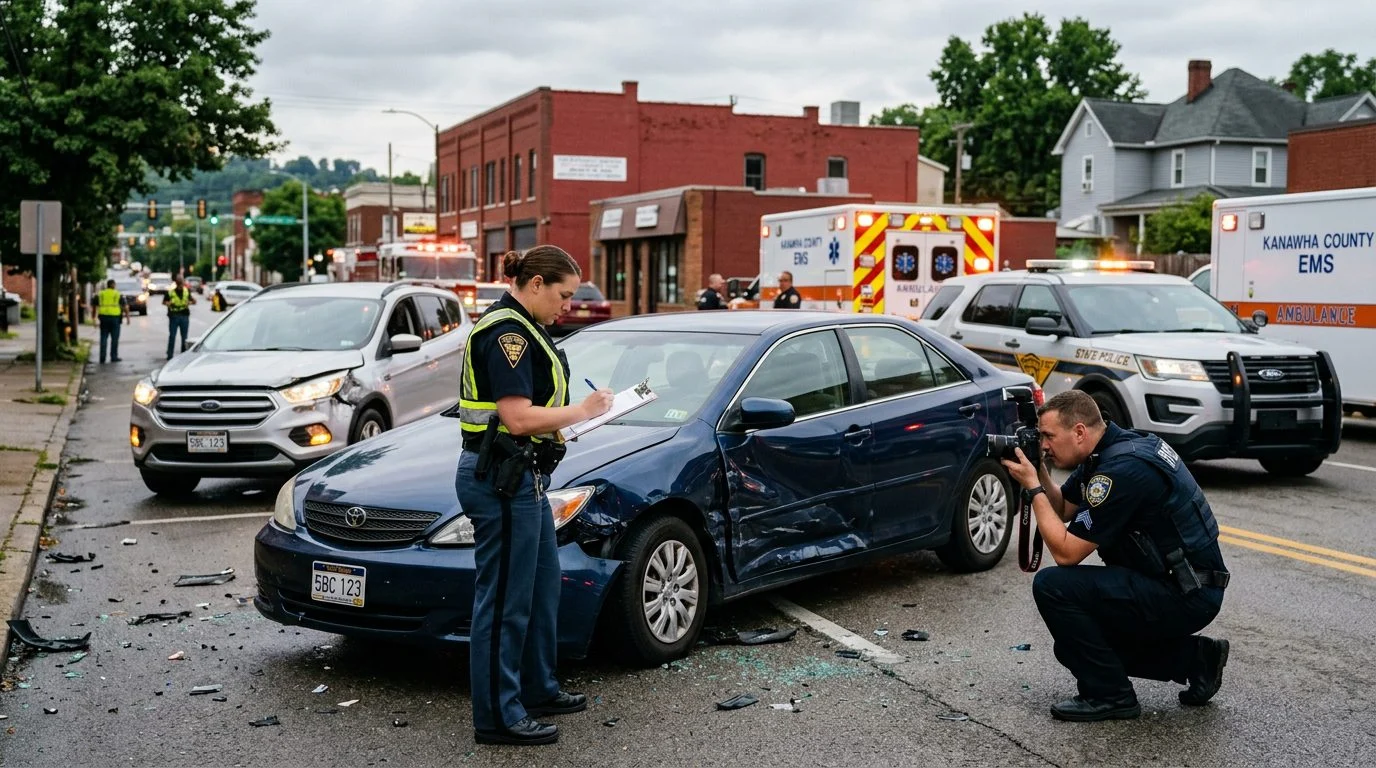
Car Accidents | West Virginia
Hurt in a West Virginia Crash? Know What Comes Next
Between the scene, the police, the DMV, and your insurer, it's easy to lose track of what needs to happen. Here is a plain-language guide to the steps that matter most.
Published November 15, 2026
West Virginia Car Accident Reporting to DMV and Police
If you were in a crash in West Virginia and aren’t sure whether you had to report it, you’re not alone. Many drivers feel unsure about the DMV, the police, and their insurer all at once.
In short, West Virginia law generally requires a driver to stop, share information, and notify police when a crash causes injury, death, or significant property damage. The details depend on the facts of your crash.
If your crash left you or someone you love hurt and unsure what to report next, we can talk it through with you in a free case review. Talk it through with Big Bubba — the first case review is free, confidential, and carries no obligation.
The short answer: when a West Virginia crash must be reported
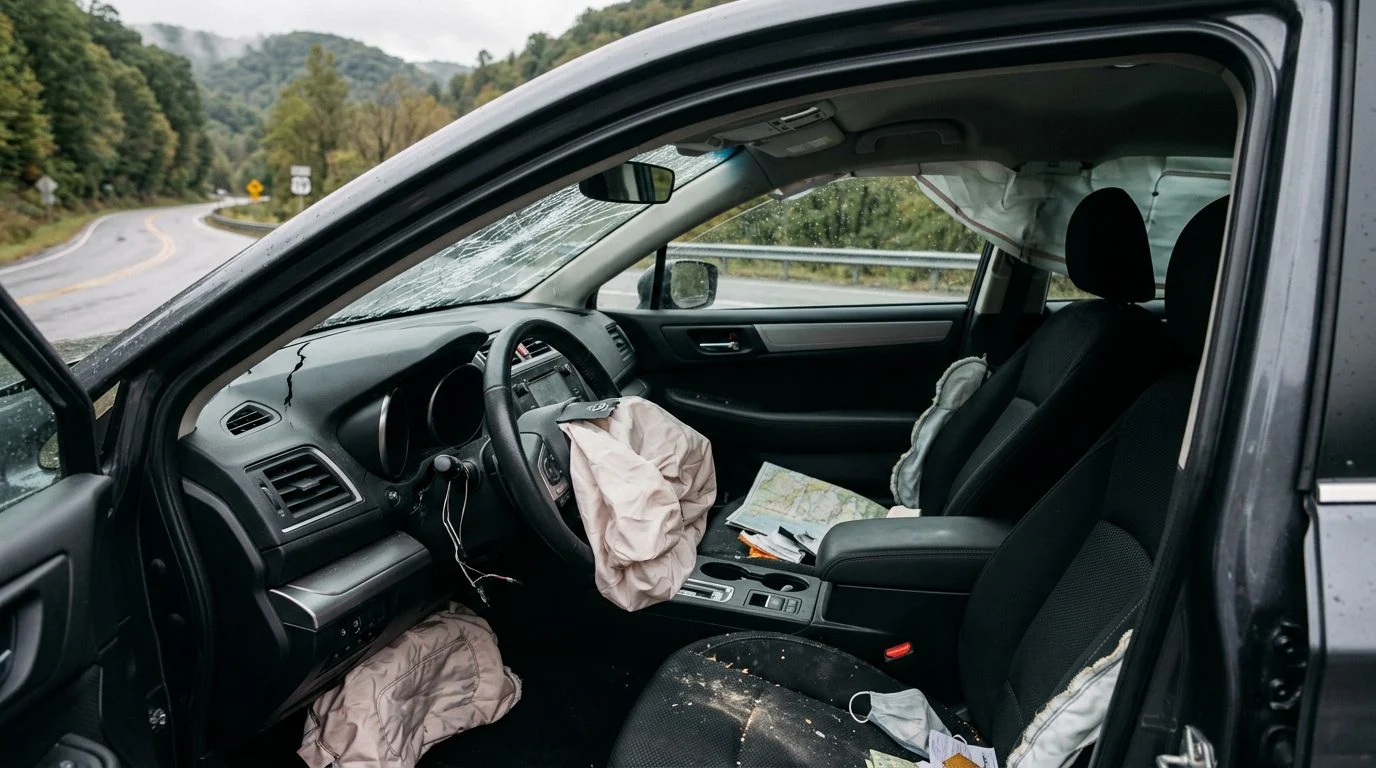
A driver in a West Virginia crash generally has reporting duties when someone is hurt or killed, or when property damage reaches a set level. The first duty is to stop. Under W. Va. Code § 17C-4-1, a driver in a crash that injures or kills someone should stop at the scene or as close as possible. The driver must stay there until the information duties are met, unless leaving is reasonably necessary to render assistance to a person injured in the crash.
Next comes the exchange of information and help for anyone hurt. W. Va. Code § 17C-4-3 covers that step. Then police notice applies under W. Va. Code § 17C-4-6.
Compare your crash to these triggers. Was anyone injured or killed? Was there total property damage of $1,000 or more? Each answer points to different duties. Keep the police notice, the officer’s written report, and insurance notice separate in your mind. They are different steps.
Crash reporting requirements in West Virginia
Reporting in West Virginia has two sides. The driver has duties, and the investigating officer has duties.
For the driver, W. Va. Code § 17C-4-6 requires immediate notice by the quickest means of communication when a crash results in injury to or death of any person or total property damage of $1,000 or more. If the crash happened inside a city or town, the driver notifies the local police department. Otherwise, the driver notifies the county sheriff or the nearest State Police office.
W. Va. Code § 17C-4-3 addresses what a driver involved in a crash resulting in injury, death, or damage to a vehicle driven or attended by a person must provide at the scene, if physically able, and the reasonable assistance owed to an injured person.
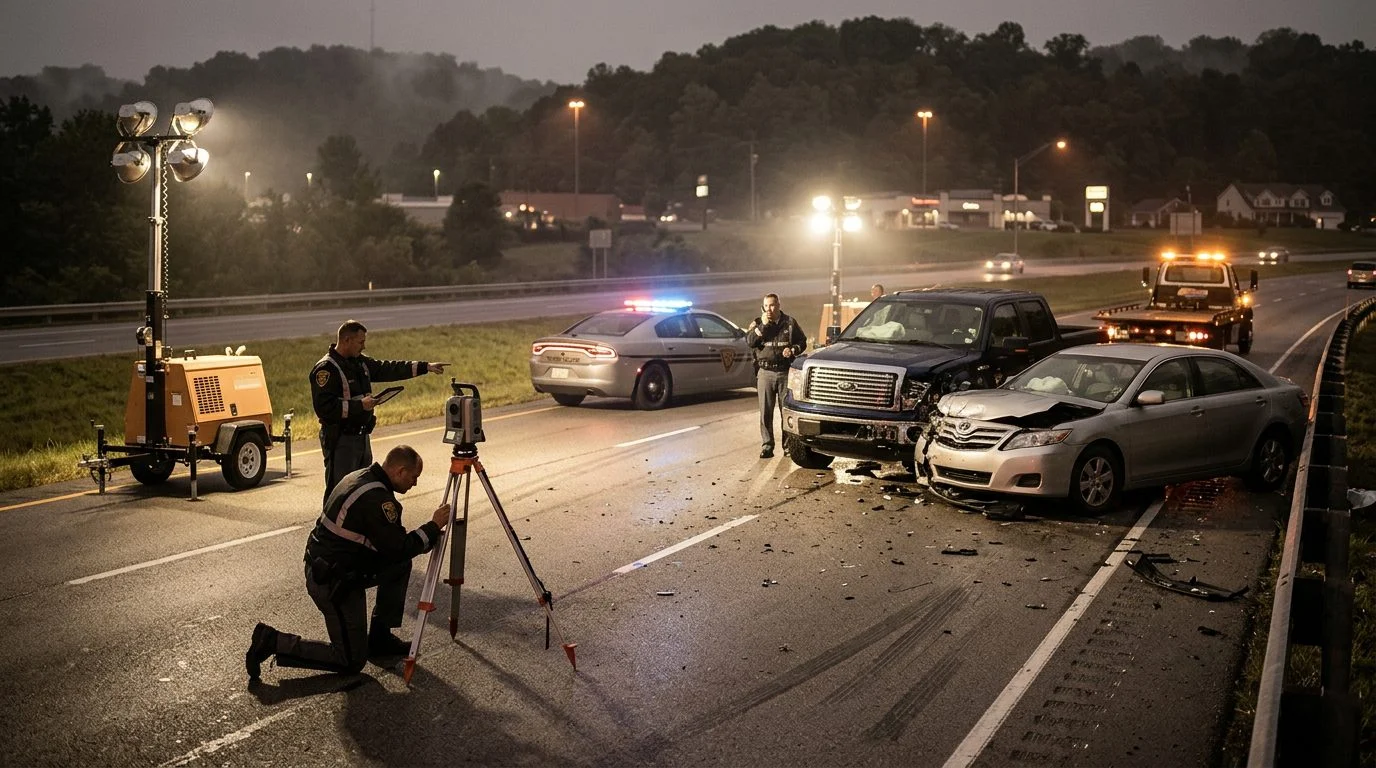
For the officer, W. Va. Code § 17C-4-7 requires a report within 24 hours after the investigation is complete. Within 24 hours of the crash, the officer must share owner, operator, and insurance details, upon request, with each involved party and their insurance agents, at no cost. If the investigation runs past 10 days, a preliminary report is due on the 10th day.
The crash report form comes from the Division of Highways.
How long after an accident should you report?
The statutes use the word “immediately” for police notice. Under W. Va. Code § 17C-4-6, notice goes out as soon as the quickest means allows. Early notice matters because details fade fast. Weather, lane position, skid marks, and witness names are easier to confirm the same day.
Some people wait to see how they feel before seeking care, and symptoms can appear later. A driver who leaves the scene without making contact may leave the police record incomplete.
Reporting timing and the deadline for an injury lawsuit are separate questions. West Virginia generally sets a two-year limit for personal injury actions under W. Va. Code § 55-2-12, and exceptions may apply. Do not confuse that lawsuit clock with the immediate duties after a crash.
Reporting minor collisions
A small crash can still carry duties, depending on what was damaged or who was hurt. Under W. Va. Code § 17C-4-2, a driver in a crash resulting only in damage to a vehicle which is driven or attended by any person must immediately stop at or as close to the scene as possible. The driver must remain there until the required steps are complete. Failing to do so is a misdemeanor.
The police notice rule uses a different test. W. Va. Code § 17C-4-6 applies to crashes with injury, death, or total property damage of $1,000 or more. A bump below that amount may not trigger the same notice step.
Minor does not always mean harmless. Some people notice headache, dizziness, or neck pain hours or days later. A crash that looked small at the scene may turn out to matter. When you are unsure, giving notice is usually the safer step.
Reporting to your insurer and the consequences of skipping a step
Some auto policies may ask for prompt notice of a crash. The exact terms depend on your policy language. Some insurers may dispute a claim when notice is late or incomplete. A missed step can make the paperwork harder to sort out later.
The state penalties are separate from insurance issues. Under W. Va. Code § 17C-4-10, the Commissioner may suspend the license or permit of a person who fails to notify law enforcement as required.
Under W. Va. Code § 17C-4-1, a driver who intentionally violates the stop-and-remain duty, knowing or having reason to believe another person was physically injured, may face a misdemeanor charge carrying a fine of up to $1,000, jail of up to one year, or both. Higher felony tiers apply when a driver intentionally violates the stop-and-remain duty, knowing or having reason to believe another person was physically injured, and serious bodily injury results, or when the crash proximately causes another person’s death that occurs within one year of the crash. Upon conviction, the commissioner must revoke the license for one year from the date of conviction or the date of release from incarceration, whichever is later, under the same statute.
Not sure what your next step is?
Talk it through with Big Bubba — the first case review is free, confidential, and carries no obligation.
Is West Virginia a no-fault state for car accidents?
West Virginia’s comparative fault statute ties recovery to each person’s share of fault. Under W. Va. Code § 55-7-13a, recovery is allocated by percentage of fault, and those percentages must total either zero or one hundred percent. That structure points toward fault mattering in a West Virginia injury claim.
Under W. Va. Code § 55-7-13c, a plaintiff’s fault bars recovery only if it is greater than the combined fault of all other persons responsible for the total damages; otherwise, recovery is reduced in proportion to the plaintiff’s degree of fault. Under W. Va. Code § 55-7-13c, a person’s own share of fault generally does not bar recovery unless it is greater than the combined fault of all other persons responsible for the damages. If it is less, the recovery is reduced in proportion to that person’s degree of fault, and the section does not apply to certain statutes it lists.
State law also requires proof of financial responsibility. Under W. Va. Code § 17d-4-2, the amounts for accidents after January 1, 2016 are $25,000 for one person’s injury or death, $50,000 for two or more persons, and $25,000 for property damage; a policy in effect on December 31, 2015 at the earlier minimum amounts continues to provide adequate proof of financial responsibility until the policy expires or is renewed. Your own coverage for injuries depends on your policy. Do not assume the answer from the state label alone.
How a report fits into a claim after an injury
A crash report is one record among several. Medical records, photographs, witness names, and repair estimates each add to the picture. The report helps identify the drivers, the vehicles, and the insurance details.
If another driver was at fault, the report may help identify that driver and the insurer involved. The report may also record the conditions that led to the crash, which can bear on fault.
Commercial truck crashes often involve more records. Federal rules at 49 CFR Part 390 require motor carriers to keep an accident register, and that register must be retained for three years. These carrier records can matter when a commercial vehicle is involved, so the crash report is only one part of the file.
If you were hurt and are still unsure what to do next
If you are reading this while recovering, or while caring for someone hurt in a crash, the questions can feel urgent. Reporting steps can seem like one more task on a long list.
Maybe the crash involved an injury, a possible brain or spinal cord injury, or a death in the family. Maybe you are not sure the police were notified correctly, or whether an insurer has been told. Those questions are common, and they deserve clear answers.
If you’re still unsure, reach out to Big Bubba. We serve West Virginia injury victims, and we can offer a free case review to talk through the crash report, the insurer notice, and the questions still open.