
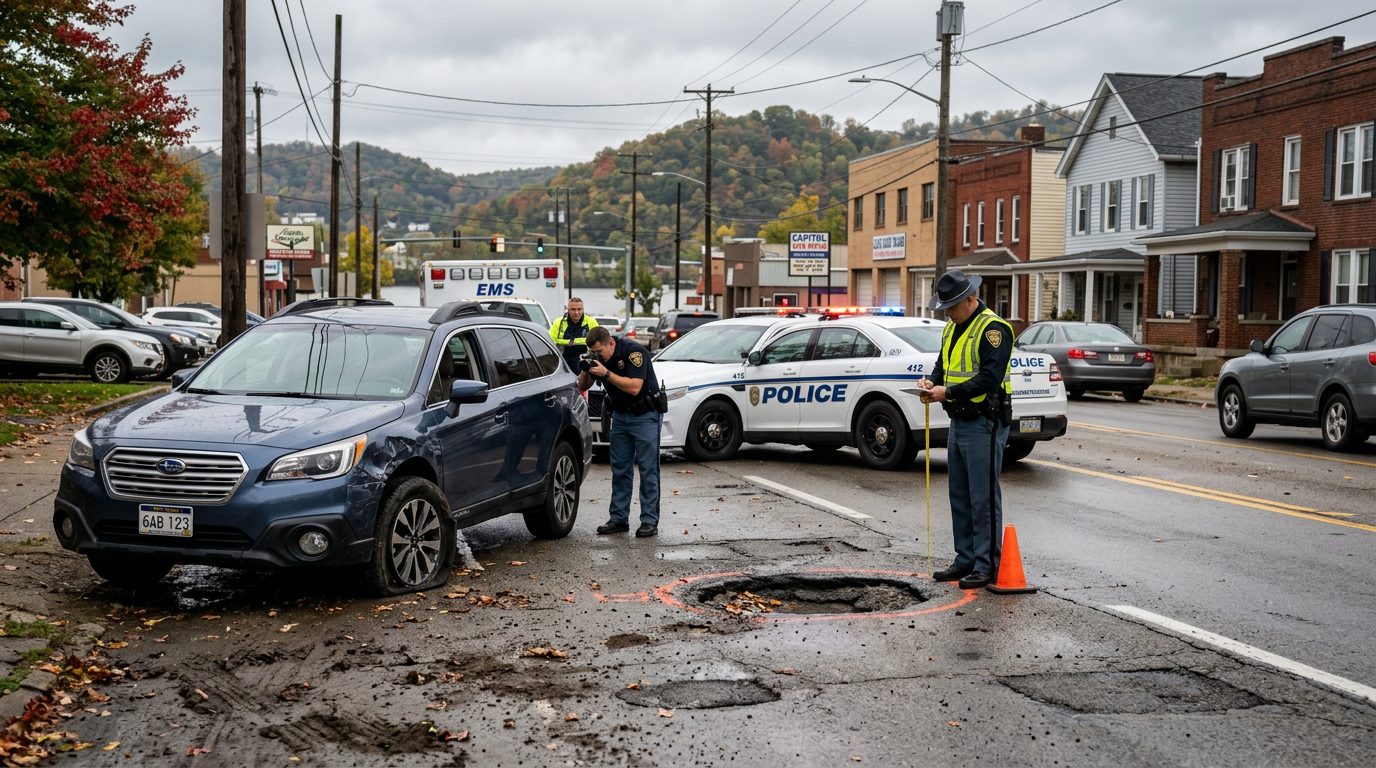
West Virginia Car Accident Claims
Hurt by a Pothole in West Virginia? Know Your Options
A road hazard can turn an ordinary drive into a serious crash. Here is what to document and how the firm can help you review what happened.
Published November 14, 2026
If a pothole or other road defect sent your car into a crash, you may be wondering whether you can bring a claim. You may have one, and the answer turns on who maintains the road, what caused the crash, and which timing rules apply.
This page explains the main decision points in plain words, so you know what to check first.
Can a pothole or road defect be part of a car accident claim in West Virginia?
A road defect can be part of a car accident claim in West Virginia, but a pothole alone does not decide the question. A claim usually asks two things. Did the road condition help cause the crash? And did the party responsible for the road know about the defect, or should it have known?
Under W. Va. Code § 55-7-13a, “comparative fault” means the degree to which a person’s fault was a proximate cause of an alleged personal injury or death or damage to property, expressed as a percentage. Under W. Va. Code § 55-7-13c, a plaintiff’s own fault bars recovery only if it is greater than the combined fault of all other persons responsible for the damages. If it is less, the recovery is reduced in proportion to the plaintiff’s degree of fault.
That means your own driving matters. Insurers and courts look at how fast you were going, whether you could see the hole, and what the road looked like at that spot.
The history of the defect matters too. A hole that formed overnight is a different situation from one that was reported and left unrepaired for months. Those details help show who may be responsible.
If a pothole or road defect may have played a part in your crash, you may have a claim worth reviewing, and we can help you sort out who owns the road and what deadlines apply. Talk it through with Big Bubba — the first case review is free, confidential, and carries no obligation.

How a pothole or road defect can lead to a crash
A pothole usually causes a crash by forcing a driver to react. The reaction, more than the hole itself, is often what sends a car off course.
Common sequences look like this. A driver swerves to miss a deep hole and crosses into another lane or onto the shoulder. A front tire drops into the hole, and the jolt pulls the steering wheel out of the driver’s hands. A tire or wheel is damaged, and the car loses control. Or a driver hits a curb, a guardrail or another car while trying to avoid the defect.
Each sequence can be pieced together from the scene, the vehicle damage and witness accounts. The order of events shows what the defect did and how the driver responded.
Speed also gets examined. The Insurance Institute for Highway Safety states that speeding increases crash risk, stopping distance and the likelihood of severe injuries. A faster driver has less time to see a defect and less room to react. That does not mean the driver is at fault, but some insurers may dispute a claim on this ground.
Who maintains the road decides where a claim goes
Who maintains the road usually decides who the claim is against and which rules apply. The road owner might be the state, a local government or a private party, and each has different procedures.
State highways are generally maintained by the West Virginia Division of Highways. County and municipal roads are generally maintained by local governments. Some roads sit on private land, and their owners are private parties subject to ordinary negligence rules.
Local governments have their own rules. Under the state’s Governmental Tort Claims and Insurance Reform Act, a political subdivision (a county, city or similar local body) can generally be liable for injuries caused by its negligent failure to keep public roads in repair. See W. Va. Code § 29-12a-4.
The same law also provides immunities. One covers certain snow, ice or weather-related conditions on a public way, unless the condition is affirmatively caused by the negligent act of a political subdivision. See W. Va. Code § 29-12a-5. Immunity may be raised, so the cause of a defect can matter as much as its existence.
Road owners who are not named in a suit can still matter. Under W. Va. Code § 55-7-13d, the fact-finder considers the fault of all persons who contributed to the damages, whether or not they could have been named as parties.
Notice and deadline rules can be stricter for government defendants
Claims against a government body can require written notice before a lawsuit is filed. That notice step is separate from the lawsuit itself.
W. Va. Code § 55-17-3 provides that, at least 30 days prior to instituting an action against a governmental agency, the complaining party or parties shall send written notice of the alleged claim and the relief desired to both the agency’s chief officer and the Attorney General by certified mail, return receipt requested. This does not apply in actions seeking injunctive relief where the court finds that irreparable harm would have occurred if the institution of the action was delayed by that subsection. If 90 days elapse after service of the notice has been effected and no action has been instituted, the notice is considered to have expired, and new notice must be provided before an action may be instituted, accompanied by a $250 fee to the Attorney General and a $250 fee to the agency’s chief officer; no further tolling of any statute of limitations occurs during a second or subsequent notice. The notice goes by certified mail, return receipt requested, to the agency’s chief officer and the Attorney General. If that notice is given, the limitation period is paused for 30 days from the date notice is provided. If the agency received it, the pause runs for 30 days from the date of the return receipt.
For most personal injury claims, West Virginia generally allows two years to file, as set out in W. Va. Code § 55-2-12. Exceptions may apply. Under W. Va. Code § 55-2-12, a personal injury action for which no other limitation is prescribed must be brought within two years after the right to bring it accrued. Actions against a political subdivision are governed by a separate provision, see W. Va. Code § 29-12a-6. See W. Va. Code § 29-12a-6.
Missing a notice step or a deadline may limit or end a claim. Check the defendant and the claim type early. Don’t assume the general two-year period covers a claim against a government body.
Evidence that may matter in a pothole claim
Records made close to the crash are often the most useful early evidence. Start keeping them organized from the first day.
Photograph the defect so its size and location show. Place a tape measure or a common object beside the hole so its depth and width can be judged. Also photograph the surrounding road, lane markings, weather and lighting. Note the date, the time and the exact location, including the nearest road sign or mile marker.
Write down what you remember while it’s fresh. Get names and contact details for any witnesses, and keep a copy of the police or crash report. If you know of earlier complaints or repair requests about the same spot, write those down too.
Keep the damaged tire, wheel or part if it has been removed. Don’t repair or discard the vehicle before it has been documented. Save repair estimates, invoices and towing records, and keep medical records that connect your injuries to the crash.
This evidence may be relevant, depending on the facts of your crash.
Common questions about pothole crash claims in West Virginia
Most questions come down to three things: who owns the road, when notice is due, and what your own auto policy covers.
Is West Virginia a no-fault state for car accidents?
A claim against another party generally depends on proving that party’s fault. Your own auto insurance may still play a role, so review its terms.
Can I get reimbursed for hitting a pothole?
You may have a claim against the party that maintains the road, or a collision question under your own auto policy. That policy’s terms control how it responds.
How do I report a pothole in West Virginia?
You can report the defect to the agency or local government body that maintains the road. That report creates a dated record, but it is not a claim by itself.
Not sure what your next step is?
Talk it through with Big Bubba — the first case review is free, confidential, and carries no obligation.
Injuries and losses a pothole crash can involve
A pothole crash can cause the same injuries as other car crashes. These can include head injuries, spinal injuries, fractures and soft-tissue injuries. Some symptoms can take days to appear, so getting checked soon after the crash matters for both health and records. Recovery varies by person and by injury.
A claim may address several kinds of loss, including medical bills, lost income, vehicle damage and other losses the facts support.
If a crash is fatal, different rules apply. Under W. Va. Code § 55-7-6, a wrongful death action is brought by the deceased person’s personal representative and must be commenced within two years after the death, subject to the provisions of section eighteen, article two, chapter fifty-five. W. Va. Code § 55-7-6 reads: “The provisions of this section shall not apply to actions brought for the death of any person occurring prior to July 1, 1988.” The verdict shall include, but may not be limited to, damages for sorrow, mental anguish and solace; reasonably expected loss of income and services; care, treatment and hospitalization expenses; and reasonable funeral expenses.
If Medicare has paid for accident-related care, its role can affect how medical bills are handled.
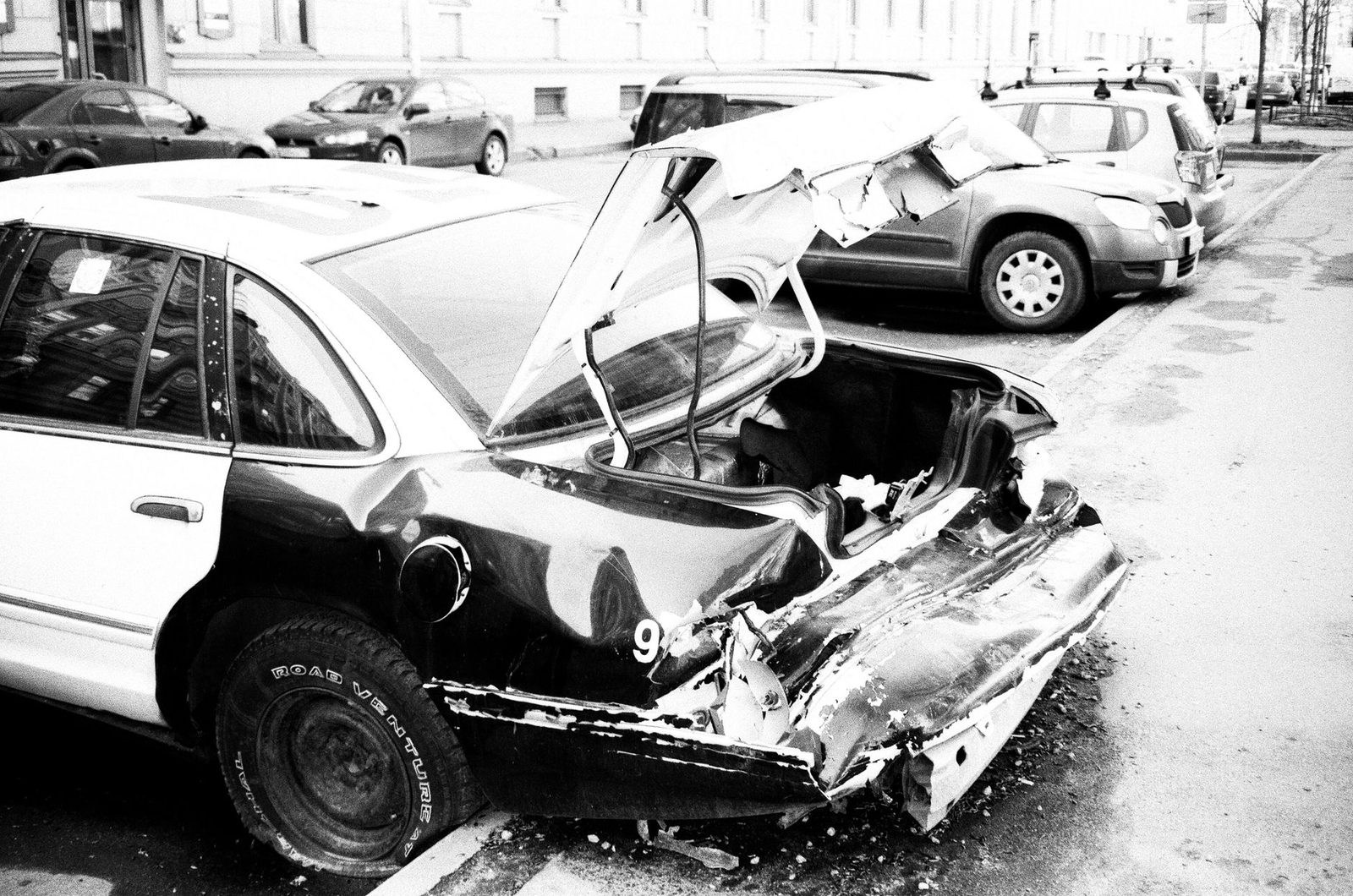
Deciding whether to talk with the firm about a road defect crash
A crash that may involve a road defect raises two early questions. Who owns the road? And has a notice step or deadline started? Answering them early keeps your options open.
If you were hurt in a West Virginia crash where a pothole or other road defect may have played a part, and you’re unsure who is responsible or what timing applies, you can request a free case review with Big Bubba Injury Law. We serve injury victims across West Virginia. Each road defect claim turns on its own facts, so the review starts with yours, and the firm can walk through the road owner, the notice steps and the timing with you.