
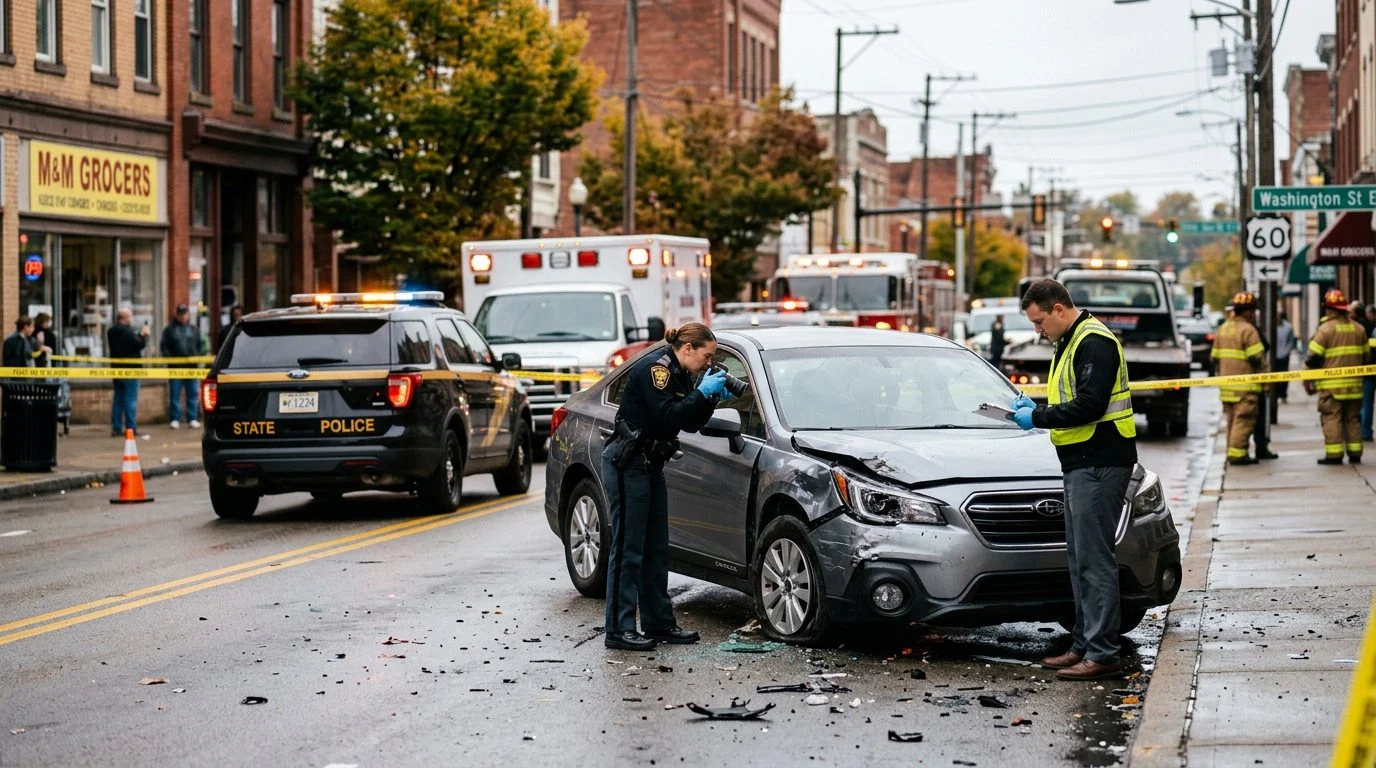
Car Accidents | West Virginia
Hurt on a Bad Stretch of State Road? Tell Us What Happened.
Potholes, washed-out shoulders and missing warning signs can turn an ordinary drive into a serious crash. Big Bubba Injury Law represents people injured in car accidents caused by state road defects across West Virginia.
Published October 31, 2026
A crash caused by a pothole, a missing guardrail, or a state or county vehicle can follow different rules than a typical car wreck. The biggest difference is timing. Some claims against public bodies require written notice before a lawsuit can be filed. This guide explains what counts as a road defect or government vehicle crash, how the notice steps work, and what to keep. We serve injury victims in all 55 West Virginia counties.
What Counts as a Road Defect or Government Vehicle Accident in West Virginia
A road defect accident is a crash linked to a hazard on a public road that a government body is responsible for. Common road hazards include:
- Potholes and sinkholes
- Washed-out shoulders or failed culverts
- Missing or damaged guardrails
- Malfunctioning traffic signals
- Drainage problems that send water across lanes
A government vehicle accident involves a state, county, or city vehicle, such as a snowplow, dump truck, patrol car, or maintenance truck. West Virginia makes a public body liable for negligent operation of a vehicle by its employees acting within the scope of their work [W. Va. Code § 29-12a-4]. It also makes a public body liable for negligent failure to keep public roads open, in repair, or free from nuisance [W. Va. Code § 29-12a-4]. W. Va. Code § 29-12a-4 reads: “(3) Political subdivisions are liable for injury, death, or loss to persons or property caused by their negligent failure to keep public roads, highways, streets, avenues, alleys, sidewalks, bridges, aqueducts, viaducts, or public grounds within the political subdivisions open, in repair, or free from nuisance, except that it is a full defense to such liability, when a bridge within a municipality is involved, that the municipality does not have the responsibility for maintain or inspecting the bridge.”
Many crashes have more than one cause. A road hazard and a driver’s choices can both contribute. The general fault-sharing rule in W. Va. Code § 55-7-13c does not apply to claims against a county, city or other political subdivision under Article 12-a of Chapter 29, so a road defect claim against a local government may follow different rules on how damages are divided among those at fault. Under the several-liability rule, each defendant is generally liable only for the share of compensatory damages allocated to its percentage of fault [W. Va. Code § 55-7-13c]. Drivers, passengers, pedestrians, and families of people killed can all be affected by these rules.
If a road hazard or a public vehicle played a part in your crash, the notice clock may already be running, so reach out for a free case review. Talk it through with Big Bubba — the first case review is free, confidential, and carries no obligation.
Why Notice Rules Can Come Before the Lawsuit
West Virginia generally allows two years to file a personal injury lawsuit, measured from when the right to bring the claim accrued (W. Va. Code § 55-2-12), and exceptions may apply. Claims against public bodies can add a notice step first. For most personal injury claims, West Virginia law generally requires that the action be brought within two years after the right to bring it has accrued, unless another limitation period applies [W. Va. Code § 55-2-12].
Under W. Va. Code § 29-12a-6, an action against a political subdivision to recover damages for injury, death, or loss to a minor who was under the age of ten years at the time of the injury must be commenced within two years after the cause of action arose or after the injury was discovered or reasonably should have been discovered, whichever last occurs, or prior to the minor’s twelfth birthday, whichever provides the longer period. That deadline can be paused if the public body concealed or misrepresented material facts about the injury through fraud or collusion [W. Va. Code § 29-12a-6].
State agencies have an added step. At least 30 days before suing a state agency, send written notice of the claim and the relief you want by certified mail, return receipt requested, to the agency’s chief officer and the West Virginia Attorney General [W. Va. Code § 55-17-3]. The limitation period is then tolled for 30 days from the notice date. If the agency received it, the 30 days run from the return receipt date [W. Va. Code § 55-17-3].
If no lawsuit is filed within 90 days after notice, the notice expires. Which rule fits a given crash depends on which body owns the road or operated the vehicle, and on the facts. Early review helps, because the notice step and the two-year clock can run at the same time.
What a Written Notice of Claim Should Include
A written notice should tell the public body who was hurt, where and when the crash happened, what caused it, and what harm you claim. A strong notice usually includes:
- Your full name and contact information, or the name of the representative for a person who died
- The date, time, and exact location, including road name, route number, mile marker, or nearest intersection
- A plain description of the road hazard or government vehicle, and how it contributed to the crash
- The public body you believe is responsible, plus any vehicle number or agency details you know
- A summary of your injuries and losses, including treatment and any ongoing care
- Proof of delivery, such as the certified mail return receipt
Keep a copy of everything you send. The statute sets the delivery method for notices to state agencies. Each public body may also have its own requirements. The firm can help prepare these notices, and the exact contents depend on the facts of your crash.
What Evidence to Preserve After a Road Defect Crash
Preserve evidence of the hazard, the crash, and your injuries as early as you safely can. Evidence often disappears when a road is repaired or a vehicle is sold. Useful items include:
- Photos and video of the hazard, the vehicle damage, the scene, and any missing or damaged signs, taken as soon as it is safe
- The crash report from the investigating agency
- Medical records linking your injuries to the crash, including emergency room notes, imaging, and treatment plans
- Names and phone numbers of witnesses, including passengers and nearby drivers
- Damaged parts, such as a tire, wheel, or component that failed, if you still have them
- Public records, such as road repair requests, prior complaints, and maintenance logs
A public body may hold these records, and the firm can help identify what to request. Be careful with recorded statements. An insurance adjuster may ask you for one. Your words can be used later, so think before you speak.
What Are the Steps and Timeline After a Road Defect Crash?
Most road defect claims follow the same basic steps, but the timing changes with each case. Here is the usual order:
- Day of the crash: Get medical care. Document the scene, including the road name or mile marker.
- First weeks: Identify the public body that owns the road or employed the driver.
- Before filing: If your claim is against a governmental agency, send written notice of the claim to that agency’s chief officer and the Attorney General at least 30 days before filing, by certified mail, return receipt requested, and keep proof of delivery.
- After notice: The public body reviews the claim and may respond. The claim may be resolved without a lawsuit, or it may move toward one.
- Filing a lawsuit: The public body is the defendant. In a suit against a county, city or other political subdivision, the subdivision is the defendant, and its employee acting within the scope of employment cannot be named as the defendant [W. Va. Code § 29-12a-13]. A case against a political subdivision is filed in the county where the subdivision is located or where the cause of action arose [W. Va. Code § 29-12a-13].
Public bodies also have immunities. That changes if the body’s own negligent act caused the condition [W. Va. Code § 29-12a-5]. A road claim is not automatic. Your medical recovery and the legal claim also run on separate schedules. Treatment can continue long after the notice step ends.
Frequently Asked Questions About Road Defect and Government Vehicle Crashes
Is the notice deadline the same as the two-year lawsuit deadline?
Not always. Some claims need written notice first.
Can I sue the driver of a county plow?
Generally, no. The public body is the defendant, and an employee acting within the scope of employment cannot be named [W. Va. Code § 29-12a-13].
Does a road hazard automatically make the public body liable?
No. Immunities can apply, and whether a claim exists depends on the facts [W. Va. Code § 29-12a-5].
Does my own fault matter?
For claims against private drivers and other parties that the statute does not exempt, West Virginia Code § 55-7-13c(c) bars any recovery when an injured person’s share of fault is greater than the combined share of everyone else responsible for the damages. Under § 55-7-13c(i), however, that section does not apply to claims against counties, cities and other political subdivisions brought under Article 12A, Chapter 29 of the West Virginia Code. If the plaintiff’s fault is less than the combined fault of all other persons, the plaintiff’s recovery shall be reduced in proportion to the plaintiff’s degree of fault. This section does not apply to the following statutes: article twelve-a, chapter twenty-nine of this code; chapter forty-six of this code; and article seven-b, chapter fifty-five of this code W. Va. Code § 55-7-13c.
Not sure what your next step is?
Talk it through with Big Bubba — the first case review is free, confidential, and carries no obligation.

Talk to the Firm About a Road Defect Crash Before Time Runs Short
If a state, county, or city road or vehicle played a part in your crash, the notice steps and the two-year clock may already be moving. You don’t have to sort out the road owner, the notice timing, and the evidence on your own. Contact the firm for a free case review. Share the date, the road, and the vehicle involved. You can tell the firm what happened in your own words, and the review is confidential.