
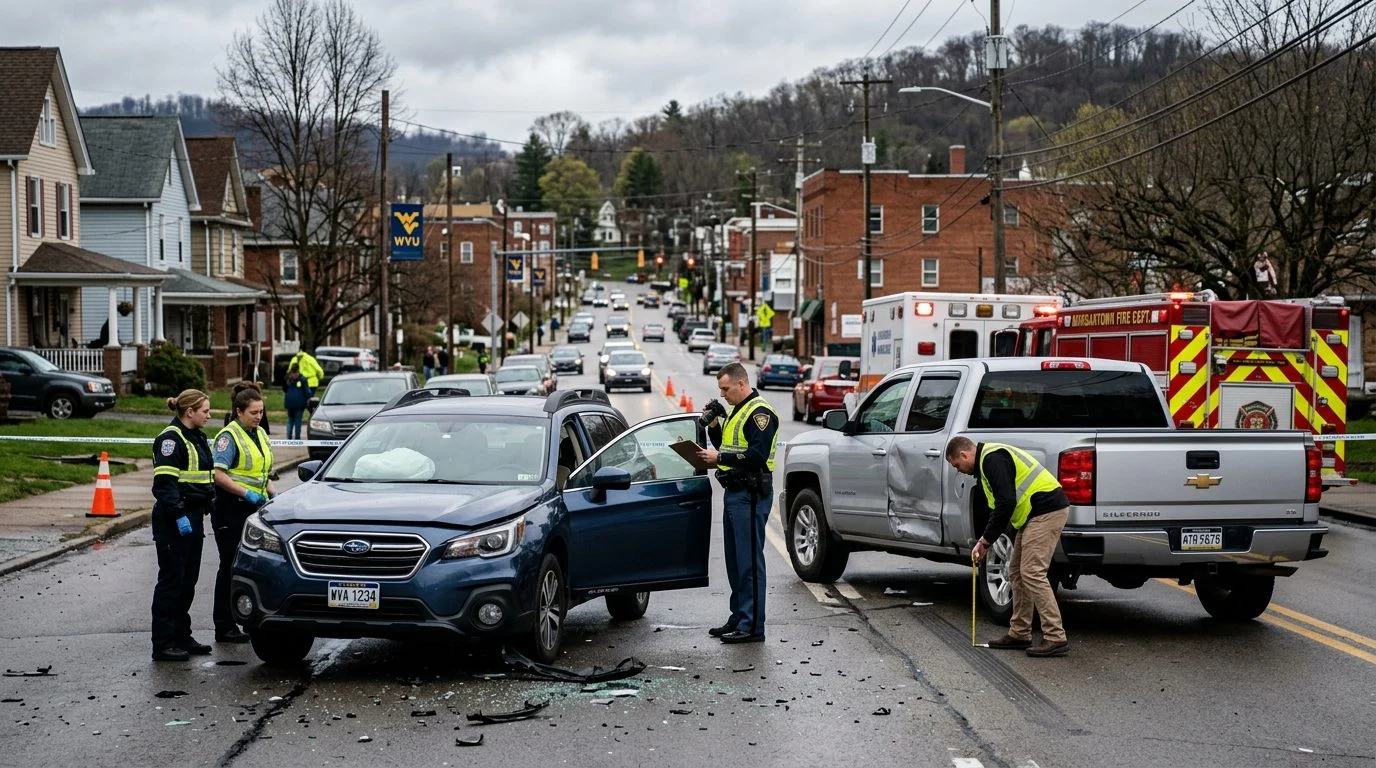
West Virginia Car Accidents
Hurt in a West Virginia Crash? Find Out Whether You Can Sue the Other Driver
Plain answers on negligence claims, who may be responsible, and the practical steps that can help you decide what to do next.
Published November 11, 2026
After a car crash, you may be hurt, out of work, and unsure what comes next. You may be asking whether you can sue the other driver after a car accident in West Virginia. Generally, yes. If the other driver’s carelessness caused the crash, you may have a negligence claim against that driver. Whether you have one depends on the facts, and a short filing deadline applies.
The Short Answer: Can You Sue the Other Driver?
In general, you may sue a driver whose carelessness caused your crash. A negligence claim is a civil lawsuit. It asks a court for money damages to cover your losses. A traffic ticket or criminal charge is a separate process from a civil claim.
If a crash killed someone, the family may have a different claim. A wrongful death action is generally brought by the personal representative of the deceased person’s estate. It generally must be filed within two years after the death, and exceptions may apply. W. Va. Code § 55-7-6(d) generally requires that a wrongful death action be commenced within two years after the death of the deceased person, subject to the provisions of section eighteen, article two, chapter fifty-five, and exceptions may apply. See W. Va. Code § 55-7-6 for the rule.
If another driver's carelessness may have caused your crash, you don't have to sort out your options alone, and the firm can review the facts with you. Talk it through with Big Bubba — the first case review is free, confidential, and carries no obligation.

What You Generally Need to Show in a Negligence Claim
To bring a negligence claim, you generally need to show that the other driver failed to use reasonable care and that this failure caused your harm. In plain terms, the claim usually has four parts.
Some driving choices may support a claim when the proof backs them up. Examples include speeding, running a red light, texting behind the wheel, and driving after drinking.
Your losses are the damages a claim seeks to recover. These often include medical bills, lost income, and pain and suffering. Some injuries, including brain injuries, may not show symptoms right away. Getting medical care soon after a crash may matter for your health and for your records.
How West Virginia’s Comparative Fault Rule Can Affect Your Claim
West Virginia generally reduces an injured person’s recovery by that person’s share of fault. Under W. Va. Code § 55-7-13c, your fault does not bar recovery unless it is greater than the combined fault of all other people responsible for the damages. If your fault is less than that combined total, your recovery is reduced in proportion to your fault.
Fault is divided by percentage. W. Va. Code § 55-7-13a allocates each person’s liability in direct proportion to that person’s percentage of fault. The jury or judge must also allocate fault to everyone who proximately caused the damages, including nonparties who were never named in the suit. See W. Va. Code § 55-7-13d. See W. Va. Code § 55-7-13d.
The other driver may argue that you contributed to the crash. Some insurers may dispute fault in the same way. That argument is common, so it helps to understand how the rule works before you talk with an insurer.
Who Can Be Named in a Car Accident Lawsuit
The driver who caused the crash is usually the main defendant. Other parties may also be named when the facts support it.
An employer may be responsible when its employee causes a crash while working. West Virginia law generally makes an employer answerable for an employee’s negligent act done within the scope of employment. See Zirkle v. Winkler.
An employer may also face a negligent hiring claim. See McCormick v. W. Va. Department of Public Safety.
Commercial trucks add more rules. Federal rules may require alcohol and drug testing after certain crashes involving commercial drivers. The Federal Motor Carrier Safety Administration describes those requirements. West Virginia also limits certain noneconomic damages against an employer of a commercial motor vehicle, with exceptions, under W. Va. Code § 55-7-32.
How Insurance Fits Into a Claim Against the Other Driver
The other driver’s liability insurance is often the first place a claim goes. West Virginia requires drivers to carry auto insurance. The West Virginia Division of Motor Vehicles explains mandatory insurance, proof of coverage, and minimum liability limits.
Your own policy may matter too. Under W. Va. Code § 33-6-31, motor vehicle policies must include uninsured motorist terms. W. Va. Code § 33-6-31 reads: “except a bailee for hire, who uses, with the consent, expressed or implied, of the named insured, the motor vehicle to which the policy applies or the personal representative of any of the above; and the term “uninsured motor vehicle” means a motor vehicle as to which there is no: (i) Bodily injury liability insurance and property damage liability insurance both in the amounts specified by section two, article four, chapter seventeen-d of this code, as amended from time to time.” Uninsured motorist coverage under W. Va. Code § 33-6-31 generally covers sums you are legally entitled to recover from the owner or operator of an uninsured vehicle, and the statute sets out conditions that apply to recovery. Your policy’s wording controls how that coverage works for you.
Some insurers may dispute a claim, ask for a recorded statement, or make an early offer. West Virginia also limits some early settlement talks. Under W. Va. Code § 55-7-11a, no one may negotiate a settlement with an injured person within twenty days of the injury while that person is an inpatient in any hospital or is partially or totally unable to engage in his or her usual trade, profession or occupation.
Filing Deadlines: The General Two-Year Statute of Limitations in West Virginia
West Virginia generally allows two years to file a personal injury lawsuit (W. Va. Code § 55-2-12). Exceptions may apply.
A claim filed after the deadline may be barred. That is why the timing question matters early. West Virginia generally allows two years from the date the cause of action accrues, typically the date of injury, to file a personal injury lawsuit (W. Va. Code § 55-2-12), though the discovery rule or tolling provisions, such as those for minors or fraudulent concealment, may delay that start in narrow circumstances. West Virginia law generally requires a personal injury action to be brought within two years next after the right to bring it has accrued, as stated in W. Va. Code § 55-2-12, and exceptions may apply. A late filing may be barred, though exceptions may apply, and waiting can make that question harder to answer.
West Virginia’s survival statute does not extend the time to file other torts. See W. Va. Code § 55-7-8a. Keep the crash date and every medical visit date in your records from day one. Wrongful death actions are brought by and in the name of the personal representative of the deceased person under W. Va. Code § 55-7-6.
Not sure what your next step is?
Talk it through with Big Bubba — the first case review is free, confidential, and carries no obligation.
When the Other Driver Flees or Cannot Be Identified
A hit-and-run may still leave you with options. Your own uninsured motorist coverage may apply when the at-fault driver cannot be found. Under W. Va. Code § 33-6-31, when the owner or operator of the vehicle is unknown, the insured (or someone on the insured’s behalf) must report the accident to a police, peace or judicial officer within twenty-four hours after discovering it and being physically able to report it, unless a police officer has already investigated the accident. The insured must also notify the insurance company within sixty days after the accident, must make the vehicle the insured was occupying available for inspection if the insurer sends a written request within five days after receiving that notice, and must show at trial that the injury or damage arose out of physical contact with the hit-and-run vehicle.
Report the crash to police promptly. That creates a record that may be relevant to a claim and may help show what happened. Keep copies of every letter and form from your insurer, too.
A missing driver does not necessarily end your options. Hit-and-run cases raise more questions than ordinary crashes, so early records matter even more.
Evidence That May Matter in a Car Accident Claim
Evidence may help show what happened and how the injury changed your daily life. Collecting it early helps, while details are still fresh. Useful items may include:
- The police crash report and any citation numbers.
- Photos of the vehicles, the roadway, skid marks, and visible injuries.
- Names and phone numbers of witnesses.
- Dashcam or nearby business video, if it still exists.
- Medical records from the first visit onward.
- A simple journal of symptoms, missed work, and daily limits.
Notes made close to the crash are easier to rely on later. A journal can show how an injury affected work, sleep, and family life over time.
Before you give a recorded statement to an insurer, you may want to understand your rights. A short conversation about those rights can help you decide what to say and when.

Questions to Ask About Your Situation
If you are recovering from a serious injury, or helping a family member who was hurt or killed, these questions can feel like too much at once. You don’t have to sort them all out in one sitting.
We serve injury victims across West Virginia. The firm handles car accident claims, truck and commercial vehicle claims, catastrophic injury cases, and wrongful death claims. If you want to talk through what happened, request a free case review with the firm. It is confidential, with no obligation to continue.