
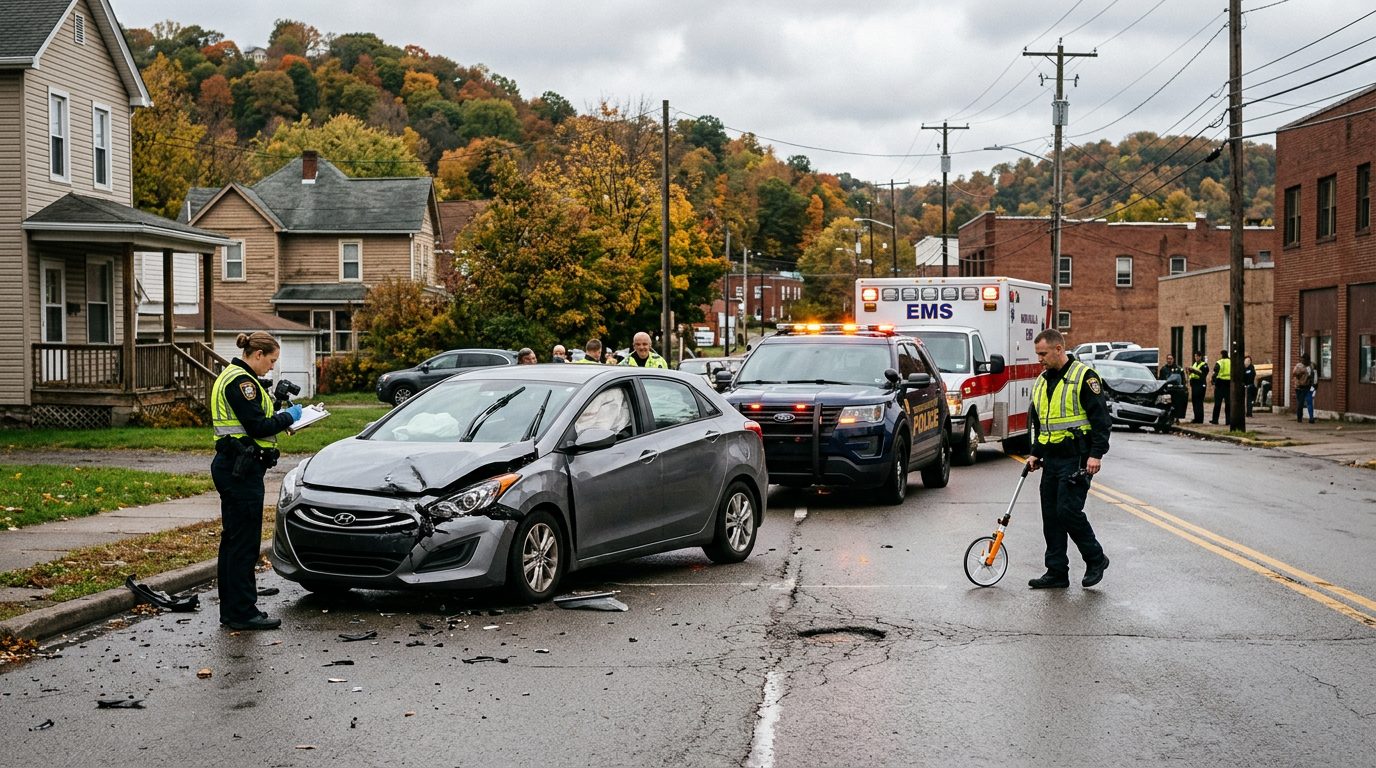
Road Defect Car Accidents | West Virginia
Hurt on a Damaged Road? Find Out Where You Stand
Potholes, failed shoulders, and broken guardrails can turn an ordinary drive into a serious crash. Here is how we help injured people sort out who may be responsible.
Published November 11, 2026
You were hurt in a car accident, and you believe a pothole, a washed-out shoulder, or a broken guardrail played a part. You want to know if you can sue the State. In some cases, a claim tied to a road defect may be possible, but it follows different steps than a lawsuit against another driver.
This guide explains who may be responsible, what you generally need to show, the deadlines that matter, and the evidence to protect early.
Can You Sue the State After a Crash Caused by a Road Defect?
In some cases, a claim over a road defect may be possible, but the rules differ from a lawsuit against a driver.
A road defect is a dangerous condition in the road itself. Common examples include potholes, a washed-out shoulder, a missing or damaged guardrail, faded lane markings, and debris on the pavement.
Not every road problem leads to a claim.
Whether a claim succeeds depends on the facts of the crash and the road condition. If you’re in this position, you may be dealing with pain, vehicle repairs, and hard questions about who is responsible.
If a pothole or damaged guardrail left you hurt on a state road, the firm can talk with you about whether a claim may apply, during a free case review. Talk it through with Big Bubba — the first case review is free, confidential, and carries no obligation.

Who Can Be Sued When a State Road Is Involved
The possible targets include a state agency, a county or city that maintains the road, and a private contractor or driver. Each one may face a different set of rules.
A county or city is a political subdivision. Under West Virginia political subdivision law, these governments are generally not liable for injuries. They can be liable, though, for negligent failure to keep public roads, highways, streets, avenues, alleys, sidewalks, bridges, aqueducts, viaducts, or public grounds open, in repair, or free from nuisance, except that for a bridge within a city it is a full defense that the city does not have responsibility for maintaining or inspecting the bridge.
Claims against a governmental agency also have a notice step.
The law does not make a road owner responsible for every road problem. Claims often focus on a specific failure, such as not repairing a known hazard or not keeping a guardrail in working order.
More than one defendant changes how money is divided. Under § 55-7-13c, each defendant is generally liable only for its own share of fault. Joint liability applies only in limited situations the statute lists.
What You Generally Must Show: Duty, Negligence, Notice, and Causation
In plain terms, the claim asks whether someone responsible for the road was careless about a danger that was known or preventable. That is the core of a negligence claim.
Notice is often the hardest part. How that kind of proof works turns on the particular record.
Causation matters too. The defect has to have played a role in the crash and your injuries. Driver error alone may not tie the crash to the road condition.
Picture a driver who hits a deep pothole, loses control, and strikes a utility pole. The pothole’s history, any earlier complaints, and the driver’s speed and path all become part of the proof.
Filing Deadlines and Notice Requirements
West Virginia generally allows two years to bring a personal injury claim, and exceptions may apply. The general rule appears in § 55-2-12.
A shorter period may apply if another section of the code provides one.
Under § 55-17-3, that notice can pause the deadline for a set period.
Wrongful death claims have their own clock. Under § 55-7-6, the action must be commenced within two years after the person’s death, subject to the provisions of section eighteen, article two, chapter fifty-five. W. Va. Code § 55-7-6 reads: “The provisions of this section shall not apply to actions brought for the death of any person occurring prior to July 1, 1988.”
Court papers against a city or county also follow a rule. Under § 29-12a-6(d), the complaint asks for damages the judge or jury finds appropriate. It does not name a dollar amount.
Waiting can make proof harder. Road repairs, changed signs, and fading memories can erase the scene you need to show what happened.
Other Parties That May Be Responsible for a Road Defect Crash
Responsibility can reach a contractor, a city or county, or another driver. It depends on who controlled the road and who created the danger.
A private company hired to build or repair a road can face a different claim path.
A city or county road is a different target than a state road. The responsible government body may be different, so the rules above apply to each one separately.
Another driver may also share fault. Speeding, distraction, or impairment can matter. Under § 55-7-13d, fault of a nonparty may be considered if the plaintiff entered into a settlement agreement with that nonparty, or if a defending party files and serves notice no later than one hundred eighty days after service of process upon that defendant that the nonparty was wholly or partially at fault. The section also states that nothing in it is meant to eliminate or diminish defenses or immunities that existed as of its effective date, except as expressly noted in the section.
The law also treats some conduct differently. Under § 55-7-13c, a defendant whose driving under the influence was a proximate cause of the damages may be jointly and severally liable.
How Comparative Fault Can Affect a Road Defect Claim
West Virginia uses modified comparative fault, which reduces your recovery by your share of fault. Under § 55-7-13a, each person’s fault is allocated in direct proportion to that person’s percentage.
If your share is smaller, your recovery is reduced in proportion to your own fault. That rule appears in § 55-7-13c.
Here’s how it works in practice. Suppose you were found partly at fault for drifting into a lane. Your award would be reduced by that share, but the claim would not automatically end.
A defense may argue you could have slowed down, moved over, or avoided the hazard. Some insurers may dispute a claim on those grounds.
Clear details help when fault is disputed. Speed, visibility, weather, lane position, and the time of day all matter. Write them down while you remember them.
Not sure what your next step is?
Talk it through with Big Bubba — the first case review is free, confidential, and carries no obligation.
Evidence to Preserve After a Road Defect Crash
The most useful evidence shows the defect, where it was, and how it affected your crash. Start collecting it as soon as you can do so safely.
- Photos of the defect, the surrounding road, any warning signs or missing signs, and your vehicle damage.
- The exact location, such as a mile marker or nearest intersection, plus the date and time.
- The police crash report, and whether it mentions road conditions.
- Names and contact details for witnesses.
- Public records on road inspections, maintenance, or past complaints, where available. These records may or may not show prior notice.
- Medical records and receipts for injury-related expenses.
Keep the vehicle and any damaged parts if you can, until someone has reviewed them. Photos taken later can’t replace the view at the scene.

Crashes on State Roads in West Virginia
If a road defect hurt you or someone you love, you don’t have to work out the State’s role on your own. You may be recovering from injuries, caring for a family member, or trying to understand a crash you never chose to be part of.
A claim might involve a pothole that sent a car into a guardrail, a washed-out shoulder that tipped a vehicle, or a highway where the damage was never repaired. When a crash causes a death, the claim is brought by the personal representative of the person who died, as described in § 55-7-6.
We handle car accident, truck accident, commercial vehicle, catastrophic injury, traumatic brain injury, spinal cord injury, and wrongful death claims across West Virginia.
If you’re wondering whether your crash may give rise to a claim, reach out to the firm to request a free case review.