
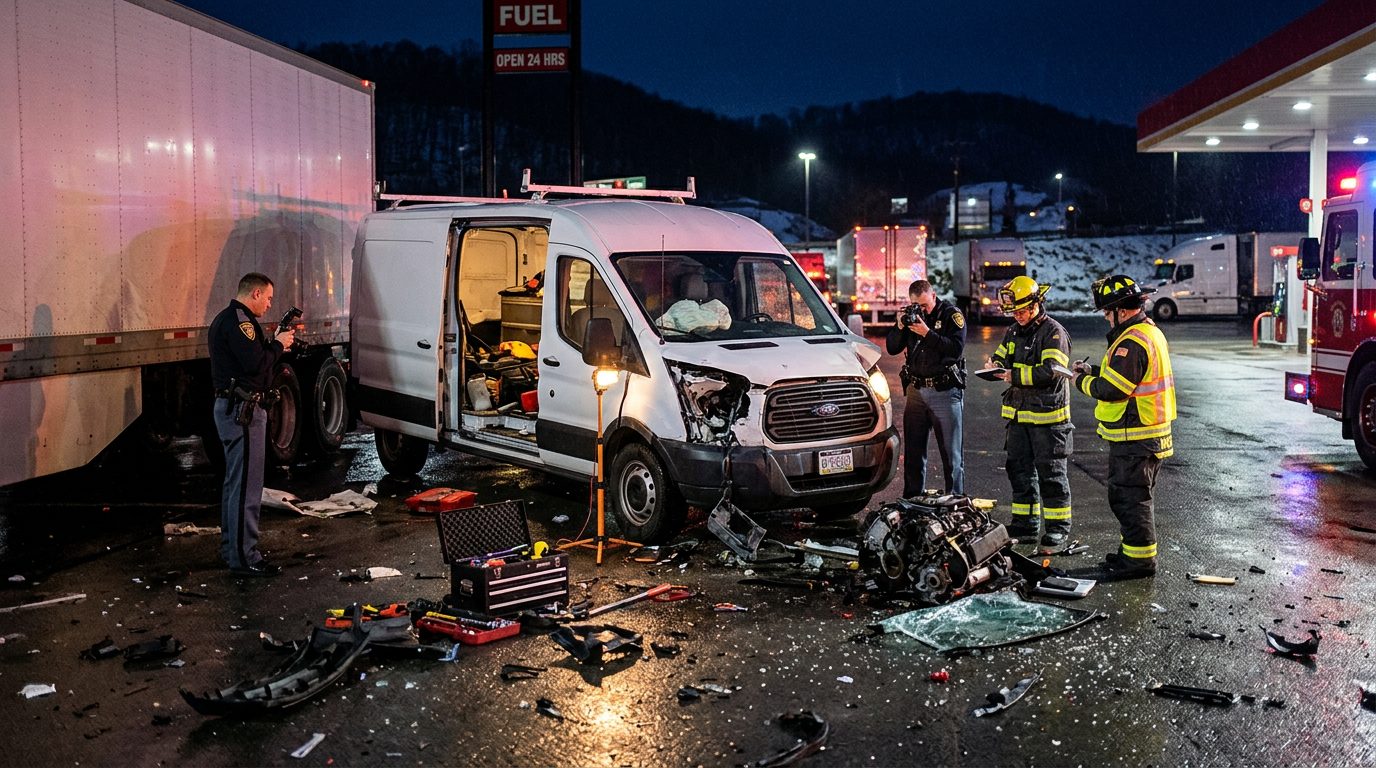
Work Van Crashes in West Virginia
Hurt in a Work Van Crash? Know What to Tell Your Employer
A calm, practical guide to reporting the crash, protecting your health, and keeping records that matter if you need them later.
Published November 13, 2026
A crash in a work van can leave you hurt, shaken, and unsure what to say to your boss. Here is the short answer. Report the crash to your employer promptly, stick to the facts you saw, and describe any injury you noticed, even a minor one. Then notify the other people and agencies that apply. This guide covers what to tell your employer after a work van crash in West Virginia, who else needs to know, and how to keep records that help later.
What Happens First After a Work Van Crash in West Virginia
Get medical care first, then deal with the scene and the paperwork. Some injuries, especially head injuries, may not show symptoms right away. Get checked by a medical provider even if you feel fine.
If your van is a commercial motor vehicle under federal rules, testing may be required after the crash. Federal rules also say that necessary medical care should not be delayed for testing. See federal post-accident testing rules.
A crash in a company van can differ from a personal car accident. The trip may be work-related. In some crashes involving a commercial motor vehicle that requires a commercial driver’s license, West Virginia law limits the noneconomic damages recoverable against an “employer defendant,” which can include the employer of the person operating the vehicle, and exceptions apply. See W. Va. Code § 55-7-32. See W. Va. Code § 55-7-32. In injury or wrongful death cases involving a commercial motor vehicle that requires a commercial driver’s license, this law limits noneconomic damages against an “employer defendant”: the vehicle’s owner, the employer of the person operating it, or any other person or entity that owns, leases, rents, or otherwise holds or exercises legal control over the vehicle or its operator, with exceptions. See W. Va. Code § 55-7-32. See W. Va. Code § 55-7-32. Keep the reporting steps in order, and keep your facts clear.
If you were hurt in a work van crash and aren't sure what to report next, we offer a free case review, confidential and with no obligation to continue. Talk it through with Big Bubba — the first case review is free, confidential, and carries no obligation.

Should You Tell Your Employer About the Crash?
Yes, in most cases you should tell your employer about the crash promptly. Your employer may require a written accident report, even for a minor crash. Following its steps keeps the record clear.
Prompt notice also helps if an injury appears days later. An early report shows when and where the crash happened.
If your van falls under federal testing rules, a driver generally must not use alcohol for eight hours after the crash. The driver must also avoid alcohol until a required test is given, whichever comes first. See 49 C.F.R. § 382.209.
Reporting the crash is not the same as deciding who was at fault. You can report what happened and let the investigation work through the rest.
How to Tell Your Boss About a Work Van Accident
Tell your boss the facts. Share the date, the time, the location, the van involved, who was in it, and any injuries you noticed. Keep it short and plain.
A simple statement could sound like this: “The company van and I were in a crash at about 2 p.m. on the county road by the job site. A coworker was in the passenger seat. My neck hurts, and I want to get checked out.”
Avoid guessing. Don’t say “it was my fault” or “the other driver ran the red light” unless you saw it clearly. Don’t say you are fine if you are not.
West Virginia uses modified comparative fault, so fault is measured in percentages. Under W. Va. Code § 55-7-13c, a plaintiff’s fault bars recovery only if it is greater than the combined fault of all other persons responsible for the damages. Guesses about fault can create problems later, so stick to what you saw.
Ask for the company’s written accident report form. Fill it out, keep a copy of what you submit, and note the date you sent it.
What Not to Say When Reporting Your Injury for Workers’ Compensation
Describe your symptoms accurately, including ones that seem minor. Workers’ compensation is the system many workers use for injuries on the job. The details you give early can matter later.
Don’t minimize your injuries. Saying “it’s just a bruise” when you’re not sure can cause trouble if pain grows over several days. Report new symptoms as they develop, such as headaches, numbness, or back pain.
Don’t exaggerate, either. Describe what you feel, where you feel it, and how it affects your work. Accurate, consistent reports help everyone involved.
Don’t speculate about the other driver’s conduct or how fast anyone was going. Describe only what you saw and felt.
If you were driving a passenger vehicle and were not wearing a seat belt, West Virginia law generally limits how that fact can be used. Evidence of not wearing a belt generally cannot be used to show the driver was negligent. It may be admissible to show it made injuries worse, under conditions the statute sets out. See W. Va. Code § 17C-15-49a.
Who Else Needs to Know: Police, Insurers, and Fleet Management
Notify the police if an officer responds to the scene. Let your fleet manager or safety officer know right away, too. The fleet manager may handle the van’s insurance claim, so the company needs your facts quickly.
Ask the responding officer for the report number and the agency’s name. Those details help you request the crash report later.
Other drivers’ insurers may contact you. Some insurers may dispute a claim. Write down the adjuster’s name, company, and claim number. Keep your answers short, and don’t give a recorded statement without thinking it through first.
West Virginia limits early settlement contact. For twenty days after an injury, while you are a hospital inpatient or partially or totally unable to engage in your usual trade, profession or occupation, the statute generally bars anyone from negotiating a settlement or seeking a release from you. See W. Va. Code § 55-7-11a. Under W. Va. Code § 55-7-11a, a settlement, release of liability or statement obtained in violation of that rule may be disavowed by the injured person at any time within one hundred eighty days from the date of the personal injury, by executing a written statement of disavowal and forwarding a copy of it to the person who violated the section. If any consideration paid for the settlement or general release is repaid or returned to the person who paid it at the time the copy is forwarded, the settlement, release or statement may not be admissible in evidence for any purpose in any court or other proceeding relating to the personal injury.
Property Damage to the Work Van and Your Personal Items
Photograph the van, the scene, and any damaged personal items before anything is moved. Take wide shots and close-ups. Include damage to doors, bumpers, and windows, and to items like a phone, tools, or a bag in the cab.
Report the damage to your employer, too. The company can route the van claim to the correct insurance policy, so ask who handles it. Save any repair estimate or invoice you receive.
If you suspect a mechanical problem, such as brakes, steering, or a tire failure, write down what you noticed. Tell your employer about it as well. Federal guidance describes employer duties to maintain safe equipment and train workers. See OSHA employer responsibilities.
Not sure what your next step is?
Talk it through with Big Bubba — the first case review is free, confidential, and carries no obligation.
Keeping Your Own Records After a Work Van Crash
Start a written log on the day of the crash. Record symptoms, appointments, missed work, and every conversation with your employer or an insurer. Include the date, the person’s name, and what was said.
Keep everything in one folder, on paper or digital. Include the accident report copy, photos, medical bills, discharge papers, prescriptions, and repair estimates.
Request copies of your medical records from each provider. Ask for visit notes and imaging reports so you have a complete picture of your care.
Write your notes in your own words, and keep them accurate. A log that matches what you told your employer helps show a clear timeline. Depending on the facts, these records may matter later.

Protecting Your Claim After a Work Van Crash
If you’re unsure what to say to a supervisor or what to file next, you don’t have to work through it alone. Many workers in this position are dealing with pain, missed shifts, and a van that is still in the shop.
We handle car, truck, and commercial vehicle accident claims. We serve injury victims across West Virginia.
If you were hurt in a work van crash, contact us for a free case review. It is confidential, and there is no obligation to continue.