
Truck Accident Claims | West Virginia
Know What Comes Next After a Truck Crash in West Virginia
A truck accident claim moves through several stages. Learning what each one involves can help you plan your next steps with a clearer head.
Published November 17, 2026
If a commercial truck hurt you or someone you love, you likely want to know what happens next and how long it takes. A truck accident claim timeline in West Virginia moves in stages, from medical care and the crash report to investigation, a claim, and possibly a lawsuit. Wrongful death actions under W. Va. Code § 55-7-6 must be commenced within two years after the death of the deceased person, subject to the provisions of section eighteen, article two, chapter fifty-five, and the statute does not apply to actions for deaths occurring before July 1, 1988.
Timing varies by case. The stages can overlap or repeat, and the deadlines below are the ones that most often control timing.
Truck Accident Claim Timeline at a Glance
A truck accident claim usually moves through five stages: medical care and reporting, evidence preservation, insurer contact, investigation and demand, and then settlement or a lawsuit. Here is the sequence with the deadlines marked.
- Day 0: Get medical care and report the crash. West Virginia requires the driver of a vehicle in a crash resulting in injury or death of any person, or total property damage of $1,000 or more, to immediately give notice by the quickest means: to local police if the crash is within a municipality, otherwise to the county sheriff or the nearest State Police office.
- First 20 days: If you are in the hospital or cannot work, the law generally bars anyone from negotiating a settlement with you during this window. W. Va. Code § 55-7-11a
- Within 24 hours after the investigation ends: The officer must complete the crash report.
- Under W. Va. Code § 55-7-11a, a settlement, release of liability or statement obtained within twenty days of a personal injury, while the injured person is an inpatient in any hospital or partially or totally unable to engage in his or her usual trade, profession or occupation, may be disavowed by the injured person at any time within one hundred eighty days from the date of the personal injury by executing a written statement of disavowal and forwarding a copy of it to the person who violated this section, in which event the settlement, release or statement may not be admissible in evidence for any purpose in any court or other proceeding relating to the personal injury, if any consideration paid is repaid or returned to the person who paid it.
- Months 2 to 12: Records are gathered and a demand is presented. The length varies.
- Two years: The general deadline to file most injury lawsuits. For wrongful death, the two years run from the date of death.
- Resolution: The claim ends in settlement or trial. The timing varies.
If a commercial truck left you hurt and insurers are calling, you may have a claim worth reviewing, and the firm offers a free case review. Talk it through with Big Bubba — the first case review is free, confidential, and carries no obligation.
Day 0 to Day 7: Medical Care, Scene Facts, and Reporting
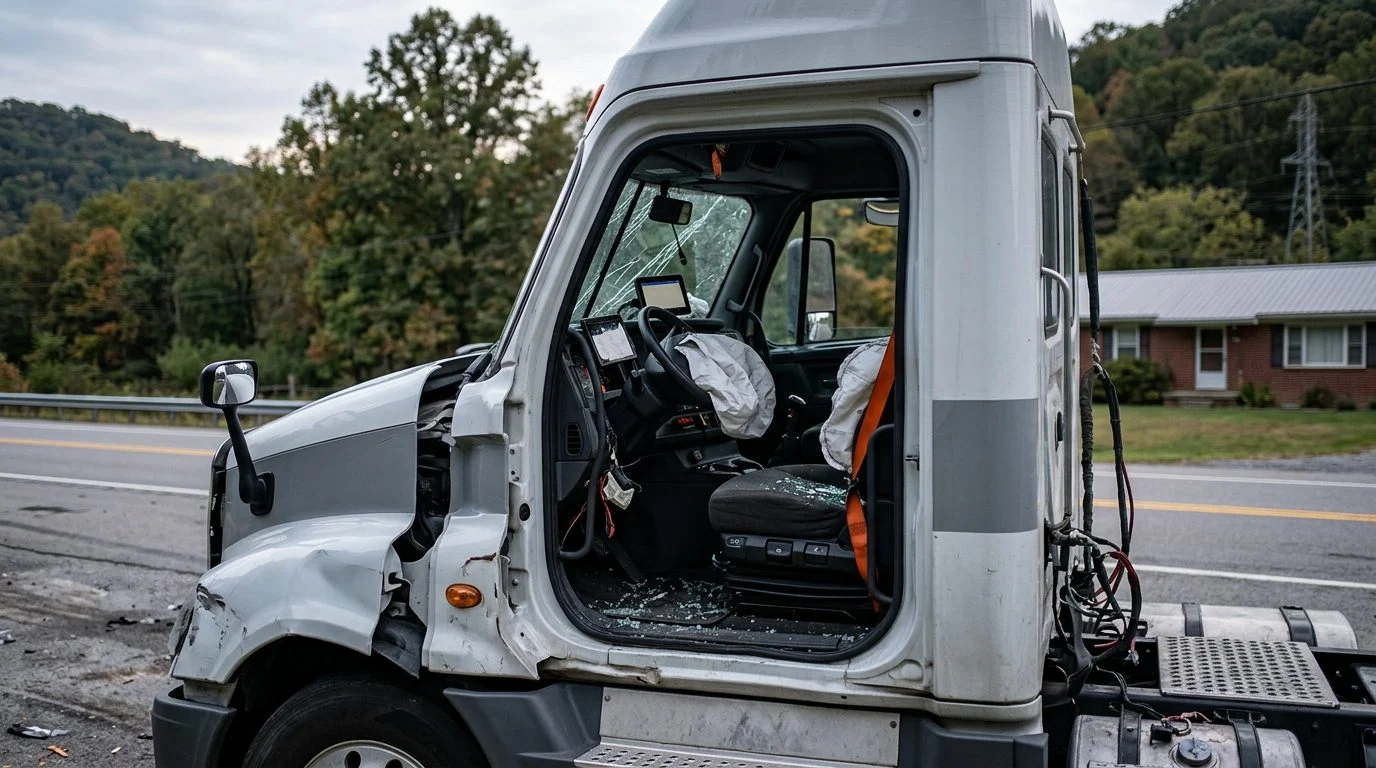
Medical care comes first, for your health and for the record of your injuries. Some serious injuries, including brain and spinal cord injuries, may not show symptoms right away. A prompt doctor visit helps document what happened.
If you can do so safely, note what you can at the scene. Write down the truck’s company name and unit number, the driver’s name, and the names and phone numbers of witnesses. Take photos of the vehicles, the road, and any debris.
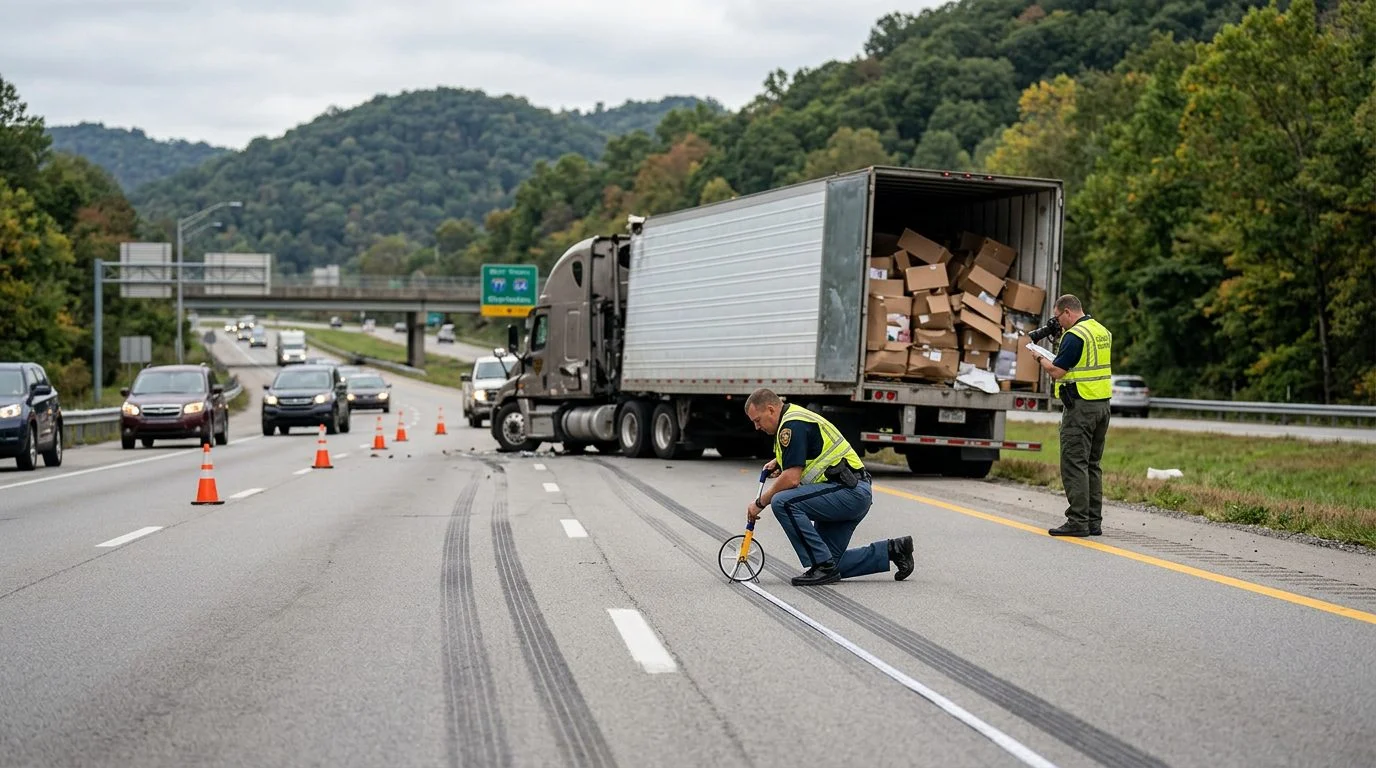
Reporting is required by law. A driver in a crash causing injury, death, or total property damage of $1,000 or more must immediately notify the local police if the crash occurs within a municipality, otherwise the county sheriff or the nearest State Police office. W. Va. Code § 17c-4-6 A driver in a crash involving injury or death, or total property damage of $1,000 or more, must immediately give notice of it to the local police, or to the county sheriff or nearest State Police office. The investigating officer must then prepare a report within 24 hours after finishing the investigation (W. Va. Code § 17c-4-7). The officer must also provide each party’s owner, operator, and insurance information, upon request, to each of the other involved parties and their insurance agents within 24 hours of the crash, at no cost, whether or not the accident report has been completed. W. Va. Code § 17c-4-7 If the investigation runs past 10 days, a preliminary report is due on the 10th day.
The crash report and the officer’s notes often become key evidence in a truck case. Ask the investigating agency for a copy as soon as it is available.
Weeks 1 to 8: Preserving Evidence and Notifying Insurers
Evidence in a truck case can be lost over time, so early preservation matters. Federal rules set minimum keep periods for trucking records. A motor carrier must keep a driver’s qualification file while the driver is employed and for three years after. 49 C.F.R. § 391.51
A preservation letter is a written request asking the company to keep the truck, its logs, maintenance files, and data. Its timing can affect what survives, since some records have short retention periods.
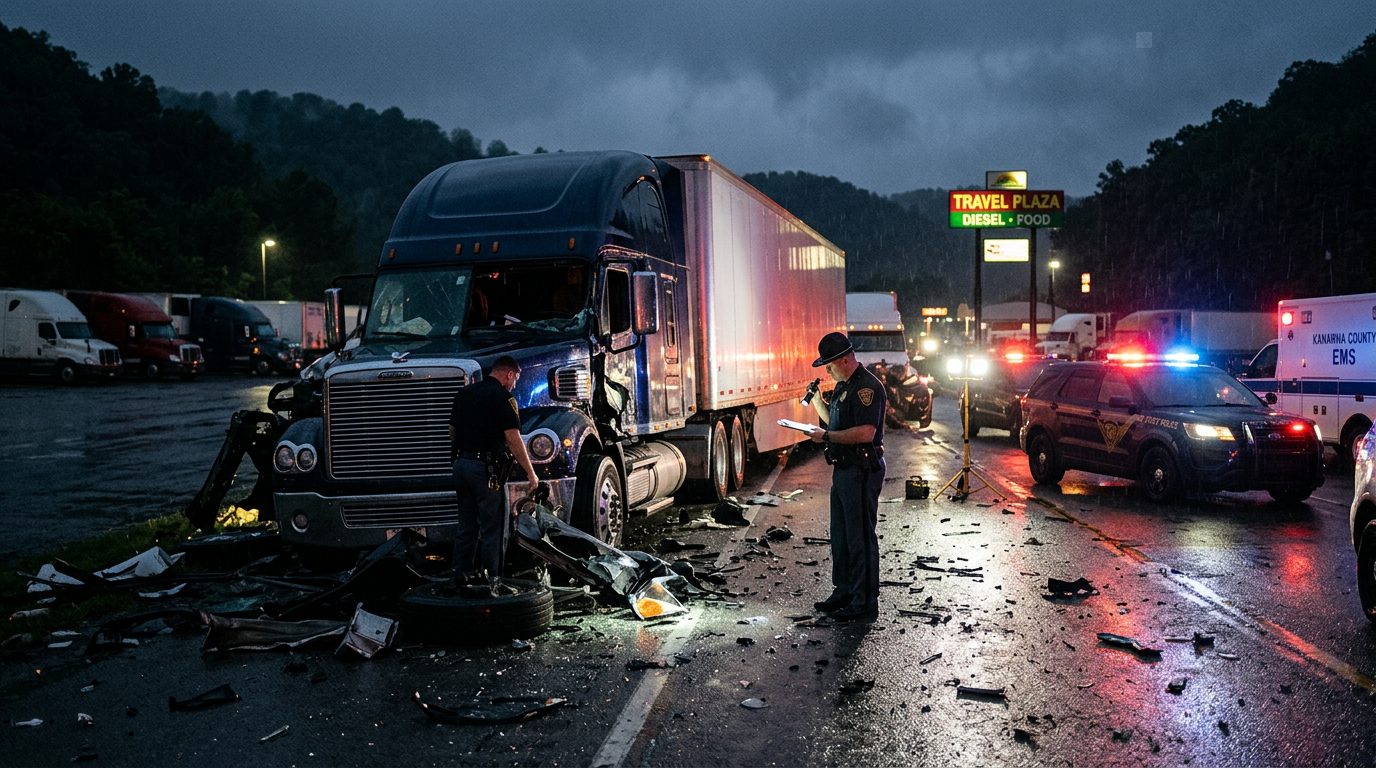
Federal testing rules also apply after certain crashes. The employer must test surviving drivers for alcohol and controlled substances as soon as practicable. Under federal rules, an employer generally must test each surviving commercial driver for alcohol and controlled substances after a crash involving a fatality. When someone immediately receives medical treatment away from the scene, or a vehicle has disabling damage and must be towed away, the employer must also test the driver if the driver receives a citation for a moving traffic violation arising from the crash within 8 hours (for alcohol) or 32 hours (for controlled substances) (49 C.F.R. § 382.303). 49 C.F.R. § 382.303 If an alcohol test is not given within two hours, the employer must record the reason.
Some insurers may dispute a claim. An early offer may not reflect medical care that is still ahead. Keep your account to basic facts. Think carefully before giving a recorded statement about injuries, and don’t sign a release without understanding what it ends.
Months 2 to 12: Investigation, Medical Records, and Demand
This phase often runs several months, though the length varies by case. It gathers medical records and bills, the crash report, the truck’s data and maintenance history, and proof of lost income. It also records how the injury limits daily life.
A demand package is the written claim sent to the insurer. It summarizes the injuries, the treatment, the losses, and the facts about how the crash happened. Its timing depends on how far treatment has progressed and how quickly records arrive.
Who may be responsible? For purposes of W. Va. Code § 55-7-32, an “employer defendant” includes the truck’s owner, the driver’s employer, and any other person or entity that owns, leases, rents, or otherwise holds or exercises legal control over the truck or its driver. W. Va. Code § 55-7-32 A claim can involve more than one party. The other driver’s insurer and the trucking company’s insurer may be different companies.
Fault can be shared. W. Va. Code § 55-7-13a A share of fault may reduce what can be recovered, which is why the facts of the crash matter.
Medical recovery may not be complete while a claim is being evaluated. A claim may need to account for future care when the medical picture is still developing.
West Virginia Filing Deadlines: When a Lawsuit Becomes Urgent
West Virginia generally allows two years to file a personal injury lawsuit. The clock generally starts when the right to sue arises, often at the injury. W. Va. Code § 55-2-12 Exceptions may apply, so confirm the date for your specific case as early as you can.
Wrongful death claims follow a similar window. Wrongful death actions are not governed by this general limit, which applies only to personal actions for which no other limitation is prescribed; a wrongful death action generally must start within two years after the person’s death (W. Va. Code § 55-7-6). It is brought by the decedent’s personal representative.
A deadline can pass while settlement talks are still going on. Talks with an insurer do not replace the need to track a filing date. Start tracking the date from the first day after the crash.
Litigation, Mediation, and Trial: What Comes After Filing
A lawsuit starts a court phase, and many cases settle at some point before trial. The complaint is filed, and the defendants are formally served and respond. Next comes discovery, when both sides exchange records and written questions.
Depositions, which are sworn statements taken outside court, may cover drivers and company representatives. Technical review by outside engineers or medical professionals may also be needed. Mediation, a meeting with a neutral third party aimed at reaching agreement, often happens before trial.
Each stage’s length depends on the court calendar, the number of parties, and how complex the medical and trucking records are. Some cases settle during discovery, and others go to trial.
How long does a truck accident lawsuit take?
There is no set length. The time depends on the court, the number of parties, the medical records, and whether the case settles.
Does West Virginia have a wrongful death deadline?
Yes. The state’s wrongful death statute generally requires the action to start within two years after the death (W. Va. Code § 55-7-6).
What should I avoid saying to an insurer?
Keep your account to basic facts. Talk with a lawyer before giving a recorded statement or signing a release.
Not sure what your next step is?
Talk it through with Big Bubba — the first case review is free, confidential, and carries no obligation.
How the Truck Crash Timeline Is Documented
If your truck crash has you in ongoing treatment, taking calls from an insurer, and watching the calendar, the next step is a free case review with the firm. The firm can look at the dates and facts of your crash and explain what applies to your situation. You can request a free case review at any point.
We serve injury victims across West Virginia, including Charleston, Huntington, Morgantown, Wheeling, Martinsburg, Parkersburg, Beckley, Clarksburg, Fairmont, and Weirton. The firm handles truck accident claims, commercial vehicle accidents, and wrongful death matters.