
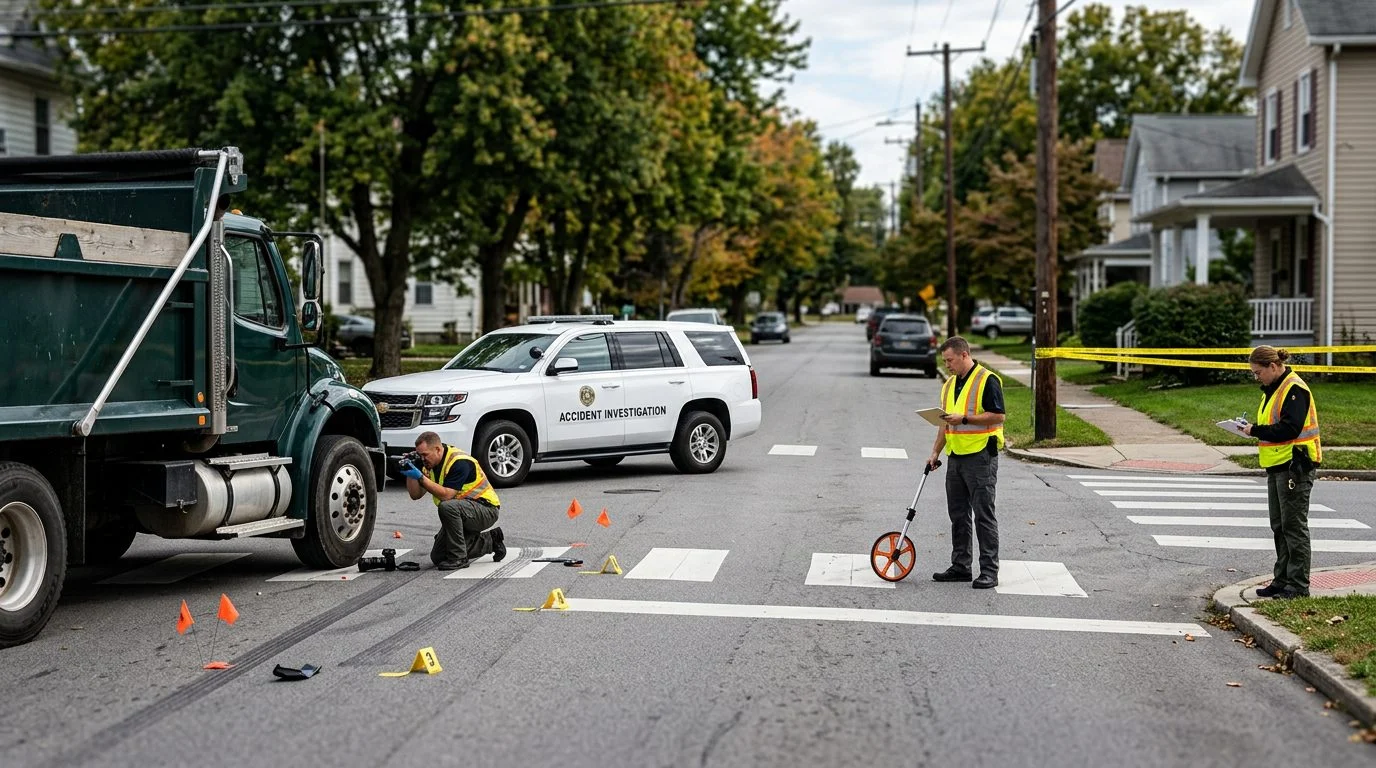
Truck Crash Injury Claims in West Virginia
Hurt in a Truck Crash? Talk With a West Virginia Brain Injury Lawyer
Brain injuries from a commercial truck collision can be hard to understand at first. We can help you sort through the medical, insurance, and legal questions in plain language.
Published November 9, 2026
A crash with a semi or box truck can leave a brain injury that changes how you think, work, and handle daily life. A truck crash brain injury claim can involve more people, more records, and more federal rules than a typical car crash claim.
This page explains how truck crash traumatic brain injury claims work in West Virginia, what they may cover, and how to start with a free case review, offered with no obligation to continue.
Why truck crash brain injury claims can be different from car crash claims
A truck crash brain injury claim often involves more potentially responsible parties and more records than a standard car crash claim.
Commercial trucks are often owned, leased, dispatched, and loaded by different companies. West Virginia law defines an “employer defendant” to include the truck’s owner, the operator’s employer, and others with legal control over the truck or driver. Which parties may be responsible can turn on who controlled the truck and its load, and possible candidates include the driver, the motor carrier, a leasing company, a maintenance contractor, or a cargo loading company.
Commercial trucks are generally subject to federal safety rules. For example, federal driver log rules require drivers to record their duty status. If a carrier or driver broke rules like these, that may be relevant to fault.
In some cases, brain injury symptoms may appear days or weeks after a crash. Headaches, memory problems, and mood changes may start later, so early medical documentation matters. Prehospital guidance from the Brain Trauma Foundation addresses field assessment of these injuries.
West Virginia uses a modified comparative fault rule. Under the state’s comparative fault statute, your recovery is generally reduced by your share of fault. It is barred only if your fault is greater than the combined fault of everyone else responsible.
If a semi or box truck crash left you with headaches or memory trouble that won't clear, you may have a claim, and we can review it with you in a free case review. Talk it through with Big Bubba — the first case review is free, confidential, and carries no obligation.

Who this page is for and where the firm serves
This page is for adults with a brain injury from a crash involving a semi, box truck, or other commercial vehicle. It is also for families who lost a loved one in one of these crashes.
The firm handles car accidents, truck accidents, commercial vehicle accidents, catastrophic injuries, traumatic brain injury, spinal cord injury, and wrongful death claims. We serve injury victims across West Virginia, including Charleston, Huntington, Morgantown, Wheeling, Martinsburg, Parkersburg, Beckley, Clarksburg, Fairmont, and Weirton. The firm represents people seriously hurt in crashes across West Virginia.
Brain injuries cover a wide range. A traumatic brain injury is an injury to the brain caused by an outside force, and automobile accidents can cause one. The firm handles brain injury claims that range from concussions with lasting symptoms to more severe injuries.
What a truck crash brain injury claim may cover
A claim may seek compensation for losses that the medical and work records support.
- Medical care, such as emergency treatment, imaging, visits with other doctors, rehabilitation, and medication.
- Cognitive testing, such as neuropsychological evaluation, which can help document memory, attention, and processing changes.
- Lost income and reduced ability to work, if the injury limits your current job or other work.
- Help needed at home, changes to daily activities, and strain on family relationships.
- Pain, suffering, and loss of enjoyment of life, which are judged differently in each case.
In a wrongful death case, West Virginia law lets the jury consider sorrow, mental anguish, and solace. It also covers lost income and services, medical and hospital expenses, and reasonable funeral expenses. Damages are distributed to eligible family members as the statute provides.
Medical and work records from before the crash can help show what changed afterward.
Evidence that matters most in truck crash brain injury cases
The most useful evidence usually includes the crash report, driver records, and the truck’s electronic data. These records work best together, because a driver log can be compared with the crash report and the medical timeline.
- The police crash report, which lists the parties, witnesses, and the officer’s observations.
- Electronic logging device data and hours-of-service records, which may show a driver’s schedule before the crash.
- Engine control module and event data recorder information, which may show speed, braking, and throttle position.
- Driver qualification files, testing records, and training history. Federal rules generally require carriers to keep a driver qualification file while the driver works for them and for three years after.
- Maintenance and inspection records, including brake and tire history.
- Dashcam footage, cargo paperwork, and witness statements, where they exist.
- Medical records that link symptoms to the crash, including early emergency room notes.
A preservation letter asks the carrier to keep these records. Some records have short minimum keep periods. For example, federal driver log rules require carriers to keep duty-status records for at least six months, so early requests matter.
After certain serious truck crashes, federal testing rules generally require the employer to test surviving drivers for alcohol and drugs as soon as practicable.
How working with the firm typically goes
Working with the firm usually starts with a free case review and then moves through records, parties, and medical documentation.
- Free case review. You describe the crash, your injuries, and your treatment. The review is offered with no obligation to continue.
- Records. The firm reviews the crash report and requests carrier, driver, and medical records.
- Parties. The firm identifies who may be responsible and may send preservation requests to carriers and insurers.
- Medical documentation. The firm works with treating providers to document the brain injury over time.
- Negotiation or lawsuit. The firm evaluates any settlement talks with insurers and, if needed, prepares a lawsuit.
How long each step takes depends on medical recovery, the number of parties, and how quickly records arrive.
West Virginia generally allows two years to file a personal injury lawsuit, and exceptions may apply. Timing should be reviewed early. See the West Virginia limitations statute.
Common questions about truck crash brain injury claims
Here are short answers to questions people often ask after a truck crash.
Should I talk to an insurer right away?
Some insurers may ask for a recorded statement soon after a crash. A lawyer can handle those communications for you.
Can a claim still exist if my symptoms started days later?
Brain injury symptoms can appear days or weeks later. Medical records that show the timeline may be relevant.
Is a concussion enough for a claim?
Each brain injury is reviewed based on the medical records and on how symptoms affect daily life and work.
What if the truck driver did not work for the company?
Responsibility can depend on the relationship between the driver, the carrier, and others. The facts of each crash are reviewed.
Can a family bring a wrongful death claim after a truck crash?
Generally, yes. The claim shall be brought by the personal representative of the deceased person’s estate, and it must be commenced within two years after the death, subject to the provisions of section eighteen, article two, chapter fifty-five. Under W. Va. Code § 55-7-6, the wrongful death rules in that section do not apply to deaths that occurred before July 1, 1988. See the West Virginia wrongful death statute.
Not sure what your next step is?
Talk it through with Big Bubba — the first case review is free, confidential, and carries no obligation.

Next steps after a truck crash brain injury
If a truck crash left you or someone you love with a brain injury, early facts matter. Gather a few items before you talk with the firm:
- The crash report number, if you have one.
- Names and phone numbers of anyone who saw the crash.
- A list of medical providers you have seen since the crash.
- Simple, dated notes on symptoms, missed work, and daily tasks that are harder now.
Keep those notes simple and dated. They can help show how symptoms changed over time. Tell us what happened in your crash, and we can talk through the facts in a free case review. Contact the firm to get started.