
Car Accidents | West Virginia
Get Your West Virginia Car Accident Crash Report
Knowing which agency responded to your crash and how to ask for its report can make the next steps much clearer.
Published November 20, 2026
Someone you care about was just in a car accident, or you are the one holding the paperwork now. Either way, you probably want the official crash report and a clear path to getting it.
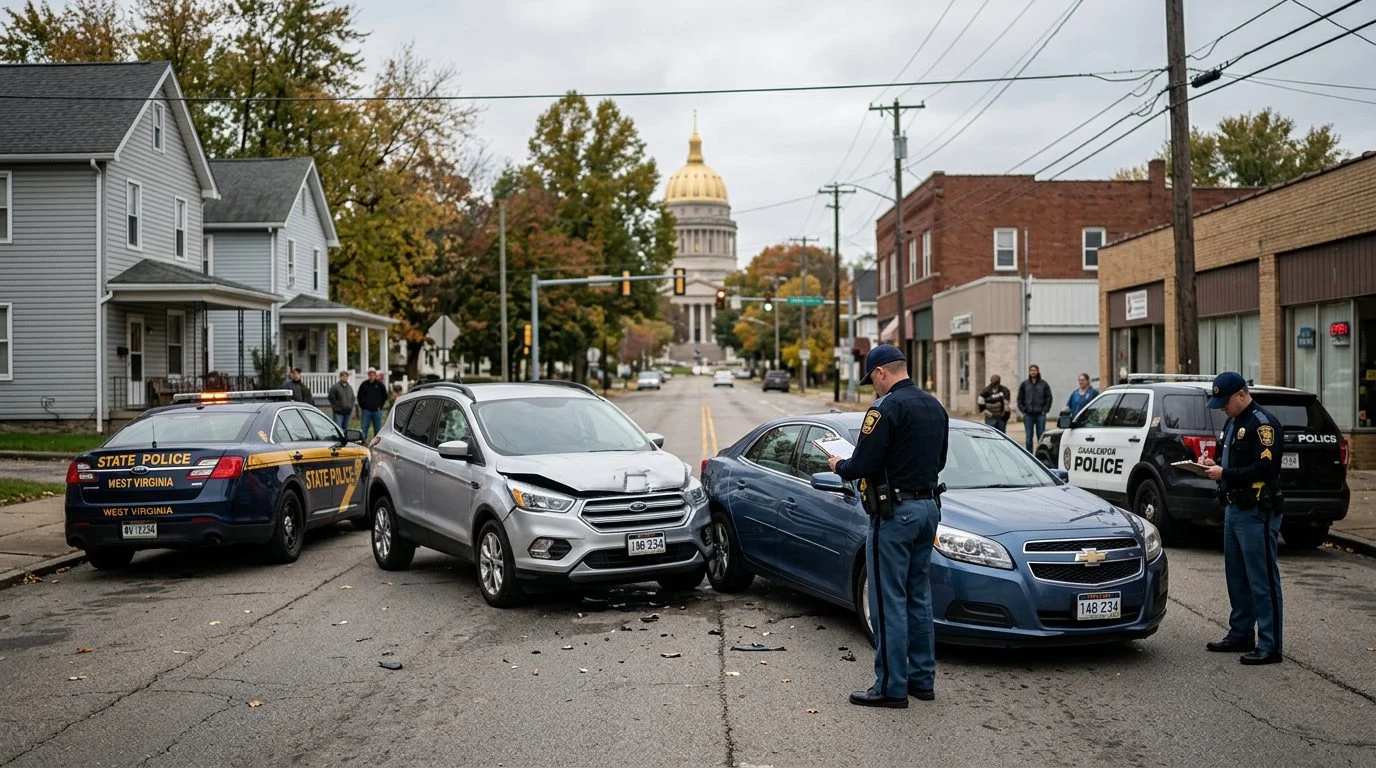
A crash report from a car accident in West Virginia usually comes from the agency that responded to the scene. That is the State Police, a county sheriff’s office, or a municipal police department. Start your request there.
What a Crash Report Is and Why It Matters
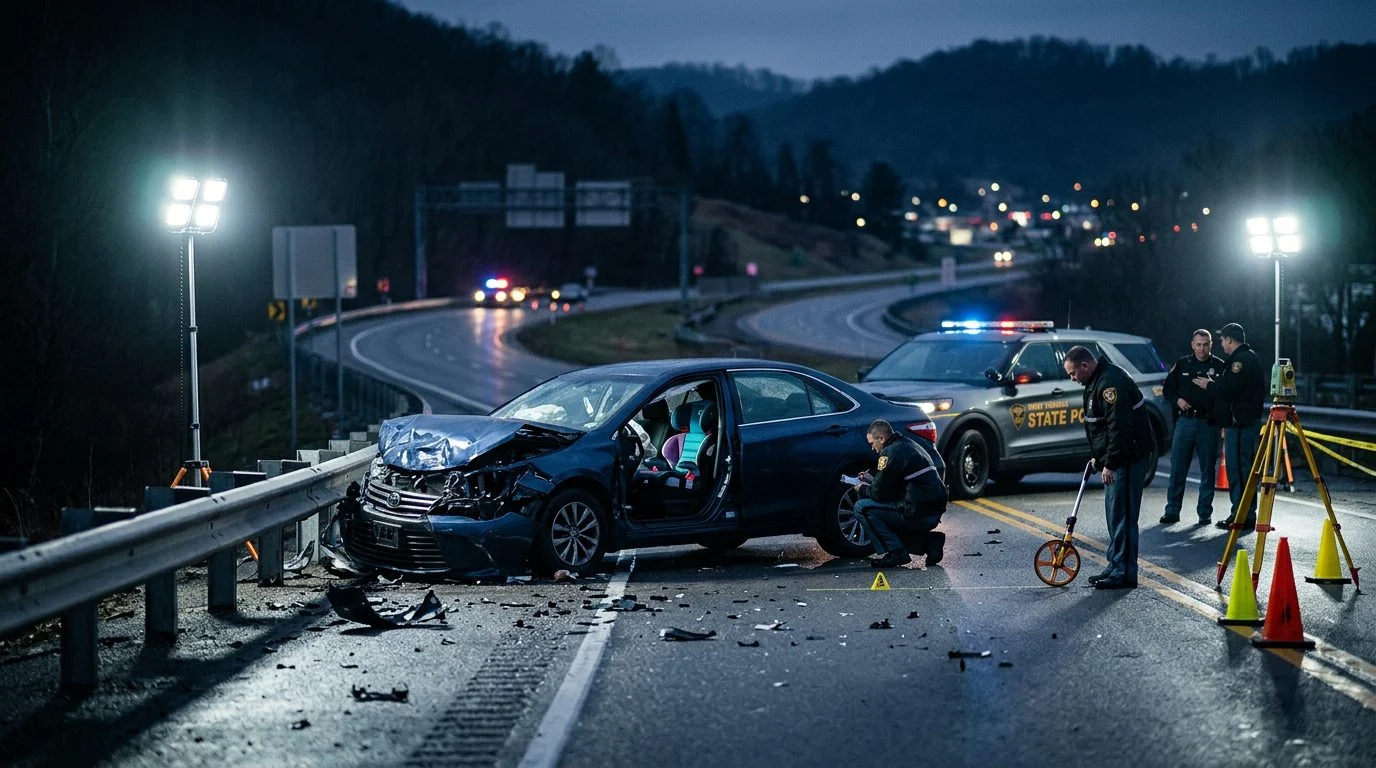
A crash report is the official record an investigating officer prepares, electronically or in writing, after a motor vehicle crash on a public street or highway in West Virginia that results in bodily injury, death, or total property damage to an apparent extent of $1,000 or more. It sets out what the officer found and documented at the scene.
Reports commonly record the date, time, and location of the crash. They also list the vehicles and drivers involved, and any passengers or witnesses the officer noted. The officer’s observations and narrative usually appear too.
West Virginia law sets out what a report must cover. Under W. Va. Code § 17c-4-9, the report must give enough detail to show the cause, the conditions at the time, and the people and vehicles involved.
Many people are surprised that the report is a starting point, not a final answer. It is one record among several. Medical records, photos, repair estimates, and letters from insurers all tell part of the story. On its own, a report may not settle questions about fault.
If someone you love was hurt in a crash and you are sorting out what comes next, you do not have to do it alone. Reach out to us for a free case review. Talk it through with Big Bubba — the first case review is free, confidential, and carries no obligation.

Which Agency Prepares the Report
The responding agency depends on where the crash happened. That agency’s officer wrote the report, so requests start there.
Inside a city or town, the local police department is usually the agency involved. Outside city limits, the county sheriff’s office or the West Virginia State Police often responds. The notice rule is in W. Va. Code § 17c-4-6. It says a driver involved in a crash resulting in injury or death, or total property damage of $1,000 or more, must immediately notify the local police department if the crash occurs in a municipality. Otherwise, the notice goes to the county sheriff or the nearest State Police office.
Not sure which agency came? Check the officer’s card, the paperwork exchanged at the scene, or any ticket or case number. The date and road name also help narrow it down.
Write down the officer’s name, badge number, and any report or case number you were given. These details make the request faster. Many people skip this step and lose days guessing which office to call.
How to Request a Copy of the Crash Report
Contact the records division of the agency that responded. Most agencies take requests by phone, by mail, or in person. Some also offer an online request option.
Have these details ready: the date and approximate time, the location, the drivers’ names, and the report or case number if you have one. The more precise you are, the easier it is for staff to find the file.
Agencies may ask for a request form, a photo ID, or a statement of how you are connected to the crash. Requirements can differ by agency, so ask what it needs before you go.
Some agencies charge a copy fee set by the agency itself. Ask for the current amount and the accepted payment methods, since both can change. Insurance details on the report are easier to confirm when you know how state rules work. The West Virginia DMV consumer insurance information page explains state coverage requirements.
Timing also matters. Under W. Va. Code § 17c-4-7, an officer who investigates a crash on public streets or highways that involves bodily injury, death, or total property damage of $1,000 or more must prepare the report within 24 hours after finishing the investigation. The officer must also give each involved party’s owner, operator, and insurance information to the other involved parties and their insurance agents within 24 hours of the crash, on request and at no cost, whether or not the report is complete.
How Long It Can Take and Checking the Report for Accuracy
Timing varies, so ask the agency for the report’s current status. The 24-hour rule applies after the investigation is finished, and investigations can run longer.
Every case turns on its own facts. If the officer cannot finish within 10 days, a preliminary report goes to the Division of Highways on the 10th day. The final report follows within 24 hours of completing the investigation, as W. Va. Code § 17c-4-7 explains.
Once you have the report, read it closely. Check spellings, names, the vehicle year, make, and model, and the identification details. Confirm the insurance information, the date and time, and the narrative of what happened. Note anything that looks wrong.
Questions about errors usually go to the agency that prepared the report. Ask how that agency handles correction requests, since the process may vary. Put your request in writing when you can.
Save the original file, a copy, and a written log. Record every request, call, and response, with the date and the name of the person you spoke with. A common mistake is trusting an old copy or waiting weeks before asking for the report.
Keeping the Crash Report With Your Other Records
Keep the crash report in one folder with the rest of your crash records. Good organization makes a claim easier to follow later.
Put the report next to photos from the scene, medical bills and records, repair estimates, and letters from insurers. Label each item with its date. Brain and spinal injuries can change daily life for a long time, so keep every medical record too.
Keep track of deadlines. West Virginia generally allows two years to file a personal injury claim, and exceptions may apply. The rule is in W. Va. Code § 55-2-12. Because exceptions exist, the date for your situation depends on the facts.
Fault questions can be complicated. In a rear-end collision, for example, fault may depend on braking, following distance, and other facts of the crash. If another driver was at fault, the report may help identify that driver, the vehicle, and the insurer.
If You Are Gathering Information for Someone Else
If you are collecting the report for someone else, you are not alone in this task. Many people request crash records for a spouse, parent, or friend who is still recovering.
The injured person may need to authorize some requests. Ask the agency what it requires from you and from them. Get the answer in writing if you can.
The driver involved in a crash resulting in injury to or death of any person, or damage to any vehicle driven or attended by any person, must, if physically able, give the person struck or the driver or occupant of the vehicle collided with his or her name, a valid telephone number, the year, make, model and last four digits of the vehicle identification number, and proof of security and financial responsibility. Under W. Va. Code § 17c-4-3, a driver may also give that information to the officer at the scene. If the injured person could not exchange details, the officer’s record may help fill those gaps.
We serve injury victims across West Virginia. We handle car accident, truck accident, and wrongful death claims. If the crash has left someone you love hurt, and you are weighing what comes next, you can reach out to us for a free case review.