
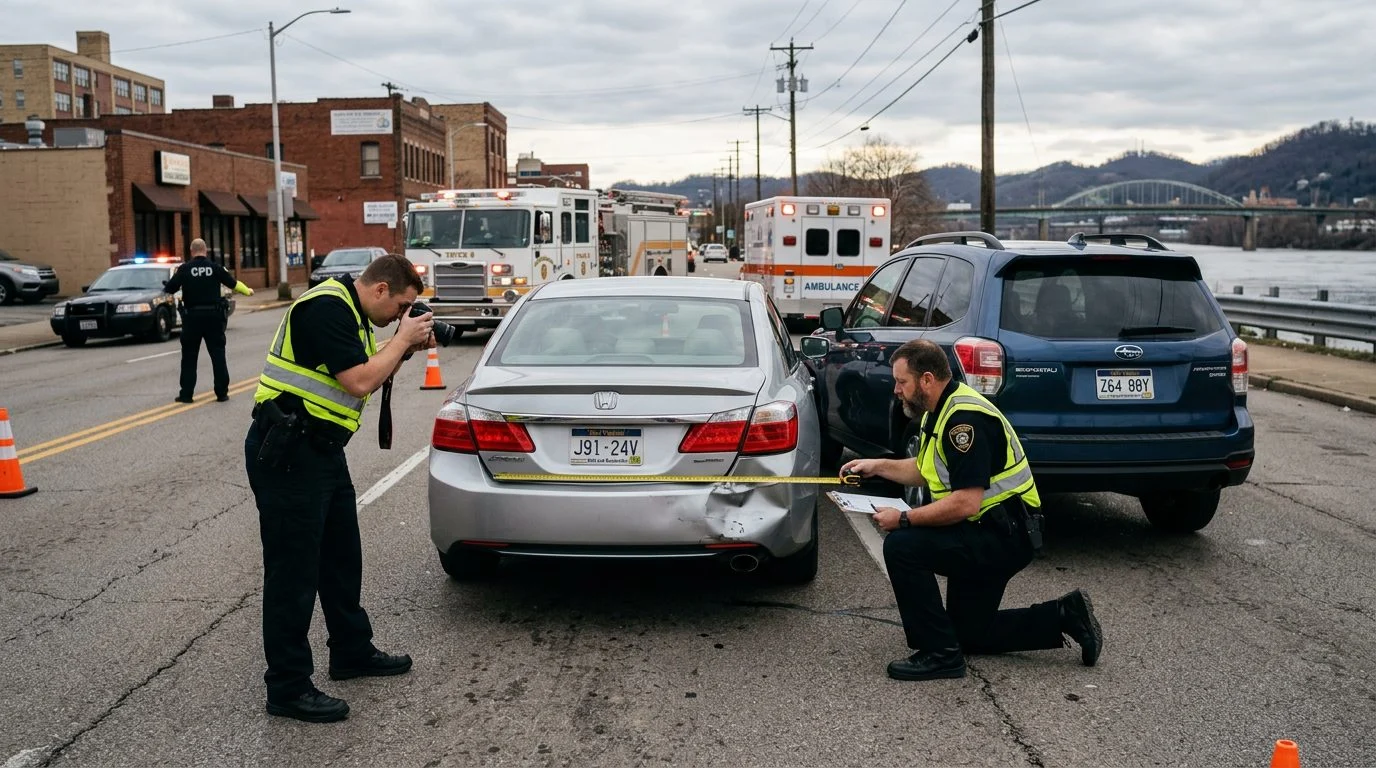
Car Accidents | West Virginia
Hit From Behind in West Virginia? Here's How Fault Is Usually Sorted Out
A rear-end crash can leave you shaken, hurt, and unsure what happens next. Here is a plain-language look at the questions that often come up and the steps that can help.
Published November 20, 2026
Someone hit the back of your car, and now you’re trying to work out who is usually at fault. That’s stressful, especially if you’re hurting or worried about the damage. In most rear-end crashes, the driver who hits from behind is looked at first. That is a starting point, not a final answer.
This page explains how fault is usually sorted out in West Virginia, when the driver in front may share the blame, and what evidence may help show what happened.
Why the Driver Who Hits From Behind Is Often Looked At First
The driver who hits from behind is often looked at first, because drivers are generally expected to keep a safe following distance and stop in time.
Picture a common case. Traffic slows at a stoplight. The car behind doesn’t stop in time and hits the car ahead. Many rear-end crashes look like this, with one vehicle striking the back of another after a sudden slowdown or while traffic is stopped.
Some people assume the car behind is always to blame. That’s not quite how the analysis works. The following driver controls the gap between the two cars, so the early questions usually focus on speed, attention, and how far back that driver was. Was the driver watching the road? Did they have room to stop? Those questions often shape the first picture of the crash.
Driver attention matters here too. Under W. Va. Code § 17c-14-15, a driver must exercise due care and may not engage in actions involving a phone or other device that distracts them from safe operation of the vehicle. If a following driver was looking at a screen, that fact may matter a great deal.
If you were hit from behind and are sorting out who was at fault, we serve people across West Virginia, and you can reach out to us for a free case review. Talk it through with Big Bubba — the first case review is free, confidential, and carries no obligation.

When the Driver in Front May Share or Carry the Blame
The driver in front may share or carry the blame if their own move helped cause the crash.
A front driver who stops suddenly with no clear reason may be part of the chain of events. The same is true of a driver who reverses into the car behind, changes lanes or cuts in too close, or has brake lights or other equipment that does not work as expected.
Being hit doesn’t end the question. A sudden or unsafe move by the front driver may be relevant even though the car behind made contact. Was the stop needed? Was there a hazard or a signal that explained it? Did the driver check the mirrors before moving? Those answers can come from the crash report, photos, and witness statements.
When an unsafe move is shown, it may move part of the fault off the trailing driver. Each crash is different, so the same facts can look very different on different roads.
Can Both Drivers Be at Fault in One Rear-End Crash?
Yes. More than one driver can contribute to the same crash, and blame can be divided between them. Fault is not always all or nothing.
Here is a simple example. A following driver looks at a phone and hits a car that stopped for a traffic signal. The front driver then brakes hard in a way no one could expect and pushes the car ahead into another lane. Both actions may have contributed. One driver may carry most of the blame and the other a smaller share.
Multi-car pileups work the same way. Each impact may be looked at separately, and the first car to be hit may carry different responsibility than a car struck later.
If a commercial truck struck from behind, federal rules may also matter. The Federal Motor Carrier Safety Regulations appear in Title 49 of the Code of Federal Regulations and can apply alongside West Virginia law.
How Comparative Fault Can Affect an Injury Claim in West Virginia
West Virginia generally uses a modified comparative fault rule (W. Va. Code § 55-7-13c). That means your own share of blame can reduce what you may recover.
Under W. Va. Code § 55-7-13c, your own fault generally does not bar recovery unless it is greater than the combined fault of everyone else responsible for the damages. If your share is less than that combined fault, your recovery is reduced in proportion to your degree of fault.
Fault is measured in percentages. W. Va. Code § 55-7-13a allocates liability in direct proportion to each person’s percentage of fault, and the total for one incident must equal either zero percent or one hundred percent. That is why the percentage assigned to each driver is often the central question.
The details can be technical. Exceptions and specific rules may apply, so the way fault is measured can matter a great deal in any claim.
What Evidence May Help Show Who Was at Fault
The police crash report is often the first record to request. Under W. Va. Code § 17c-4-7, the investigating officer must prepare a report within 24 hours after completing the investigation when a crash causes bodily injury, death, or total property damage of $1,000 or more.
The same statute requires the officer to provide owner and insurance information to each of the other involved parties, and to each party’s respective insurance agents, within 24 hours, upon request, at no cost. The agency that issues a copy of the report may charge a copy fee. Reports must also give enough detail to show the cause, the conditions, and the persons and vehicles involved, under W. Va. Code § 17c-4-9.
A report’s conclusions may not be final. Treat it as one piece of evidence, not the whole answer.
Other evidence may also help:
- Photos of both vehicles, the scene, skid marks, and damage patterns
- Dashboard camera footage from either car
- Nearby business or traffic camera footage, if it still exists
- Names and contact details for witnesses, and what they saw
- Phone records or vehicle event data, in some cases
Evidence can be lost over time. Footage may be overwritten, and scenes change quickly. Early preservation matters. Write your own notes on the order of events, the weather, road conditions, and what you remember while it’s fresh.
Why Insurers May Dispute Fault, and What to Watch For
Some insurers may dispute fault or argue that the injured driver shared the blame. Early statements can shape that debate, so wording matters.
Insurers may also ask for recorded statements early on. Be careful what you say. Stick to facts you are sure of, and avoid guessing about speed, distance, or who was at fault. Keep a record of every call, letter, and email, with dates and names.
The roles differ. The other driver’s insurer handles claims against that driver. Your own insurer’s role depends on your policy. The state’s Division of Motor Vehicles publishes consumer insurance information, including rules on required coverage and proof of insurance.
A third-party claimant has limited remedies. Under W. Va. Code § 33-11-4a, a third-party claimant may not bring a private cause of action or any other action against any person for an unfair claims settlement practice. The sole remedy is an administrative complaint with the Insurance Commissioner. Knowing these limits can help you plan how to respond to a dispute.
Not sure what your next step is?
Talk it through with Big Bubba — the first case review is free, confidential, and carries no obligation.
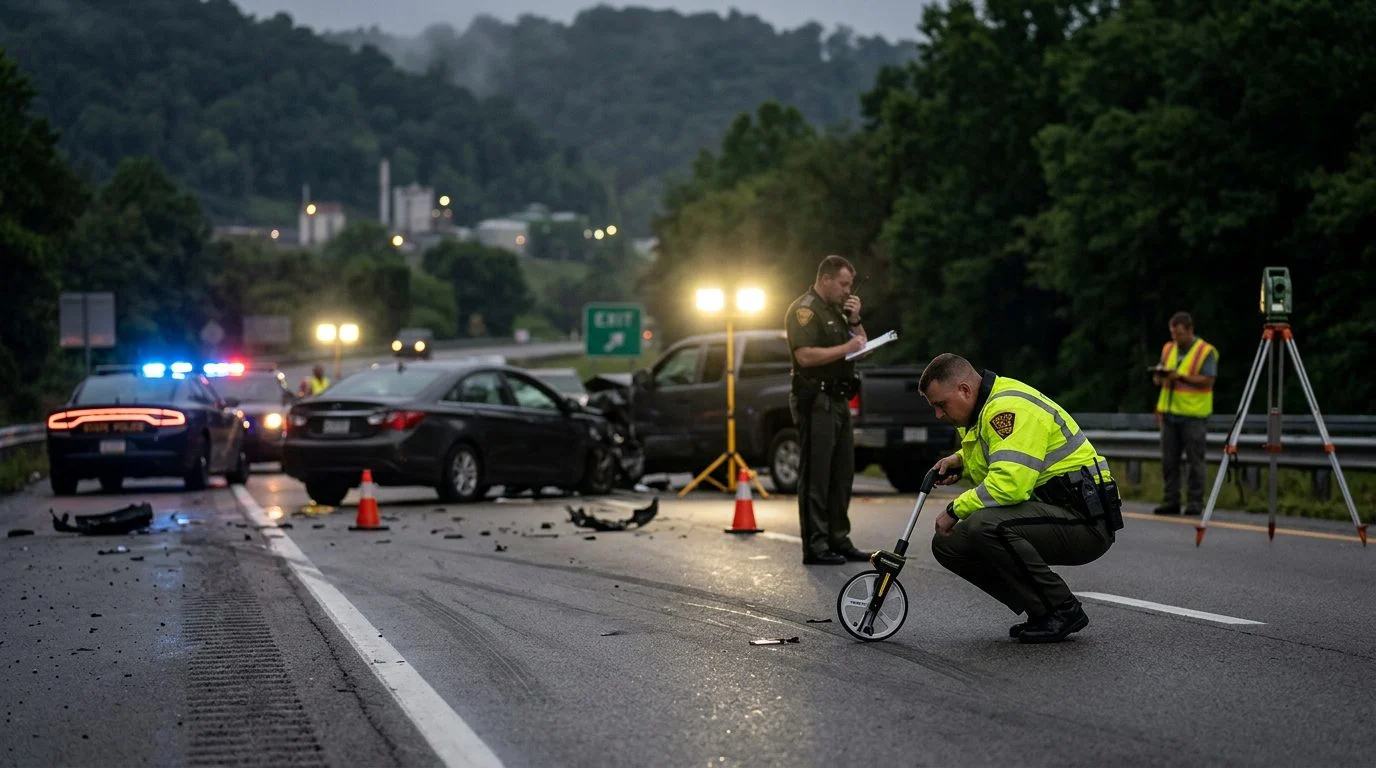
Head and Spine Symptoms After a Rear Impact, and Reaching Out
A rear impact can injure the head, neck, or spine even at lower speeds, and some symptoms may not appear for hours or days.
Symptoms that may appear later include headaches, dizziness, memory trouble, and neck or back pain. Mention any symptom you notice, even one that seems minor. Keep a simple log with each symptom, the date you noticed it, any doctor visits, and what you told the doctor.
Our pages on concussion symptoms and what to tell your doctor after a car accident may help you organize that information. For more on fault and claims, see our West Virginia car accident claims overview.
If you’re reading this after a rear-end crash, maybe on behalf of a family member, you may be dealing with pain, a police report, and calls from insurance adjusters all at once. You don’t have to sort out fault on your own. When you’re ready, reach out to us for a free case review of your situation. We serve people across West Virginia.