
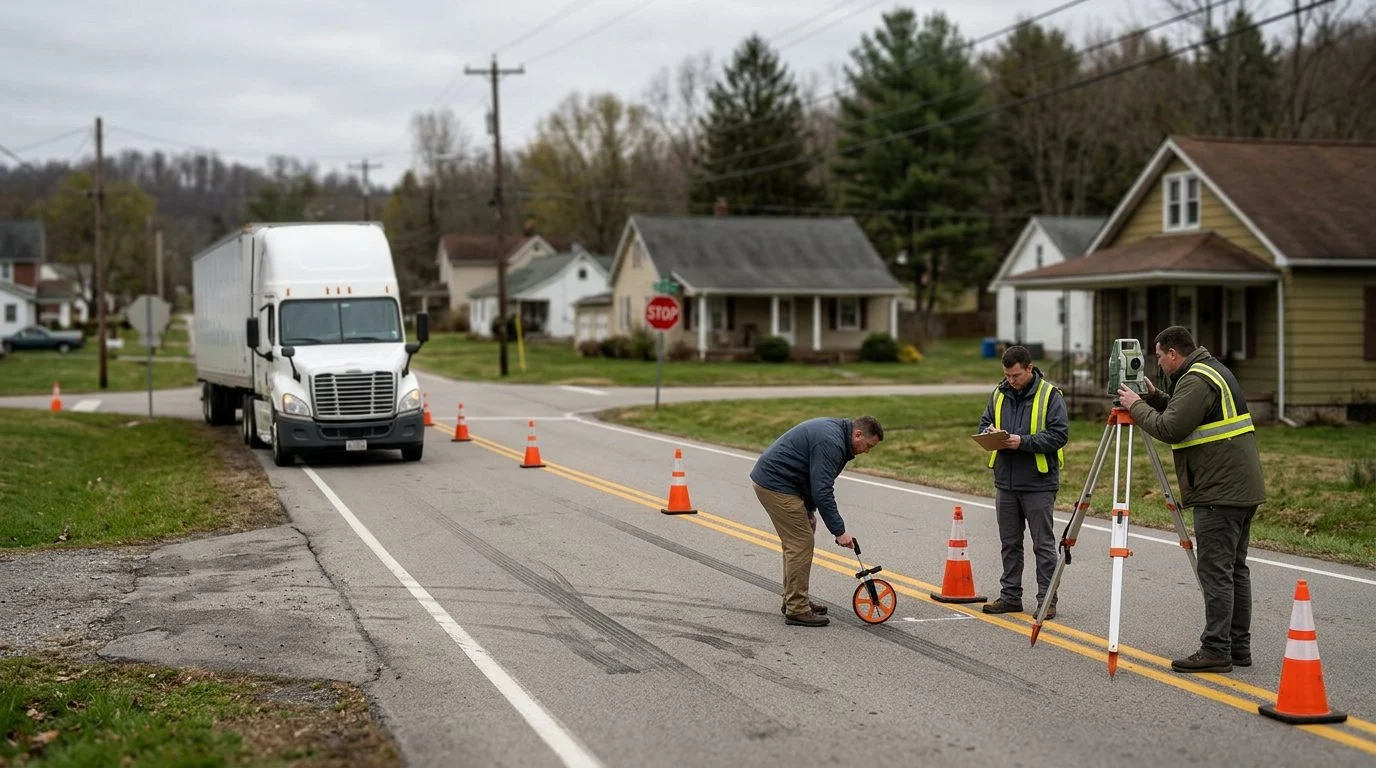
Truck Accident Injuries | West Virginia
Brain Injury From a Semi Truck Crash in West Virginia
A traumatic brain injury from a commercial truck collision can change your health, your work and your family's daily life. The firm represents injured people and families across West Virginia.
Published November 7, 2026
A brain injury from a semi truck crash is damage to the brain caused by a blow, a jolt, or a force that breaks through the skull. The injury can be serious even when the person feels fine at the scene. This guide explains how truck crashes cause these injuries, which symptoms need prompt medical care, and what steps may help protect a claim. The firm handles truck accident, commercial vehicle, catastrophic injury, and wrongful death cases.
What a Brain Injury From a Semi Truck Crash Involves
A brain injury from a semi truck crash is a traumatic brain injury, or TBI. The Administration for Community Living states that automobile accidents can cause traumatic brain injuries.
TBIs range from mild concussions to severe injuries. A concussion may improve with rest and medical care. Severe injuries can cause lasting changes in thinking, movement, or mood, and some need long-term care.
This page is written for several readers. Some are drivers or passengers who were hurt. Others are motorists who were hit or who were nearby. Many are spouses, adult children, or other family members helping someone who cannot manage alone.
The injury may not be obvious at the scene. A person can seem alert and still have a brain injury. Getting checked matters even when the person feels mostly fine.
Not sure what your next step is?
Talk it through with Big Bubba — the first case review is free, confidential, and carries no obligation.

How Semi Truck Crashes Can Cause Brain Injuries
Truck crashes can involve large forces. A loaded tractor-trailer is much heavier than a passenger car, so its impacts can be powerful. Common crash patterns include:
- Sudden stops, when a fast-moving truck hits a slower vehicle or stopped traffic.
- Jackknifing, when the trailer swings around the cab.
- Rollovers, which can throw occupants against hard interior parts.
- Vehicles leaving the roadway, where a hard impact can happen a second time.
A head can strike a steering wheel, window, door frame, or roof. Even without a direct hit, a sudden stop can move the head fast enough to injure brain tissue. Head and neck injuries often happen together, so a neck injury is a reason to ask about the head too.
The Federal Motor Carrier Safety Administration publishes national statistics on large truck and bus crashes. The IIHS state-by-state fatality data reported 256 motor-vehicle crash deaths in West Virginia in 2024.
Symptoms to Watch For and Why Prompt Medical Evaluation Matters
Headache, dizziness, confusion, and memory gaps are among the symptoms that may follow a head injury. Symptoms vary from person to person. Physical symptoms can include:
- A headache that lasts or gets worse
- Dizziness or loss of balance
- Nausea or vomiting
- Blurred vision
Thinking and mood symptoms can include confusion, memory gaps, trouble concentrating, irritability, sleep changes, and mood shifts.
Some symptoms may not appear until hours or days after the crash. Report any new symptom to a medical provider.
Get emergency care right away for warning signs. These include repeated vomiting, a headache that keeps getting worse, seizures, unequal pupils, or unusual drowsiness that makes the person hard to wake.
When you see a provider, say that the injury came from a truck crash. Accurate medical records help doctors and help any later claim.
Losses a Brain Injury Claim May Involve
A brain injury claim may seek compensation for medical bills, lost income, and changes to daily life. Common losses include:
- Emergency care, hospital stays, imaging, and neurology visits
- Rehabilitation, therapy, and medication, including future care a doctor recommends
- Lost wages now and reduced ability to work later
- Help with household tasks, driving, and personal care
- Strain on family relationships and emotional suffering
Family members may pursue losses when a loved one dies. West Virginia generally requires a wrongful death action to be brought by the decedent’s personal representative within two years after the death (W. Va. Code § 55-7-6).
Some commercial vehicle cases may face a statutory limit on noneconomic damages. That limit may not be available to an employer that lacks the insurance the statute requires (W. Va. Code § 55-7-32). Which losses apply to a given case may depend on the facts of that case.
Who May Be Responsible After a Truck Crash
Responsibility in a truck crash can extend beyond the driver to the company that employs or controls the truck. In some cases, questions can arise about whether an employer reasonably checked an employee’s background for the job, depending on the facts.
Other parties may also matter, such as companies involved in vehicle maintenance or cargo loading. If another driver was at fault, that driver’s share may matter too.
Under W. Va. Code § 55-7-13a, in an action for personal injury, property damage, or wrongful death, recovery is based on comparative fault, and each person’s liability is allocated in direct proportion to that person’s percentage of fault. Under W. Va. Code § 55-7-13c, an injured person’s fault generally does not bar recovery unless it is greater than the combined fault of everyone else responsible. Where the injured person’s fault is less than the combined fault of everyone else responsible, any recovery is reduced in proportion to that person’s degree of fault.
Some insurers may dispute a claim, including who was at fault. Keeping your own records can help answer those disputes.
Steps That Help Protect a Brain Injury Claim
The most useful early steps are getting medical care, keeping records, and writing down what you notice. Start with these:
- Keep every medical record, discharge summary, imaging report, and prescription receipt.
- Write a daily journal of symptoms, memory problems, missed work, and daily limits.
- Save the crash report, and write down the responding agency’s name and number.
- Keep photos, vehicle details, witness names, and messages about the crash.
Evidence can be time-sensitive. Federal rules generally require trucking employers to test surviving drivers for alcohol and drugs after certain crashes, within short time windows (49 C.F.R. § 382.303). Asking early for records may matter.
You may choose what to say to an insurer. It’s wise to talk with the firm before giving any recorded statement.
Not sure what your next step is?
Talk it through with Big Bubba — the first case review is free, confidential, and carries no obligation.
How the Firm Helps Families and Injured People in West Virginia
The firm handles truck accident, commercial vehicle, catastrophic injury, and wrongful death claims. Our catastrophic injury work includes traumatic brain injury and spinal cord injury claims.
We serve injured people and families in Charleston, Huntington, Morgantown, Wheeling, Beckley, and Parkersburg, and across the state.
A free case review is a confidential first review with no obligation to continue. In it, you can share what happened, review available records, and talk through options and possible next steps.
To start, tell Big Bubba what happened through the contact page.
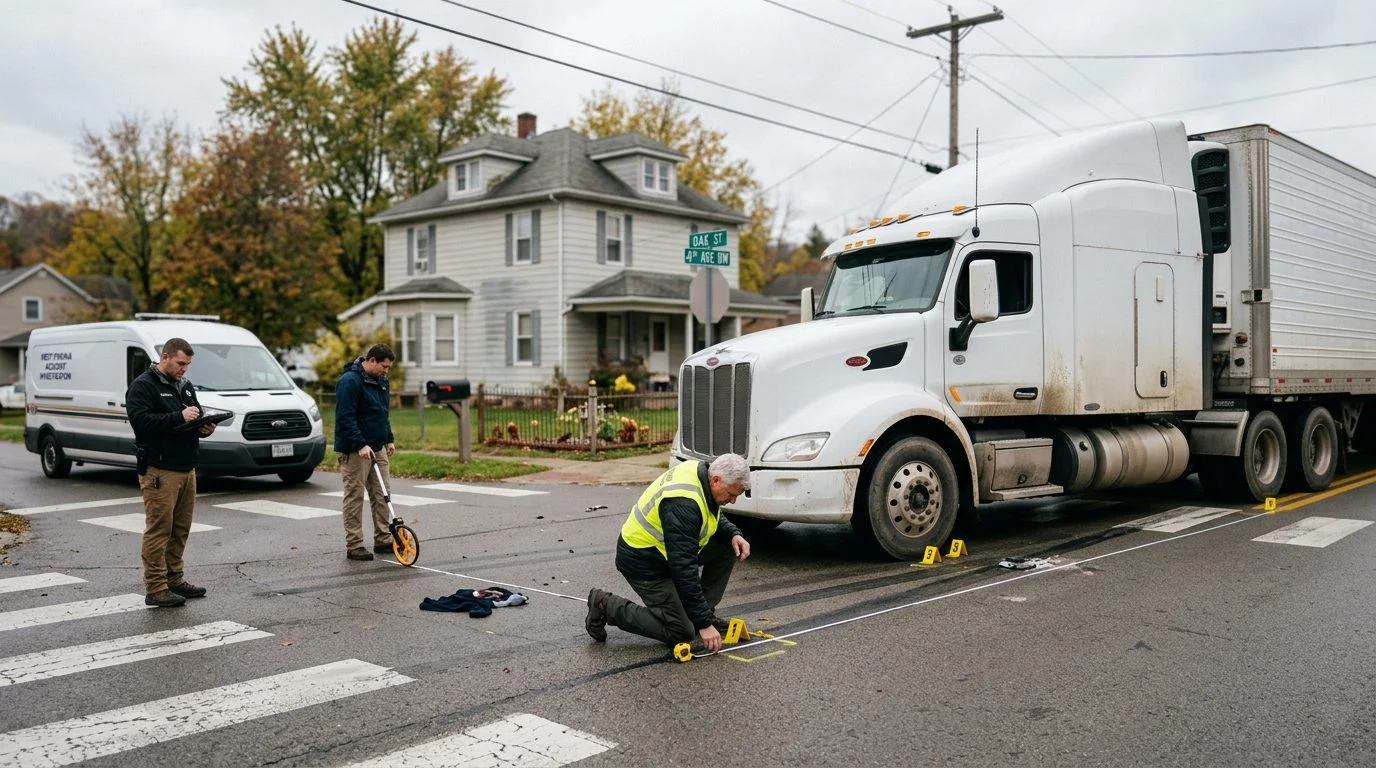
Frequently Asked Questions About Brain Injuries From Semi Truck Crashes
Can I still have a claim if I was partly at fault?
West Virginia generally allows recovery when an injured person’s fault is not greater than the combined fault of everyone else (W. Va. Code § 55-7-13c). Where the injured person’s fault is less than the combined fault of everyone else responsible, any recovery is reduced in proportion to that person’s degree of fault (W. Va. Code § 55-7-13c).
What if my symptoms showed up days after the crash?
Some brain injury symptoms can appear days later. Report every new symptom to a medical provider and tell them about the truck crash.
What if an insurance adjuster calls me?
You may choose what to say. Some insurers may dispute a claim, so it’s wise to speak with the firm before any recorded statement.
Can a family member reach out for an injured person?
Yes, family members can reach out on an injured person’s behalf. The firm can explain what information it needs and what steps may follow.
Call the firm about your case, and we’ll talk through what happened.