
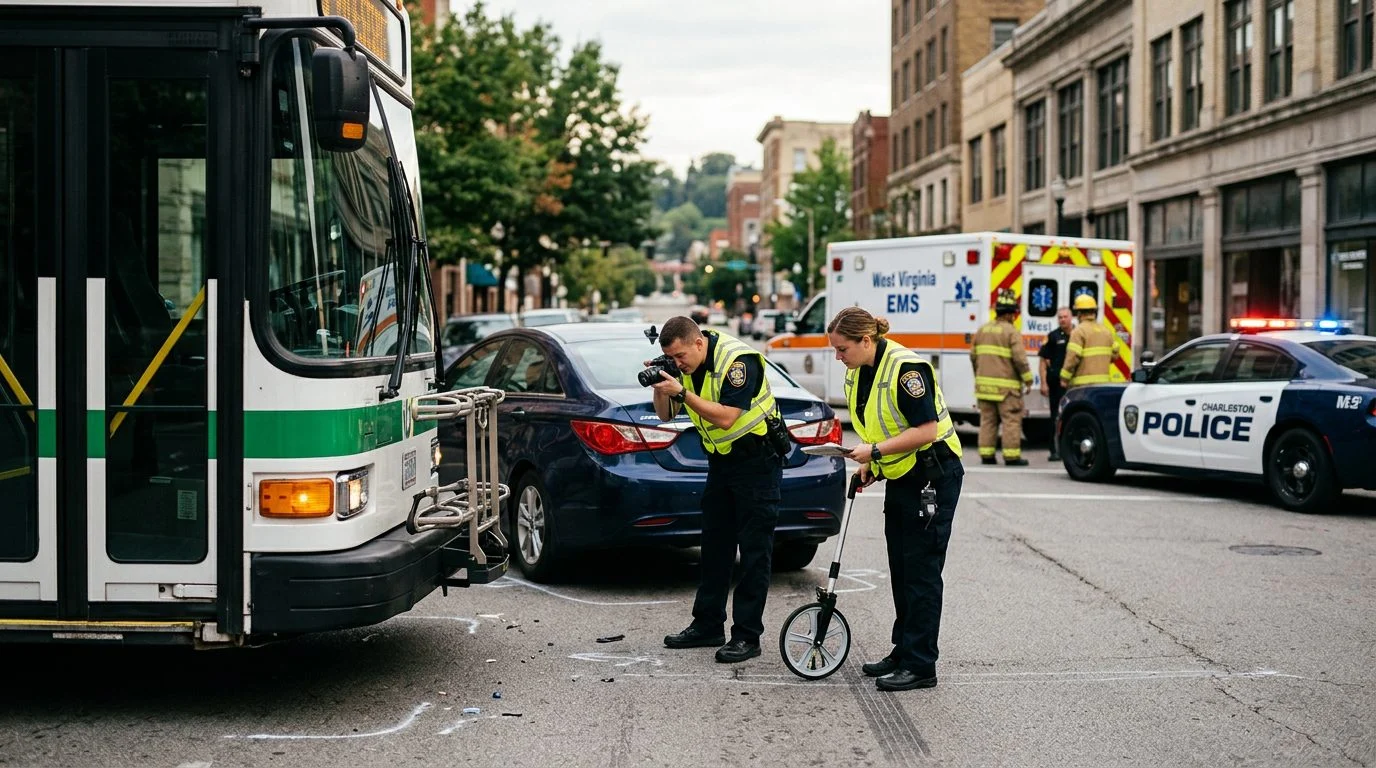
Bus Accident Lawyer | West Virginia
Hurt in a Bus Crash? Tell Bubba What Happened.
Big Bubba represents people seriously injured in bus and commercial vehicle crashes, and families in wrongful death cases. We serve communities across West Virginia, including Charleston, Huntington, Morgantown, Wheeling, and Beckley.
Published November 7, 2026
If you were hurt in a bus or motorcoach crash in West Virginia, you may have a claim. This page explains how these claims work, whether you are searching for a bus accident lawyer West Virginia or just trying to understand your options.
What a bus or motorcoach accident claim covers
A bus accident claim is a personal injury or wrongful death claim that arises from a crash involving a bus. We handle these claims for people hurt across West Virginia.
Bus crashes can involve motorcoaches, charter and tour buses, intercity buses, shuttles, and school buses. Each type may have different operators, insurers, and rules. A charter trip may be booked through a broker and run by a separate carrier.
Injured passengers, pedestrians, drivers in other vehicles, and families of people who die may all have claims. Whether a particular person has a claim depends on the facts. Because bus crashes often fall under commercial vehicle rules, the steps can differ from a standard car claim.
If a bus or motorcoach crash left you or a family member hurt, reach out to us for a free case review and tell us what happened. Talk it through with Big Bubba — the first case review is free, confidential, and carries no obligation.
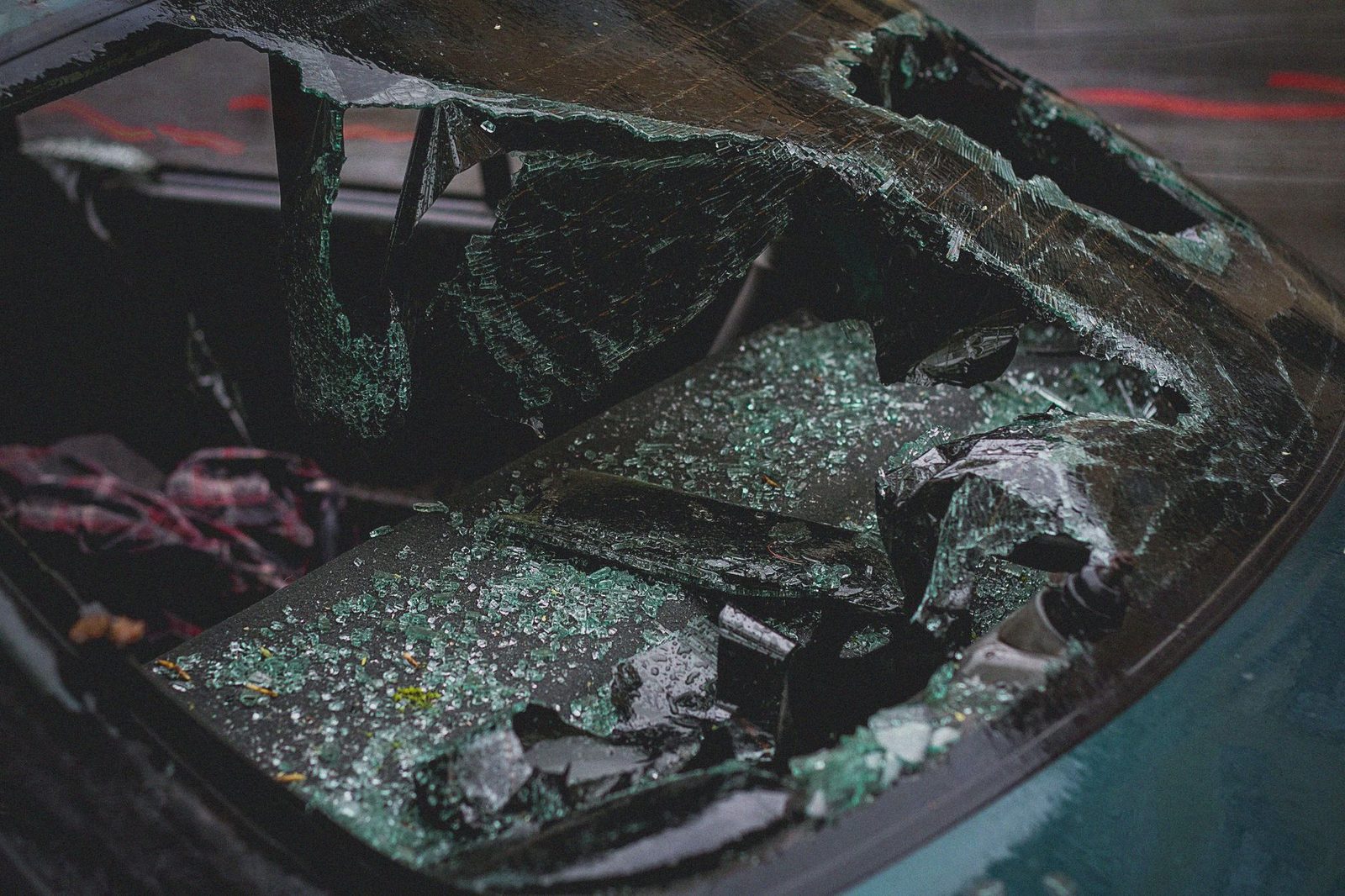
Who may be responsible after a bus crash?
More than one party can share responsibility after a bus crash. The bus company, its driver, a maintenance contractor, a broker, or another driver may each play a part.
If another driver was at fault, that driver’s insurer may be involved. Some insurers may dispute a claim, so it helps to document everything early.
Under W. Va. Code § 55-7-13a, recovery in a personal injury or wrongful death action is predicated on comparative fault, and each person’s liability is allocated in direct proportion to that person’s percentage of fault. Under W. Va. Code § 55-7-13c, a plaintiff’s fault generally does not bar recovery unless it is greater than the combined fault of everyone else responsible. If it is not, the recovery is reduced by the plaintiff’s share of fault.
Brokers can face claims too. In 2026, the U.S. Supreme Court held that a state-law claim that a broker negligently hired an unsafe motor carrier falls within a federal safety exception. See Montgomery v. Caribe Transport II.
Injuries we handle in bus and motorcoach crashes
We handle catastrophic injuries, traumatic brain injury, spinal cord injury, and wrongful death claims that arise from bus crashes.
Crashes at highway speed or rollovers can cause serious harm. Injuries can include head trauma, spinal injuries, multiple fractures, and internal injuries. Some injuries may need long-term care or surgery, and some may affect work and daily life for a long time. Symptoms may not appear right away, so medical care matters even when you feel only shaken up.
When a crash causes a death, the family may have a claim. Under W. Va. Code § 55-7-6, the action is brought by the personal representative of the person who died. The statute says the jury’s verdict shall include, but is not limited to, damages for sorrow, mental anguish, and solace; reasonably expected loss of income and of services, protection, care and assistance; care, treatment and hospitalization expenses; and reasonable funeral expenses.
Evidence that may matter in a bus crash case
Evidence that may matter includes the crash report, company records, and proof of your injuries. Which items matter most can vary by case.
- Crash report and any photos from the scene
- Driver records and hours-of-service logs
- Maintenance and inspection records for the bus
- Company safety policies and driver training files
- Dashcam or onboard video, if it exists
- Witness names and contact details
- Medical records, bills, and notes on missed work
Federal rules may require testing of surviving drivers after some serious crashes. 49 CFR 382.303 sets time limits for those tests, so early records may matter. Write down what you remember soon after the crash, while details are fresh. Keep copies of everything you receive from insurers.
Deadlines and claims against public entities
West Virginia generally allows two years to file a personal injury or wrongful death lawsuit, and exceptions may apply. For a personal injury, W. Va. Code § 55-2-12 sets a two-year period that starts when the right to sue accrues. For a wrongful death, W. Va. Code § 55-7-6 requires filing within two years after the death, subject to cross-referenced exceptions.
Some crashes may involve a public body, such as a city or county. Claims against a political subdivision are governed by W. Va. Code § 29-12a-6, which generally requires filing within two years after the claim arose or was discovered, unless a shorter period applies.
For 20 days after an injury, W. Va. Code § 55-7-11a generally bars anyone from seeking a release of liability or a statement for settlement from an injured person who is hospitalized or unable to work, though a person acting for the injured person may obtain a statement upon the injured person’s express request. Early questions matter, because waiting can narrow the options that remain.
How a bus crash claim works, step by step
A bus crash claim usually moves through five steps, from first contact to a possible lawsuit.
- Reach out for a free case review. It is confidential and carries no obligation to continue.
- Gather evidence. We help collect the crash report, medical records, and other records.
- Identify who may be responsible. That can include the carrier, the driver, a broker, or another party.
- Present the claim. We send the claim to the responsible insurers and review their response.
- Discuss next steps. If a fair resolution is not reached, we talk through whether a lawsuit is needed.
Each step can take a different amount of time, and steps can overlap. Our role is to explain each step in plain language so you can decide what to do next.
Not sure what your next step is?
Talk it through with Big Bubba — the first case review is free, confidential, and carries no obligation.
How the firm approaches bus and motorcoach cases
The firm handles car accident, truck accident, commercial vehicle, catastrophic injury, traumatic brain injury, spinal cord injury, and wrongful death claims.
We serve injury victims across West Virginia, including Charleston, Huntington, Morgantown, Wheeling, Beckley, and Parkersburg. We explain the process in plain language and answer the questions that matter to your decision.
Federal bus rules can bear on a crash. 49 CFR 395.5 limits driving time for passenger-carrying drivers, which may matter if fatigue is a question.
West Virginia limits noneconomic damages in certain commercial vehicle cases under W. Va. Code § 55-7-32: the maximum amount recoverable against the employer defendant of a commercial motor vehicle as compensatory damages for noneconomic loss may not exceed $5 million for each occurrence, and beginning January 1, 2026 that limit increases each year to account for inflation by an amount equal to the Consumer Price Index, not to exceed 150 percent of the stated amounts. The limit is not available to an employer without at least $3 million in commercial motor vehicle insurance for each occurrence. W. Va. Code § 55-7-32 reads: “(d) This section does not apply if the civil action involving a commercial motor vehicle arises from an incident for which an operator or driver is found to have.” West Virginia Code § 55-7-32 caps certain noneconomic damages in commercial motor vehicle cases, but its definition of commercial motor vehicle excludes a vehicle serving as a common carrier of passengers, a commercial motor vehicle as defined in §17E-1-3(7)(C) of this code, a school bus, and other vehicles primarily engaged in transporting passengers, and subsection (d) lists conditions under which the section does not apply, so whether it applies to a particular bus crash depends on the facts.
Common questions about bus accident claims
Most readers want to know whether they have a claim, what to do first, and how to handle insurers.
Can I still have a claim if I was only a passenger?
Passengers are often among the people who may have a claim after a bus crash.
What should I do first after a bus crash?
Get medical care, and write down what happened while the details are fresh. Keep copies of bills, missed-work notes, and insurer letters.
Will the bus company’s insurer contact me?
Insurers may reach out soon after a crash. Be careful with recorded statements, since your words can be used later.
Can I recover if I was partly at fault?
West Virginia’s modified comparative fault rule may still allow recovery if your fault is not greater than everyone else’s combined (W. Va. Code § 55-7-13c). Any recovery may be reduced by your share of fault.
Can a family bring a claim after a fatal bus crash?
Family members may have a claim through the personal representative of the person who died. The filing period generally runs two years from the death (W. Va. Code § 55-7-6).

Information to gather after a bus crash
If a bus crash left you or a family member hurt or grieving, the next step is to look at what the facts show. Bring what you have, including the crash report, medical papers, photos, and any letters from insurers. That gives the firm a clearer picture of what happened.
If you’re looking for a bus accident lawyer West Virginia families can reach, reach out to the firm for a free case review. Tell us what happened, and we’ll look at the crash details with you. You can contact the firm here.
Related practice areas
- Truck Accident Claims in West Virginia | Big Bubba Legal
- Freight Broker and Shipper Liability in Truck Crashes in West Virginia
- Spinal Fusion and Long-Term Care After a Truck Crash in West Virginia
- Sue Company Driver Crash West Virginia: What to Know