
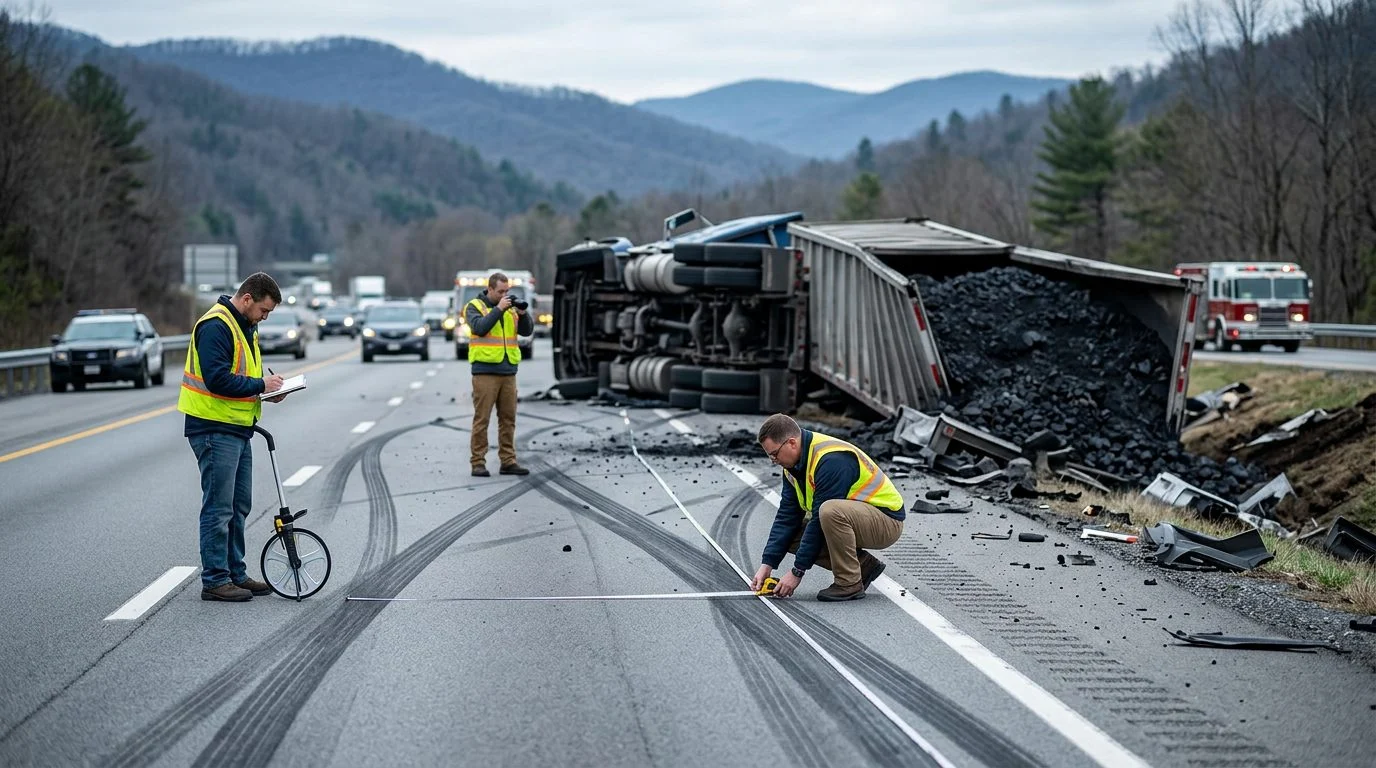
Coal Truck Accidents | West Virginia
Hurt in a Coal Truck Crash? Tell Bubba What Happened
Big Bubba Injury Law represents people seriously hurt in car and commercial truck crashes, catastrophic injuries and wrongful death cases across West Virginia. We serve Charleston, Huntington, Morgantown, Beckley and communities statewide.
Published October 26, 2026
A coal truck accident lawyer in West Virginia helps people hurt in these crashes understand their options. A coal truck injury claim asks for payment for harm, or for a death, caused by a coal haul truck on a public road. This guide explains what these claims cover, who may be responsible, the evidence that matters early, and the deadlines that apply. The firm handles these cases across West Virginia.
What a Coal Truck Accident Injury Claim Covers
A coal truck accident injury claim seeks compensation for harm caused by a crash involving a coal haul truck. The injured person can bring the claim. If someone died, the family brings a wrongful death statute claim through a personal representative. That is the person appointed to manage the deceased person’s estate.
This guide focuses on crashes on public roads. Injuries suffered inside a mine follow a different path.
These claims may help:
- Drivers and passengers in cars or pickup trucks
- Pedestrians and cyclists struck by a truck
- Families after a fatal crash
If a coal truck left you or someone you love hurt, you may have a claim, and the firm can review it with you for free. Talk it through with Big Bubba — the first case review is free, confidential, and carries no obligation.

Common Causes of Coal Truck Crashes and Who May Be Responsible
Coal truck crashes often trace back to fatigue, speed, equipment problems, overloading, or unsafe loads. More than one party can share responsibility.
Common factors include:
- Driver fatigue and hours-of-service violations
- Speeding on steep or winding mountain grades
- Brake and steering problems
- Overloading and weight violations
- Poor load securement
Federal rules limit how long a driver can work. A driver may not drive after 14 consecutive hours on duty that follow 10 hours off, and may not drive more than 11 hours in that period (49 C.F.R. § 395.3). Carriers must also keep trucks in safe operating condition, including brakes, axles, wheels, and steering (49 C.F.R. § 396.3).
Responsibility can reach beyond the driver. Depending on the facts, the hauling company, the vehicle owner, a maintenance contractor, or a load provider may be liable.
Wet, icy, or mud-covered roads are common in mountain counties. Document road conditions at the scene with photos and notes.
Serious Injuries These Claims Can Cover
Coal truck crashes can cause brain injuries, spinal cord injuries, and other catastrophic harm. Some crashes end in death.
- Traumatic brain injury: concussions, bruising of the brain, and changes in memory, mood, or thinking that can appear days or weeks later.
- Spinal cord injury: partial or complete paralysis and long-term medical care.
- Other catastrophic injuries: crush injuries, amputations, severe fractures, and internal injuries that need extended treatment or rehabilitation.
- Wrongful death: claims brought by family members after a fatal crash.
West Virginia’s wrongful death statute lists the losses a jury may consider. These include sorrow, mental anguish, and solace, lost income and services, and medical and funeral expenses (W. Va. Code § 55-7-6).
Get medical care promptly, even when symptoms seem minor. Keep every record, bill, and appointment note.
How a Coal Truck Injury Claim Usually Moves Forward
A coal truck injury claim usually moves through medical care, investigation, insurer talks, and, if needed, a lawsuit.
- Medical care and a police report. Get treatment and make sure the crash is reported to law enforcement.
- A free case review. Contact the firm. The review is confidential and carries no obligation to continue.
- Investigation. The firm works to gather the crash report, photos, witness information, and the trucking company’s records.
- Demand and negotiation. The firm presents the claim to the insurers involved, backed by medical records and proof of losses.
- Lawsuit if needed. If a fair resolution is not reached, a lawsuit can be filed in the proper West Virginia court. Many claims resolve before trial. Others take longer, and timelines depend on the facts.
Be careful in the first weeks. Under W. Va. Code § 55-7-11a, no person may, within twenty days from the date of a personal injury while the injured person is either an inpatient in any hospital or partially or totally unable to engage in his or her usual trade, profession or occupation, negotiate or attempt to negotiate a settlement, obtain or attempt to obtain a partial or general release of liability from the injured person, or obtain or attempt to obtain any statement from the injured person for use in negotiating a settlement or release. An injured person may also disavow a settlement, release or statement made in violation of that section at any time within one hundred eighty days from the date of the personal injury by executing a written statement of disavowal and forwarding a copy of it to the person who violated the section, in which event it may not be admissible in evidence if any consideration paid is repaid or returned to the person who paid it at the time the copy is forwarded.
Evidence That Matters Early in a Coal Truck Crash Case
The most useful evidence includes the crash report, driver logs, maintenance records, weight tickets, and scene photos or video.
- The official crash report from the responding agency
- Electronic logging device data and driver logs, which can show fatigue or schedule pressure
- Maintenance and inspection records, including brake and tire history
- Weight tickets and load paperwork, which can reveal overloading
- Dashcam or onboard video, skid marks, and road conditions at the time of the crash
- Written preservation requests sent early
Federal rules require carriers to keep maintenance records for one year. They must also keep them for six months after a vehicle leaves their control (49 C.F.R. § 396.3). Because those periods are limited, the firm recommends acting early.
Filing Deadlines for West Virginia Coal Truck Claims
In West Virginia, personal injury lawsuits generally must be brought within two years after the right to bring the claim accrues, unless another limitation period applies (W. Va. Code § 55-2-12). A wrongful death action must be commenced within two years after the death, subject to the provisions of section eighteen, article two, chapter fifty-five (W. Va. Code § 55-7-6). W. Va. Code § 55-7-6 reads: “The provisions of this section shall not apply to actions brought for the death of any person occurring prior to July 1, 1988.”
The personal injury deadline runs two years from when the right to bring the claim accrues (W. Va. Code § 55-2-12). Wrongful death actions are brought by the personal representative within two years after the death (W. Va. Code § 55-7-6), subject to the provisions of section eighteen, article two, chapter fifty-five. W. Va. Code § 55-7-6 reads: “The provisions of this section shall not apply to actions brought for the death of any person occurring prior to July 1, 1988.”
West Virginia uses modified comparative fault. You can still recover if your fault is less than the combined fault of everyone else. Your recovery is reduced by your share of fault (W. Va. Code § 55-7-13c).
Do not wait. Evidence can disappear, and insurers act quickly. Other deadlines may apply in some situations, and that depends on the facts.
Not sure what your next step is?
Talk it through with Big Bubba — the first case review is free, confidential, and carries no obligation.
How the Firm Can Help Injured Families
The firm handles car accidents, truck and commercial vehicle accidents, catastrophic injuries, traumatic brain injury, spinal cord injury, and wrongful death claims across West Virginia.
The firm serves all 55 West Virginia counties, including Charleston, Huntington, Morgantown, Wheeling, Martinsburg, Parkersburg, Beckley, Clarksburg, Fairmont, and Weirton.
The firm offers a free case review. It is confidential and carries no obligation to continue.
To make the most of that review, gather these items:
- The crash report number
- Medical records and bills
- Letters from insurers
- Photos of the scene and vehicles
- A written timeline of the crash and your treatment
Frequently Asked Questions About Coal Truck Crash Claims
Can I still make a claim if the truck driver says the crash was my fault?
Yes, you may still have a claim. Under modified comparative fault, your recovery is reduced by your share of fault, and your fault bars recovery only if it is greater than the combined fault of all other persons (W. Va. Code § 55-7-13c).
Can the trucking company be responsible for its driver?
Possibly. Liability can extend to the employer or vehicle owner, depending on how the truck was operated and who controlled it.
Can a family file a claim after a fatal coal truck crash?
Yes. A personal representative files a wrongful death claim within two years of the death, subject to the provisions of section eighteen, article two, chapter fifty-five (W. Va. Code § 55-7-6). W. Va. Code § 55-7-6 reads: “The provisions of this section shall not apply to actions brought for the death of any person occurring prior to July 1, 1988.”
Do I need the crash report before I contact the firm?
No. The firm can help you request the report, so don’t delay contacting the firm while you wait for it.
Should I give a recorded statement to the trucking company’s insurer?
Be careful. Share the insurer’s requests with the firm before you give any statement.
Next Steps After a Coal Truck Crash
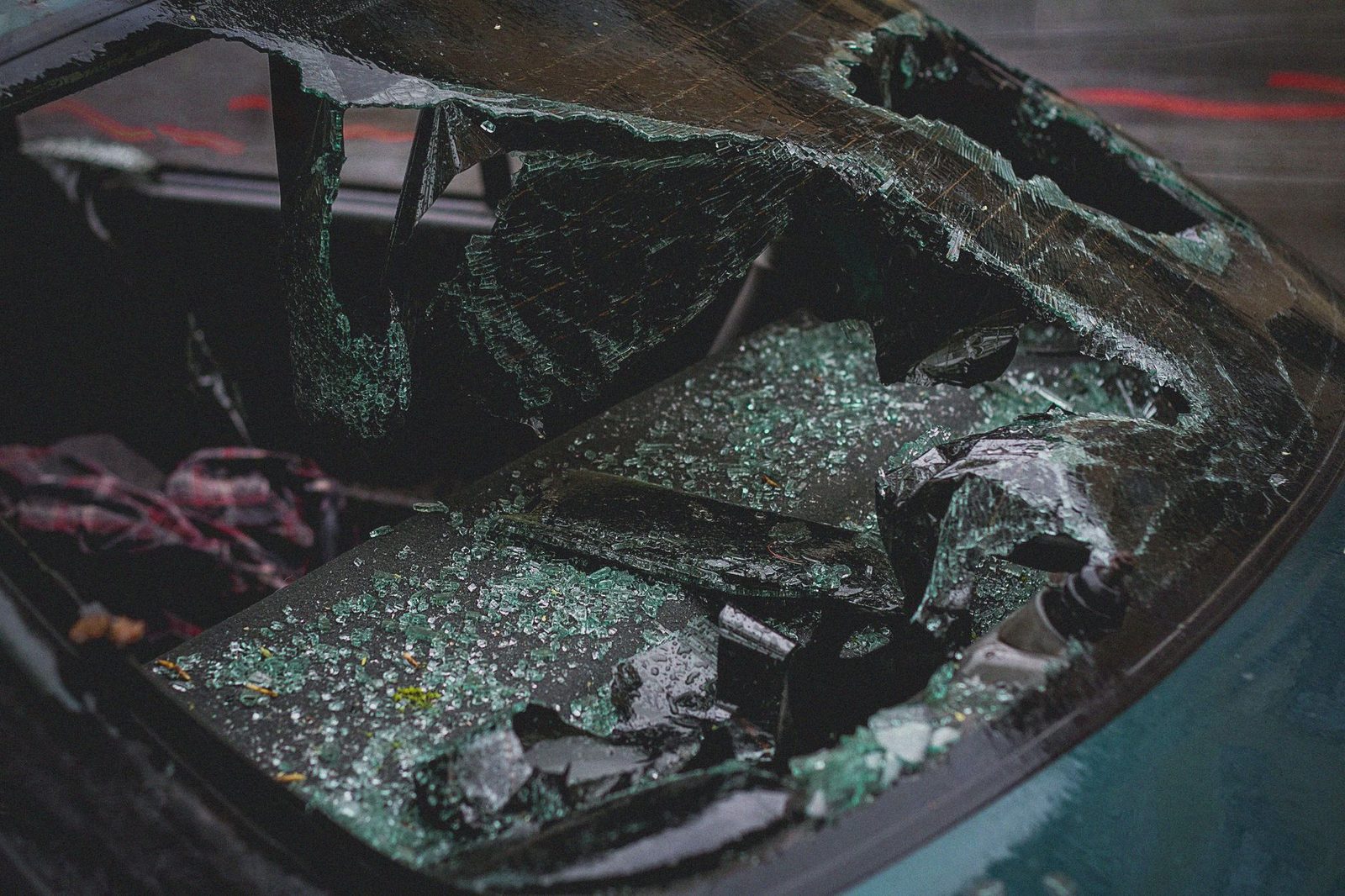
The next step after a coal truck crash is to protect your health, keep your records, and reach out about your claim. If a coal truck left you hurt or grieving, request a free case review with the firm. Bring the crash report number and any medical records you have.