
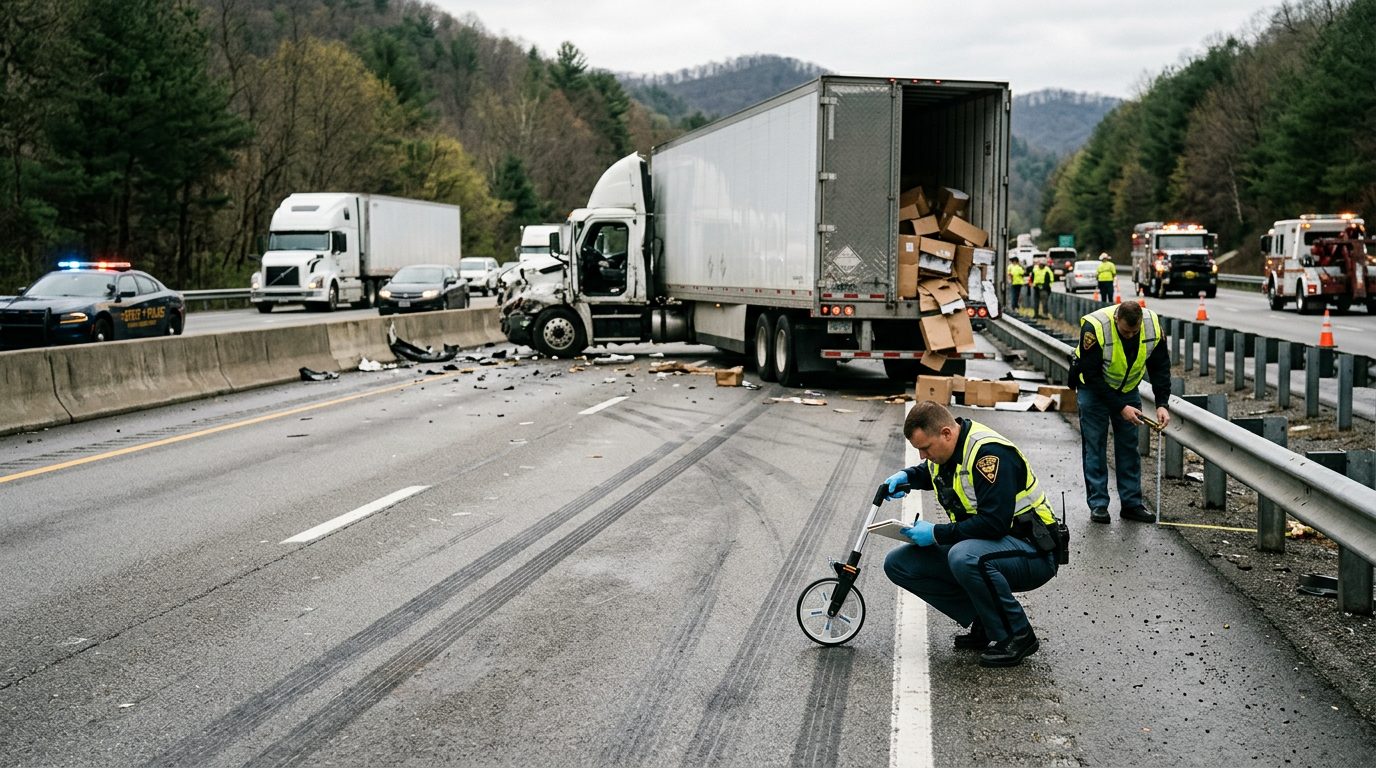
Truck Accidents · West Virginia
Truck Accident Crash Reports in West Virginia: How to Get One
A crash report can be an important record after a truck collision. Here is how to request one, and how the firm can help you understand what it contains.
Information that may help when you request a report
Basic crash details
Agencies often ask for the date, time, and location of the crash, along with the names of the people involved.
Agency contact information
The investigating agency's records office can tell you its current request process, fees, and delivery options.
Published November 6, 2026
The short answer to how to get truck accident crash report West Virginia copies is this: ask the agency that investigated the crash. Find that agency, complete its request form, and include the details it asks for. This page walks through each step, shows the mistakes that send requests back, and explains what to expect after you submit.
What a Truck Crash Report Is and Why People Request It
A truck crash report is the official record that a law enforcement agency writes after a reportable crash. Injured people, family members, and their representatives often request it. It records the scene, the vehicles, the drivers, and what the officer observed.
The report is one record among many. Other records may include photos, witness statements, and carrier files. What the report says about fault can be disputed, and insurers and courts may weigh it differently.
Commercial vehicle crashes often involve more than one company. Federal rules require motor carriers to keep an accident register for 3 years after each accident. A report can also help you identify the driver, the vehicle owner, and the carrier’s name, which you’ll need for later steps. List every vehicle and company you know about in your request.
If a truck crash left you hurt or left your family grieving, you may have a claim, and the firm can talk it through with you in a free case review. Talk it through with Big Bubba — the first case review is free, confidential, and carries no obligation.

Identify Which Agency Investigated the Crash
The agency that responded to the scene holds the report, so start by finding it. The answer depends on where the crash happened. A state trooper, a county sheriff’s deputy, or a city police officer may have responded.
Check the paperwork you already have. The officer’s card, a citation, a tow receipt, or an insurance letter often names the agency and may list a report number. If the crash happened on a city street, the city police department may have responded. If it happened on a highway or rural road, the State Police or a county sheriff may have responded.
Requesting from the wrong agency is a common cause of delay. Each agency’s records office states its own request process, so check that process before you send anything. State Police and sheriff offices each set their own steps.
If a city or county agency is involved, a separate deadline may apply. West Virginia generally requires a claim against a political subdivision to be brought within two years after the cause of action arose or after the injury was discovered or reasonably should have been discovered, whichever last occurs, and shorter periods or exceptions may apply (W. Va. Code § 29-12a-6). Write down the crash date now.
Walk Through the Request Form Section by Section
Each part of the request asks for a fact that helps records staff find one file. Fill out each section in order. Mark anything you don’t know as unknown instead of leaving it blank.
- Incident information. Give the exact date, the time, the road name, the nearest intersection or mile marker, and the city or county. An approximate time or a wrong road name makes the search harder.
- Report or case number. Write it down if you have it. It is the fastest way to locate the file.
- Parties and vehicles. List each driver and each vehicle’s make, model, and plate number. Include the commercial carrier or owner if you know it. Partial information is often still useful when you label it as partial.
- Requester and relationship. State whether you were a driver, passenger, owner, or family member. Forms often ask this question.
- Delivery and copy method. Choose mail, in person, or electronic delivery. Some agencies list a copy fee. The agency sets that fee, so check its notice.
West Virginia law defines an “employer defendant” in a commercial vehicle case to include the vehicle’s owner, the operator’s employer, and any entity that holds legal control over the vehicle or driver (W. Va. Code § 55-7-32). That is why listing every company tied to the truck matters.
Gather the Information Before You Submit
Gather the core facts before you fill out anything. Having them ready prevents guesses that can slow the request.
- The date and time of the crash
- The exact location, including the road name and nearest landmark
- The agency name and report number, if known
- Every driver’s name and every vehicle’s make, model, and plate
- The carrier or company name printed on the truck
Keep copies of any citation, tow receipt, medical discharge papers, or insurance letter that lists a report number or officer name. These papers often hold the detail the records office needs.
If someone was hurt or died, the requester may need to state their relationship to the person involved. For a death, West Virginia law says a wrongful death action is brought by the personal representative of the deceased person’s estate (W. Va. Code § 55-7-6). Record who holds that role in your family early.
Timing matters for carrier records too. Federal rules require employers to test surviving drivers for alcohol and drugs after certain truck crashes, and they set time limits for those tests (post-accident testing rules). Carriers may also destroy some records after set retention periods (federal records retention rules), so note the carrier’s name early.
Common Mistakes That Send a Request Back
Most delays come from a few avoidable errors. Check for these before you send the form.
- Wrong agency. The request goes to a records office that did not respond, so it must be sent again.
- Wrong date or road. A date taken from a later phone call, or a road name that differs from the scene, can mismatch the file.
- Missing signature or contact details. Mailed or electronic forms may be treated as incomplete without them.
- Blank fields. Mark unknown items instead of leaving them empty.
- Wrong report number. Several crashes at one intersection can have similar records, so match the number to the date and vehicles.
Read the form once more before you send it. These errors often show up only after the request is returned, so a quick check can save a second round.
What Happens After You Submit the Request
After you submit, the records office logs the request, finds the file, reviews it for release, and sends a copy. Keep your confirmation and any request number.
Processing time varies by agency and by how complete the request was. Use the report number to ask the records office for the status of your request.
An early request may not return a finished report. An investigation may still be open, and a crash involving injury or death may have a more involved file. Ask the agency what it expects to release and when.
When the copy arrives, check it against your notes. Look at the date, time, road, and vehicle details. If something is wrong, contact the agency and ask how it handles corrections.
Not sure what your next step is?
Talk it through with Big Bubba — the first case review is free, confidential, and carries no obligation.
Questions People Ask About Truck Crash Reports in West Virginia
Most questions come down to who can ask, how long it takes, and what the report can and cannot settle.
How long after a crash can I request a report?
The time depends on the agency and the case. Ask the agency’s records office for its current process.
Can a family member request a report after a fatal crash?
Requester rules can apply, and the form asks how you are related to the person involved. In a wrongful death case, the action generally must start within two years after the death (W. Va. Code § 55-7-6).
What if the report has errors?
You can raise corrections with the agency that wrote it. The firm can review how the report fits your situation.
Does the police report decide who was at fault?
It may help, but it does not usually decide fault on its own.
Reaching Out to the Firm After a Truck Crash
Requesting a crash report is one step, and the firm can help you see where it fits. You may be asking for this record while you recover from injuries or while you grieve a family member. The form is only one part of a hard process.
The firm handles truck accident, commercial vehicle, and wrongful death claims for people across West Virginia. If you want to talk through your situation, tell Big Bubba what happened and request a free case review. It is an offer with no obligation to continue, and it can help you understand how the report may fit your next steps.