
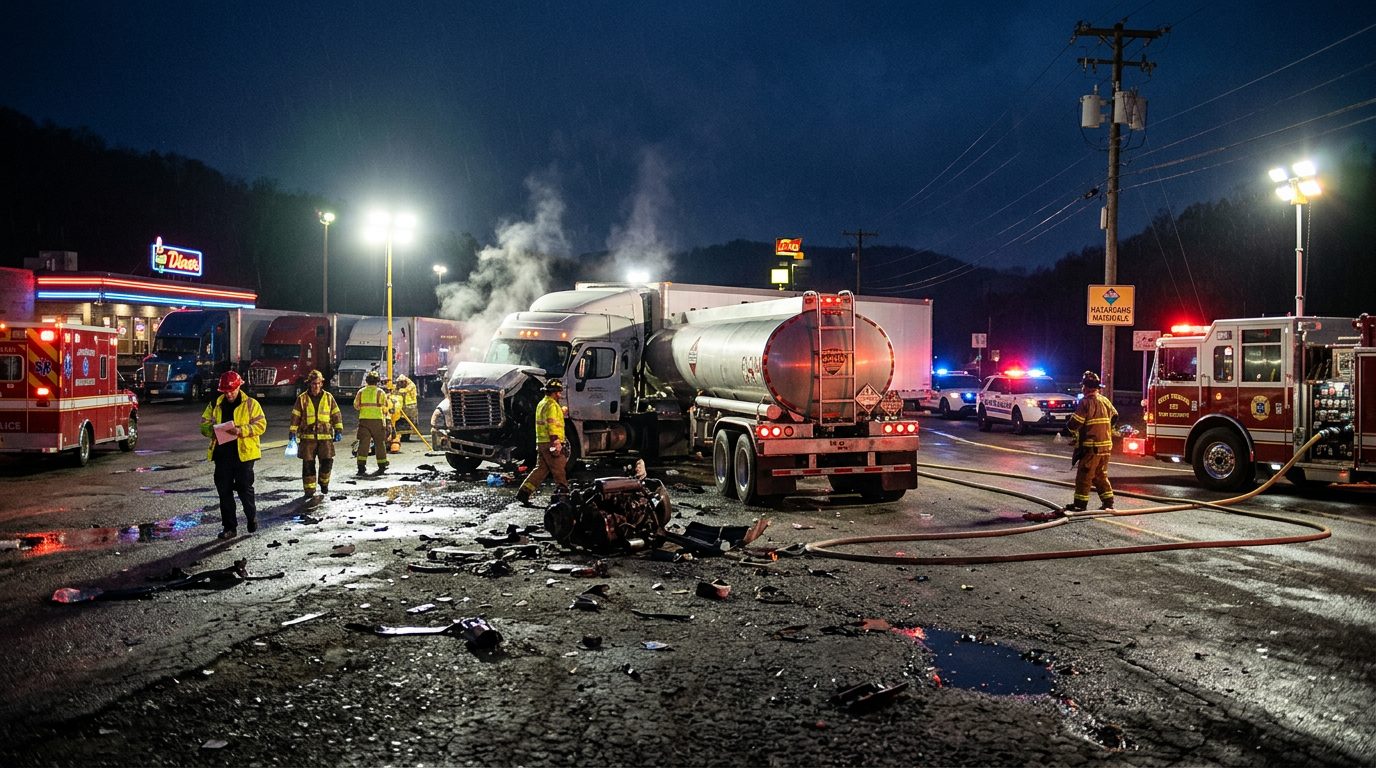
Truck Crash Injuries · West Virginia
Hurt in a Hazmat or Tanker Truck Crash? We Can Help You Take the Next Step.
Chemical exposure, fuel fires, and complicated records make these cases different. We help injured people and families across West Virginia sort through what comes next.
Published November 18, 2026
After a hazmat or tanker truck crash, your first steps are straightforward: get medical care, follow orders from responders, and write down what you saw. Chemical exposure can be hard to spot right away, so tell a medical provider about any possible exposure, even if you feel fine.
This guide explains how hazmat truck crash injuries differ from a typical wreck, which records matter most, and what West Virginia law says about wrongful death.
Why Hazmat and Tanker Crashes Are Different
Hazmat and tanker crashes fall under federal hazardous materials rules. That means the driver, the cargo, and the carrier can all be part of the picture.
Drivers who haul hazardous materials need extra knowledge. An applicant for a hazardous materials endorsement must learn hazmat rules, including emergency response and reporting hazardous materials accidents.
Tank vehicles have their own knowledge requirements. The tank vehicle endorsement rules cover cargo surge and how braking changes when a tank is empty, full, or partly full. West Virginia’s Division of Motor Vehicles also explains the state’s hazardous-material endorsements.
These rules show what regulators expect from drivers. They do not show what happened in your crash.
A hazmat crash can also combine two kinds of harm. The collision may cause broken bones or head injuries, and the cargo may add chemical exposure. Medical care may need to address both, which can make the medical record more involved than in a typical truck wreck. News reports of chemical spills on West Virginia highways often describe closed lanes and evacuations, so the scene itself can become part of the story.
If someone you love was hurt in a tanker or hazmat crash, you don't have to sort out the medical, scene, and records questions alone, and the firm can help you understand your options. Talk it through with Big Bubba — the first case review is free, confidential, and carries no obligation.

Chemical Exposure: What to Tell Your Medical Provider
If you were near a leaking load, tell a medical provider about the possible exposure, even if you feel fine.
Exposure can happen by breathing fumes or vapors, by touching a liquid or residue, or through fire near the load. Ask the treating providers to note the suspected exposure in your chart. If responders or placards identified the material, write that information down too.
Keep a simple daily log of any new symptoms, with dates and times. Include symptoms that appear hours or days later, and mention them at every visit.
Bring a list of the medicines you take and any chemicals you think you touched. Keep every evaluation and follow-up visit, since gaps in treatment can later be questioned. A steady, complete record keeps the story of your care clear.
Responders may be able to tell you the name of the material. Ask them directly, and write down the answer and who gave it.
Scene Safety and Emergency Orders
Follow the orders of fire, police, and emergency crews, even when you feel well enough to act on your own.
Those orders may include evacuation or shelter-in-place instructions. Do not walk back toward a leaking tank to look at it, and do not touch spilled material.
Responders may require decontamination before you leave the area. That can mean removing clothing, bagging it, and handing over belongings for separate handling. It can feel strange, but it is part of the process.
Write down the names of agencies and responders you dealt with, the time of each instruction, and any road closure or evacuation notice. Notes made the same day are usually more detailed than memories formed weeks later.
If you are able, take a few photos of the scene, the placards, and the roadway, and keep them in one folder.
Who May Be Involved in a Hazmat Crash Claim
West Virginia law generally assigns fault by percentage, so more than one party may be responsible for a crash.
Other parties may include the trucking company, the shipper that loaded the cargo, a company that maintained the tank or trailer, and a parts maker. Who had a role depends on what the records show.
A plaintiff’s fault does not bar recovery unless it is greater than the combined fault of everyone else responsible (W. Va. Code § 55-7-13c). If it is less, the recovery is reduced in proportion to the plaintiff’s fault.
For a broader look at truck claims, read our truck accident overview.
Records That Matter After a Hazmat or Tanker Crash
Ask for the official crash report, and keep every record that shows what happened.
West Virginia law requires the investigating officer to prepare a crash report within 24 hours after finishing the investigation of a crash resulting in bodily injury to, or death of, any person or total property damage to an apparent extent of $1,000 or more. Within 24 hours of a motor vehicle crash, the officer must also provide owner, operator, and insurance information upon request for all the involved parties to each of the other involved parties and to each party’s respective insurance agents, at no cost, whether or not the accident report has been completed. The crash report rules set those deadlines. Ask the responding agency for the report number and keep it with your other paperwork.
Be careful with early talks.
Some insurers may ask for recorded statements early. It may help to get advice before giving a detailed account.
Preserve photos and video from your phone, witness names and phone numbers, and any messages from the carrier or insurers. Damaged trucks, containers, and debris may be moved or repaired quickly, so write down what you saw before that happens.
Catastrophic Injuries and Wrongful Death After a Hazmat Crash
A hazmat crash can cause a catastrophic injury or a death, and each path follows its own legal rules.
Serious crashes can cause traumatic brain injury and spinal cord injury. Recovery and long-term effects vary widely, so treating physicians are the right source for questions about your prognosis.
When a crash causes a death, West Virginia law generally requires the action to be brought by the decedent’s personal representative. The action generally must be started within two years after the death. W. Va. Code § 55-7-6 reads: “The provisions of this section shall not apply to actions brought for the death of any person occurring prior to July 1, 1988.” See the wrongful death statute.
That same statute lists damages a jury may consider. These include sorrow, mental anguish, and solace; compensation for reasonably expected loss of income and of services, protection, care and assistance provided by the decedent; expenses for the care, treatment and hospitalization of the decedent incident to the injury resulting in death; and reasonable funeral expenses.
Families often gather medical bills, funeral records, and papers about the person’s work and home life. Keeping them in one place makes the next steps easier.
Not sure what your next step is?
Talk it through with Big Bubba — the first case review is free, confidential, and carries no obligation.
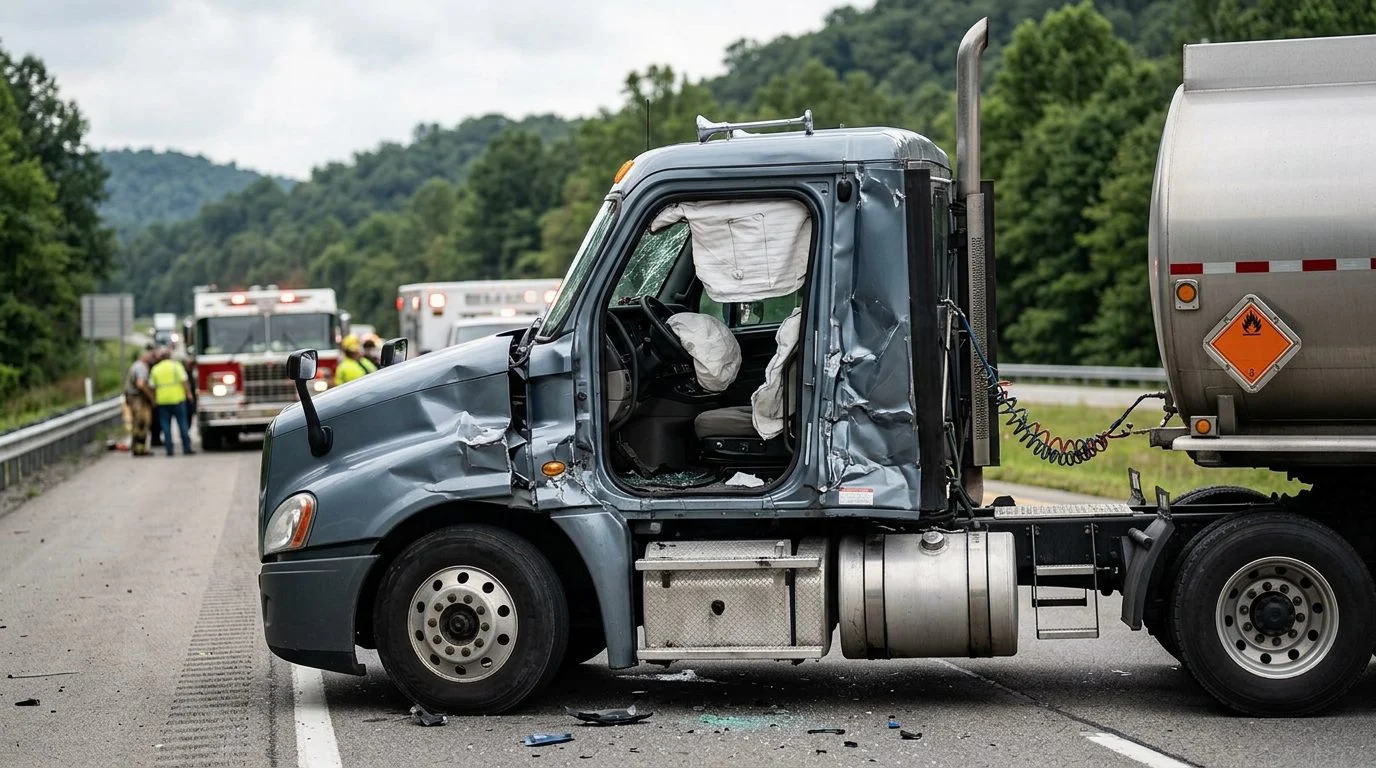
Talking With the Firm About Your Crash
If you are sorting out a hazmat or tanker crash, you do not have to face the medical, scene, and records questions alone.
Big Bubba Injury Law handles car accident, truck accident, commercial vehicle, catastrophic injury, traumatic brain injury, spinal cord injury, and wrongful death matters. We serve injury victims across West Virginia.
Bring the crash report number, provider names, and any photos you have to that conversation.
If a loved one was hurt in a tanker or hazmat crash, or you were exposed at the scene and are still deciding what comes next, you can contact the firm to request a free case review.