
Truck Accident Claims | West Virginia
Lost Pay After a Truck Crash? Talk With the Firm About Your Options
Missed shifts, unpaid leave, and lost overtime can strain a household fast. Reach out to the firm to talk through what happened to your job and your paycheck.
Published November 25, 2026
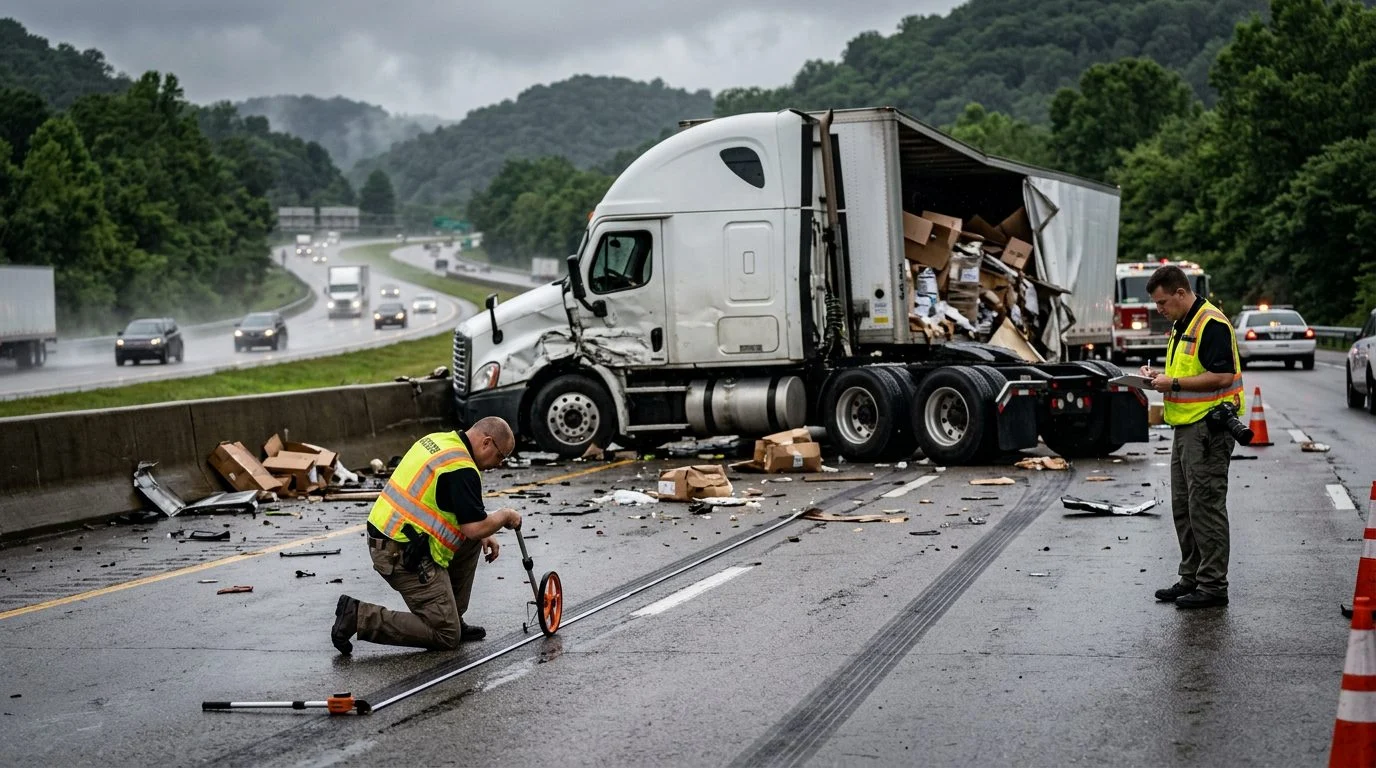
A truck crash can keep you off the job for weeks. The pay you lose can be as hard to replace as the medical bills. Lost income is a question many people ask after a truck accident, and how it is proven depends on the facts of each case.
Can You Recover Lost Income After a Truck Crash in West Virginia?
Whether lost pay can be part of a claim depends on the facts of each case.
A truck crash can affect your pay in several ways. You might miss scheduled shifts while you heal. You might take unpaid leave, lose overtime, or miss bonuses tied to your work. Some people cannot return to the same job at all. Each kind of loss leaves a different paper trail, so it helps to know what to gather early.
Lost income is one part of a larger claim. Medical care and other losses may also be part of the picture, depending on the facts. Commercial vehicle cases can involve more than one company and more than one set of records.
The same missed week can look very different in two claims, depending on the records. We handle truck accident claims across West Virginia. For the wider process after a commercial vehicle crash, read our truck accident pages.
If a truck crash has cut into your pay or kept you off the job, we can talk through your missed work and records in a free case review. Talk it through with Big Bubba — the first case review is free, confidential, and carries no obligation.

Is West Virginia a No-Fault State for Car Accidents?
West Virginia generally uses a fault-based system, so a car accident claim often turns on who caused the crash.
Under West Virginia’s comparative fault rule, your own fault generally does not bar recovery unless it is greater than the combined fault of everyone else responsible. If it is less, your recovery is reduced in proportion to your share of fault.
Why does this matter for lost income? If another driver was at fault, the losses from that crash may be part of the claim, depending on the facts.
Time limits matter too. Knowing the West Virginia personal injury deadline early helps you plan the claim.
Rules can also differ by vehicle. A crash involving a commercial truck can raise different parties and legal questions than a crash between two passenger cars.
Which Work Losses May Be Part of a Truck Crash Claim?
The most common work losses are lost wages, time off for medical care, lost overtime or bonuses, and lost benefits, depending on the facts.
Lost wages cover pay you missed while you were unable to work. Time off for medical care can count too, when it’s documented. Lost overtime and bonuses count if they were part of your normal pay. Lost benefits, such as retirement contributions, may also be raised.
Reduced earning capacity is a separate idea. It asks whether a serious injury limits the kind or amount of work you can do going forward. A study of traumatic spinal cord injury in West Virginia links injury severity and rehabilitation access to long-term function and mobility. Treating providers’ notes are where those limits usually show up.
Owner-operators and self-employed drivers need a different kind of proof. Their income often comes from hauling jobs and contracts, not a paycheck. Settlements, invoices, and business records show what the work paid.
Wrongful death cases follow a different path. West Virginia’s wrongful death statute lets a jury include compensation for reasonably expected loss of the decedent’s income and services. The claim is brought by the personal representative of the person who died.
Records That Support a Lost Income Claim
The core records for a lost income claim are usually pay records, tax forms, and a letter from your employer.
- Pay stubs from the months before the crash, showing your normal pay pattern.
- W-2 forms and tax returns, which show income over a longer period.
- An employer letter confirming your job title, pay rate, scheduled hours, time missed, and whether your job is still open.
- Leave and attendance records, including paid time off used, unpaid leave, and any light-duty notes.
- For owner-operators: load settlements, invoices, bills of lading, fuel and expense logs, and records of trips you could not take.
Crash reports are another source. Under state crash report rules, for a crash on a public street or highway that results in bodily injury to, or death of, any person or total property damage to an apparent extent of $1,000 or more, the investigating officer must prepare a report within 24 hours after finishing the investigation. The officer must also provide owner and insurance information, on request, to each involved party within 24 hours of the crash.
Ask for the report early. It helps you see what was recorded at the scene.
Tracking Missed Work and Medical Appointments
Start a dated log of missed work the day after the crash. Records made close in time may be easier to connect to the injury, depending on the facts.
For each day, write the date, the hours missed, and why. Note whether you could drive or do your job duties that day. Keep the log simple and factual, and keep it with your other records.
Save appointment cards, referral slips, and visit summaries. These show when treatment happened and how long it lasted. Ask treating providers for work status or restriction notes, since those can show the physical limits placed on your return to work.
Watch the first 20 days closely. Under West Virginia’s early settlement statute, anyone negotiating with you or asking for a statement for settlement generally must wait 20 days after the injury if you’re an inpatient or unable to do your usual work. Under W. Va. Code § 55-7-11a, a settlement, release of liability or statement obtained in violation of that section may be disavowed by the injured person at any time within one hundred eighty days from the date of the personal injury, by executing a written statement of disavowal and forwarding a copy of it to the person who violated the section; for the disavowal to keep the settlement, release or statement out of evidence, any money paid for the settlement or release must be repaid or returned when the copy is sent.
We serve injury victims in Charleston and Huntington, and across the rest of West Virginia. We can help you organize these records.

Talk Through Your Lost Income With the Firm
If a truck crash has kept you out of work, you don’t have to sort out your pay records alone.
Start with the records above. If your employer’s leave records or pay history are hard to get, or you’re unsure whether you can return to the same job, raise those gaps early.
If the at-fault driver had no insurance, your own coverage may matter. West Virginia’s motor vehicle insurance statute addresses uninsured and underinsured motorist coverage, and how it applies depends on your policy and the facts.
If you’ve lost pay since a truck crash and want to talk through your missed work and medical limits, you can request a free case review with the firm.