
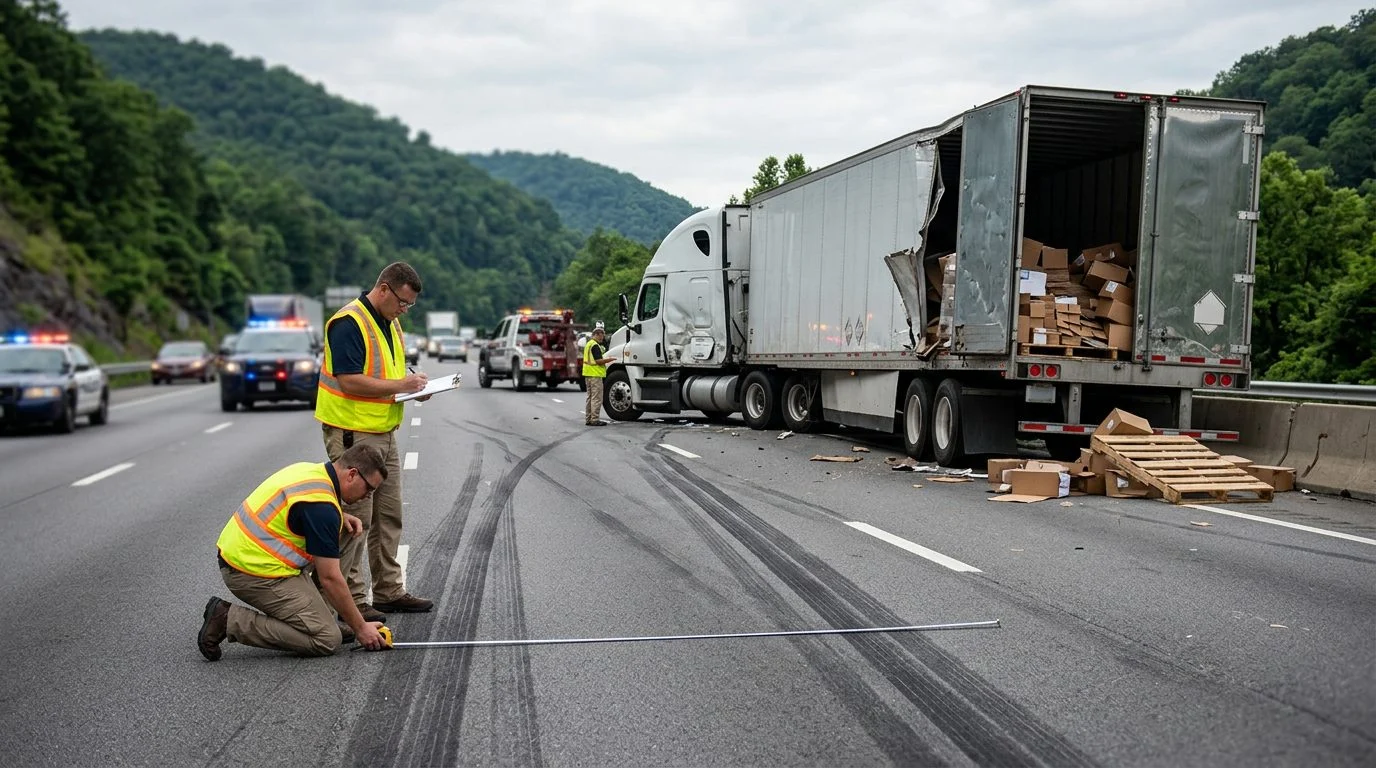
Truck Accident Claims in West Virginia
Asked for a Recorded Statement After a Truck Accident?
Insurance adjusters may ask for one early. You can take time to understand what you are being asked, and the firm can help you decide how to respond.
Published November 3, 2026
Getting a call about a recorded statement after a truck accident in West Virginia can feel rushed. A recorded statement is an audio-taped question-and-answer session with an insurance adjuster. You can ask for time before you answer. This page explains who asks for one, why the request may come early, and what to weigh before you agree. It is written for people hurt in a truck or commercial vehicle crash, and for family members acting on their behalf.
What a Recorded Statement Is and Who Asks for One
A recorded statement is an audio-recorded interview in which an insurance adjuster asks you about a claim. The adjuster works for the insurer. The questions usually cover how the crash happened and how you are doing since.
After a truck crash, the request may come from the trucking company’s insurer or from the company itself. It often comes by phone. It can arrive before you have had time to gather your thoughts or your papers.
You are not required to answer on the spot. You can ask who is calling and what the recording is for. You can ask for the questions in writing. You can also say you need time to think it over.
Keep a notepad near the phone. Write down the caller’s name, the company, and the date and time of the call. That record helps you keep track of what was said and when.
If a trucking company's insurer has called you after a crash, you do not have to sort it out alone. Reach out to the firm for a free case review. Talk it through with Big Bubba — the first case review is free, confidential, and carries no obligation.

Why an Insurer May Ask for a Statement Early
An insurer may ask early because it wants facts while the crash is fresh. Early answers can shape the insurer’s file.
West Virginia law limits some early contact. Under W. Va. Code § 55-7-11a, for 20 days after a personal injury, a person may not try to get a statement from an injured person for use in negotiating a settlement. That limit applies when the injured person is an inpatient in a hospital or is totally or partially unable to do usual work. The statute does not block a person acting or intending to act for and on behalf of the injured person from obtaining a statement the injured person expressly asks to give.
So this limit covers only some calls. Whether it reaches your call depends on whether the call comes within 20 days of the injury, your condition, and what the caller asks for.
Some insurers may dispute a claim or the order of events. A statement given before the facts are clear can become part of that discussion.
Points to Weigh Before You Agree
Before you agree, know who is calling, what the call is for, and whether you can speak clearly. Ask yourself a few questions first:
- Do you know who the caller represents?
- Were you told the call is recorded and what it may be used for?
- Are pain, medication, or shock making it hard to remember details?
West Virginia uses modified comparative fault, which splits fault by percentage. Under W. Va. Code § 55-7-13a, each person’s liability is allocated in direct proportion to that person’s percentage of fault. That is why the wording you use about who was at fault can matter. The person who seeks to prove another’s fault carries the burden of proof, under W. Va. Code § 55-7-13d.
Under W. Va. Code § 55-7-11a, an injured person may disavow a settlement, release of liability or statement obtained in violation of that section at any time within one hundred eighty days from the date of the personal injury, by executing a written statement of disavowal and forwarding a copy of it to the person who violated the section. The statute ties this to repaying any money already paid.
Keeping Answers Accurate and Limited to What You Know
Answer only what you know. Say “I don’t know” or “I don’t remember” when that is true.
Guessing at speeds, distances, or times can create problems later. A short, accurate answer is easier to keep consistent with the police report and other records. A long account given under stress is harder to keep consistent.
Stick to what you saw, heard, and felt. If a driver or witness told you something, say you were told it. Do not say you saw it yourself.
Ask for a copy of the recording or a written summary of what was said. If you are unsure of a detail, say you will confirm it later. Raise any questions about medical records before the call, not during it.
Medical Details, Injuries, and How Early Answers Can Be Used
Describe only the injuries your medical providers have confirmed. Say plainly when you have not been evaluated for something yet.
Questions about injuries, treatment, and past health can feel personal and urgent. A description given before a diagnosis is complete can read differently later, especially if your condition changes.
Traumatic brain injury is one example. The Administration for Community Living states that automobile accidents can cause traumatic brain injuries. It describes these as severe brain damage caused by an external force.
Some injuries, including brain and spinal cord injuries, may take time to understand. You do not need to predict your recovery on a recorded call. It is fine to say the full picture is still developing.
Other Evidence That May Matter in a Truck Crash Claim
A recorded statement is one piece of a truck crash file. Records outside the insurer’s call may also matter.
Trucking companies keep their own records. Under 49 C.F.R. § 395.8, a motor carrier must require each driver to record duty status for each 24-hour period. Carriers operating commercial motor vehicles must require drivers to use an electronic logging device (ELD).
Testing may also follow certain crashes. Under 49 C.F.R. § 382.303, after an occurrence involving a commercial motor vehicle on a public road in commerce, an employer may be required to test its surviving drivers for alcohol as soon as practicable, and whether and when that testing applies depends on the type of crash and other circumstances. Post-accident alcohol testing may be required after certain commercial motor vehicle crashes, such as those in which a person immediately receives medical treatment away from the scene and the truck driver receives a citation within 8 hours for a moving traffic violation arising from the crash. If an alcohol test is not given within two hours, the employer must keep a record of why.
Dashcam or onboard video may be relevant, depending on the facts. A crash report can also show what happened on the road. You can read our overview of how truck crash claims are handled in West Virginia. You can also review pages on dashcam footage, FMCSA crash reports, and missed work records.
Not sure what your next step is?
Talk it through with Big Bubba — the first case review is free, confidential, and carries no obligation.

Talking Through Your Situation Before You Respond
If you were hurt in a truck crash, or you are caring for someone who was, an insurer’s call can arrive at a hard time. You may be dealing with pain, missed work, and questions about the crash itself. A stranger may be asking for a recorded answer at the same time.
The firm handles truck accident claims for people across West Virginia. You do not have to decide how to answer an adjuster alone.
If you want to understand what a recorded statement may mean for your situation, reach out to the firm and request a free case review. You can share what happened in your own words, at your own pace.
Related practice areas
- West Virginia Employer Liability Van Crash Guide