
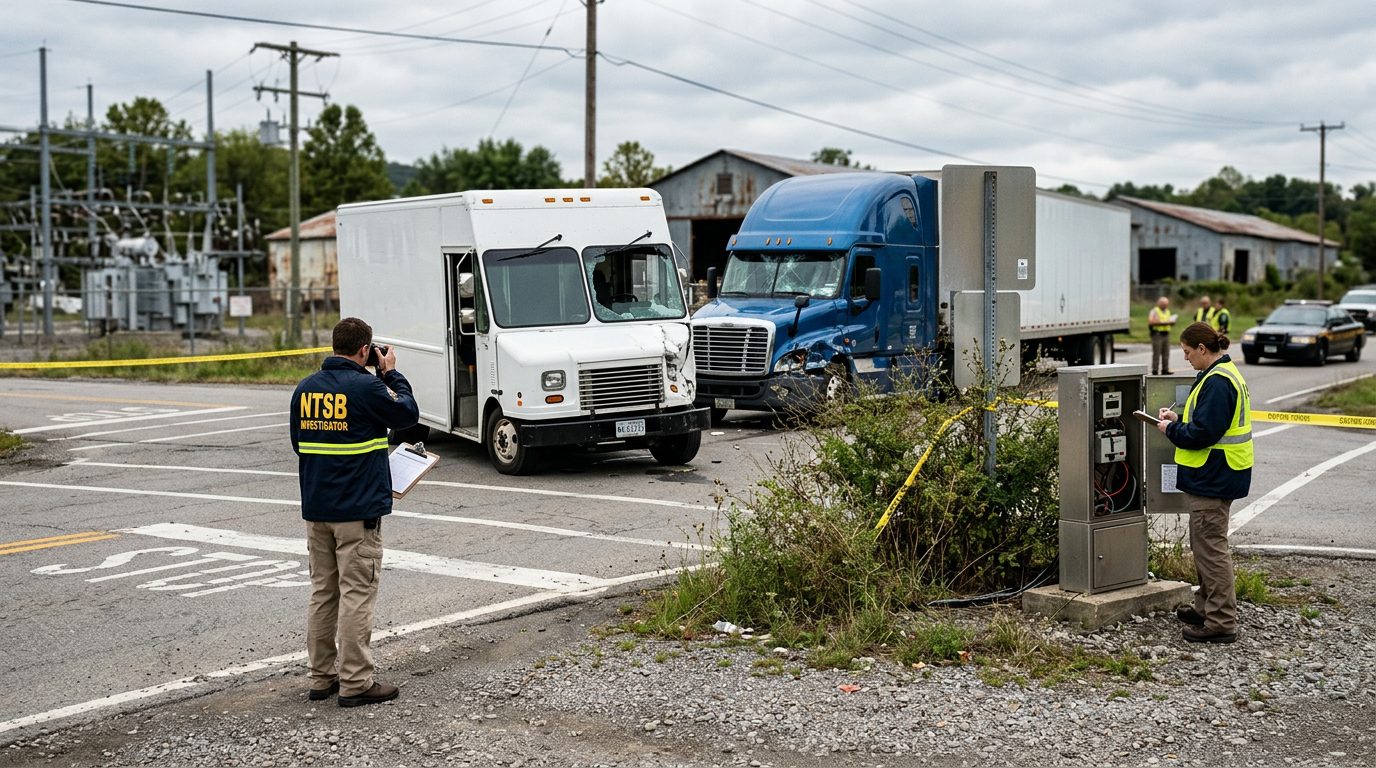
Truck Accident Claims | West Virginia
Hurt in a Tractor-Trailer Crash? Talk With Our Team About Your Claim
Tractor-trailer collisions involve large carriers, detailed records, and serious injuries. The firm helps injured people and families across West Virginia understand their options.
Published November 4, 2026
A tractor-trailer accident injury claim West Virginia residents file asks the responsible party to pay for harm caused by a crash. This guide explains how these claims work, which injuries and evidence often matter, and which deadlines to watch. It also covers catastrophic brain and spinal cord injuries and wrongful death. We handle truck accident claims, and you can reach out to us to talk about what happened.
What a Tractor-Trailer Injury Claim Is and Who It Is For
An injury claim is a request for compensation from the party or parties responsible for a crash. Most claims are made against the driver, the company that employs or controls the driver, or another party whose actions may have contributed. Whether a claim is viable depends on the facts of each crash, and the firm can review those facts in a free case review.
Tractor-trailer crashes can differ from a standard car crash. The truck may be owned by one company, driven by another person, and insured under commercial policies. Their size and weight can make impacts more serious. That means more parties and more records to review.
Claims may be brought by:
- Injured truck drivers and passengers in other vehicles
- Pedestrians and motorcyclists hurt in a crash
- Family members in a wrongful death case
If a tractor-trailer crash left you or a family member seriously hurt, you may have a claim, and we can review it with you in a free case review. Talk it through with Big Bubba — the first case review is free, confidential, and carries no obligation.
Injuries Common in Tractor-Trailer Crashes
Tractor-trailer crashes often cause broken bones, ligament damage, and, in severe cases, brain or spinal cord injuries.
- Broken bones from impact, crushing, or being thrown from a vehicle
- Ligament and joint damage to the knee, ankle, shoulder, or wrist, which may need imaging and extended treatment
- Traumatic brain injury (TBI), which can affect memory, mood, and the ability to work
- Spinal cord injury, which can cause weakness, paralysis, or loss of feeling
According to MedlinePlus spinal cord injury information, motor vehicle accidents can cause spinal cord injuries. Weakness, paralysis, and sensory loss may result.
Early medical records matter. Treatment notes, imaging, and provider statements help connect each injury to the crash. Some injuries, such as ligament and brain injuries, may not show their full effects right away. A doctor is the right source for questions about your own diagnosis and recovery.
Who May Be Responsible After a Truck Crash
More than one party may be responsible after a tractor-trailer crash, and the driver is only one possibility.
- The truck driver, whose actions may include speeding, fatigue, distraction, or traffic violations
- Maintenance providers, vehicle owners, or cargo loaders, when a defect or improper loading may have contributed
- Other drivers whose actions may have contributed to the collision
Under W. Va. Code § 55-7-13c, fault is divided by percentage. A plaintiff’s fault does not bar recovery unless it is greater than the combined fault of others. W. Va. Code § 55-7-13c reads: “(c) Any fault chargeable to the plaintiff shall not bar recovery by the plaintiff unless the plaintiff’s fault is greater than the combined fault of all other persons responsible for the total amount of damages, if any, to be awarded.” Otherwise, it reduces recovery in proportion. Each defendant generally pays only its own share.
For some commercial vehicle claims, W. Va. Code § 55-7-32 limits certain noneconomic damages against employers, and exceptions may apply.
Evidence That Often Matters in a Tractor-Trailer Claim
Crash reports, truck records, and medical files often shape these claims.
- Police crash reports, scene photographs, and witness names and phone numbers
- Electronic logging device and duty-status records, which may show hours driven and rest breaks. Federal rules require drivers to keep federal duty status rules for each 24-hour period.
- Drug and alcohol testing records, which federal post-accident testing rules may require after certain crashes
- Maintenance and inspection records for the tractor and trailer
Some company records are kept only for set periods, so early action may help preserve them. Waiting can also make it harder to locate witnesses.
How the Claim Process Typically Works
A typical claim moves from a free case review to investigation, damages documentation, negotiation, and, if needed, a lawsuit.
- Free case review. The firm listens to what happened and reviews the records you have. The review is confidential and carries no obligation to continue.
- Investigation. This may include crash, medical, and employment records and, where useful, accident reconstruction analysis.
- Damages documentation. This covers medical bills, lost wages, reduced earning ability, and how the injury affects daily life.
- Claim presentation and negotiation. The claim goes to the responsible parties and their insurers.
- Lawsuit. If a fair resolution cannot be reached, a lawsuit may be filed, which can extend the timeline.
Timelines vary widely with the injuries, the number of parties, and the evidence. No single timeline fits every claim.
Deadlines for Filing a Truck Accident Claim in West Virginia
West Virginia generally allows two years to file a personal injury lawsuit, and exceptions may apply (W. Va. Code § 55-2-12).
The rule comes from W. Va. Code § 55-2-12. The two years generally run from when the right to sue arose, which is often the date of the crash.
Wrongful death claims have their own clock. Under W. Va. Code § 55-7-6, a wrongful death action is brought by the personal representative and generally must start within two years after the death. A family’s deadline may differ from the injury date.
Waiting can make evidence harder to obtain, even before the legal deadline passes.
Not sure what your next step is?
Talk it through with Big Bubba — the first case review is free, confidential, and carries no obligation.
What to Expect From Insurers and Common Questions
Some insurers may dispute a claim quickly, so it helps to know the rules before you respond.
- Some insurers may dispute fault, question how serious your injuries are, or ask for a recorded statement.
- Under W. Va. Code § 55-7-11a, a settlement, release of liability, or statement obtained in violation of that section may be disavowed by the injured person at any time within one hundred eighty days from the date of the personal injury, by executing a written statement of disavowal and forwarding a copy to the person violating the section; the settlement, release or statement then may not be admissible in evidence for any purpose in any court or other proceeding relating to the personal injury, if any consideration paid is repaid or returned to the person who paid it at the time the copy is forwarded.
- Helpful steps may include getting medical care promptly, following treatment advice, keeping bills and missed-work records, and keeping a daily journal of symptoms.
- Questions about giving a statement can be raised in a free case review before you respond.
Frequently Asked Questions About Tractor-Trailer Injury Claims
Can I bring a claim if the truck driver was not at fault?
If another driver was at fault, a claim may be possible against that party. The firm can review the facts in a free case review.
Do I need a police report?
A crash report is commonly used evidence in these claims. A copy may help support what happened.
What if my injury did not seem serious at first?
Some injuries, including ligament and brain injuries, may show symptoms days later. Prompt medical evaluation helps create records that connect them to the crash.
Can a family bring a claim after a fatal truck crash?
Under West Virginia law, a personal representative generally brings a wrongful death action for the family. It generally must be filed within two years after the death, subject to the provisions of section eighteen, article two, chapter fifty-five (W. Va. Code § 55-7-6). W. Va. Code § 55-7-6 reads: “The provisions of this section shall not apply to actions brought for the death of any person occurring prior to July 1, 1988.”

What to Do Next After a Tractor-Trailer Crash
The most useful steps right after a crash are medical care and written notes about what happened. Write down the date, time, and location, the truck company’s name if you know it, and the names of witnesses. Keep photos of the scene and vehicles, and save every bill and letter.
We serve injury victims across West Virginia, including Charleston, Huntington, Morgantown, Wheeling, Martinsburg, Parkersburg, Beckley, Clarksburg, Fairmont, and Weirton.
If a tractor-trailer crash left you hurt or took a family member’s life, you may have a claim, and the firm can review it with you. Tell us what happened through our contact page, and request your free case review.