
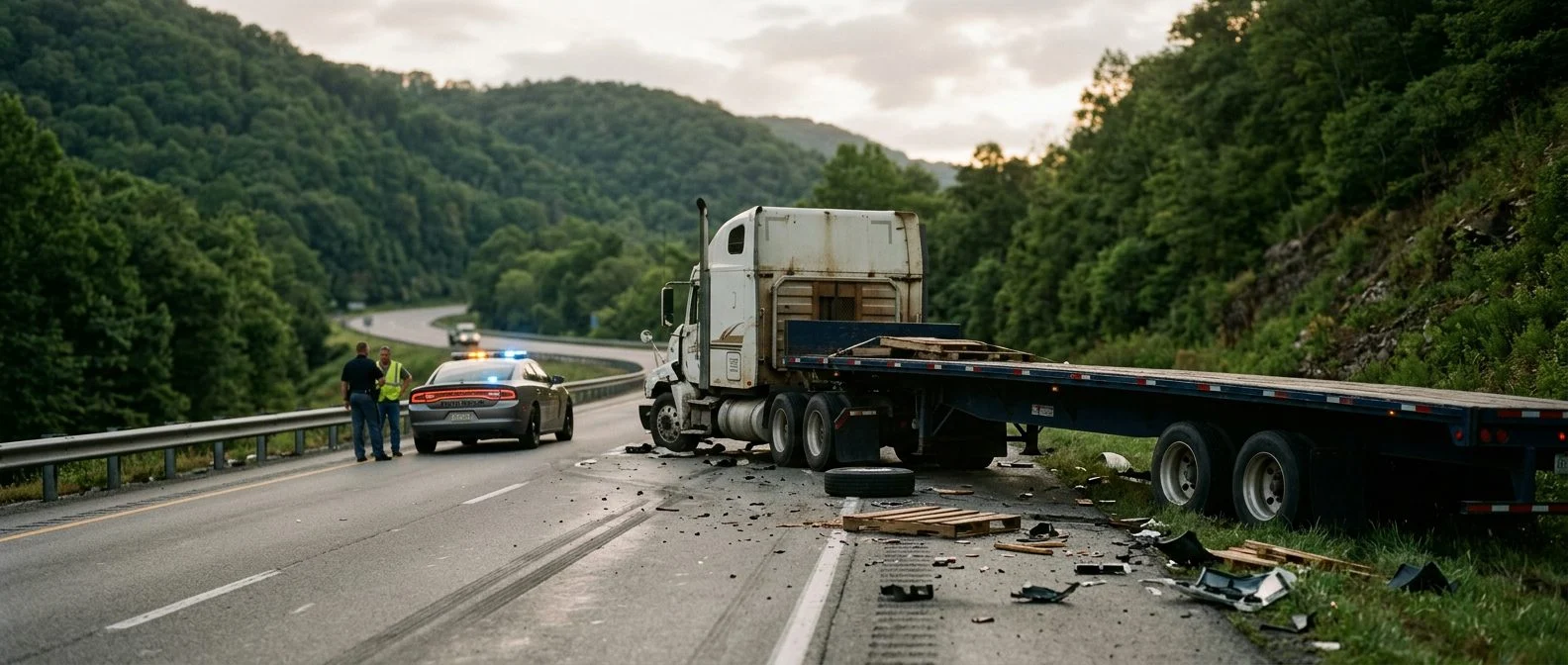
Tractor-Trailer Crashes | West Virginia
Hurt in a Tractor-Trailer Crash? Tell Bubba What Happened.
The firm represents people injured in truck and commercial vehicle crashes, and families who have lost a loved one in a wrongful death case. We serve injury victims across West Virginia, including Charleston, Huntington, Morgantown, Wheeling, Martinsburg, Parkersburg, Beckley, Clarksburg, Fairmont, and Weirton.
Published November 7, 2026
Looking for a tractor-trailer crash lawyer West Virginia drivers and families can reach? This page explains what these claims involve, who may be responsible, and what to do next. The firm handles truck accident and commercial vehicle claims across West Virginia, including catastrophic injury and wrongful death cases.
What a Tractor-Trailer Crash Claim Covers
A tractor-trailer crash claim seeks compensation for harm caused by a collision with a large commercial truck. Compensation may cover medical care, lost income, and other losses, depending on the facts.
These claims often differ from ordinary car crash claims. Commercial carriers operate under federal safety rules. They also often carry insurance under different terms. Those differences can change who may be responsible and how the claim is built.
The firm handles car accidents, truck accidents, and commercial vehicle accidents. It also handles catastrophic injuries, traumatic brain injury, spinal cord injury, and wrongful death.
Who This Page Is For
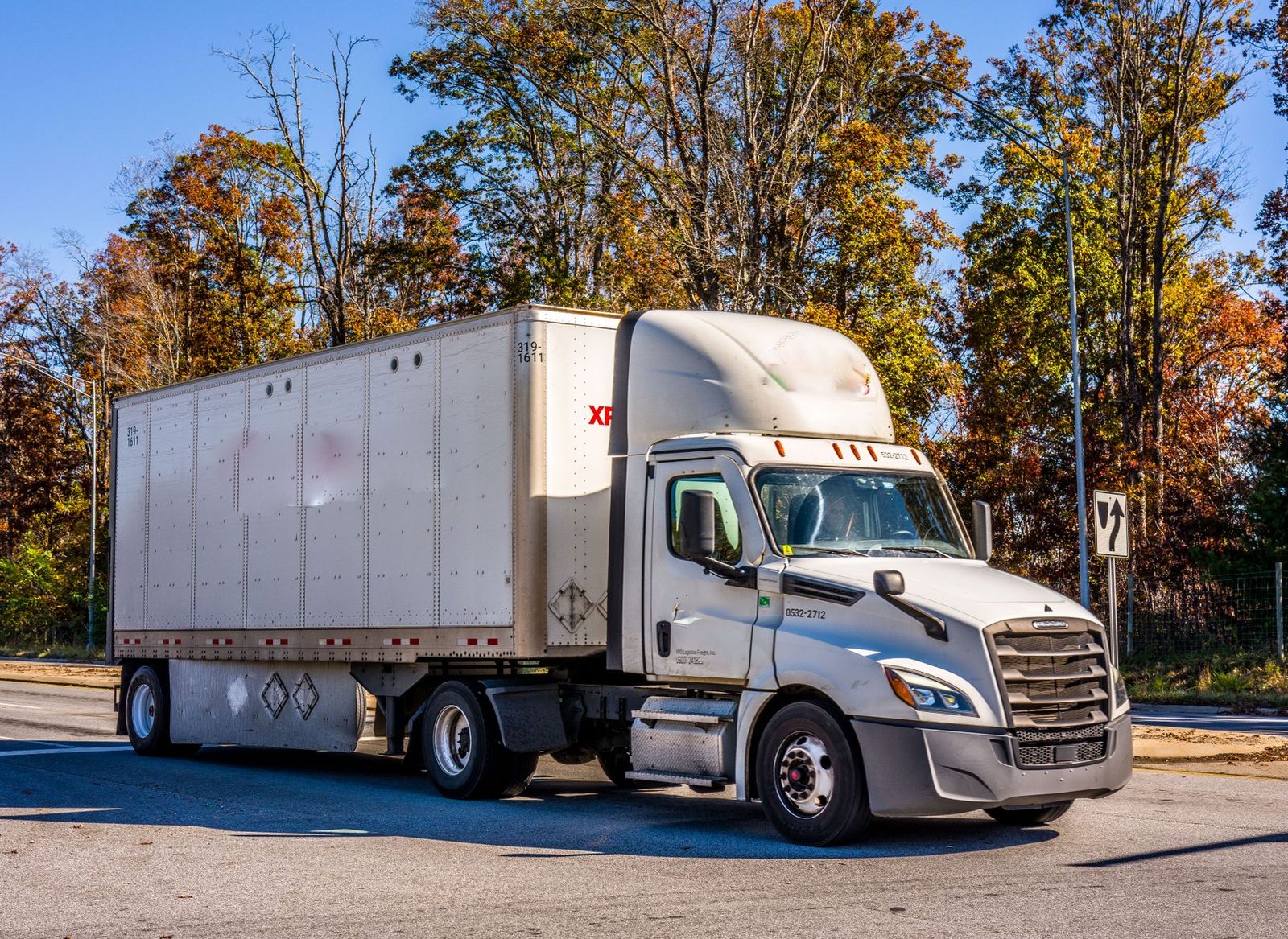
This page is for people hurt in a crash with a tractor-trailer or other commercial truck. It is also for families who lost someone in one.
- Drivers and passengers injured in a truck crash.
- Families of someone killed in a truck crash.
- People with a traumatic brain injury or spinal cord injury after a serious crash.
- Anyone who has already spoken with an insurer or is worried about deadlines.
If one of these describes you, timing matters. The sections below explain the deadlines and early steps that may matter most.
Who May Be Responsible After a Tractor-Trailer Crash
Responsibility may rest with the driver, the trucking company, or another party, depending on the facts. West Virginia defines an “employer defendant” to include the truck’s owner, the driver’s employer, and anyone who controls the truck or its driver (W. Va. Code § 55-7-32).
Other parties may also be looked at. These can include a company that leased the truck, a maintenance provider, or a company that loaded the cargo. Whether any of them share fault depends on what happened.
West Virginia splits fault by percentage among everyone who contributed to the harm (W. Va. Code § 55-7-13a). If you share some of the fault, that share may reduce what you recover.
Evidence That May Matter in Truck Crash Cases
The right evidence depends on the facts of your crash. Some items are often important early on.
- Police crash report and scene photos. The Beckley Police Department lists a $20 copy fee for crash reports.
- Driver hours records. Except as otherwise provided in 49 C.F.R. § 395.1, federal rules provide that a driver of a property-carrying commercial motor vehicle may not drive without first taking 10 consecutive hours off duty, may not drive after a period of 14 consecutive hours after coming on-duty following 10 consecutive hours off-duty, and may drive a total of 11 hours during that period (49 C.F.R. § 395.3).
- Post-crash testing records. After some crashes, federal rules require employers to test drivers for alcohol and controlled substances, within set time limits (49 C.F.R. § 382.303).
- Maintenance records, dashcam video, witness statements, and medical records.
Some of these records may be lost or overwritten if no one asks for them promptly.
Injuries Often Involved in Serious Truck Crashes
Tractor-trailer crashes can cause traumatic brain injury, spinal cord injury, broken bones, crush injuries, and death. A traumatic brain injury can range from a concussion to a more severe injury. A spinal cord injury can affect movement and feeling.
Recovery varies from person to person. A medical evaluation is the starting point for understanding any injury.
When a crash causes a death, the family may have a wrongful death claim. West Virginia’s wrongful death law lists damages that may include grief and loss of companionship, expected lost income and services, medical costs from the injury, and reasonable funeral expenses (W. Va. Code § 55-7-6).
Commercial Insurance and Why Coverage Matters
For many for-hire carriers hauling nonhazardous freight across state lines, federal rules set a minimum of $750,000 in liability coverage (49 C.F.R. § 387.9). The amount of coverage can affect how a claim is handled.
Some insurers may dispute a claim. They may also argue that the injured person bears part of the fault.
A cap on certain damages may apply in some commercial vehicle cases, and the law also lists exceptions (W. Va. Code § 55-7-32).
How the Claim Process Generally Works
A claim usually starts with a free case review and moves through investigation, medical review, and negotiation. It may end in a lawsuit.
- Request a free case review. Tell the firm what happened in your own words.
- Gather the records. The firm may get the crash report, request records, and send requests to preserve evidence.
- Review medical records and bills. This often continues as treatment goes on.
- Negotiate. Settlement talks may begin. If a fair resolution is not reached, a lawsuit may be filed.
Deadlines matter. West Virginia generally allows two years to file a personal injury claim, and exceptions may apply (W. Va. Code § 55-2-12). A wrongful death action generally must start within two years after the death (W. Va. Code § 55-7-6). W. Va. Code § 55-7-6 reads: “The provisions of this section shall not apply to actions brought for the death of any person occurring prior to July 1, 1988.”
State law also limits early contact. For 20 days after an injury, others may not negotiate a settlement with a hospitalized or unable-to-work injured person. An injured person may disavow a settlement entered into, obtained, or made in violation of this section at any time within one hundred eighty days from the date of the personal injury, by executing a written statement of disavowal and forwarding a copy to the person violating this section; the settlement, release or statement may not be admissible in evidence if any consideration paid is repaid or returned to the person who paid the consideration (W. Va. Code § 55-7-11a).
Frequently Asked Questions About Tractor-Trailer Crash Claims
Should I talk to the trucking company’s insurer after a crash?
Some insurers may ask for a recorded statement early. You may want to speak with the firm first.
Can I still bring a claim if I was partly at fault?
West Virginia divides fault by percentage. Your share may affect what you recover, depending on the facts.
What should I bring to a free case review?
Bring the crash report, photos, medical records, bills, and any letters from insurers, if you have them.
Does the firm handle tractor-trailer crash claims across West Virginia?
The firm serves injury victims across West Virginia.

Understanding Your Tractor-Trailer Crash Claim
Your crash report, medical records, and any insurer letters can help the conversation start.