
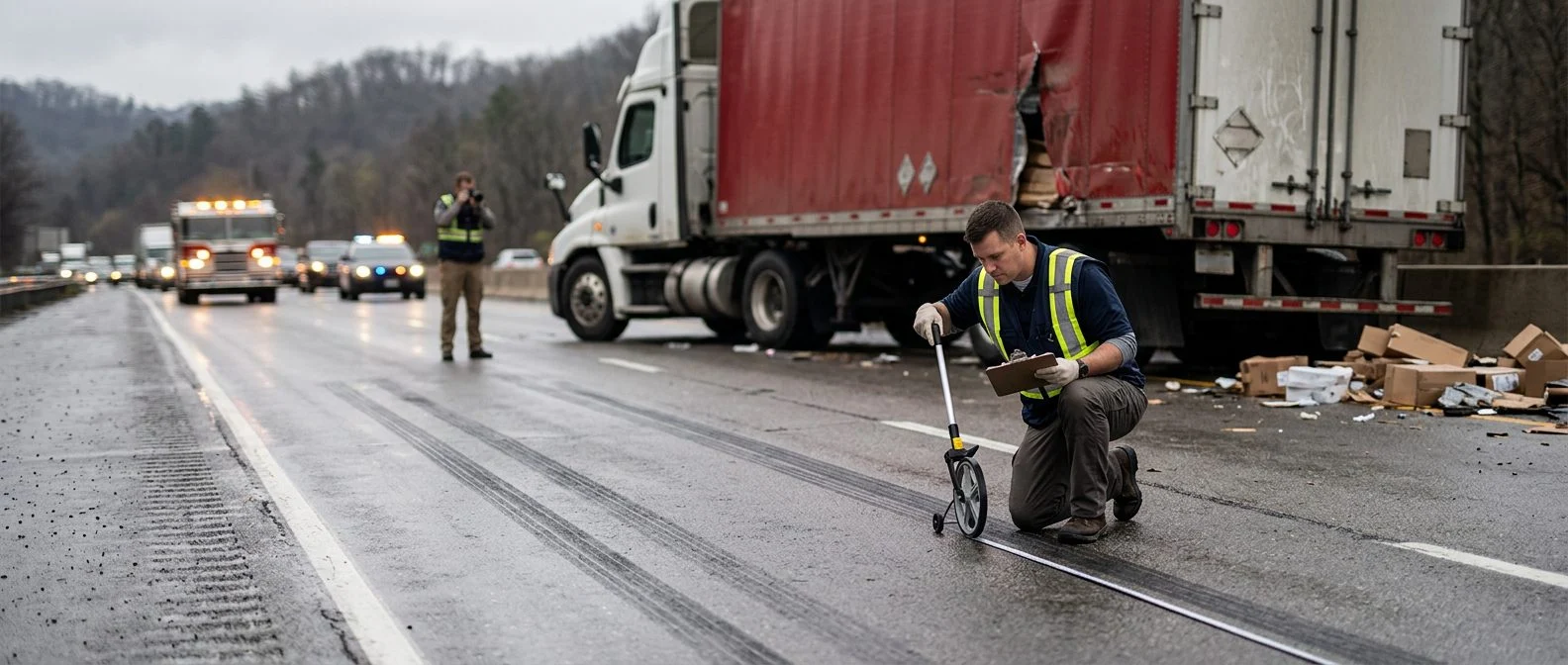
Truck Accident Claims | West Virginia
Truck Accident Claims for Parents of an Injured Child
A commercial truck crash can leave a child with serious injuries and leave parents with urgent questions. The firm helps West Virginia families understand their options and what comes next.
Published November 3, 2026
A truck accident claim for parents of an injured child in West Virginia starts with one question: how old is the child? This guide explains both paths, what a claim may cover, and why a crash with a commercial truck raises different questions. Every family’s facts are different, so the details of your situation matter.
Who Holds a Truck Accident Claim for an Injured Child?
The injured person generally holds the claim for their own injuries. A parent’s role depends on the child’s age.
When the Child Is an Adult
Parents often help with medical visits, paperwork, and daily care. The firm can explain how this works for your family.
When the Child Is a Minor
West Virginia law may give a child extra time to sue after turning 18. Under W. Va. Code § 55-2-15(b), a personal action brought by a person who was an infant when the right to sue accrued may generally be brought within the like number of years after reaching full age that is allowed to a person with no such impediment, but in no case more than 20 years from the time the right accrues, and exceptions may apply. Because timing depends on the facts, don’t assume the extra time applies to your family without a review.
When a Child Has Died
Wrongful death claims are brought by the decedent’s personal representative. Under W. Va. Code § 55-7-6, the action generally must be started within two years after the death, and other rules may affect that deadline. The firm handles wrongful death claims for families.
If your child was hurt in a truck crash in West Virginia, you may have a claim, so reach out to Big Bubba for a free case review. Talk it through with Big Bubba — the first case review is free, confidential, and carries no obligation.

What Can a Truck Accident Claim for an Injured Child Cover?
A claim may seek compensation for medical care, lost income, and the effect of the injury on daily life. Which losses apply depends on the facts.
- Medical care: emergency treatment, hospital stays, surgery, imaging, and follow-up visits.
- Therapy: physical, occupational, or speech therapy when a provider recommends it.
- Lost income: for the injured person, and for a parent who missed work to care for them.
- Future care: ongoing treatment or home changes, when medical providers document the need.
- Pain and suffering: how the injury affects school, sports, friendships, and family life.
For a wrongful death claim, W. Va. Code § 55-7-6 lists damages that may include sorrow, mental anguish, and solace. It also lists expected loss of income and care, medical and hospital expenses tied to the injury, and reasonable funeral expenses.
Some parents also have their own losses, such as bills they paid for their child’s care. Keep a running list of every bill, receipt, and missed workday. A clear list makes losses easier to show.
Why a Commercial Truck Crash Raises Different Questions
A crash with a commercial truck often involves more records, and sometimes more than one responsible party, than a typical car crash.
- Driving-time rules: Under 49 C.F.R. § 395.3, a driver of a property-carrying commercial motor vehicle generally may not drive after 14 consecutive hours on duty that follow 10 hours off duty. The driver may drive a total of 11 hours in that period.
- Records: Driver logs, maintenance files, and vehicle data may matter. Under 49 C.F.R. § 379.7, records may be preserved by any technology that accurately reflects all of the information in the record and remains accessible in a form that can be accurately reproduced later for reference.
- More than one party: A company may answer for a driver’s negligent act done within the scope of the job, as Zirkle v. Winkler explains. If another driver or a maintenance company was at fault, the claim may involve them too.
- Shared fault: Under W. Va. Code § 55-7-13c, a plaintiff’s own fault does not bar recovery unless it is greater than the combined fault of all other persons. Otherwise, recovery is reduced by the plaintiff’s share of fault.
- Damage limits: State law limits some noneconomic damages against certain commercial vehicle employers, under W. Va. Code § 55-7-32. That limit has exceptions, including some hours-of-operation violations.
- Insurer pushback: Some insurers may dispute a claim or argue the crash was not their insured’s fault.
How the Claim Process Works, Step by Step
Most claims move from medical care and evidence gathering to talks with insurers. A lawsuit comes only if needed. Timing varies with the injuries, the records, and the parties involved.
- Get medical care. Keep every record, bill, and appointment note.
- Write down the details. Note the time, location, weather, and any witnesses while you still remember.
- Meet for a free case review. The firm reviews the crash details, the injuries, and who may be involved.
- Preserve records. The firm may request crash reports, driver logs, and vehicle data.
- Document damages. Medical summaries and proof of lost income help show the claim’s impact.
- Negotiate with insurers. Under W. Va. Code § 55-7-11a, a person generally may not negotiate a settlement within 20 days of an injury if the injured person is in the hospital or unable to work. Under W. Va. Code § 55-7-11a, a settlement, release of liability or statement obtained in violation of the section may be disavowed by the injured person at any time within one hundred eighty days from the date of the personal injury by executing a written statement of disavowal and thereupon forwarding a copy of the same to the person violating this section. The settlement, release or statement then may not be admissible in evidence for any purpose in any court or other proceeding relating to the personal injury, if any consideration paid for the settlement of or the general release of liability for the personal injury is repaid or returned to the person who paid the consideration.
- File a lawsuit if needed. West Virginia generally allows two years to file a personal injury claim under W. Va. Code § 55-2-12, and exceptions may apply.
How the Firm Handles Truck Accident Claims in West Virginia
The firm handles truck accident claims, commercial vehicle accident claims, catastrophic injury claims, traumatic brain injury claims, spinal cord injury claims, and wrongful death claims. It serves injured people and families across West Virginia.
The work includes gathering crash records, organizing medical documentation with providers, and keeping families updated at each step. Catastrophic injuries often need detailed medical records gathered over time. Support staff help families with scheduling, records requests, and questions between meetings.
Questions Parents Often Ask About Truck Accident Claims
Most parents ask who can file, what to do first, and what a free case review covers.
The firm can explain how that applies to your facts.
In some cases, a person who was an infant when the claim arose may have additional time to file under W. Va. Code § 55-2-15(b), and exceptions may apply.
What should we do first?
Get medical care, keep records, and note the police report number. Be careful about recorded statements to insurers.
What if the truck came from out of state?
Out-of-state carriers may still face claims in West Virginia, depending on where the crash happened and other facts.
What is a free case review?
It is a confidential first meeting, with no obligation to continue, where the firm reviews the crash and your child’s injuries.
Not sure what your next step is?
Talk it through with Big Bubba — the first case review is free, confidential, and carries no obligation.

What to Do Now If Your Child Was Hurt in a Truck Crash
The first steps are protecting your child’s health and the evidence from the crash.
- Keep all medical records, bills, and discharge papers.
- Keep the police report number and any crash paperwork.
- Photograph injuries and the scene, if you can do so safely.
- Save every message and letter from an insurer. Don’t sign a release without reviewing it first.
- Keep a log of missed work and care tasks.
Your child may face ongoing medical visits, missed work, and hard questions about what comes next. You don’t have to sort out those questions alone. If your child was hurt in a truck crash in West Virginia, contact Big Bubba for a free case review and tell the firm what happened.