
Truck Accidents | West Virginia
Reading Your Truck Crash Report, Step by Step
A plain-language guide to the official crash report after a truck accident in West Virginia, and how the report fits into your case.
Published November 6, 2026
A West Virginia truck crash report is the official police record of a crash, and the investigating agency issues it. This truck accident crash report walkthrough explains each part of the form in plain words. It also points out the entries that most often need correction.
What a West Virginia Truck Crash Report Is and Who Issues It
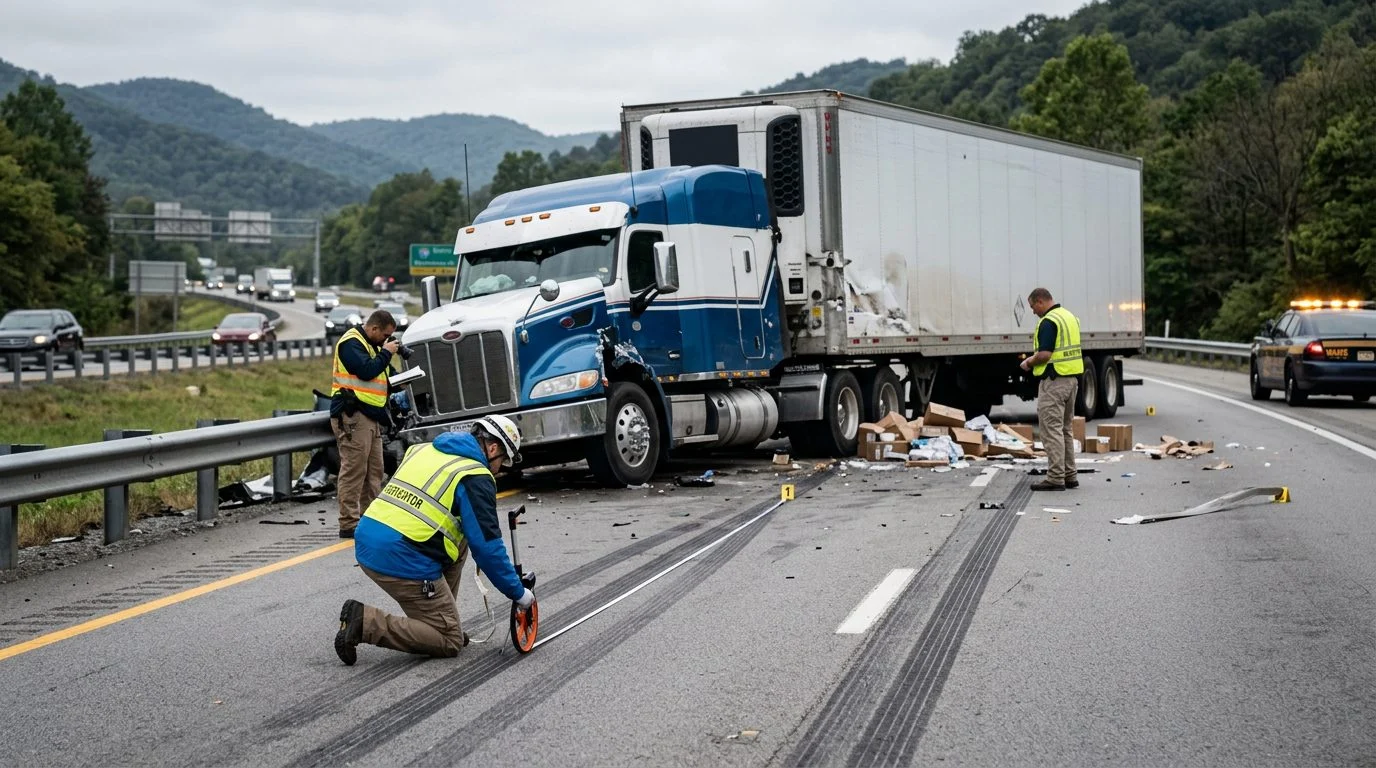
The investigating law enforcement agency that responded to the scene prepares the crash report. That may be the West Virginia State Police or a local police department. The report records the facts the officer gathered at the scene. It is separate from your own notes, photos, and insurance file.
A truck crash can involve more than one agency. A state trooper may handle the highway, while a local department handles a nearby intersection. Layouts also vary by agency and crash type, so your copy may label things differently. Check the agency name at the top first. The broader steps for a truck claim are covered in our truck accident claim process guide.
If your truck crash report has a field, carrier name, or narrative that doesn't match what you remember, you can reach out for a free case review. Talk it through with Big Bubba — the first case review is free, confidential, and carries no obligation.

Getting the Right Version of the Report Before You Read It
Request the report from the agency that investigated the crash. Use the report or case number on your paperwork. Start by counting the pages. Look for any supplemental pages and diagram attachments. A report with missing pages can make the story hard to follow.
Next, check the report date. Find out whether your copy is an original or a later amended version. If you have both, keep both. The agency may charge its own copy fee, and that agency sets the amount. Some agencies handle requests under public records law, so ask what process applies. Write down the date you asked and the date you received the copy.
Crash Identification: Date, Time, Location, and Report Number
The identification fields tie the report to one crash, one date, and one place. The date and time should match what you remember. They should also match what dispatch records or witnesses describe. Location fields usually ask for a road name, a route or highway number, a milepost, and a nearby landmark.
These details matter because the narrative often describes lanes and direction of travel by road. A wrong route number can place the crash on the wrong road. The report number ties every page, diagram, and amendment request to one file. Use it in every letter and call. Note each error with its page number.
Parties and Drivers: Names, License Information, and Contact Details
The driver section identifies each driver by name, address, date of birth, and license information. Check each entry against what the driver reported at the scene. Confirm names and license numbers character by character. A single transposed digit can make a record hard to match.
If you were a passenger or pedestrian, you may appear in a separate section. Check that section for correct spelling and contact details. The agency may use those details to reach you about the file. Common mistakes include a misspelled name, a transposed license number, or a driver listed in the passenger section. Clerical errors like these are usually simple to explain in writing.
Vehicles and the Commercial Carrier Details on a Truck Crash Report
The vehicle section records each vehicle’s year, make, model, body type, license plate, and vehicle identification number, or VIN. For a truck, the carrier fields matter most. They may list the carrier name, the USDOT number, and other motor carrier identifiers. These fields help identify the company responsible for the truck.
Federal rules require motor carriers to keep required records for set periods. Legible copies that accurately reflect the information may be kept in place of originals (49 C.F.R. § 390.31). The same rules bar fraudulent or intentionally false entries on required records (49 C.F.R. § 390.35).
Cargo and placard fields record what the truck carried and whether hazardous materials were involved. Common mistakes include an incorrect VIN, a missing USDOT number, a trailer recorded under the wrong number, or a carrier name that differs from the markings on the truck.
Insurance, Owner, and Lessee Information
The report may list the vehicle’s owner, any lessee, and insurance details reported at the scene. The owner or lessee entry matters. A truck is often leased or run under a company name that differs from the one on the door. Check the owner against the registration. Check the lessee against any lease papers you have.
Insurance fields reflect what someone reported at the scene. They may need to be confirmed separately. Common mistakes include an owner listed as a driver’s own name when a company owns the truck, or insurance fields left blank. Write down what you know about the insurer and the policy number, if you have them.
Not sure what your next step is?
Talk it through with Big Bubba — the first case review is free, confidential, and carries no obligation.
Witnesses, Passengers, and Injury Information
The witness section lists people who saw the crash or arrived right after it. Witnesses can help confirm the order of events, the lane, and the signals. Their contact details on the report may be the only way to reach them later.
The passenger and injury fields record who was hurt, what injury the officer observed, and whether medical transport was requested. These entries show who was present and what the officer was told. Some injuries are not visible at the scene. If you went to a hospital, keep those records with your copy of the report. Common mistakes include a witness never contacted, injuries recorded as none when you were taken to a hospital, or a missing passenger.
The Diagram, the Narrative, and the Officer’s Observations
The diagram shows vehicle positions, lanes, and points of impact. The narrative explains what the officer saw and what people told the officer. The two should match. Check that the truck appears in the lane the narrative describes. Check that the direction of travel is consistent.
The narrative should also separate the officer’s observations from each driver’s statements. Read those labels closely. A driver’s statement is what that person said. It is not the officer’s finding. Common mistakes include a diagram placing the truck in the wrong lane, a narrative that contradicts the diagram, or a statement attributed to someone who never said it. If you disagree with the account, write your version and ask how the agency handles attachments.
Citations, Contributing Factors, and Charges
The citation section lists any traffic citations issued to a driver and the traffic law cited. Contributing factor codes, such as speed, following distance, weather, or equipment, show what the officer believed played a role. These entries are the officer’s own. They do not decide fault by themselves.
Under West Virginia’s comparative fault rules, fault may be divided by percentage among the people involved. A plaintiff’s fault does not bar recovery unless it is greater than the combined fault of all other persons; if it is less, recovery is reduced in proportion to the plaintiff’s degree of fault (W. Va. Code § 55-7-13c). Check that each citation is listed and tied to the correct driver. Check that each code matches the narrative. Ask the agency for the status of any citation and keep the paperwork.
Common Mistakes That Send a Crash Report Back for Correction
Most errors fall into three groups. Identification mistakes include wrong dates, times, and locations. Party and vehicle mistakes include misspelled names, wrong license numbers, and wrong VINs or USDOT numbers. Narrative mistakes include a diagram that conflicts with the text or a statement credited to the wrong person.
A clerical error is different from a disagreement about how the crash happened. A misspelled name or transposed number is a fact-check issue. A disagreement about cause usually needs a written statement or other evidence. Keep a dated list of every error you find. Include the page and field where it appears. That list makes a correction request faster to write.
How to Request an Amended or Supplemental Crash Report
You request a correction from the agency that issued the report. That agency decides how to handle the request. Gather the report number, the page and field with the error, and any supporting document. A registration, a photo of a VIN plate, or a witness contact record may help.
Put the request in writing and keep a copy. An amended report may carry a new date, so keep both versions. Agencies may take time to process a request. Do not assume a change until you receive the corrected copy. If a change is not made, you can still provide your own written account, as the agency allows.
If your truck crash report has a field, carrier name, or narrative that doesn't match what you remember, you can reach out for a free case review. Talk it through with Big Bubba — the first case review is free, confidential, and carries no obligation.
Using the Crash Report With the Rest of a Truck Accident Claim
The crash report is one piece of evidence. It is often reviewed next to medical records, photos, vehicle data, and carrier records. Truck crashes involve more records than a car-only crash. Federal post-accident testing rules set time limits. If a required post-accident alcohol test is not given within two hours, the employer must keep a record on file stating why it was not given promptly. If a required post-accident alcohol test is not given within eight hours, the employer must stop trying to give it and must keep a record of why it was not given (49 C.F.R. § 382.303).
West Virginia’s commercial vehicle employer statute, W. Va. Code § 55-7-32, applies only to causes of action arising after its July 1, 2024 effective date. Families handling a claim after a death may also review a page on wrongful death after a commercial vehicle crash. A complete, internally consistent report is easier to review. That does not predict how any claim will turn out.
Reviewing Your Crash Report With the Firm
If a field, carrier name, or narrative in your report raises questions, the firm can review it with you. Start by writing down the page and field that concern you.
What is a truck crash report in West Virginia?
It is the official record a law enforcement agency prepares after a crash. It records the facts the officer gathered at the scene.
Which agency issues the report?
The investigating agency issues it. That may be the West Virginia State Police or a local police department.
What is a USDOT number on a crash report?
It is a federal identifier for a motor carrier. It helps identify the company responsible for the truck.
Can I ask for a correction?
Yes. Make the request in writing to the agency that issued the report. Include the report number and the page and field involved.
Does the report decide who was at fault?
No single record decides fault on its own. West Virginia’s comparative fault rules may divide fault by percentage among the people involved (W. Va. Code § 55-7-13c).
You can reach out to the firm to request a free case review. The review is confidential and comes with no obligation to continue.