
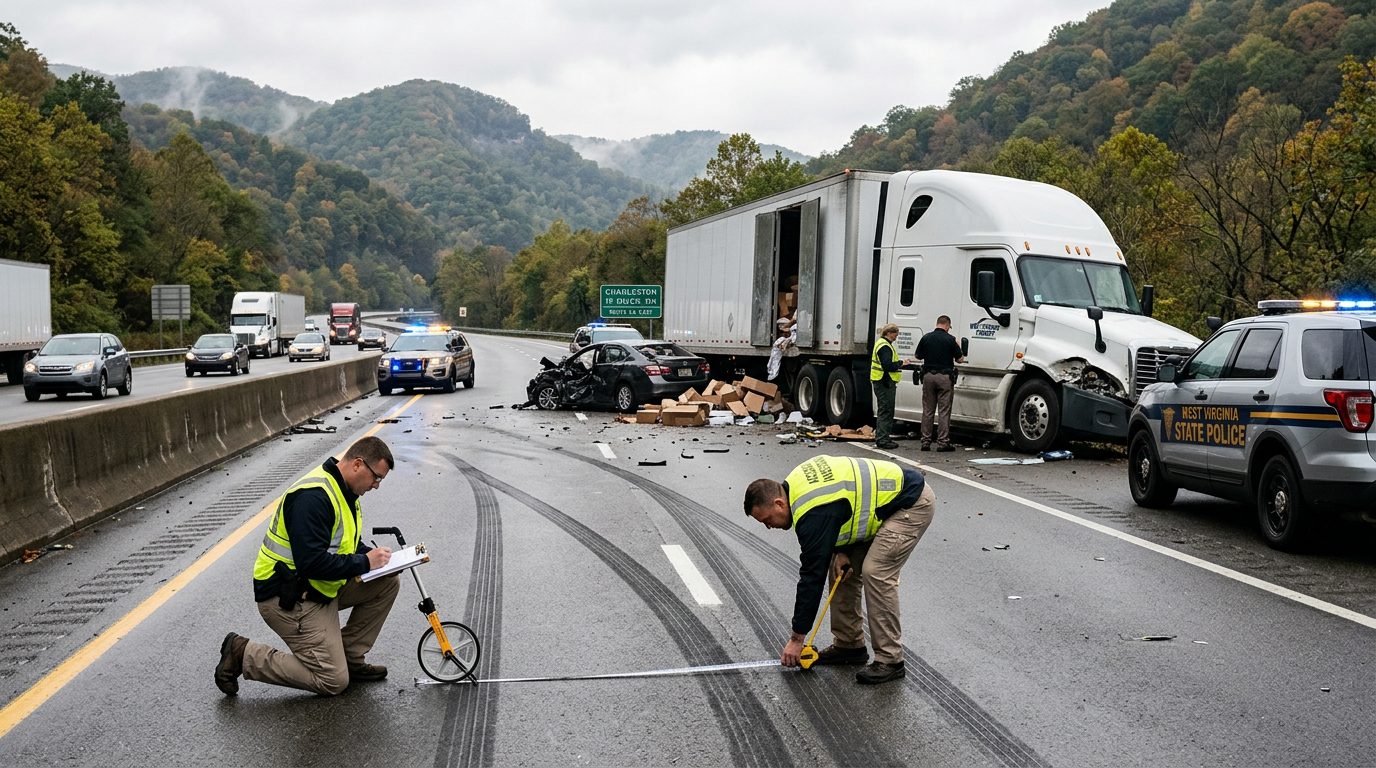
Truck Accidents in West Virginia
Lost Wages After a Truck Crash? We Can Help You Sort Out Your Losses
A serious truck crash can cut into your paycheck long after the wreck itself. Here is how we approach the income side of your claim.
Published November 11, 2026
A truck crash can keep you away from work for weeks, or for good. If you’re asking whether that missed income belongs in your claim, it may. Lost wages and lost earning capacity are both economic losses that can be part of a truck accident lost wages claim in West Virginia, depending on the facts.
This page explains what each category means, what records support it, and how the claim process generally moves.
What Lost Wages and Lost Earning Capacity Mean in a Truck Crash Claim
Lost wages are pay you missed because of the crash. Lost earning capacity is a reduced ability to earn in the future.
Lost wages usually cover the time from the crash until you recover or return to work. That can include time off for hospital stays, surgery, therapy, and doctor visits.
Lost earning capacity looks forward. It may apply when a serious injury means you can no longer do your old job, must move to lighter work, or lose a career path you had planned.
Both are economic losses. They differ from pain and suffering, which is a noneconomic loss. A claim may include one, both, or neither, depending on the facts.
Truck crashes often cause injuries that keep people off the job for a long time. A brain injury or spinal cord injury can affect work for life. Medical records and work restriction notes are often the starting point for showing what an injury means for your job.
If a tractor-trailer crash has kept you off the job and you're wondering whether lost pay belongs in your claim, reach out to us to request a free case review. Talk it through with Big Bubba — the first case review is free, confidential, and carries no obligation.

Who May Be Responsible for Income Losses After a Truck Crash
The driver, the trucking company, or another party may share responsibility for lost income, depending on how the crash happened.
In a commercial vehicle case, West Virginia law defines an “employer defendant” to include the vehicle’s owner and the driver’s employer. W. Va. Code § 55-7-32 Its text applies to certain civil claims for personal injury or wrongful death involving the operation of a commercial motor vehicle.
Truck cases often turn on records. 49 C.F.R. § 395.3
If another driver was at fault, you may be able to pursue lost income from that driver.
West Virginia generally uses a modified comparative fault rule. Your own share of fault can reduce what you recover. It bars recovery only if your fault is greater than the combined fault of everyone else responsible. W. Va. Code § 55-7-13c
Types of Income Loss a Truck Accident Claim May Include
A truck accident claim may include several kinds of lost income. Which ones apply depends on your job and how the injury affects your work.
- Base pay: hourly wages or salary for shifts missed due to crash injuries and treatment.
- Overtime and bonuses: regular overtime, shift differentials, or bonuses you would have earned.
- Employer benefits: health coverage, retirement contributions, or paid leave you lost, where they apply.
- Reduced hours or changed duties: lower pay when an injury limits your hours or the tasks you can do.
- Self-employment income: profits lost by owners, independent drivers, and contractors.
- Future earning capacity: reduced ability to earn over time when permanent restrictions apply, such as after a brain or spinal cord injury.
Each item needs its own proof. A pay stub history can show base pay. Overtime usually needs time records that show a steady pattern. Lost earning capacity is often the hardest category to prove, so it usually relies on medical input.
Records That Support an Income Loss Claim
Strong income loss claims rest on records that show what you earned before the crash and what you lost after it.
- Pay stubs, W-2 forms, and tax returns from the period before the crash.
- Employer letters confirming your job title, pay rate, schedule, and days missed.
- Medical records and work restriction notes that connect the injury to time away from work.
- Leave records, attendance logs, and written return-to-work discussions.
- For self-employed people, invoices, business bank statements, and profit records.
- Crash documents such as the police report. The responding agency may charge a copy fee.
Trucking companies keep records too. Federal rules allow records to be kept electronically, as long as they stay accurate and can be reproduced later.
How a Truck Accident Income Claim Generally Moves Forward
Most income loss claims follow the same general steps, though each one moves at its own pace.
- Free case review. You share what happened, your job, and your injuries. The free case review carries no obligation to continue.
- Investigation. The firm may look at trucking company records and electronic data before they are lost.
- Medical and work documentation. Records are gathered to tie your missed work to the injury.
- Income calculation. Past losses and possible future losses are estimated from your records and medical input.
- Negotiation or lawsuit. Claims are negotiated with the responsible parties or their insurers. A lawsuit may be filed if needed.
Timing varies widely from case to case, and no specific timeline can be promised. West Virginia also limits certain settlement contacts in the first twenty days after an injury, when the injured person is in the hospital or cannot do usual work. Under W. Va. Code § 55-7-11a, a settlement, release or statement obtained in violation of the section’s twenty-day restriction, which applies while the injured person is an inpatient or partially or totally unable to work, may be disavowed by the injured person at any time within one hundred eighty days from the date of the personal injury by executing a written statement of disavowal and thereupon forwarding a copy of the same to the person violating this section. W. Va. Code § 55-7-11a
Common Questions About Lost Wages in West Virginia Truck Crash Claims
Missed income can be part of a claim when records connect the injury to the lost work.
Can I still claim lost wages if I missed work before I had a diagnosis?
Often, yes, if records connect early treatment and missed work to the crash. The timing of first medical care is commonly reviewed closely.
What if my employer keeps paying me while I recover?
Paid leave can change how lost income is documented, so the details matter. Some claims still address time or benefits that were actually lost, depending on the facts.
Can I claim lost wages if I cannot return to my old job?
Lost earning capacity may apply when restrictions change the type or amount of work you can do. Work restriction notes are central to showing that change.
What if the trucking company says my injuries were not that serious?
Some insurers may dispute a claim. Medical records and work restrictions are central to answering that dispute.
Can a family pursue lost income after a fatal truck crash?
West Virginia’s wrongful death law allows a verdict to include reasonably expected loss of the decedent’s income. It also covers lost services and care the decedent provided. W. Va. Code § 55-7-6 The action is generally brought by the decedent’s personal representative and must generally begin within two years after death.
Not sure what your next step is?
Talk it through with Big Bubba — the first case review is free, confidential, and carries no obligation.
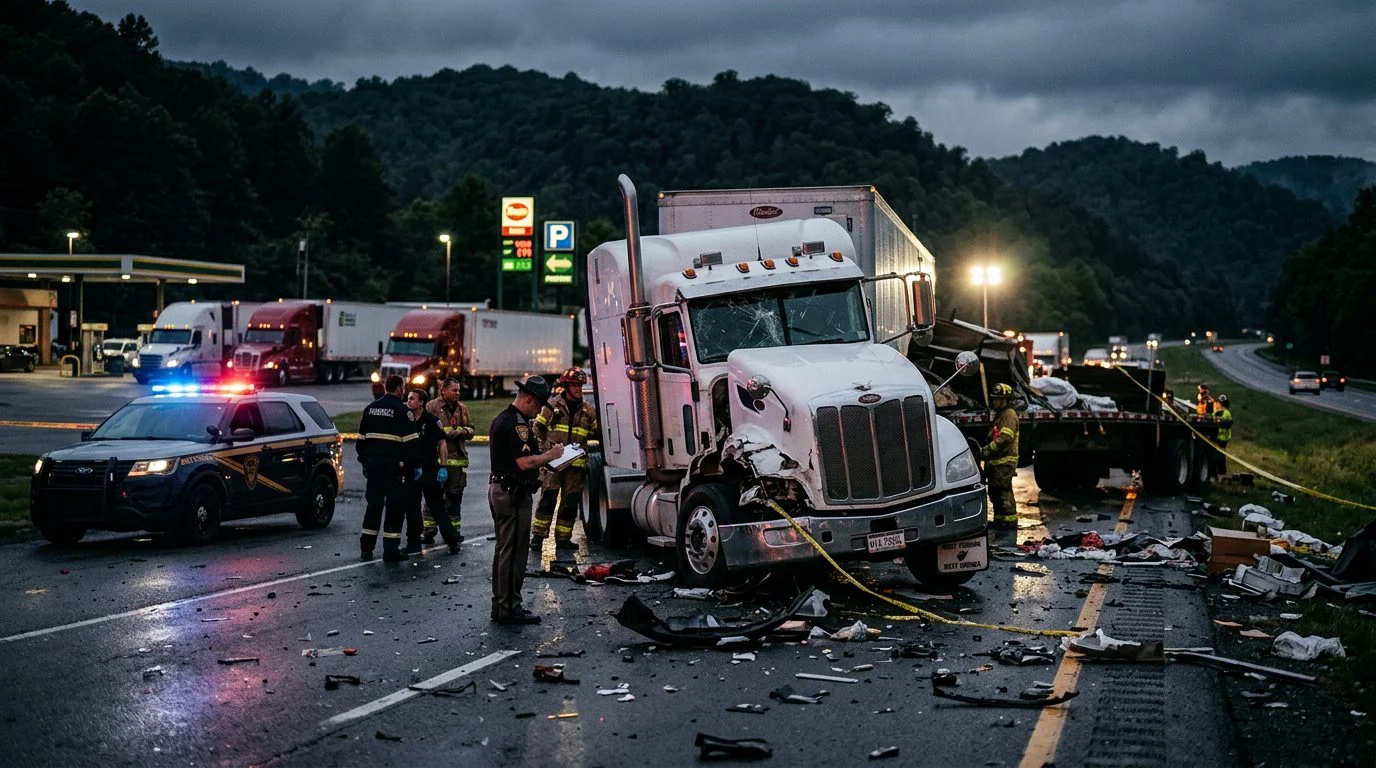
Missed Income After a Truck Crash
Big Bubba Injury Law handles truck accident claims, commercial vehicle claims, and catastrophic injury cases in West Virginia. We serve Charleston injury victims and injury victims across the state, including Huntington, Morgantown, Wheeling, Martinsburg, Parkersburg, Beckley, Clarksburg, Fairmont, and Weirton.
To make a free case review useful, have these details ready: the crash date, your employer, recent pay records, and the names of your medical providers.
If a tractor-trailer crash has kept you from work and you’re wondering whether lost pay can be part of your claim, you can reach out to us for a free case review.