
Truck Accidents | Serving West Virginia
Hurt as a Passenger in a Truck Crash? Your Claim Starts Here.
Big Bubba Injury Law represents people hurt in car and commercial truck crashes, including passengers, across West Virginia. We help you understand your options and focus on your recovery.
Published October 30, 2026
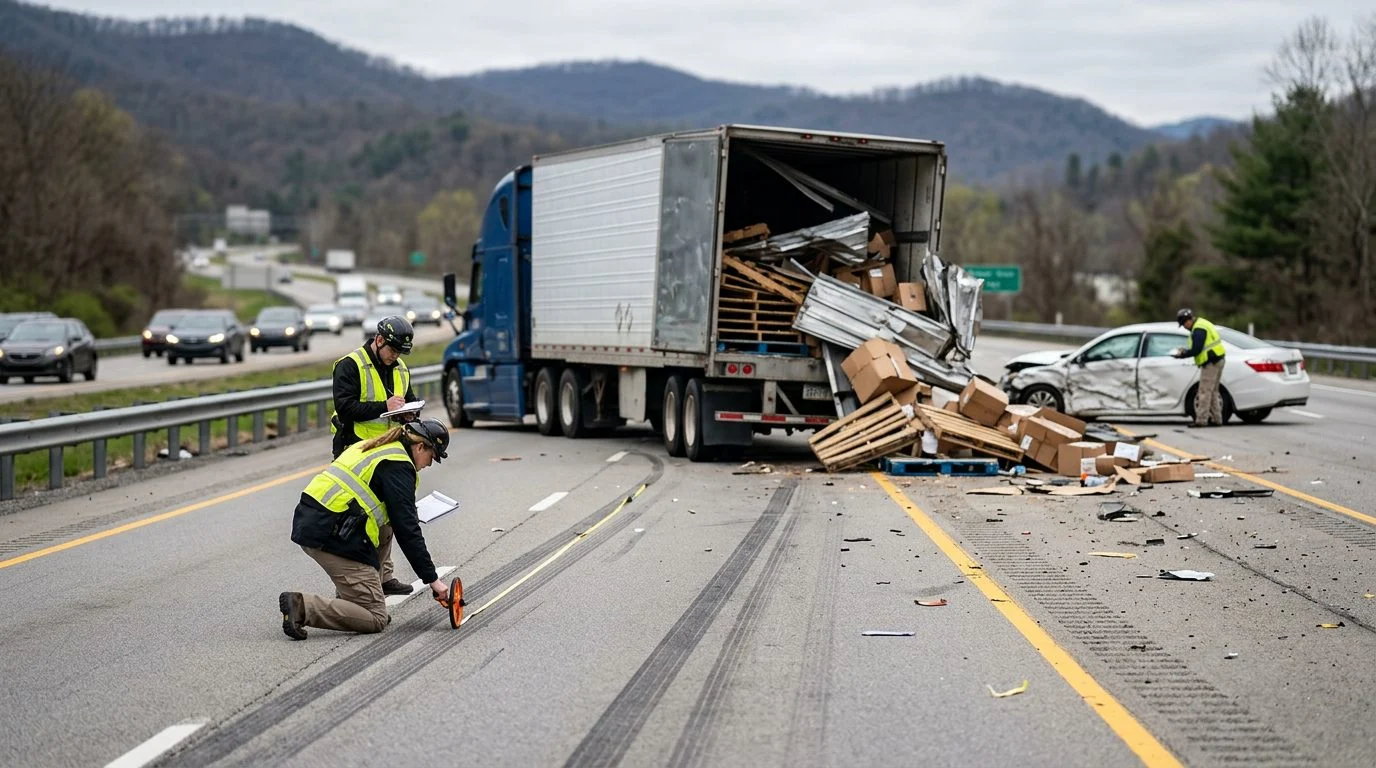
If a commercial truck hit the car you were riding in, you may have a claim even though you did not drive. In West Virginia, a claim like this can reach the truck driver, the trucking company, and others whose actions helped cause the crash. This guide explains who may be responsible, how fault is decided, which evidence matters early, and what to expect.
Who a Passenger’s Claim Is For and What It Can Cover
A truck accident passenger car claim in West Virginia covers a person hurt while riding in a vehicle in a truck crash. It can also cover the family of a passenger who died.
Passengers may have been in the car that was struck or, in some crashes, in the truck. A passenger does not control how the vehicle is driven. That often makes their role easier to separate from the drivers’ roles.
Every injury case is different, and the losses a person faces can extend well beyond medical bills.
- Medical bills, both past and future
- Lost wages and lost ability to earn money later
Catastrophic injuries such as traumatic brain injury and spinal cord injury often need long-term care. That usually means a claim needs more planning, and the full picture can take longer to form.
Families facing the death of a loved one in a crash often have many questions, and the firm can talk through them with you. Under West Virginia wrongful death law, the claim is brought by the deceased person’s personal representative. Damages can include sorrow and mental anguish, expected lost income, care and hospital expenses, and reasonable funeral expenses.
If a truck hit the car you were riding in, you may have a claim, and we can talk through what happened in a free case review. Talk it through with Big Bubba — the first case review is free, confidential, and carries no obligation.

Who Can Be Held Responsible When a Truck Hits a Car
More than one party can be responsible, and the truck driver is only one possibility.
- The truck driver. Distraction, speeding, unsafe lane changes, or driving while too tired or ill can cause a crash. Federal rules bar a driver from operating a commercial vehicle when alertness is so impaired, or so likely to become impaired, through fatigue, illness, or any other cause, as to make it unsafe to begin or continue operating the vehicle, under the federal fatigue rule.
- The trucking company. A claim can look at how the company hired, trained, supervised, dispatched, and maintained the truck. A company that owns or controls the truck can be an “employer defendant” under West Virginia commercial vehicle law.
- Other parties. Maintenance contractors, cargo loaders, or parts makers may have played a role. Whether they did depends on what happened.
- The car’s driver. If the driver of the car you rode in contributed to the crash, that driver may share fault.
Under West Virginia fault rules, the trier of fact shall consider the fault of all persons who contributed to the alleged damages, regardless of whether the person was or could have been named as a party to the suit.
West Virginia law caps compensatory damages for noneconomic loss at $5 million per occurrence in certain commercial motor vehicle cases, and the cap does not apply to all damages. Under W. Va. Code § 55-7-32, an employer defendant cannot use the cap unless it carries at least $3 million in commercial motor vehicle insurance. Injury claims can include economic losses, such as medical bills and lost income, and non-economic losses. The rules that apply depend on the facts of each case. The cap does not apply in several listed situations, including impaired driving, hours-of-service violations, and willful or wanton disregard for safety.
How West Virginia Decides Fault
West Virginia uses a modified comparative fault rule, which splits fault by percentage among everyone who contributed to the harm (W. Va. Code § 55-7-13c).
Under West Virginia’s comparative fault statute, each person’s share of liability follows their percentage of fault. The percentages must total either zero or one hundred.
Here is what that means for a passenger. Under West Virginia’s damages rule, an injured person’s own fault does not block recovery unless it is greater than the combined fault of everyone else. If it is less, the recovery is reduced by the injured person’s share.
A passenger who did not control the vehicle often has a small share of fault. How the rule applies depends on the facts of each crash.
Investigators and insurers often look at:
- Police crash reports
- Witness statements
- Traffic, road, and weather conditions
- Damage patterns on both vehicles
Winter roads can change how a crash is viewed, so road and weather details matter.
Evidence That Matters Early
The evidence that matters most is often the evidence that can disappear first, especially a trucking company’s records.
- Driver logs. Federal rules require motor carriers to have each driver record a driver’s record of duty status for each 24-hour period, except private motor carriers of passengers (nonbusiness). They also bar false reports and tampering with electronic logging devices.
- Driver qualification files. A carrier must keep a driver qualification file while the driver is employed and for three years after, except as provided in paragraph (d) for records that may be removed three years after execution.
- Scene evidence. Photos, dashcam or phone video, damage to both vehicles, and where debris landed all help. Write down what you remember while it’s fresh.
- Medical records. Keep emergency records, imaging, and notes about every symptom, even minor ones. Some brain and spinal injuries show symptoms later.
- A simple journal. Track appointments, missed work, travel to care, and daily tasks that have changed.
Records are easier to preserve when someone asks for them early. Starting the process quickly helps identify what exists.
What to Expect: From Free Case Review to Resolution
A truck crash claim usually moves from a free case review to investigation, a demand letter, and then settlement talks or a lawsuit.
- Free case review. This is a confidential first conversation with no obligation to continue. You describe what happened and what you are facing.
- Investigation. The firm can request crash reports and trucking records and work to preserve evidence.
- Medical picture. A claim is usually not fully valued until the injured person reaches maximum medical improvement. That is the point where the condition is stable enough to assess.
- Demand letter. This is a written presentation of fault and damages sent to the responsible parties’ insurers.
- Negotiation or lawsuit. If a fair resolution is not reached, the claim may move into a lawsuit. Discovery is the process of exchanging evidence.
Timelines vary widely. The general deadline for a personal injury claim is two years under West Virginia’s limitation statute.
The firm handles truck accidents, commercial vehicle accidents, catastrophic injuries, and wrongful death claims. We serve injury victims across West Virginia, including Charleston, Huntington, Morgantown, Wheeling, Martinsburg, Parkersburg, Beckley, Clarksburg, Fairmont, and Weirton.
Common Questions About Passenger Claims in West Virginia
Can I bring a claim if I was only a passenger?
Often, yes. A passenger may have a claim against the drivers and companies whose conduct helped cause the crash.
Do I have to talk to the insurance company right away?
West Virginia limits settlement talks during the first twenty days after an injury for people in the hospital or unable to work.
What if the driver was a family member?
Family relationships can affect insurance questions. A free case review is a good place to sort those questions out.
What if I have no visible injuries?
Some brain and spinal injuries show symptoms days later. Getting checked soon after a crash helps record what you are feeling.
What if a family member died in the crash?
Under West Virginia wrongful death law, the personal representative brings the claim. It must start within two years after the death, subject to the provisions of section eighteen, article two, chapter fifty-five. W. Va. Code § 55-7-6 reads: “The provisions of this section shall not apply to actions brought for the death of any person occurring prior to July 1, 1988.”
Not sure what your next step is?
Talk it through with Big Bubba — the first case review is free, confidential, and carries no obligation.
Talking Through Your Passenger’s Situation With the Firm
If you’re reading about a truck accident passenger car claim in West Virginia for a parent, spouse, or child, you’re probably still dealing with injuries and hard questions.
They may still be in treatment, and deciding whether to talk to a lawyer can feel like one more task. The real question is whether the crash, the injuries, and the trucking company’s conduct are worth a conversation.
A free case review is confidential and has no obligation to continue. You can tell Big Bubba what happened through the contact form, and the firm will go from there.
Related practice areas
- Truck Accident Claims in West Virginia | Big Bubba Legal
- How Long Do Trucking Companies Keep Driver Logs and Crash Data After a Wreck?
- Delivery Truck Accident Claim West Virginia | Big Bubba