
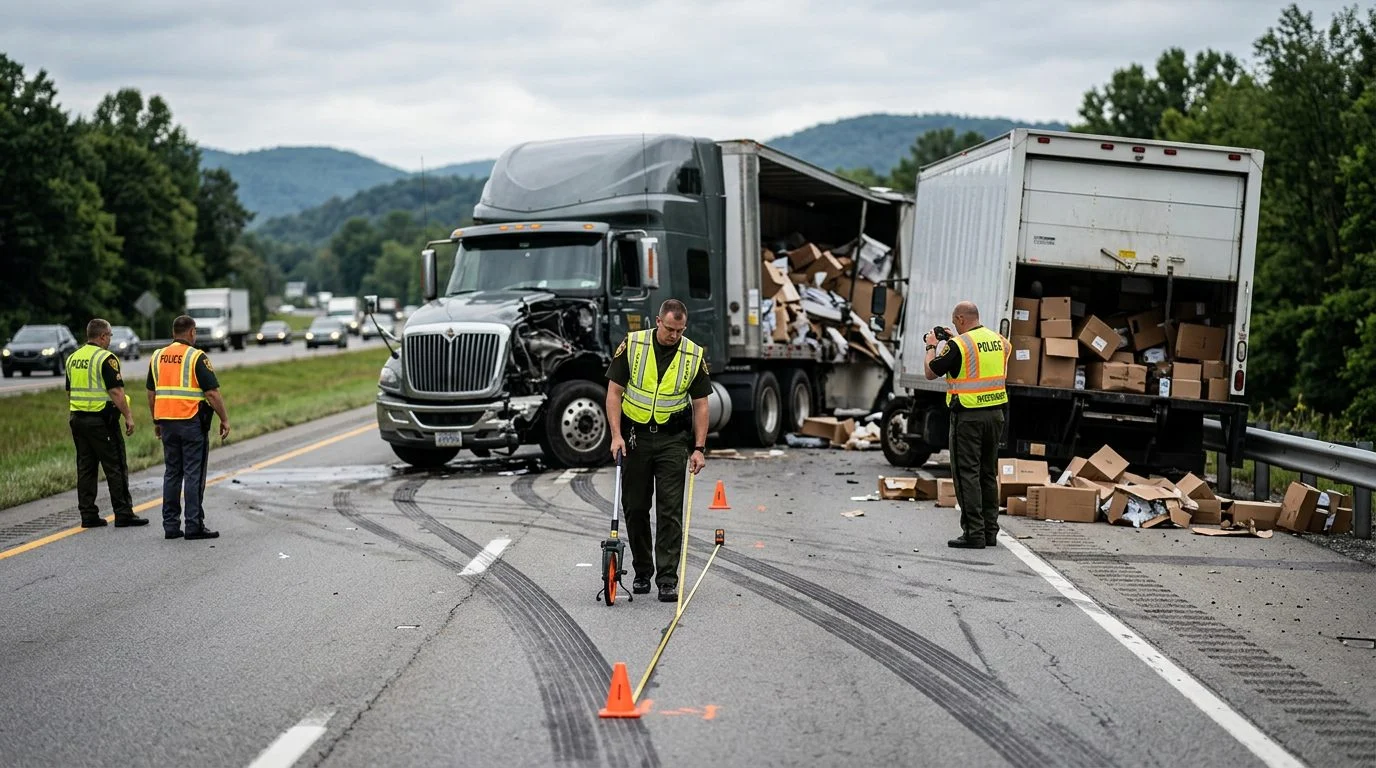
Truck Accident Settlement
What to Expect in Your West Virginia Truck Accident Claim
Understanding the settlement process after a serious truck crash—and how Big Bubba Injury Law handles settlement negotiations.
Published October 01, 2026
Truck Accident Settlement: What to Expect in West Virginia
A truck accident settlement is a negotiated agreement between you (or your legal representative) and the at-fault party’s insurance company to resolve your injury claim without going to trial. Understanding how the process works, what factors shape the outcome, and why timing matters can help you make informed decisions while you’re healing.

If you've been seriously injured in a truck crash in West Virginia and you're trying to understand what comes next, you don't have to figure this out alone. Talk it through with our team — the first case review is free, confidential, and carries no obligation.
What Happens After a Truck Accident: The Settlement Path
The truck accident settlement process typically unfolds in stages: investigation, demand, negotiation, and resolution. Each step takes time because each one serves a purpose.
First, the facts of the crash must be gathered. This includes police reports, witness statements, photos of vehicle damage, and often accident reconstruction analysis. For truck accidents specifically, investigators examine Federal Motor Carrier Safety Regulations (FMCSR) compliance—whether the truck driver followed required rest periods, maintenance schedules, and load limits. Generally, violations of these regulations may bear on liability and may be relevant to your claim, depending on the facts of each case.
Next, your medical condition must stabilize enough to understand the full scope of your injuries. This is generally why settling before that point can be risky, since the full scope of your injuries may not yet be known. Once treatment is underway and prognosis is clearer, your attorney prepares a demand letter outlining your injuries, medical expenses, lost income, and the compensation you’re seeking.
The insurance company then responds, and its response may include a counteroffer. Negotiation follows—back-and-forth exchanges where both sides move toward a middle ground. If settlement is reached, you receive compensation and the case closes. If not, the case may proceed toward trial, though most settle before that point.
Key Factors That Influence Your Truck Accident Settlement
Settlement value depends on several concrete factors, not on what someone else received.
Severity of injury is the primary driver. Catastrophic injuries—traumatic brain injury (TBI), spinal cord injury, permanent disability, or wrongful death—can involve ongoing medical care, permanent life changes, and lost earning potential, and how these factors affect a claim depends on the facts of each case.
Liability and fault matter enormously. Evidence that the truck driver or company was at fault may, depending on the facts, be relevant to your position. West Virginia applies comparative fault principles: if you bear partial responsibility for the accident, your recovery is generally reduced in proportion to your degree of fault, but you are barred from recovery if your fault is greater than the combined fault of all other persons responsible. Depending on the facts, strong evidence—dashcam footage, witness statements, FMCSR violations—may bear on the negotiations in your claim, though results depend on the facts of each case.
Medical documentation is your foundation. Thorough medical records, imaging studies, specialist opinions, and treatment plans establish the extent of your injuries and future care needs. Insurance companies scrutinize medical records carefully; consistent, well-documented care following standard treatment protocols carries far more weight than sporadic treatment.
Lost income and earning capacity are legitimate settlement components. Both wages you’ve already lost and future income you cannot earn due to your injuries factor into value. In catastrophic injury cases, calculating lost earning capacity requires vocational expert opinions and realistic projections of the job market you could access.
Insurance policy limits set a ceiling. The at-fault party’s coverage caps what can be recovered in many cases, regardless of the actual harm you’ve suffered.
Witness statements and accident reconstruction provide objective evidence of how the crash happened and who caused it—critical when liability is disputed.
How Much Are Most Truck Accident Settlements?
There is no single “average” truck accident settlement that applies to your case. Settlement amounts vary widely based on the factors above.
Catastrophic injuries generally may involve more serious and longer-lasting consequences than minor injuries, which can affect how a claim is evaluated, depending on the facts. A person with a spinal cord injury may face ongoing medical care, adaptive equipment, and lost earning potential, depending on the individual’s circumstances. A person with a minor soft-tissue injury faces a different recovery trajectory.
Insurance companies use internal settlement guidelines and formulas as starting points for negotiation, but those are not final offers. They’re opening positions designed to be challenged with strong evidence. Your actual settlement depends on your specific injuries, the evidence supporting your claim, and the strength of your legal representation.
Not sure what your next step is?
Talk it through with our team — the first case review is free, confidential, and carries no obligation.
How Long Does a Truck Accident Settlement Take?
Timeline varies significantly. Some cases settle within months; others take a year or longer.
Early stages—investigation, medical treatment, obtaining records, and preparing a demand letter—can take varying amounts of time depending on the facts of each case. Negotiation can be quick if both sides are aligned, or lengthy if positions are far apart. Complex cases involving catastrophic injury, multiple parties, or disputed liability may take longer because more evidence and expert input are needed.
Settling before your medical condition stabilizes or before the full scope of your injuries is known may affect the outcome of your claim, depending on the facts.
Do Injections or Other Treatments Increase Your Settlement?
Medical treatment itself does not automatically increase a settlement amount. What matters is whether that treatment was medically necessary and documented as such.
Insurance companies scrutinize treatment decisions carefully. They may dispute whether a particular injection, surgery, or procedure was reasonable or necessary. Consistent, well-documented medical care that follows standard treatment protocols for your injury type may be relevant to your claim because it can help show why that care was needed, depending on the facts.
The goal of treatment is your recovery, not settlement leverage. But thorough medical records may be relevant to your claim because they can help document the reality and extent of your injuries, depending on the facts of your case.
Will Your Settlement Cover Future Lost Income?
Generally, if your injuries prevent you from working or earning at your previous level, future lost income (also called lost earning capacity) may be a recoverable part of your claim, depending on the facts. Exceptions may apply.
This may be especially important in catastrophic injury cases where permanent disability may affect your ability to work over a long period, depending on the facts. Calculating future lost income requires evidence: your pre-injury earnings, your medical prognosis, vocational expert opinions about realistic job options, and the job market you could access given your post-injury limitations.
Future income projections may be questioned, so thorough documentation may be relevant to how your claim is evaluated, though how any dispute is resolved depends on the facts of your case.
Have questions about what happened?
Ask our team directly. The first conversation is free, confidential, and there is no obligation to continue.
Why Legal Representation Matters in Settlement Negotiations
Insurance adjusters generally work for the insurance company, so their role in settlement negotiations may differ from yours, though exceptions may apply depending on the facts of each claim. Without representation, an injured person may find it harder to assess the value of their case.
An attorney investigates the crash thoroughly, gathers evidence, obtains medical records, and builds a factual case for your claim. Generally, your lawyer can handle communication with insurance companies on your behalf, which may help limit statements that could be used against you, depending on the facts of your case. A prepared, well-documented case may be useful if an insurer disputes the value of your claim, depending on the facts.
Taking time before accepting any settlement offer may allow you to better understand the full extent of your injuries and what your future medical needs may be, depending on the facts of your case.

Frequently Asked Questions
How is liability determined in a truck accident?
Liability is generally assessed through evidence that may include police reports, witness statements, accident reconstruction, compliance with Federal Motor Carrier Safety Regulations, and expert opinions about how the crash occurred, depending on the facts of each case.
What if I’m partially at fault for the truck accident?
West Virginia applies comparative fault law, meaning your recovery is generally reduced by your percentage of fault, and your fault generally does not bar recovery unless it is greater than the combined fault of all others responsible. Exceptions may apply depending on the facts.
How long should I wait before settling my truck accident claim?
Generally, many people wait until their medical condition has stabilized and the full scope of their injuries and long-term needs is known, though timing depends on the facts of each case.
What documents do I need for a truck accident settlement?
Medical records, imaging studies, specialist reports, proof of lost wages, medical bills, police reports, witness contact information, and photos of vehicle damage.
If you’ve been seriously injured in a truck crash in West Virginia and you’re trying to understand what comes next, you don’t have to figure this out alone. Contact us for a case review to talk about what happened and what your claim might look like.
The Settlement Process: Key Stages
Investigation & Evidence Gathering
We collect police reports, witness statements, accident reconstruction analysis, and records of Federal Motor Carrier Safety Regulation compliance. This foundation may help clarify who may be liable and how the crash occurred, depending on the facts of each case.
Demand & Negotiation
We prepare a detailed demand that reflects your medical treatment, lost wages, pain and suffering, and long-term care needs. We negotiate with the truck company's insurance carrier to reach a fair settlement.
Settlement or Trial
Many cases resolve through settlement. If a fair offer isn't reached, we're prepared to take your case to trial and present your claim to a jury.
Recovery & Closure
Once settled or awarded, funds are distributed to cover medical liens, attorney fees and case costs, and the remainder goes to you. No attorney fee unless we win; clients remain responsible for case costs.
Time Matters
Truck accident claims involve strict procedural rules and evidence that can disappear. The sooner you reach out, the sooner we can preserve critical information and protect your rights.
Why the Settlement Process Is Complex in Truck Cases
Multiple Parties & Insurance Layers
Truck accidents often involve the driver, the trucking company, the vehicle owner, and multiple insurance policies. We navigate these complexities to identify all responsible parties.
Regulatory Compliance Records
Federal Motor Carrier Safety Regulations govern truck operations. Violations—maintenance failures, hours-of-service breaches, driver qualification issues—may be relevant to liability and damages, depending on the facts of each case.
Serious, Long-Term Injuries
Truck accidents cause catastrophic injuries, traumatic brain injury, spinal cord damage, and wrongful death. Settlement must account for lifetime medical care, rehabilitation, and lost earning capacity.
Insurance Company Tactics
Trucking insurers may involve adjusters and defense lawyers in handling a claim. We can help you review any settlement offer before you decide whether to accept it.
Common Questions About Truck Accident Settlements
How is liability determined?
Through police reports, witness statements, accident reconstruction, compliance records, and expert analysis of how the crash happened. We examine Federal Motor Carrier Safety Regulation violations and driver conduct.
What if I'm partially at fault?
West Virginia applies comparative fault law (W. Va. Code § 55-7-13c). Under the comparative fault approach described above, a person’s recovery is generally reduced by the percentage of fault assigned to them, and exceptions may apply depending on the facts of each case. We evaluate your specific situation.
What damages can I recover?
Generally, the damages that may be recoverable can include medical expenses, lost wages, pain and suffering, disability, disfigurement, and, in wrongful death cases, loss of companionship and support, depending on the facts of your case. The severity of the injuries is one of the factors considered in valuing a claim, though no particular result can be promised.
How long does settlement take?
How long a case takes to settle varies and depends on the facts of each case; cases involving more complex injuries or multiple parties may take longer. We work to move your case forward efficiently while taking the time needed to review any offer.