
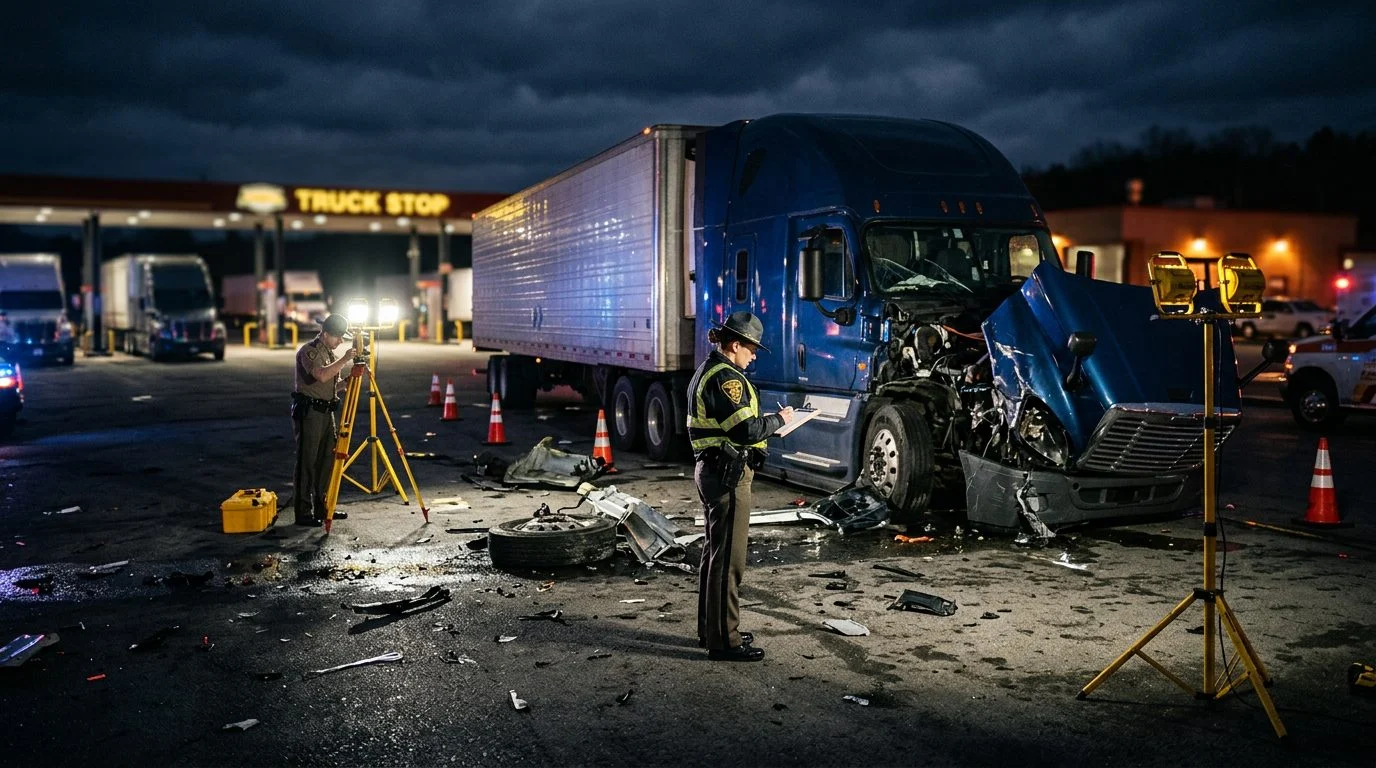
Truck Crash Evidence | West Virginia
Truck Crash Preservation Letter: Key Steps to Protect Evidence
Learn what a preservation letter asks a trucking company to keep, and how to start the process after a serious crash.
Published November 6, 2026
A truck crash preservation letter is a written request. It asks the trucking company, and often its insurer, to keep evidence connected to a crash. This page explains the truck crash preservation letter West Virginia families often ask about, which records may disappear, and why timing matters. A preservation letter asks that evidence be kept. It does not prove who was at fault.
If you’re reading this after a crash, you may be doing it for someone else. A spouse may be in the hospital. A parent’s truck may still be in a tow yard. The steps below can help you understand what’s at stake.
What a Preservation Letter Is and Why It Matters After a Truck Crash
A preservation letter is a written request to keep evidence that may matter later. In a truck crash, it usually goes to the trucking company and may also go to its insurer. The letter names the kinds of records and items the sender wants kept.
Think of it as a hold notice. It does not decide who was at fault, and it does not set the value of anything. Its job is narrower. It asks that records and equipment are not thrown away, changed, or repaired before anyone can review them.
Truck crashes often involve more records than car crashes. A truck may be driven by one person, owned by one company, leased from another, and dispatched through a third party. Each of those parties may hold different pieces. That spread is why the request is often sent early.
For a broader view of how these cases work, read our overview of truck accident claims in West Virginia.
Not sure what your next step is?
Talk it through with Big Bubba — the first case review is free, confidential, and carries no obligation.

Evidence That Can Be Lost or Overwritten
The evidence most at risk is usually material that is stored electronically, moved, or repaired during normal business. Several types of evidence often matter in a truck case:
- The truck and trailer, including damaged parts
- The electronic control module, which stores engine data
- Driver logs and electronic records of duty status
- GPS, telematics, and dispatch messages
- Drug and alcohol test results
- Dashcam and surveillance video
- Maintenance and inspection files
- Cargo and bill-of-lading paperwork
Some of these records sit on systems that are cleared, replaced, or updated on a routine cycle. Once that happens, the original may no longer exist. Federal rules set minimum retention periods for many carrier records. After those periods, the records may be destroyed at company management’s discretion (49 C.F.R. § 379.3).
Repairs and sales are another common way physical evidence changes. A damaged truck may be fixed and returned to service, and its parts may be replaced. Whether a particular item still exists often depends on how the company handled it. That is usually unclear until someone asks.
Electronic Control Module and GPS Records
Many modern commercial trucks store engine and braking data in an electronic control module. Fleet systems may also track location. These records can show how the truck was operated before a crash, if they still exist in their original form.
The electronic control module is sometimes called a “black box.” It may record speed, braking, throttle, and engine events. What it saves depends on the truck’s make, model, and settings. A request should ask the company to keep the module and its stored data.
GPS and telematics systems may record the route, timing, and stops. Carriers often hold this data through software vendors, not only in their own offices. A written request should name those systems too, so no one assumes another party is holding them.
Federal rules also limit changes to electronic records. A motor carrier must not alter or erase the original hours-of-service information it collects. It also may not permit anyone else to do so (49 C.F.R. § 395.30).
Driver Logs, Hours of Service, and Post-Crash Testing
Federal rules generally require commercial drivers to record their duty status. They may also require alcohol and drug testing after certain crashes. Both sets of records can matter in a truck claim.
Carriers must require drivers to record duty status for each 24-hour period. Logs can show when a driver was on duty and when driving began. Dispatch messages and fuel receipts may fill in the same timeline.
Post-crash testing is a separate rule. After certain crashes involving a commercial vehicle on a public road, an employer must test surviving drivers in some cases (49 C.F.R. § 382.303). The rule also sets timing limits. An alcohol test not given within two hours requires a written record of the reasons. If it is not given within eight hours, the employer must stop trying. For controlled substances, the cutoff is 32 hours.
The testing records and the reasons for any delay may be part of what a preservation request covers.
Dashcam and Surveillance Video
Video is often recorded over on a loop unless someone asks for it to be kept. Many trucks have forward-facing or driver-facing cameras. Some fuel stops, terminals, and nearby businesses have cameras too.
Footage may be overwritten after a set period. That period varies by system and by business. A request should name the camera systems that may hold footage and ask that the original file be saved.
You can help now by writing down the location, the time, and the direction the truck was traveling. Note the names of businesses near the crash site, since they may have cameras. Share that list with whoever is helping with the claim.
Keep the original files on your phone or device as they are. Editing or cropping can make the original harder to use later.
Why Timing Matters in the First 30 Days
The first few weeks after a crash are often when the truck, its data, and its paperwork are most likely to exist in original form. Records can change quickly once the truck leaves the scene.
A common sequence goes like this. The truck is towed. It may be repaired, returned to service, or sold. Routine systems keep recording or overwriting data on their own schedules. Each step may change what is left.
The company may not know a claim is coming. A preservation letter gives notice. It can move the company’s records from routine handling to a hold.
For a step-by-step look at early actions, read about the early steps after a truck crash. For medical and documentation steps in the first hours and days, see the ER visit checklist for truck crashes.
Not sure what your next step is?
Talk it through with Big Bubba — the first case review is free, confidential, and carries no obligation.
If the Other Driver Left the Scene or Did Not Report the Crash
When the other driver leaves the scene or does not report the crash, the trucking company may be hard to identify at first. That can delay a preservation letter.
Drivers involved in a crash often have questions about what to do at the scene and whom to contact afterward. Those duties are separate from a civil claim for injuries. Any criminal penalties depend on the circumstances.
Fewer records and witnesses may be available right away. A truck that leaves the scene may still have a company behind it, and that company may hold records. A letter may need to go out as soon as the company is identified.
Write down any markings on the truck, the company name, the DOT number if visible, the direction of travel, and the time. Those details can help identify the company later.
Deadlines and the Two-Year Question
West Virginia generally allows two years to bring a personal injury claim, and exceptions may apply. The general rule is in W. Va. Code § 55-2-12.
Wrongful death cases follow a related rule. Under W. Va. Code § 55-7-6, the action is brought by the personal representative of the deceased person’s estate. It generally must be commenced within two years after the death, subject to other provisions of state law. W. Va. Code § 55-7-6 reads: “The provisions of this section shall not apply to actions brought for the death of any person occurring prior to July 1, 1988.” When the clock starts, and whether an exception applies, can turn on the specific facts.
A preservation letter generally does not extend or stop a filing deadline. The two issues are separate. A letter protects evidence. A deadline controls when a lawsuit must be filed.
Families dealing with a death can read about wrongful death steps after a truck crash.
Practical Steps to Take Now
The most useful steps today are to write things down and keep originals safe. Start one folder or file for everything connected to the crash. Include:
- The date, time, exact location, and direction of travel
- The trucking company’s name, and the DOT number if it is visible on the truck
- Photos of the truck, its markings, plates, and damage, taken as they are
- Names and phone numbers of witnesses
- Medical records, bills, and a written log of missed work
You can also ask the trucking company or its insurer, in writing, to keep the records described in this article. Keep a copy of what you send. Some insurers may dispute a claim, so a clear written record helps. A lawyer can send a preservation request for you and list the records by type.

Understanding Your Options
Deciding whether to send a truck crash preservation letter West Virginia families need can’t always wait. Many people reading this are dealing with a lot at once.
A family member may still be in the hospital. The truck may still be in a tow yard, and no one may know where its data is. A death may have changed everything at home, with paperwork piling up. You don’t have to sort out the records alone.
If you want help with this decision, you can request a free case review. The firm can talk with you about the crash, the trucking company involved, and which evidence may still exist. The firm serves people across West Virginia who were hurt in truck crashes or lost someone in one.
Common Questions
Does a preservation letter stop the filing deadline?
No. A preservation letter generally does not extend or stop the deadline for filing a claim.