
Truck Accidents | West Virginia
How to Get a Truck Crash Report in West Virginia
A plain-language guide to finding the right agency, making the request, and reading what comes back, from a firm that handles truck crash claims across the state.
Published November 20, 2026
If you were hurt in a truck crash, or someone in your family was, you may need the official paperwork before you know what to ask for. To get a truck crash report in West Virginia, contact the agency that investigated the crash, give it the date, time and place, and ask for the report or case number.
This guide explains who holds the report, how a request usually works, what the report shows, and what to do when it contains mistakes. A crash report is one piece of the picture, not the whole story.
Why the Crash Report Matters After a Truck Crash
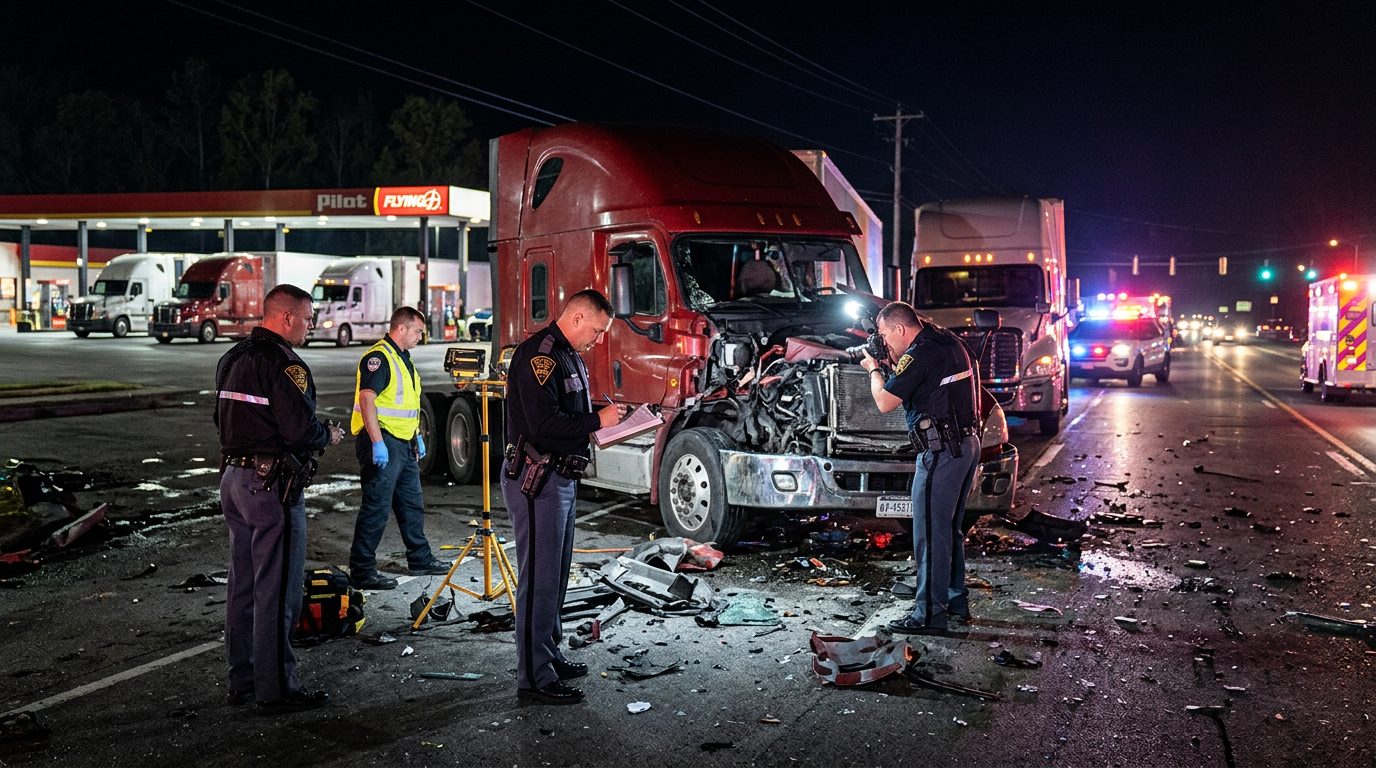
A crash report is the official written record that a law enforcement agency makes after it investigates a crash. Under W. Va. Code § 17c-4-7, an officer who investigates a crash on a public road that causes bodily injury, death, or total property damage of $1,000 or more must prepare a report within 24 hours after completing the investigation.
That makes the report one of the first written records of a truck crash. Memories fade and details blur quickly after a crash, so a written record matters. It can help you and your family keep track of basic facts, such as the time, the place and the vehicles involved, while other questions are still open.
Keep your expectations realistic. The report is one piece of the picture. Medical records, photographs, witness statements and carrier information often matter too. For the broader picture, read our guide to truck accident claims in West Virginia.
If you're piecing together a truck crash report for someone you love, you don't have to sort it out alone; we can talk through what you have in a free case review. Talk it through with Big Bubba — the first case review is free, confidential, and carries no obligation.

Police Report or Accident Report: What the Terms Mean
In everyday use, a police report and an accident report usually mean the same document. It is the report written by the officer or agency that responded to the crash. Agency forms can carry different titles, so don’t be thrown if the paperwork uses another name.
Look for the document that records the date, the location and the parties involved. If it shows those things, it’s the one you need, whatever its title. Read it side by side with any notes you made at the scene.
A crash report is different from a driving record. A driving record is a separate document about a person’s driving history, and it doesn’t describe one specific crash. If you’re asking about the crash itself, ask for the crash report.
Keep the report number or case number from the scene paperwork. Agencies use it to find your file quickly.
Who Holds the Report in West Virginia
The agency that investigated the crash usually holds the original report. That may be a State Police detachment, a city police department or a county sheriff’s office. Which agency it is depends on where the crash happened.
A truck crash on an interstate, a state road or a local street can be handled by different agencies. Confirm which agency responded before you send a request, since the wrong office can cause delay.
Some cities have adopted rules of their own. Under W. Va. Code § 17c-4-15, a city may by ordinance require drivers to file a crash report with a designated city department, and those reports are for that department’s confidential use. If the crash happened in a city, ask whether the city keeps its own copy.
If you are a family member, expect to show your relationship to the injured person or the person who died. Each agency sets its own identification rules. We serve injury victims across West Virginia, including Charleston and Huntington.
How to Request a Copy of a Truck Crash Report
To request a copy, contact the investigating agency with the date, time, location and any names or report number you have. Ask which request methods it accepts, such as in person, by mail, or through its own online process.
The West Virginia Public Records and FOIA information page explains the general process.
Ask about timing too. The investigating officer generally must submit the report within 24 hours after finishing the investigation, as § 17c-4-7 provides. If the investigation runs past 10 days, a preliminary report is due on the 10th day, and the final report follows within 24 hours of completion. So a report may not be final right away.
Ask the agency to state any copy fee before you submit. Write down the date you asked, the method you used and any reply. That record helps if you need to follow up.
What a Truck Crash Report Typically Shows
A crash report usually records when and where the crash happened, who was involved, and what the scene looked like. West Virginia law says the report format must give enough detail to disclose the cause of the crash, the conditions then existing, and the persons and vehicles involved, under § 17c-4-9.
Common sections include the date, time and location; road and weather conditions; names and contact details of drivers and passengers; vehicle information; and insurance details where recorded. Witness information, a scene diagram, and a narrative of what the officer saw and what drivers said may appear too.
If an officer issues a citation, it may appear in the report. A charge is a separate matter from the factual description, so read the two parts separately. Photographs and measurements appear depending on the agency and the investigation.
Reading the Commercial Vehicle Sections Carefully
A truck crash report may list carrier and cargo details that a passenger car report often leaves out. These can include the carrier name, the USDOT number, the trailer number and the cargo type, when the officer records them.
Compare the driver’s name, the carrier name and the vehicle identification numbers against the paperwork you already have. Any mismatch is worth asking about.
The law can reach more than one company. Under W. Va. Code § 55-7-32, an “employer defendant” can include the owner of a commercial motor vehicle, the driver’s employer, or any other entity that owns, leases, rents or holds legal control over the vehicle or driver; the section uses that term to limit the noneconomic damages recoverable against such a defendant, subject to exceptions. Who fits that definition depends on the facts, so note every company name on the report.
The police report is not the whole carrier file. Under 49 C.F.R. § 390.31, required carrier records must be kept for the periods specified, and legible copies that accurately reflect the information required to be contained in the record or document may be kept in place of originals. The crash report won’t show those records, so note any gaps for review.
Not sure what your next step is?
Talk it through with Big Bubba — the first case review is free, confidential, and carries no obligation.
When a Report Is Incomplete or Contains Errors
If a report has a mistake, ask the investigating agency how to submit a correction or supplemental information. Mistakes happen. Wrong times, misspelled names, incorrect vehicle details and a narrative that doesn’t match witness accounts can all appear in a report.
Because the form must contain all required information unless it is unavailable, missing fields are a fair question to raise with the agency. Ask whether the item was unavailable or simply left out.
Keep your own written timeline, photographs and medical records, and compare them with the report. Where they differ, note the difference and the date you noticed it. Write down who you spoke with and what they said.
The report is one source, not the final word. Other evidence may be relevant, depending on the facts. Keep your own notes alongside the official version.

Bringing the Report Into Your Broader Records
The crash report works best alongside your other records. Connect it to a timeline of events, the medical file, and the carrier information you gather. Our truck accident evidence timeline explains what to keep and why.
If a family member died in the crash, a wrongful death action in West Virginia must be brought by the personal representative of the deceased person, under W. Va. Code § 55-7-6. That statute generally sets a two-year period from the date of death, and exceptions may apply. Our wrongful death checklist for spouses covers early steps.
For a minor who was hurt, see the page for parents of injured children.
If you’re piecing together a truck crash report for someone you love while they recover, you don’t have to sort through it alone. You can request a free case review and talk through what you have so far.