
Wrongful Death | Serving West Virginia
Understanding Each Stage of a West Virginia Wrongful Death Lawsuit
Losing someone to a crash or serious injury raises hard questions. Here is a plain-language look at how a wrongful death case typically moves from filing to trial, and how the firm can help your family through it.
Where We Serve
55
West Virginia counties served
7
Practice areas focused on serious injury and loss
Published October 27, 2026
A West Virginia wrongful death lawsuit usually moves in a set order. It starts with protecting evidence and opening the estate. Then it moves to filing, discovery, settlement talks, and trial if the case does not settle. Each stage has its own timing. This page explains those stages in plain language. It is general information, not a prediction of how any one case will go.
What are the main stages of a wrongful death lawsuit in West Virginia, from filing through trial or settlement?
In most cases, the stages run in this order: preserving evidence, opening the estate, filing the lawsuit, discovery, settlement talks, and then trial or another resolution. An appeal can follow a verdict.
Not every case reaches every stage. Some settle early, once the family has the key records. Others go further, with depositions and a trial date. The path depends on the facts of the death, the parties involved, and whether the defendants agree to resolve the claim.
Two rules shape the whole process from the start. The lawsuit is brought by the decedent’s personal representative. It generally must be filed within two years after the death (W. Va. Code § 55-7-6).
Families often feel pressure to move fast on some steps and slow on others. Knowing the order helps you ask better questions and avoid surprises.
Not sure what your next step is?
Talk it through with Big Bubba — the first case review is free, confidential, and carries no obligation.

Stage one: Preserving evidence after a fatal crash
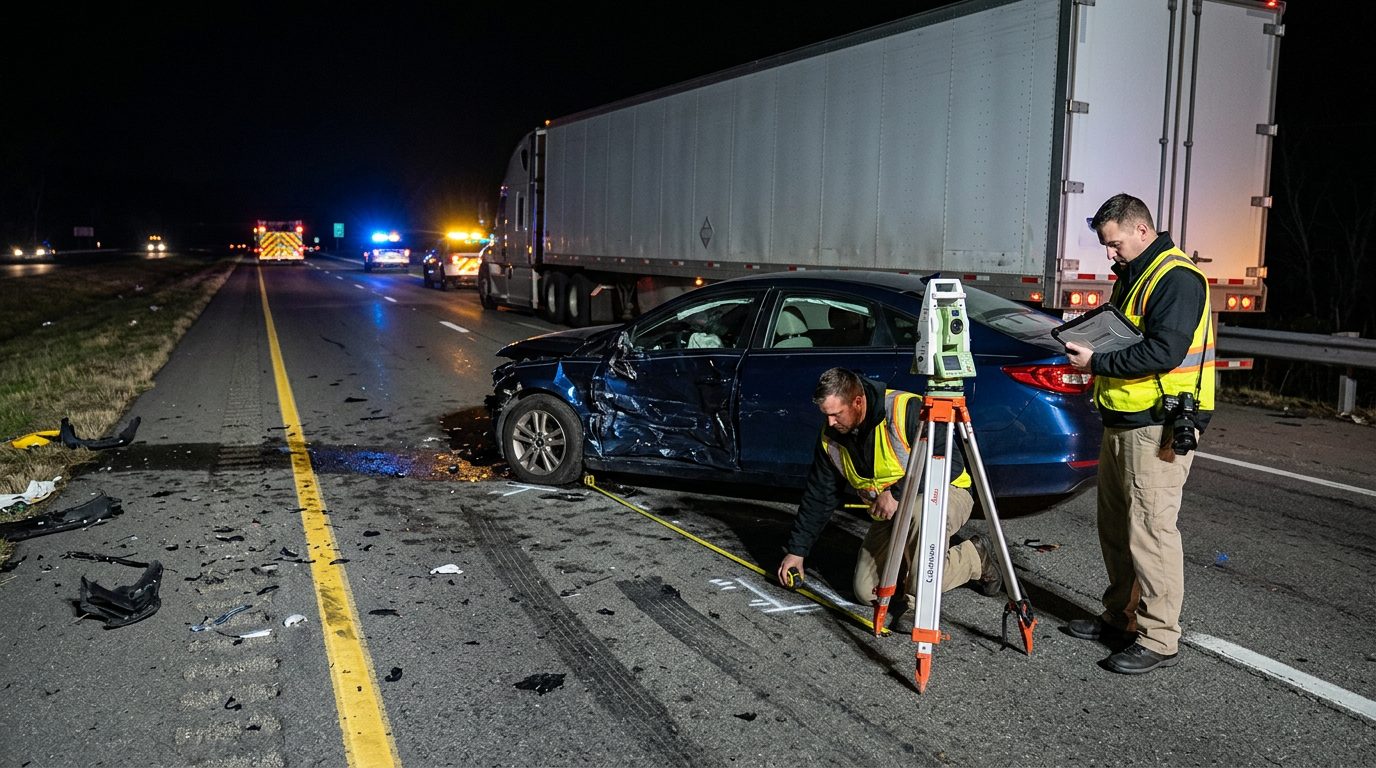
Early evidence is often the most fragile part of a case. Crash scene details, vehicle data, and witness names can be lost or overwritten over time. That is why early steps matter.
Crash deaths are not rare in the state. The Insurance Institute for Highway Safety reports 256 motor-vehicle crash deaths in West Virginia in 2024.
Families commonly gather the police crash report, photographs, medical and death records, and records of the decedent’s income. They also keep notes on the decedent’s daily role in the household.
Commercial truck cases have extra timing rules. The federal post-accident testing rule lists a human fatality as an occurrence that requires these tests.
If an alcohol test is not given within two hours, the employer must record why. If it is not given within eight hours, the employer must end attempts. For controlled substances, the cutoff is 32 hours. These limits are one reason early records matter.
The firm can talk with you about what evidence may matter in a car, truck, or commercial vehicle crash.
Stage two: Opening the estate and naming the personal representative
A wrongful death case is brought by the personal representative of the person who died. Individual family members generally do not file it on their own. The representative must have been duly appointed in West Virginia, in any other state, territory or district of the United States, or in any foreign country. If appointed outside West Virginia, the representative must post bond with a corporate surety authorized to do business in this state, in the sum of $100, at the time the complaint is filed. See W. Va. Code § 55-7-6.
A personal representative is the person a court appoints to manage the estate. Some people call this role an administrator. In practice, the estate is often opened before the lawsuit is filed. The representative acts for the estate and for the family members who may share in any recovery.
The statute also names who may share in the damages. These include the surviving spouse and children, including adopted children and stepchildren. They also include brothers, sisters, parents, and any persons who were financially dependent on the decedent at the time of death or who would otherwise be equitably entitled to share in such distribution. The court or jury decides how damages are divided among them.
If there are no such survivors, the decedent’s will controls. If there is no will, state descent and distribution laws apply.
Who serves as representative, and who qualifies to share, depends on the family’s facts and state law. This is one area where a careful review of the records helps.
Stage three: Filing the complaint and the two-year deadline
West Virginia law generally requires a wrongful death action to be commenced within two years after the death. The clock runs from the date of death, not the date of the crash. The statute notes that other provisions may also apply. Families should not assume they always have the full two years. See W. Va. Code § 55-7-6.
The complaint is the document that starts the lawsuit. It names the defendants, describes how the death happened, and states the claim.
It may say the amount in controversy meets the court’s minimum. See W. Va. Code § 55-7-25.
Several parties may be involved. These can include the driver, the employer, and the vehicle owner. Each may be named in the lawsuit.
Waiting can narrow options. Evidence can fade, and memories can change. A deadline is a deadline, so families should not assume there is unlimited time.
Stage four: Discovery, responses, and motions
Discovery is the stage where both sides exchange information and collect sworn testimony. The defendant responds to the complaint.
Discovery often includes written questions, requests for documents, and depositions. A deposition is a recorded question-and-answer session given under oath. Common witnesses include the driver, the employer, coworkers, and people who saw the crash.
See McCormick v. West Virginia Department of Public Safety.
Insurance can also matter. Under W. Va. Code § 55-7-32, in any civil action for personal injury or wrongful death involving the operation of a commercial motor vehicle requiring a commercial driver’s license, the maximum amount recoverable by each person injured or killed against an employer defendant as compensatory damages for noneconomic loss may not exceed $5 million for each occurrence, subject to inflation adjustments beginning January 1, 2026, and this limitation is not available to any employer defendant that does not have commercial motor vehicle insurance in the aggregate amount of at least $3 million for each occurrence covering the personal injury that is the subject of the action. The cap does not apply in listed situations, such as certain impaired-driving or hours-of-service violations. That section applies only to claims arising after July 1, 2024.
Stage five: Settlement talks and mediation
A settlement is a negotiated agreement that ends the lawsuit. The personal representative may settle a wrongful death damages claim before or after a lawsuit is filed. See W. Va. Code § 55-7-7.
Many people picture settlement as one phone call. In practice, it often involves exchanging records, written demands, and negotiation. Some cases use a mediator, a neutral person who helps both sides talk through the issues. The personal representative of the deceased, not the family as a group, may compromise the claim, which means deciding whether to accept an offer.
West Virginia also uses comparative fault, which compares each party’s share of blame. Under W. Va. Code § 55-7-13c, fault chargeable to the plaintiff does not bar recovery unless it is greater than the combined fault of all others. W. Va. Code § 55-7-13c reads: “(c) Any fault chargeable to the plaintiff shall not bar recovery by the plaintiff unless the plaintiff’s fault is greater than the combined fault of all other persons responsible for the total amount of damages, if any, to be awarded.” Otherwise, recovery is reduced in proportion to that fault.
Not sure what your next step is?
Talk it through with Big Bubba — the first case review is free, confidential, and carries no obligation.
Stage six: Trial, verdict, and appeal
If a case does not settle, it may go to trial. A jury decides damages in many cases. In a case tried without a jury, the court decides. The statute allows the factfinder to award damages it considers fair and just. See W. Va. Code § 55-7-6.
Damages can include sorrow, mental anguish, and solace, as well as reasonably expected loss of the decedent’s income and of the services, protection, care, and assistance the decedent provided.
The jury must list separately any amount for funeral, hospital, and medical expenses. Money recovered for those expenses must be spent by the personal representative.
At trial, each side presents evidence and witnesses testify. Lawyers make opening and closing arguments. The judge’s rulings shape what the jury hears.
Appeals add time to the overall process, so families should plan for a case that runs longer than they expect.

Taking the next step with Big Bubba Injury Law
If you are reading this for a parent, spouse, child, or other family member, you may be doing it in the middle of grief and paperwork you did not expect. A death from a crash can raise hard questions about records, deadlines, and who should act first. That is a heavy load to carry alone.
We serve families across West Virginia, including Charleston, Huntington, and Morgantown.
How long does a family have to file?
West Virginia law generally requires a wrongful death action to be commenced within two years after the death. See W. Va. Code § 55-7-6.
Who brings a wrongful death lawsuit?
The personal representative of the person who died brings the action for the beneficiaries named in the law.
Does the complaint list a dollar amount?
No. West Virginia law says a wrongful death complaint may not include a specific dollar figure for the damages sought.
Do all wrongful death cases go to trial?
No. Some cases settle through negotiation or mediation. Others are decided by a jury or a judge.
If you are looking into a wrongful death claim after a crash took someone you love, you can request a free case review with the firm and tell us what happened, with no obligation to continue.