
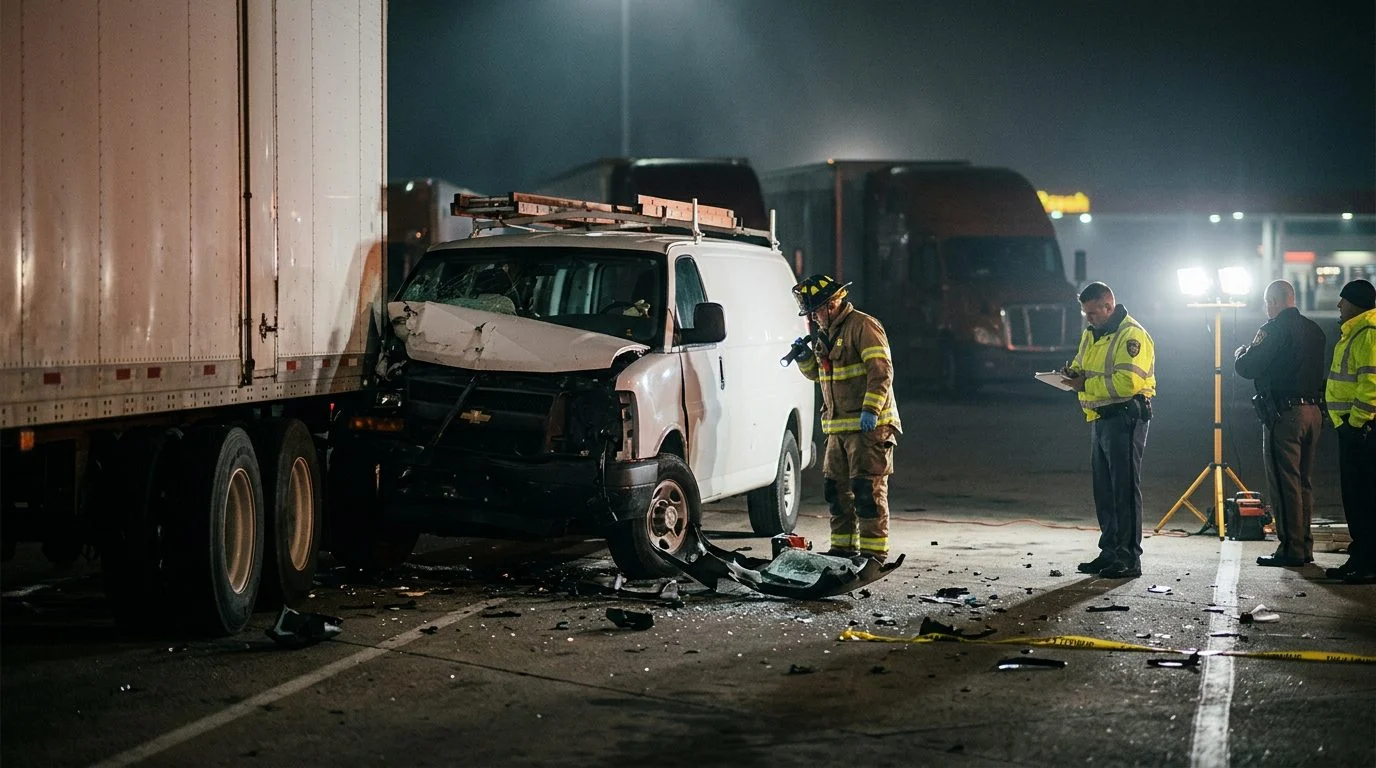
Work Van Crashes | West Virginia
Hurt in a Work Van Crash? You Don't Have to Sort Out Who's Responsible Alone
Big Bubba Injury Law represents people injured in car and commercial vehicle crashes across West Virginia, including crashes involving company vans and the families of those who were killed.
Published October 30, 2026
Short Answer: Can an Employer Be Responsible for a Work Van Crash in West Virginia?
Sometimes, yes. An employer can be legally responsible for a crash involving a work van, but it depends on the details of the trip.
A work van crash involves a van that a business owns, leases, or assigns to a worker. The van is used for company tasks, deliveries, or travel. Those details matter. A van on a delivery route raises different questions than a van a worker drives home at night.
Many people assume the company is responsible just because the van belongs to it. That is not the whole picture. A claim usually turns on who was driving, what the driver was doing, what the company did or failed to do, and what the records show.
This page explains the main legal routes, the records that matter most, and the deadlines that shape a claim. The goal is to help you ask the right questions early.
Not sure what your next step is?
Talk it through with Big Bubba — the first case review is free, confidential, and carries no obligation.
How Scope of Employment Can Make an Employer Answerable for a Driver’s Negligence
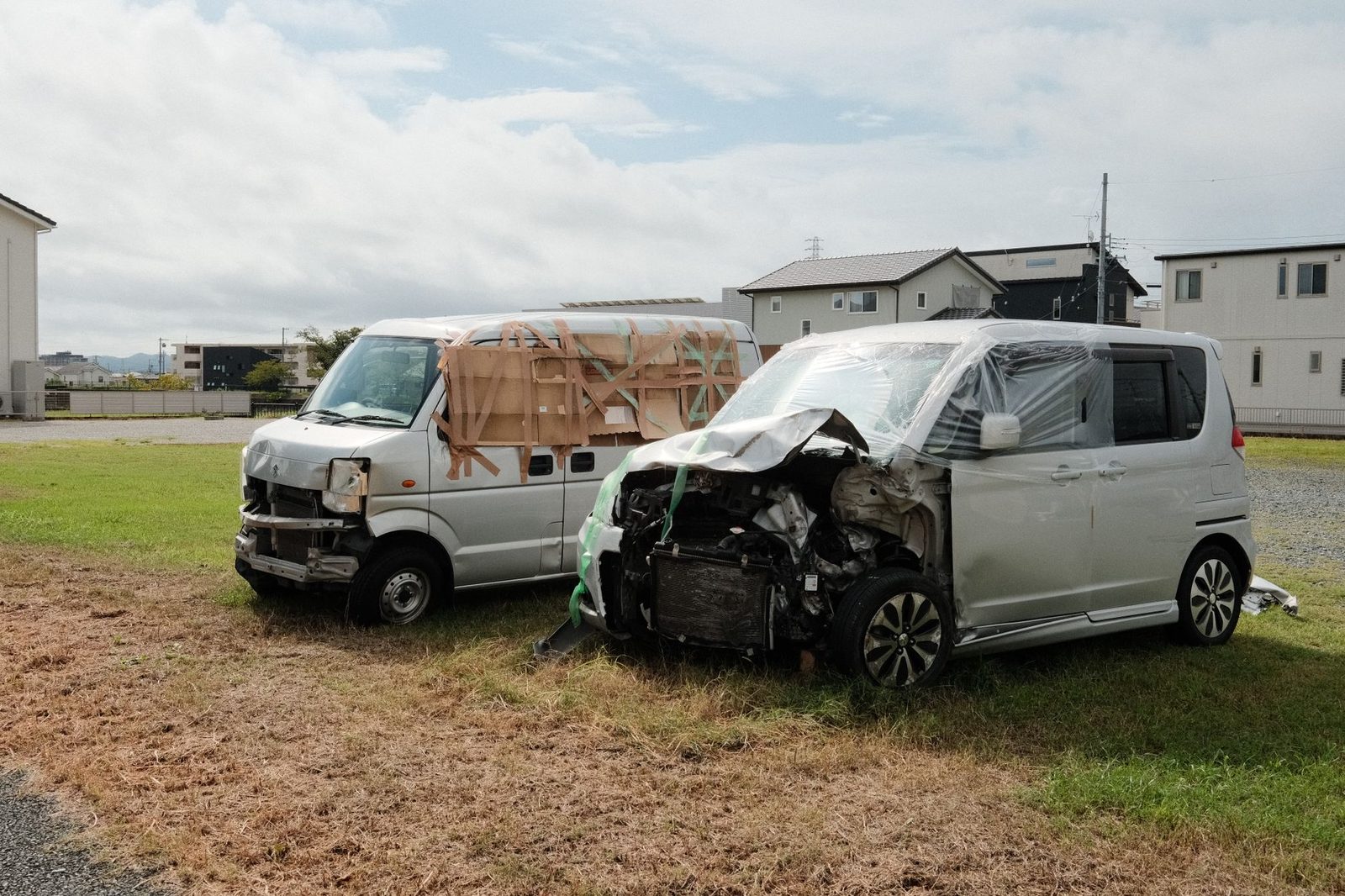
An employer can answer for a driver’s negligence when the driver was acting within the scope of employment.
West Virginia follows this rule. The state’s high court has said a master is answerable for the negligent act of an employee when that act happens within the scope of employment (Zirkle v. Winkler).
Courts commonly look at a few questions. Was the driver on a work assignment? Was the van on a company route? Was the driver doing a job task, or using the van for the business at the time of the crash? Each answer shifts the picture.
A driver going to or from work, or making a personal stop, raises different questions than a driver on an active delivery. A personal errand during a work trip may be viewed differently from a delivery stop. The facts of the trip control the outcome of that question.
For wider context on serious crash claims, see our catastrophic injury overview.
Direct Claims Against a Company: Negligent Entrustment, Hiring, Training, and Supervision
Here are the main types, in plain words:
- Negligent hiring or retention. The company hired or kept a driver without a reasonable look at the driver’s history, when the risk of harm was foreseeable.
- Vehicle maintenance. Worn brakes, bad tires, or other defects went unrepaired when the company knew about them or should have found them.
Each of these claims needs proof. That is why the records covered later on this page matter so much.
Workers’ Compensation and Injured Co-Workers: How the Rules Can Change
Workers’ compensation is a separate system that covers many workers hurt on the job. It can change which claims are available against an employer.
A third party could be another driver, or a company that maintained the van.
A passenger, a member of the public, or a family member of someone killed may stand in a different position than the employee driver. Each person’s rights depend on who was hurt and how the crash happened. How the pieces fit together depends on the facts of the case.
Raise these questions early, so the timing and paperwork for each path do not get missed.
Other Parties Who May Share Responsibility in a Work Van Crash
Other parties can share fault in a work van crash. Often, more than one party contributed to the harm.
- Other drivers. Speeding, distracted driving, or failing to yield can contribute to a crash.
- Maintenance providers. A contractor that repaired or inspected the van, or supplied a defective part, may share fault.
- Dispatchers and fleet managers. Decisions about the schedule, route, or load can affect how the trip unfolded.
West Virginia uses a rule called several liability. Under § 55-7-13c, each defendant generally pays only its own share of fault. A few exceptions exist, such as certain impaired driving cases.
A defendant can also point to a nonparty. Under § 55-7-13d, fault of a nonparty is considered if the plaintiff entered into a settlement agreement with the nonparty or if a defending party gives notice no later than one hundred eighty days after service of process upon said defendant that a nonparty was wholly or partially at fault. Then the nonparty’s fault can reduce what the plaintiff recovers. Identifying every party early helps you understand which insurance policies may be involved.
Evidence That Shows a Van Was on the Job and Who Controlled It
The records that matter most show what the driver was doing, who controlled the van, and how the van was kept up. Ask that these be preserved early.
- Trip records. Dispatch logs, delivery schedules, route assignments, and work orders.
- Location and speed data. GPS and telematics records that show speed, location, and stops.
- Ownership papers. Vehicle title, lease, registration, and the insurance that covers the van.
- Driver files. Training records, prior incident reports, and any complaints about the driver.
- Maintenance and crash records. Inspection and repair logs, the crash report, and photos of the scene and vehicles.
Federal rules set minimum record-keeping periods for many motor carriers. Motor carriers, except for a private motor carrier of passengers (nonbusiness), must keep maintenance records for each vehicle they control, and federal maintenance record rules set how long those records stay on file.
Federal hours-of-service limits also set how long a driver may work before breaks. Those logs can show whether a driver was tired.
If you can, write down what you remember about the trip. Keep any texts, pay records, or work instructions tied to the trip.
Not sure what your next step is?
Talk it through with Big Bubba — the first case review is free, confidential, and carries no obligation.
Deadlines and Fault Rules That Shape a West Virginia Work Van Claim
West Virginia generally gives two years to file a personal injury claim (W. Va. Code § 55-2-12).
For personal injury, § 55-2-12 sets a two-year period from when the right to sue accrues. For wrongful death, § 55-7-6 provides that the action must be commenced within two years after the death, subject to the provisions of section eighteen, article two, chapter fifty-five. W. Va. Code § 55-7-6 reads: “The provisions of this section shall not apply to actions brought for the death of any person occurring prior to July 1, 1988.” The personal representative of the deceased person brings that action.
West Virginia also uses modified comparative fault. Your recovery is reduced by your share of fault. Under § 55-7-13c, your fault bars recovery only if it is greater than the combined fault of everyone else responsible.
A separate cap applies to some commercial vehicles. Under § 55-7-32, in any civil action for personal injury or wrongful death involving the operation of a commercial motor vehicle requiring a commercial driver’s license, the compensatory damages for noneconomic loss that each person injured or killed may recover against the employer defendant may not exceed $5 million for each occurrence, regardless of the number of claims or theories of liability. That limit increases each year for inflation starting January 1, 2026, but not beyond 150 percent of the amount in the statute. The limit is not available to any employer defendant that does not have commercial motor vehicle insurance in the aggregate amount of at least $3 million for each occurrence covering the personal injury in the case. The section applies only to causes of action arising after its July 1, 2024 effective date. Under W. Va. Code § 55-7-32(d), the damages limit does not apply where a civil action involving a commercial motor vehicle arises from an incident for which an operator or driver is found to have one of the conditions listed in that subsection, such as operating with an alcohol concentration of .04 or more at the time of the incident. That cap applies only to vehicles that require a commercial driver’s license, and it does not apply in several listed situations. Those include hours-of-service violations and willful or wanton disregard for safety.
Because timing can be affected by the facts, reviewing a crash soon after it happens is practical.
Catastrophic Injuries and Wrongful Death in Work Van Crashes
Serious crashes can cause traumatic brain injury, spinal cord injury, or death. Each brings its own kind of claim and its own long-term effects.
A brain injury can affect memory, work, and daily life, even when the injury is not seen right away. If you cannot recall the crash, read our page on brain injury and memory after a crash. A spinal cord injury can change mobility, work, and the roles a person plays at home.
When a crash causes a death, the family may bring a wrongful death claim. Under § 55-7-5, the party who would have been liable if death had not occurred remains liable. Under § 55-7-6, the jury’s verdict shall include damages for sorrow, mental anguish, and solace. Damages can also include lost income and services, expenses for care, and reasonable funeral expenses. Families often face these costs early, as explained on our funeral expenses and wrongful death page.
We serve injured people and families across West Virginia, including Charleston, Huntington, Morgantown, Wheeling, and Beckley. For a state-level overview, see our West Virginia catastrophic injury page.
Can a company be sued if a co-worker drove the van?
Possibly. If the driver was acting within the scope of employment, the employer may answer for that negligence.
How long do I have to file a claim?
For personal injury, West Virginia generally allows two years under § 55-2-12. For wrongful death, the two years run from the date of death under § 55-7-6, subject to the provisions of section eighteen, article two, chapter fifty-five. W. Va. Code § 55-7-6 reads: “The provisions of this section shall not apply to actions brought for the death of any person occurring prior to July 1, 1988.”
Does being partly at fault end a claim?
Not automatically. Under § 55-7-13c, your recovery is reduced by your share of fault and barred only if your fault exceeds the combined fault of others.

Request a Free Case Review of a Work Van Crash
If a company van crash left you or a family member hurt, the firm can review who was driving and who controlled the van. It can also look at which records may still exist.
A free case review is confidential. It gives you a clear look at your situation before you decide what to do next.
If you are weighing whether the employer, a contractor, or another driver should be examined, reach out through our contact page to request a free case review. Share the crash date, the van’s owner, and any records you already have.