
West Virginia Injury Claims
Have Questions After a Serious Crash? Start With a Free Case Review
Bring your questions, your paperwork, and your uncertainty. A conversation can help you see what to do next.
Published November 9, 2026
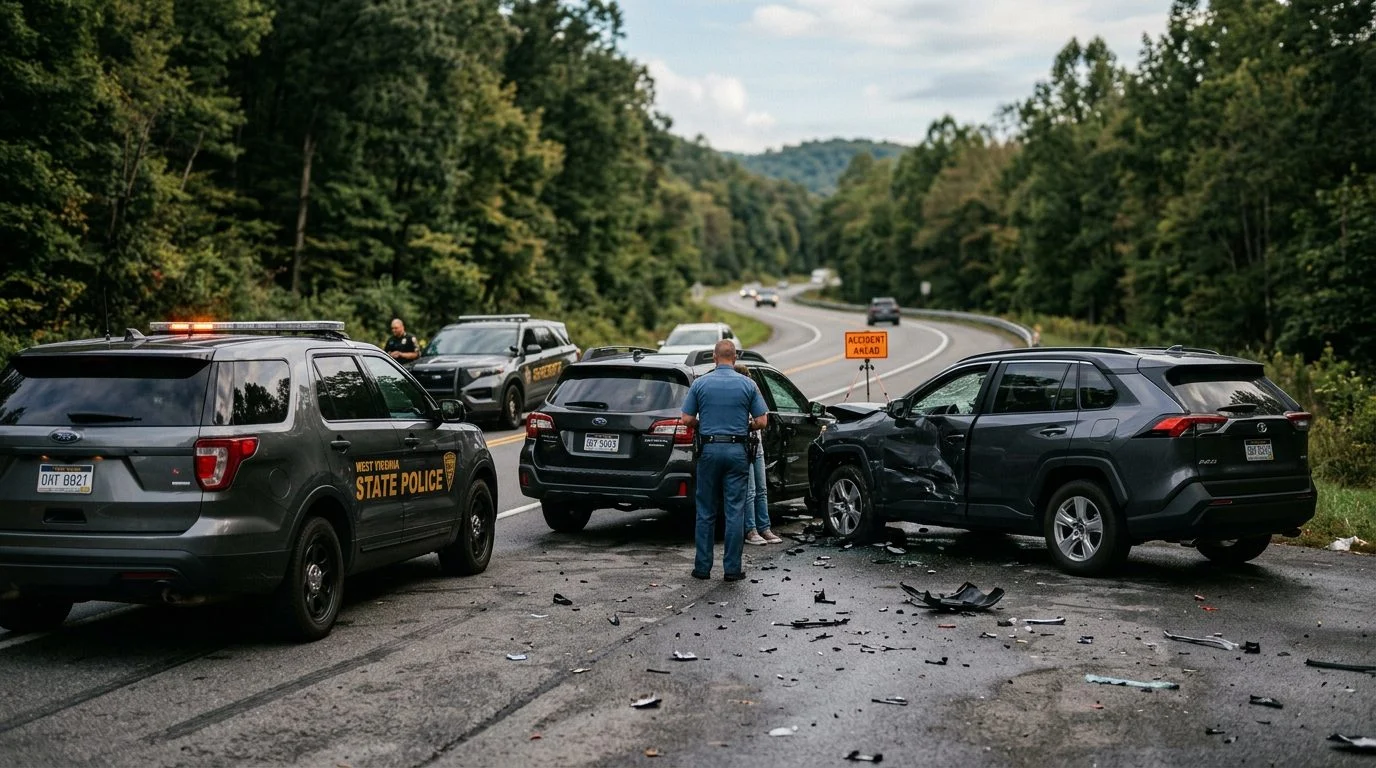
After a serious crash, you may have many questions and little clarity. A free case review is a confidential first meeting, with no obligation to continue, where you can describe what happened and ask what matters most. This page covers the questions people often bring to that meeting and what to bring with you.
What a Free Case Review Is and How to Prepare for It
A free case review is a first conversation in which you describe your crash and ask questions, with no obligation to continue.
You don’t need every document before you reach out. You can start with only a few papers and a rough memory of the day. That is enough to begin.
Before you call, write down the date, the location, the vehicles involved, and the names of anyone who saw the crash. Note your injuries and every doctor you have seen. Details fade fast, so write them down early.
A common mistake is waiting to gather everything first. Waiting can cost you time to collect photos and witness contact details while they are still easy to find. Bring your notes, any letters you have received, and your list of questions.
We offer the free case review as a first step, and you decide what comes next.
If a serious crash left you hurt, or a loss left your family facing hard questions, you don't have to face them alone. We can talk through your situation at a free case review. Talk it through with Big Bubba — the first case review is free, confidential, and carries no obligation.
Does the Firm Handle My Type of Crash?
The firm handles car accidents, truck accidents, commercial vehicle accidents, catastrophic injuries, traumatic brain injury, spinal cord injury, and wrongful death claims across West Virginia.
These categories can overlap. A crash with a semi-truck, a delivery van, or another commercial vehicle may involve more records and more parties than a crash between two cars. A serious brain or spinal cord injury may also raise catastrophic injury questions.
Bring the crash details to your review. Describe the road, the time, the vehicles, and your injuries. That helps the firm tell you which category fits your case. Ask the firm which of these categories it believes fits your situation. Wrongful death claims belong here too when a crash ends a life.
We serve Charleston injury victims, along with people hurt across the rest of the state.
Who Could Be Responsible in a Truck or Commercial Vehicle Crash?
In a truck or commercial vehicle crash, more than one party may share responsibility. Examples include the driver, the company that employs the driver, or another business tied to the trip.
West Virginia law defines an “employer defendant” to include the owner of a commercial motor vehicle and the employer of the person operating it. The definition also reaches others who hold legal control of the vehicle. See W. Va. Code § 55-7-32 for the full text.
A broker may also be part of the picture. In Montgomery v. Caribe Transport II, LLC, the U.S. Supreme Court found that a state-law claim that a broker negligently hired an unsafe motor carrier falls within a federal safety exception, so it was not preempted.
West Virginia uses modified comparative fault. Each person’s share of fault is expressed as a percentage under W. Va. Code § 55-7-13a. Under W. Va. Code § 55-7-13c, your recovery is generally not barred unless your fault is greater than the combined fault of everyone else responsible. It is then reduced in proportion to your share.
If another driver was at fault, that driver’s insurer may become part of the claim. Ask the firm at your review how it identifies every party connected to your crash.
What Evidence and Documents Should You Bring?
Bring whatever you have, starting with the crash report, photos, witness names, medical records, and any letters from insurers.
For truck crashes, some records may be relevant in certain cases. Federal rules require motor carriers to keep driver duty-status records and supporting documents for at least six months from the date of receipt. See 49 C.F.R. § 395.8.
Carriers must also keep a driver qualification file for each driver they employ, under 49 C.F.R. § 391.51. Maintenance records for each vehicle are covered by 49 C.F.R. § 396.3, which requires motor carriers, except a private motor carrier of passengers (nonbusiness), to keep them for 1 year where the vehicle is housed or maintained and for 6 months after the motor vehicle leaves the motor carrier’s control.
Ask which of these records may apply to your crash. For a wrongful death case, bring the death certificate and papers that show family relationships.
Keep everything in one folder, including bills, receipts, and every letter you receive.
How Will the Firm Handle Contact With Insurance Companies?
After a serious crash, insurance companies may contact you quickly. Some may dispute a claim.
State law limits early settlement talks.
Under W. Va. Code § 55-7-11a, a settlement, release of liability, or statement obtained in violation of that section may be disavowed by the injured person within one hundred eighty days from the date of the personal injury. The injured person does this by signing a written statement of disavowal and sending a copy to the person who violated the section, and any money paid for the settlement or release must be repaid or returned. Exceptions may apply, so ask how the rule fits your situation.
Questions to ask at your review include: Should I give a recorded statement? What should I say about my injuries? How does the firm handle communication with insurers? Keep a log of every call, with the date, the caller’s name, and what was said.
What Happens Next, and Could the Case Go to Court?
Many serious injury claims move through a few general steps: investigation, gathering records, evaluating the claim, negotiation, and, if needed, a lawsuit.
Some claims are resolved before any lawsuit is filed. Others may need a court, depending on the facts.
Deadlines matter. West Virginia generally allows two years to file a personal injury action under W. Va. Code § 55-2-12, and exceptions may apply.
Clear records are the material a claim is built from. Dated photos and a medical timeline that matches your account are good examples. A lawsuit is one possible path, not the first step in every case.
At your review, ask what the next steps would be in your situation. Those steps turn on your records, the parties involved, and your medical picture.
Not sure what your next step is?
Talk it through with Big Bubba — the first case review is free, confidential, and carries no obligation.

Questions for Families and for Serious Medical Injuries
In West Virginia, a wrongful death action is generally brought by the personal representative of the person who died. That statute, W. Va. Code § 55-7-6, also says the action generally must start within two years after the death. Other rules in the statute can change that period.
The statute lists categories a verdict may include. The verdict shall include, but may not be limited to, damages for: sorrow, mental anguish, and solace; reasonably expected loss of income and services provided by the decedent; expenses for care, treatment and hospitalization incident to the injury resulting in death; and reasonable funeral expenses.
Brain and spinal cord injuries bring their own questions. The medical course may be uncertain, and records take time to gather. Keep a simple symptom journal, a list of appointments, and every medical bill. Ask how the firm works with your medical records and treating providers.
How soon after a crash should I reach out?
Sooner is usually better, because the deadlines and early insurer rules above can affect your options.
Can I ask questions if I am not sure I have a case?
Yes. The free case review is a place to ask those questions before you decide anything.
If a crash has left you badly hurt, or a death has left your family facing hard questions, you don’t have to work through them alone. Reach out to us to schedule a free case review and tell us what happened.