
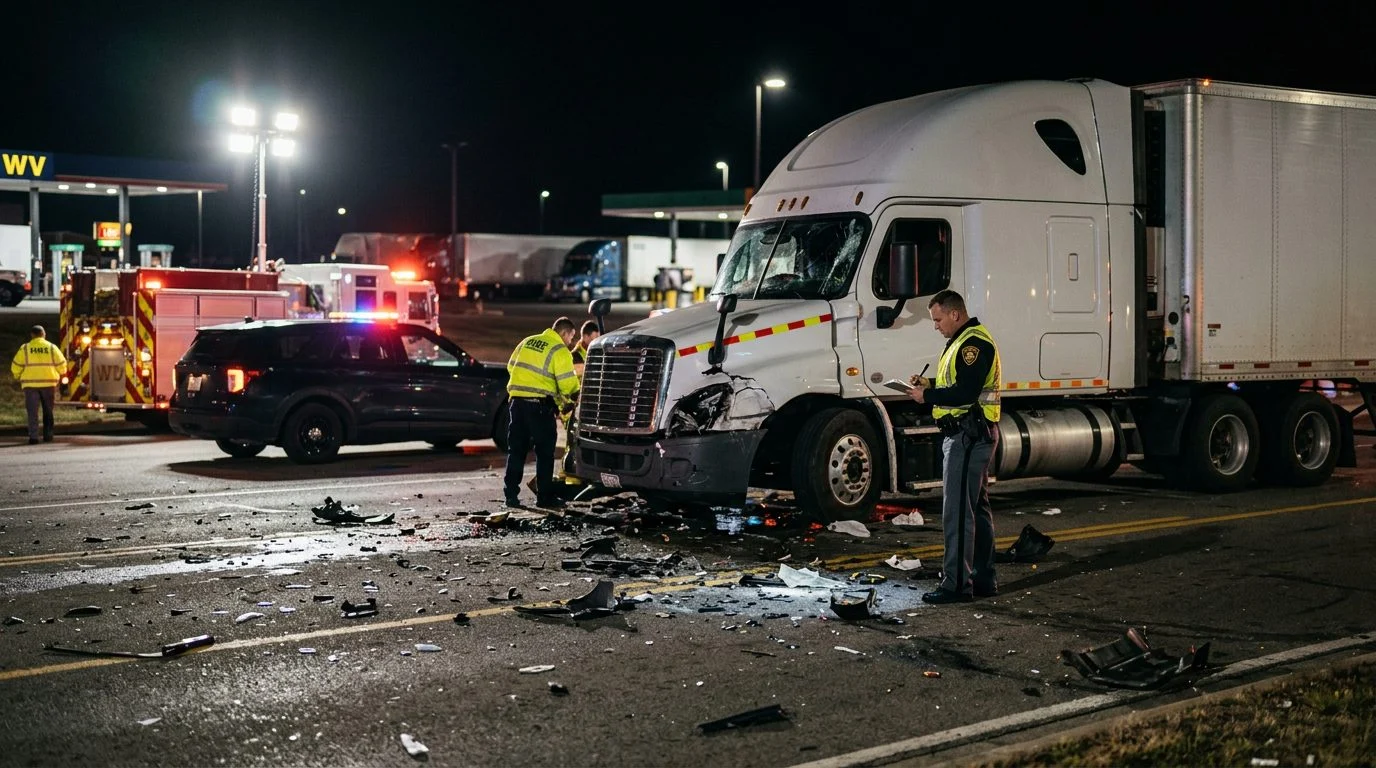
West Virginia Truck Crash Liability
Who Can Be Held Liable in a West Virginia Truck Crash?
A commercial truck crash can involve several drivers, companies, and other parties. Learn who may be connected to your case, then reach out to Big Bubba to talk about yours.
Published November 3, 2026
A commercial truck crash can involve more people and companies than a typical car crash. Responsibility in a commercial truck crash can depend on the facts of each case, including how the crash happened and what the records show. Several parties may be connected at once.
This guide explains the parties that may be connected to a truck crash in West Virginia. It is general information, not legal advice about your situation.
Why Liability Is Different in a Commercial Truck Crash
A commercial truck crash often involves more than one company and more than one set of records. The driver, the carrier, the truck’s owner, and others may each have a role. That is why more parties may be connected to a truck crash than to a typical car crash.
Federal safety rules for commercial carriers matter here. Under 49 C.F.R. § 390.11, a motor carrier generally must require its drivers to follow the duties and prohibitions that apply to them. A rule existing does not, by itself, mean a violation happened or that a company is liable.
West Virginia law also defines an “employer defendant” broadly. It can include the truck’s owner, the driver’s employer, and any other person that holds legal control over the truck or driver. W. Va. Code § 55-7-32 sets out this definition. Its special rules took effect on July 1, 2024, and apply only to causes of action arising after that date.
Who may be responsible generally depends on how the crash happened and what the records show.
If a truck crash left you or someone you love hurt, you may be wondering who is responsible. We can talk through what happened and what your options may be in a free case review. Talk it through with Big Bubba — the first case review is free, confidential, and carries no obligation.

The Truck Driver
The driver may be a party whose actions caused or contributed to the crash. Speeding, distracted driving, impairment, and driving past legal hours are examples of conduct that may matter. Whether any of these played a role depends on the facts.
Federal rules require drivers to keep a record of duty status for each 24-hour period. 49 C.F.R. § 395.8 also says no driver or motor carrier may make a false report about duty status. These records can show how long a driver had been working.
Under W. Va. Code § 55-7-32, certain driver conduct, such as operating above hours limits or while impaired, may take a case outside the section’s special rules.
A driver’s own responsibility does not settle who else may be responsible. The driver may have been working for a company, and that company may also be connected to the crash. Each party’s role should be reviewed on its own.
The Motor Carrier and Trucking Company
A motor carrier may be connected to a crash through the driver’s work or through its own decisions. In many cases, an employer may answer for a driver’s work-related conduct. Whether that applies depends on the facts, including whether the driver was acting within the job.
A carrier can also face direct claims. These claim that the carrier itself acted carelessly. Examples include negligent hiring, training, supervision, retention, and assigning a truck to an unsafe driver.
Federal rules also bear on carrier conduct. 49 C.F.R. § 391.51 requires each motor carrier to keep a driver qualification file for each driver it employs. These files may be reviewed, but what they show can vary.
Leasing Companies, Owners, and Contracted Carriers
A truck may be owned by one company and run under another company’s authority. When that happens, both companies may be examined. The lease between them can affect who had control of the truck.
49 C.F.R. § 376.12 says the lease must clearly specify who is responsible for fuel, tolls, and detention. It must also say who loads and unloads the property. These terms may be relevant to responsibility.
Federal law also allows the government to require a carrier that uses trucks it does not own to control and be responsible for operating them. 49 U.S.C. § 14102 describes this authority. Owner-operators, who own their trucks and lease them to a carrier, can raise similar questions. The lease terms and operating authority can depend on the facts of each case.
Maintenance, Loading, and Other Contractors
Outside contractors who worked on or loaded a truck may be connected to a crash. A repair shop that serviced brakes, tires, or steering may have a role if that work was involved. Whether it did depends on the facts and the records.
Cargo loading is another possible source of responsibility. If a load shifted, came loose, or was not secured well, the company that loaded it may be connected. The lease and federal rules may say who was responsible for loading and unloading.
Freight brokers and shippers may also be connected in some situations. In Montgomery v. Caribe Transport II, the U.S. Supreme Court said a state-law negligent hiring claim against a broker falls within a federal safety exception. That point may matter for claims against brokers.
Parts Manufacturers, Other Drivers, and Road Conditions
Other drivers and parts makers may also share responsibility in some truck crashes. A defective brake, tire, or other part may lead to a claim against its maker or seller. These claims often need separate evidence, such as a review of how the part failed.
Passenger vehicle drivers may also contribute to a crash. A driver who cut in front of a truck or braked suddenly may share fault. When more than one person is at fault, fault can be divided among them, and a plaintiff’s own fault bars recovery only if it is greater than the combined fault of all other persons (W. Va. Code § 55-7-13c).
Road and work-zone conditions can also play a role. In limited circumstances, a government entity or a contractor responsible for a road may be connected. These claims can involve different rules, so they are usually reviewed on their own facts.
Not sure what your next step is?
Talk it through with Big Bubba — the first case review is free, confidential, and carries no obligation.
How Fault Is Shared Under West Virginia Law
West Virginia generally uses comparative fault. W. Va. Code § 55-7-13a describes how fault is allocated by percentage among the people who caused the harm, including plaintiffs, defendants and nonparties.
Under W. Va. Code § 55-7-13c, a defendant’s liability for compensatory damages is generally several, not joint. That means each defendant is generally liable only for its own share. Exceptions may apply, including for some impaired driving and criminal conduct.
The same section says a plaintiff’s fault generally does not bar recovery unless it is greater than the combined fault of all other persons (W. Va. Code § 55-7-13c). If it is less, recovery is generally reduced in proportion to the plaintiff’s fault.
For deadlines, W. Va. Code § 55-2-12 generally allows two years for personal injury claims. Other rules may change that period.
Wrongful Death Claims After a Truck Crash
When a truck crash causes a death, a wrongful death claim is generally brought by the personal representative of the deceased person’s estate. W. Va. Code § 55-7-6 sets out this rule. It also generally requires the action to begin within two years after the death, subject to other provisions. W. Va. Code § 55-7-6 reads: “The provisions of this section shall not apply to actions brought for the death of any person occurring prior to July 1, 1988.”
The same parties that may be connected to an injury claim may also be connected to a wrongful death claim. The claim may be brought against more than one party, depending on the facts.
The statute also explains how damages may be distributed. Family members often have questions about how these rules apply to them.
Losing someone in a crash is painful. The rules above are general, and each claim depends on its own facts.
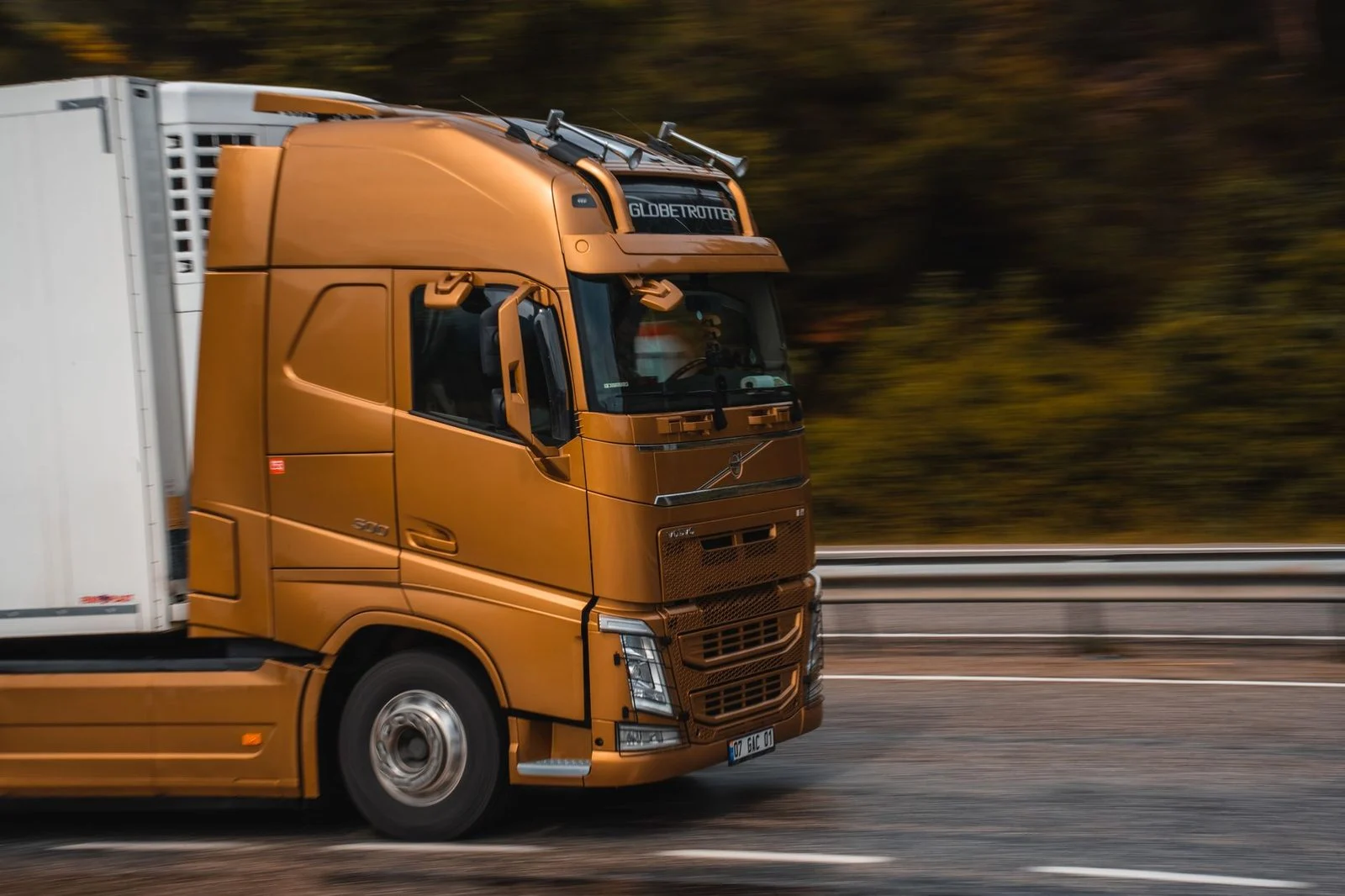
What to Do If a Commercial Truck Crash Involved You
If you were hurt or lost a family member in a truck crash, start by listing every party who may be connected. The driver, the carrier, a lessor, and a contractor may not be obvious from the scene.
Records can matter. Driver files, duty-status logs, maintenance records, and lease papers may show who was responsible for what. 49 C.F.R. § 391.51 says driver qualification files are generally kept while the driver is employed and for three years afterward. Asking about these records early can help you understand what may exist.
The decision in front of you is whether to speak with a law firm about who may be responsible and what options may exist. We handle truck accident claims in West Virginia. Contact us for a free case review to talk through what happened and what your options may be.