
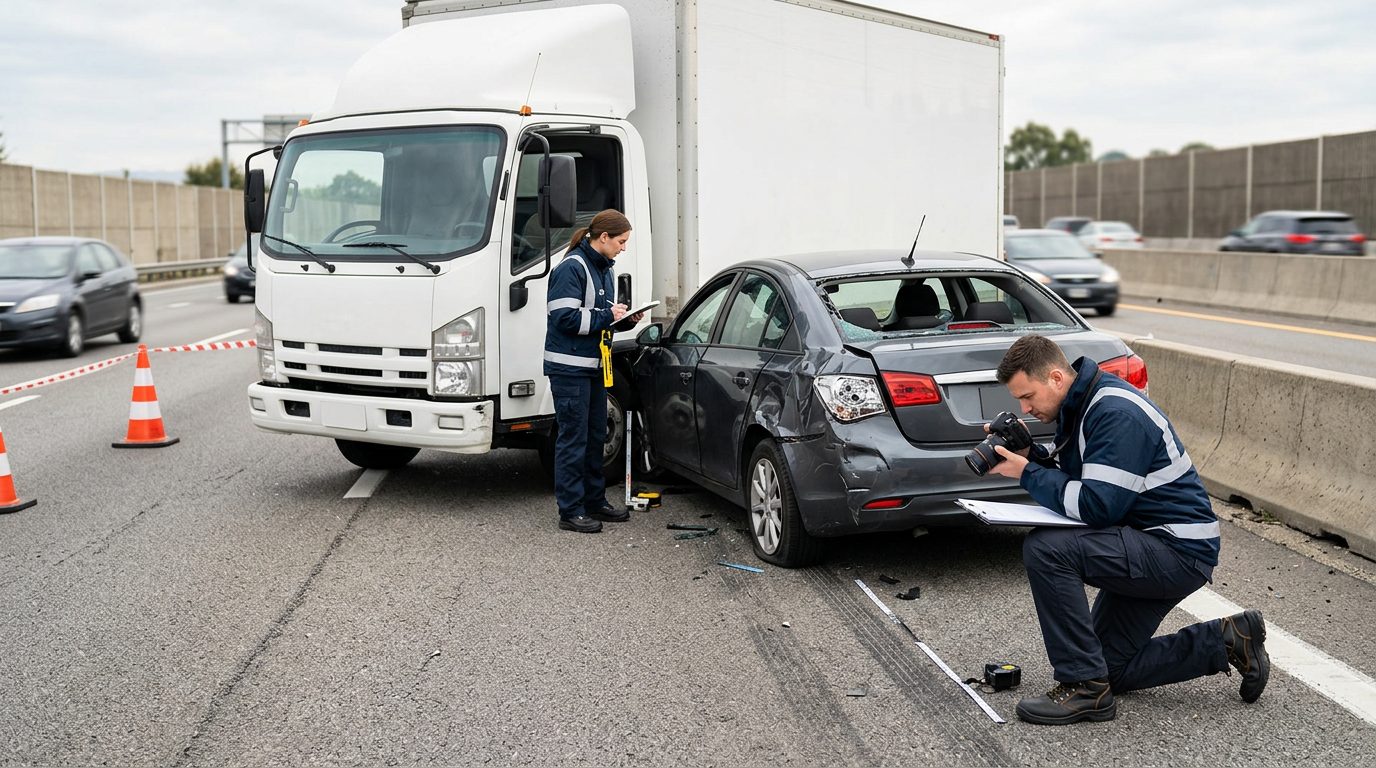
Commercial Vehicle Accidents
Hit by a Commercial Vehicle? Here's What Comes Next
A crash involving a truck or commercial vehicle is different from a regular car accident. You need to know your rights and next steps.
Published October 05, 2026
What Happens When a Commercial Vehicle Hits Your Car?
When a commercial vehicle hits your car, the immediate consequences are often more severe than a typical private-vehicle accident. Commercial vehicles—delivery trucks, cement trucks, service vans, company cars, and rideshare vehicles—are heavier, operate under different insurance and liability rules, and may involve multiple responsible parties. Understanding what happens at the scene, how liability works, and when to seek legal guidance can protect your health, your claim, and your rights.
If you've been hit by a commercial vehicle and are injured or facing significant damage, reach out to discuss what happened and your options. Talk it through with our team — the first case review is free, confidential, and carries no obligation.
The Immediate Aftermath: What Happens at the Scene
Your first priority is safety. If anyone is injured, call 911 immediately. If the vehicles can be moved safely and traffic allows, move them out of the roadway to prevent further collisions. Turn on hazard lights and stay visible.
Commercial vehicles generally weigh considerably more than passenger cars, so a collision with one can generally cause more serious damage. The driver may be operating under company policy, federal regulations, and commercial insurance rules that differ sharply from private drivers. Document everything: photograph the vehicle damage, road conditions, weather, the commercial vehicle’s company markings, license plate, and the scene from multiple angles.
Get the driver’s name, company name, phone number, and insurance information. Collect witness contact information—bystanders, nearby business owners, or other drivers. Do not admit fault or sign anything except for police or emergency responders. Request a copy of the police report and note the report number.
How Commercial Vehicle Accidents Differ from Private Car Accidents
The key difference is who bears liability and how much insurance is available. Commercial vehicles are typically insured through the company or fleet owner, not just the individual driver. The employer may be liable for the driver’s negligence under a legal doctrine called vicarious liability (also known as respondeat superior), which generally means the company may be held responsible for the driver’s actions if the driver was acting within the scope of employment. Whether that applies, and whether any exceptions apply, depends on the facts of each case.
Commercial drivers are also subject to federal and state regulations. Federal hours-of-service rules limit how long truck drivers can operate without rest. Generally, violations of these rules, improper vehicle maintenance, unsafe loading, or failure to follow company safety policies may be relevant to a negligence claim, depending on the facts of each case. Multiple parties may share liability: the driver, the company, the vehicle owner, a maintenance contractor, or even a shipper.
Commercial vehicle insurers typically carry higher liability limits than private auto policies. This means more insurance money is available to cover your damages if liability is clear.
What to Do If a Commercial Vehicle Hits Your Car
Report the accident to police and obtain a copy of the police report. Seek medical attention immediately, even if you feel fine. Some injuries—whiplash, internal bleeding, concussion—appear hours or days after impact.
Notify your own insurance company and provide them with the commercial vehicle’s information. Keep all medical records, repair estimates, receipts, and correspondence. Do not communicate directly with the commercial vehicle company’s insurance adjuster without legal guidance if you are injured. Preserve evidence: keep the damaged vehicle, photos, and any video footage from nearby cameras or traffic lights.
Insurance and Damage Claims After a Commercial Vehicle Hits Your Car
Your own collision or comprehensive coverage may cover repairs while the claim is being resolved. The commercial vehicle’s liability insurance should cover your vehicle damage and medical expenses if the driver is found at fault.
Commercial vehicle insurers often have dedicated claims teams and may move quickly to settle minor damage claims. However, if damage is significant or you are injured, the insurer may dispute liability or offer less than your claim is worth. Your deductible applies to your own insurance; you may recover it from the at-fault party’s insurer if liability is clear.
In West Virginia, you have the right to pursue a claim against the at-fault party’s insurance without necessarily filing a claim on your own policy. This can help protect your own rates and preserve your coverage.
Not sure what your next step is?
Talk it through with our team — the first case review is free, confidential, and carries no obligation.
When Is It Worth Pursuing Legal Action?
Minor damage with no injuries is often resolved through insurance claims without legal involvement. However, if you suffered injury—whiplash, broken bones, head injury, back injury—legal representation can help you seek compensation for medical bills, lost wages, and pain and suffering.
Significant vehicle damage, hit-and-run accidents, or liability disputes all warrant legal help. If the insurer claims you were partially at fault or denies the claim entirely, an attorney can investigate and advocate for you. In West Virginia, modified comparative fault law generally allows you to recover damages even if you are partially at fault, but recovery is generally barred if your fault is greater than the combined fault of others. Exceptions may apply depending on the facts. This means liability disputes require careful investigation.
Can You Sue a Truck Company for Damaging Your Car?
. The company may be liable even if the driver was negligent or violated company policy. You can seek damages for vehicle repair or replacement, rental car costs, and diminished value (the reduced resale value of a repaired vehicle).
If you were injured, you can also seek damages for medical expenses, lost income, pain and suffering, and other injury-related losses.
Common Types of Commercial Vehicles and Accidents
Delivery trucks and vans are often involved in accidents due to frequent stops, tight schedules, and driver fatigue. Cement trucks and construction vehicles are heavy, slow to stop, and cause severe damage in collisions. Service and utility vehicles—plumbers, electricians, HVAC contractors—are often operated by independent contractors or small business owners.
Rideshare and delivery driver vehicles (Uber, Lyft, DoorDash, Amazon Flex) are classified as commercial when actively working. Company cars and work vehicles operated by employees for business purposes also fall into this category.
Time Limits for Filing a Claim in West Virginia
West Virginia law generally requires personal-injury lawsuits to be filed within two years after the right to bring the action accrued, though exceptions may apply depending on the facts of your case. Do not delay—evidence can be lost, witnesses’ memories fade, and waiting too long may bar your claim entirely.
Have questions about what happened?
Ask our team directly. The first conversation is free, confidential, and there is no obligation to continue.
Frequently Asked Questions
Does an accident involving a commercial vehicle affect my insurance rates?
If you were hit by a commercial vehicle and were not at fault, filing a claim with your own insurer may affect your rates depending on your policy and state law. Consulting with a legal representative can help you understand your options and protect your interests.
What if the commercial vehicle left the scene?
A hit-and-run is a separate crime. Report it to police immediately. You may need legal help to identify the driver and company and pursue a claim against their insurance or your own uninsured motorist coverage.
How much compensation can I expect?
Compensation depends on the severity of your injury, medical expenses, lost wages, vehicle damage, and liability. An attorney can evaluate your case and help you understand what your claim may be worth, but no outcome is guaranteed.
What evidence do I need to prove the commercial vehicle driver was at fault?
Police reports, photos of the scene and vehicle damage, witness statements, medical records, federal hours-of-service violations, maintenance records, and video footage all strengthen your case. An attorney can help gather and interpret this evidence.
If you’ve been hit by a commercial vehicle and are injured or facing significant damage, reach out to discuss what happened and your options. Big Bubba Injury Law serves West Virginia injury victims across all 55 counties, including Charleston, Huntington, Morgantown, Wheeling, Martinsburg, Parkersburg, Beckley, Clarksburg, Fairmont, and Weirton.
Related practice areas
- Commercial Vehicle Accidents in West Virginia: Your Rights & Next Steps
- Commercial Vehicle Accidents in Charleston
- Commercial Vehicle Accidents in Huntington
- Examples of Catastrophic Injuries | Big Bubba
- What Qualifies as a Catastrophic Injury? | Big Bubba