
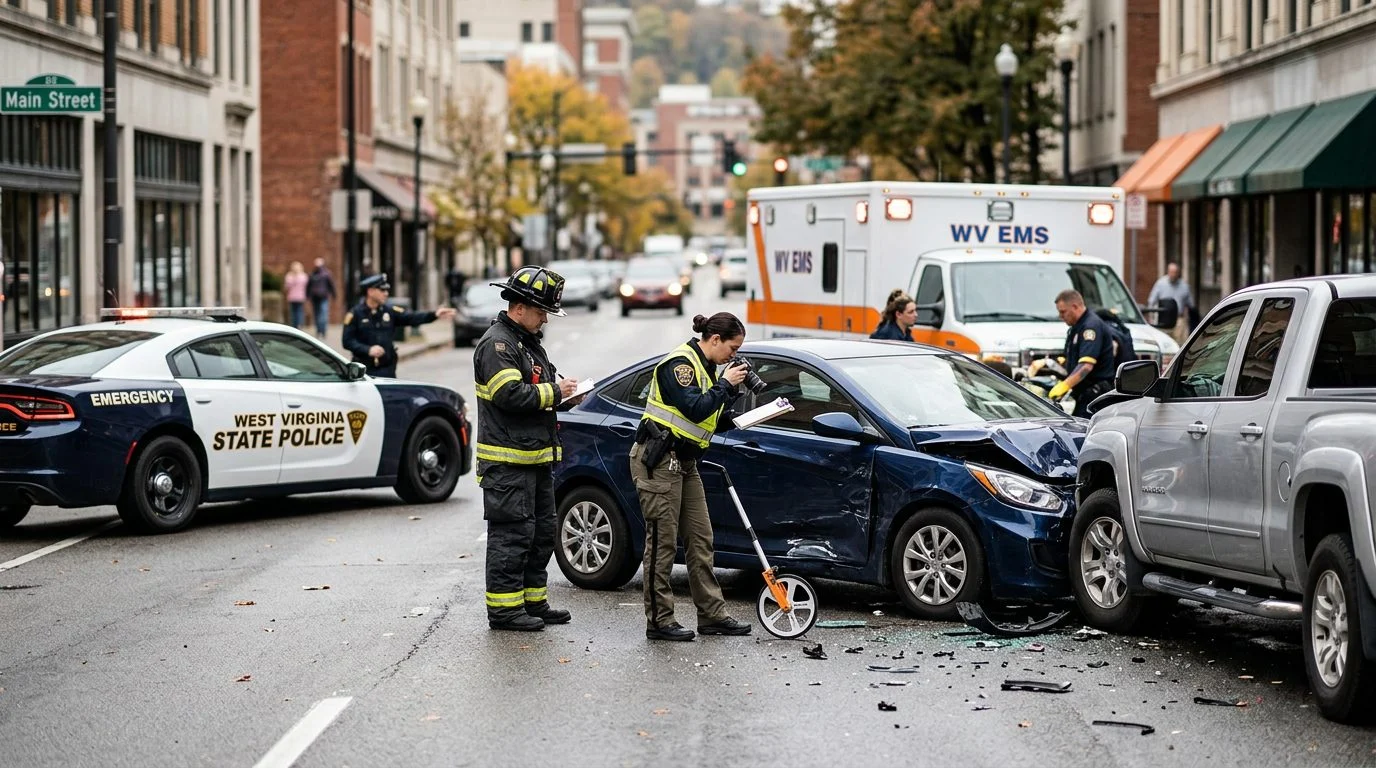
Car Accidents in West Virginia
Hurt in a Car Accident? Start With a Free Case Review
We represent people injured in car crashes across West Virginia, including Charleston, Huntington, Morgantown, Wheeling, Martinsburg, Parkersburg, Beckley, Clarksburg, Fairmont and Weirton. Tell us what happened and we will walk you through your options.
Published November 2, 2026
A car accident case review is a first conversation about a crash that has already happened. In it, the firm listens to what happened, reviews the basic facts, and explains how it handles these claims in West Virginia. The review is confidential, and you have no obligation to continue after it. Many people researching a crash want to know what a car accident case review West Virginia involves before they decide anything. This page explains what the review covers, what happens after you reach out, and what to gather first.
What a Car Accident Case Review Is
A car accident case review is a free first conversation, offered by the firm, about your crash. It is not a promise of any result. You describe what happened in your own words. The firm then explains how it handles your type of claim.
The firm handles car accident claims, truck accident claims, and commercial vehicle claims. It also handles catastrophic injury claims, traumatic brain injury and spinal cord injury claims, and wrongful death claims across West Virginia. If you want to talk through a crash that has already happened, the contact page is the place to start.
If a crash has upended your family's routine, you may have a claim worth discussing, and you don't have to sort it out alone. Talk it through with Big Bubba — the first case review is free, confidential, and carries no obligation.

Who Should Consider Reaching Out After a Car Accident
Injured people, and families of people who died in a crash, may want a first conversation. You may fit one of these situations:
- Drivers and passengers who want to know whether another driver may be responsible.
- Families of someone killed in a crash. Under W. Va. Code § 55-7-6, a wrongful death action is brought by the personal representative of the deceased person’s estate. It generally must start within two years after the death, and exceptions may apply. W. Va. Code § 55-7-6 reads: “The provisions of this section shall not apply to actions brought for the death of any person occurring prior to July 1, 1988.”
- People with a head injury, a spinal cord injury, or other serious harm. Recovery can take time, and medical care may continue for a long while.
- Anyone hurt in a crash involving a commercial truck or other commercial vehicle. These crashes can involve more parties and more records.
- Readers who have talked with an insurance adjuster and aren’t sure what to say or sign. Some insurers may dispute a claim.
If you’re unsure whether your crash fits one of these groups, describe it anyway. The review sorts through the details with you.
What the Free Case Review Covers
Many people ask what a car accident case review West Virginia covers. The review looks at four main areas:
- The crash. The date, the place, the weather, the road conditions, and how the collision happened.
- Your injuries. Your treatment so far and your medical records. Gaps in treatment can become an issue, so keep your appointments and notes.
- Who may be responsible. This depends on the facts. It may involve another driver, a trucking company, or a vehicle owner.
- Insurance. Policy letters, claim numbers, and any recorded statements you have already given.
West Virginia uses comparative fault. Under W. Va. Code § 55-7-13a, each person’s fault is expressed as a percentage. Liability is allocated in proportion to each person’s share.
What Happens After You Reach Out
After you reach out, the firm schedules your free case review and then begins gathering the facts. Each step depends on your situation, and the pace varies from case to case.
- First contact. You call or send a message through the contact form.
- The review. You describe what happened. The firm asks about injuries, treatment, work, and insurance contacts.
- Records. With your permission, the firm may request the crash report, medical records, photos, and vehicle damage records.
- Investigation. The firm may look into how the crash happened. This can take time, depending on the records and the number of parties involved.
- Your decision. You decide whether to move forward. There is no requirement to continue after the review.
How quickly records come back affects the pace. The firm explains each step as it happens, so you know what to expect next.
Information to Gather Before Your Review
Gather what you already have, but you don’t need everything before you reach out. These items help the most:
- Crash report. The police agency that investigated the crash issues the report. Ask the agency how to request a copy.
- Medical records and bills. Include emergency visits, imaging, doctor notes, and therapy records. Brain and spinal injury records can take time to collect, so start early.
- Photos. Take pictures of the vehicles, the scene, visible injuries, and road or weather conditions, when it is safe to do so.
- Insurance letters. Keep claim numbers and the names of any adjusters who contacted you.
- A written timeline. Note symptoms, missed work, and daily limits. This helps the review capture what you’re living with.
- Total loss paperwork. If the vehicle was totaled, save the valuation and related papers.
Keep original documents, and write down dates while your memory is fresh.
Common Questions Before a Claim Begins
Short answers to common early questions are below.
Can an insurance company contact me first?
Some insurers may reach out soon after a crash. Under W. Va. Code § 55-7-11a, certain settlement contacts are limited for twenty days after an injury if you are in the hospital or unable to work.
How long do I have to file?
West Virginia generally allows two years to file a personal injury lawsuit under W. Va. Code § 55-2-12. Exceptions may apply, so talk about timing early.
Does my own insurance matter?
Uninsured and underinsured motorist coverage may apply if the at-fault driver has too little insurance, depending on your policy. See W. Va. Code § 33-6-31.
Will my case go to trial?
Not every claim goes to court. Whether a case goes forward depends on the facts and the positions of the parties.
Not sure what your next step is?
Talk it through with Big Bubba — the first case review is free, confidential, and carries no obligation.
How the Firm Approaches Car Accident Claims
The firm handles car accident, truck, commercial vehicle, catastrophic injury, brain and spinal cord injury, and wrongful death claims across West Virginia. Commercial crashes add extra steps. Under 49 C.F.R. § 382.303, an employer must test surviving drivers for alcohol and drugs as soon as practicable after certain serious crashes. The federal rule at 49 C.F.R. § 382.303 states that, as soon as practicable following an occurrence involving a commercial motor vehicle operating on a public road in commerce, each employer shall test for alcohol each of its surviving drivers who was performing safety-sensitive functions with respect to the vehicle, if the accident involved the loss of human life. The first is when the accident involved the loss of human life and the driver was performing safety-sensitive functions with respect to the vehicle. The same rule, 49 C.F.R. § 382.303, also covers a surviving driver who receives a citation within 8 hours of the occurrence under State or local law for a moving traffic violation arising from the accident, if the accident involved bodily injury to a person who, as a result of the injury, immediately receives medical treatment away from the scene, or one or more motor vehicles incurring disabling damage requiring the motor vehicle to be transported away from the scene by a tow truck or other motor vehicle. For controlled substances, the citation window in the rule is thirty-two hours. Trucking companies must also keep records of driver duty status under 49 C.F.R. § 395.8.
See W. Va. Code § 55-7-32. Brain and spinal cord injuries can involve long medical follow-up, and records from each provider help show the course of care.
We serve injured people and families in Charleston, Huntington, Morgantown, Wheeling, Martinsburg, Parkersburg, Beckley, Clarksburg, Fairmont, Weirton, and throughout West Virginia. Our support staff help with communication and records requests. The firm explains each step, answers questions, and keeps you informed as the claim develops.

Next Steps After a Crash
When you reach out to the firm, describing what happened in your own words gives the case review a starting point from your own account. You may be reading this while caring for an injured family member, waiting on test results, or trying to make sense of a crash you did not choose. That is a hard place to be, and you don’t need every answer yet.
If a crash has upended your family’s routine, you may have a claim worth discussing, and you don’t have to sort it out alone. Tell Bubba what happened through the contact page. The firm will explain the free case review and what comes next.