
Car Accidents in West Virginia
Crashed With No Police Report? You May Still Have Options
An officer never arrived, but your injuries and losses still matter. Let's look at what else can document your case.
Published November 16, 2026
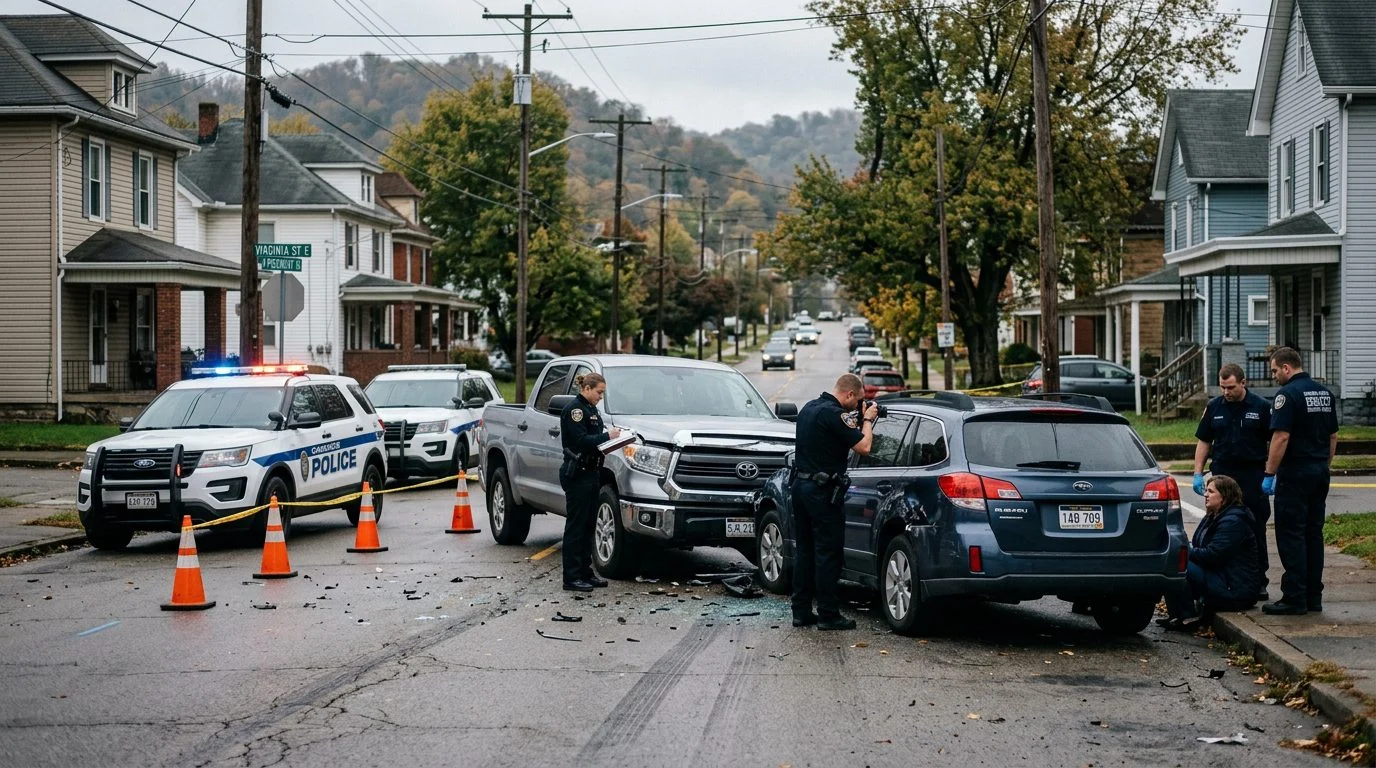
You were in a car accident, and no officer came to the scene. Now you’re wondering whether you still have any options.
You do. A car accident with no police report can still be pursued in West Virginia. The police report is one piece of evidence, not the only one. Other records can help show what happened, and the steps you take now matter.
Why a Car Accident With No Police Report Still Matters
A missing police report does not mean you have no claim. The report is useful, but it is only one source of information.
Insurers and courts may look at photos, vehicle damage, medical records, witness statements, and each driver’s account. A report written at the scene does not settle the question on its own.
Sometimes a crash that looked minor at the time leads to injuries that show up later. Those injuries can still be part of a claim.
If you’re reading this for a parent, spouse, or friend, you may be trying to piece together a crash you did not see. You may have questions like these. Was anyone hurt? Who was at fault? What records exist? Each answer below takes one of those questions in plain terms.
Talk it through with Big Bubba — the first case review is free, confidential, and carries no obligation.
Steps to Take at the Scene When No Officer Comes
Start with your health, then gather facts while they are fresh. Your body and your records come first.
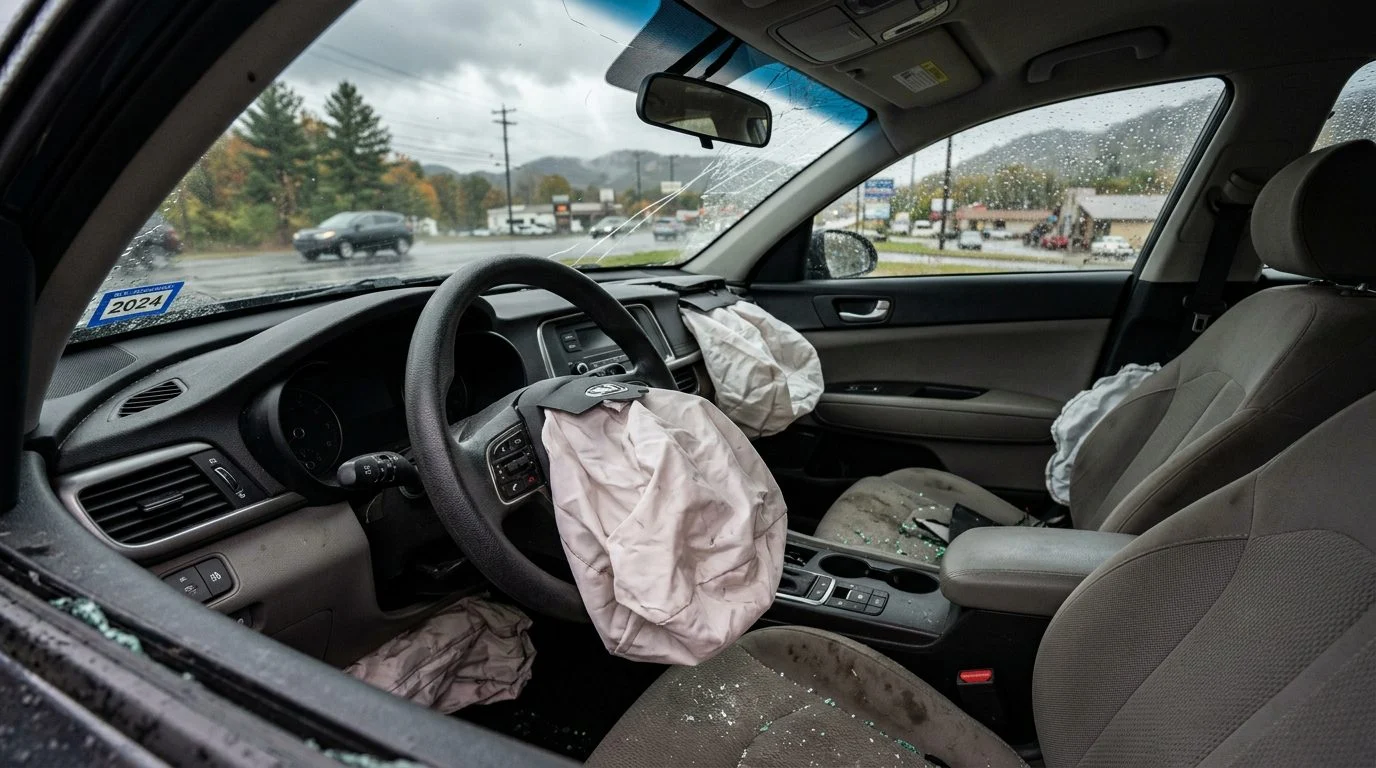
- Get medical care promptly. Even injuries that seem minor deserve a check. Some symptoms, such as headaches or back pain, may appear later. Keep every record of treatment.
- Exchange information. If you’re physically able, give the other driver your name, a working phone number, and your vehicle’s year, make, model, and last four digits of its VIN. W. Va. Code § 17c-4-3 also requires proof of insurance to be shared.
- Take photos. Capture both vehicles, the damage, the roadway, skid marks, traffic signs or signals, the weather, and any visible injuries. Note the date, time, and exact location.
- Write down witnesses. Get each witness’s name and phone number. A witness may remember details that the drivers do not.
- Write a detailed account. Record the order of events, where each vehicle stopped, and what each driver said, while your memory is fresh.
Keep the originals of everything you collect. Avoid posting about the crash online, since public posts may be used later.
Does West Virginia Require a Crash to Be Reported?
Yes. In many crashes, the driver must notify police or the sheriff right away.
Under W. Va. Code § 17c-4-6, a driver in a crash that causes injury or death, or total property damage of $1,000 or more, must give notice immediately by the quickest means of communication. Notice goes to the local police department if the crash happens inside a municipality. Otherwise, it goes to the county sheriff or the nearest West Virginia State Police office.
A missing officer does not erase that duty. The driver may still have to report, even if no one came to the scene.
Failing to notify law enforcement can also affect a license. W. Va. Code § 17c-4-10 lets the commissioner suspend a driver’s license or permit for that failure.
Which rules apply depends on the facts of your crash. Don’t assume a crash was too minor to matter.
How Long After an Accident Must It Be Reported?
Waiting can make the record harder to build.
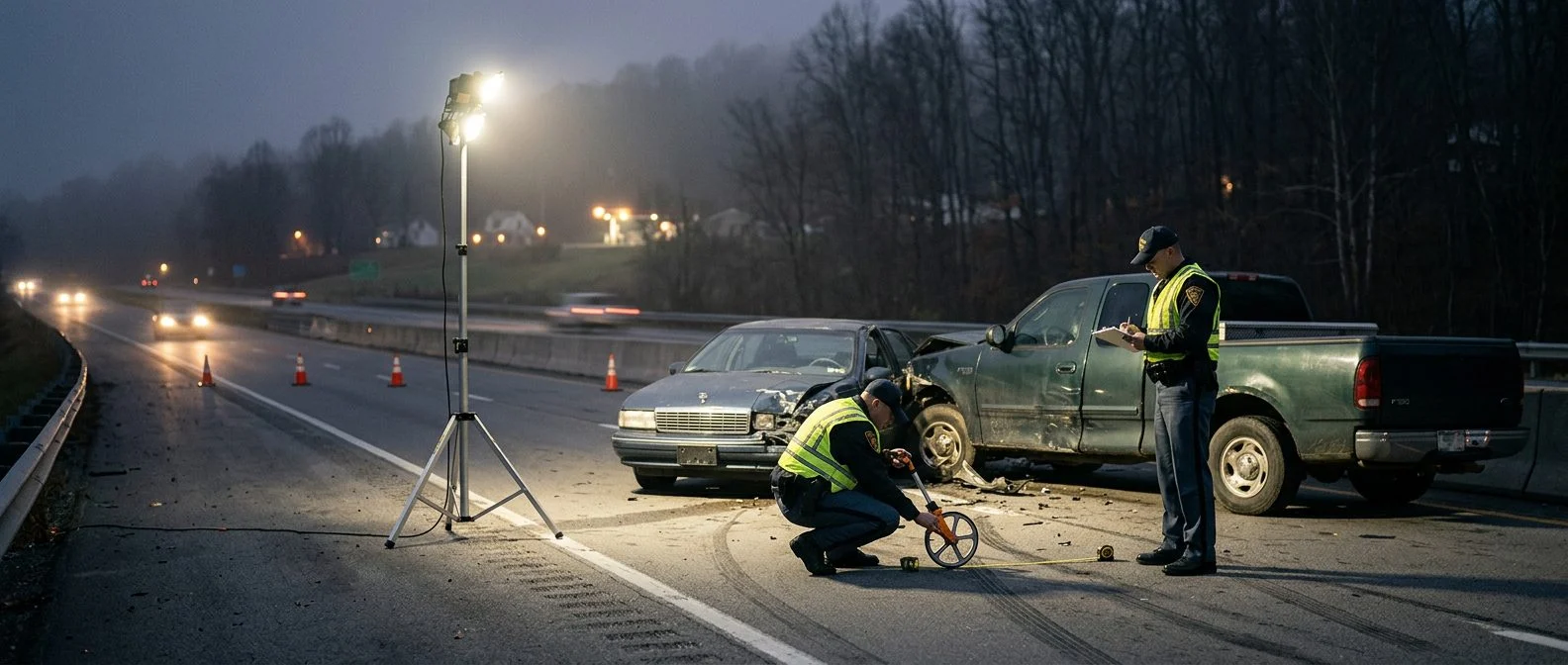
Under W. Va. Code § 17c-4-6, that notice is due right away. The police side has its own clock. Under W. Va. Code § 17c-4-7, an officer who investigates a qualifying crash must prepare a report within 24 hours after completing the investigation. If the investigation cannot be finished within 10 days, a preliminary report goes to the Division of Highways on the 10th day.
That timing matters for you. A report made close to the crash captures details while they are fresh. Early notice also creates a record that the crash was reported, which may help if questions come up later.
A delay can make it harder to show what happened. The sooner you act, the stronger your evidence tends to be.
How to Request a Crash Report After the Fact
Contact the police department or sheriff’s office that covers the crash location and ask whether a report exists. Under § 17c-4-6, the driver of a vehicle involved in a crash resulting in injury to or death of any person or total property damage to an apparent extent of $1,000 or more must immediately give notice of the crash by the quickest means of communication to the local police inside a municipality, or otherwise to the county sheriff or the nearest State Police office.
Have these details ready: the date, time, and location; the names of the drivers; vehicle information; and any case or report number you have. The crash report form is prepared by the Division of Highways under W. Va. Code § 17c-4-9. The form is meant to show the cause of the crash, the conditions at the time, and the people and vehicles involved.
Insurance information has its own route.
Agencies may charge a copy fee for records, and processing can take time. Ask about the process when you call.
Is West Virginia an At-Fault State?
West Virginia generally follows an at-fault approach, so a claim usually looks at which driver’s conduct caused the crash, and exceptions may apply.
Fault is usually shown through evidence. Photos, vehicle positions, witness statements, and the scene all help. A police report is one of those tools. Without one, the other proof matters more.
Under W. Va. Code § 55-7-13a, comparative fault means the degree to which a person’s fault was a proximate cause of an alleged personal injury, death, or property damage, expressed as a percentage, and liability is allocated to each applicable person in direct proportion to that person’s percentage of fault. Under W. Va. Code § 55-7-13c, an injured person’s recovery is reduced by their own share of fault. A person is barred only when their fault is greater than the combined fault of all others. W. Va. Code § 55-7-13c reads: “(c) Any fault chargeable to the plaintiff shall not bar recovery by the plaintiff unless the plaintiff’s fault is greater than the combined fault of all other persons responsible for the total amount of damages, if any, to be awarded.”
If another driver was at fault, that driver’s insurer may become part of the claim. The rule can get technical quickly, so it helps to learn the general idea early.
Not sure what your next step is?
Talk it through with Big Bubba — the first case review is free, confidential, and carries no obligation.
What Not to Say to Your Insurance Company
Stick to facts you know, and avoid guessing about fault or injuries.
Some insurers may dispute a claim, so careful and accurate words matter. Don’t guess about speed, what the other driver did, or how serious your injuries are. Saying “I don’t know” is fine when it’s true.
Early contact has a legal limit. Under W. Va. Code § 55-7-11a, for twenty days after a personal injury, while you are an inpatient or cannot do your usual work, no one may negotiate a settlement with you or seek a release or statement for that purpose.
Keep a simple log. Write down the adjuster’s name, the date and time of each call, and what was discussed.
Do Police Care About Minor Accidents?
Police may not come to every minor crash, but a minor crash can still matter.
A crash with little visible damage may go without an officer at the scene. That does not end the matter. The notice duty under W. Va. Code § 17c-4-6 still applies when there is injury or total property damage of $1,000 or more. Damage-only crashes involving a vehicle that is driven or attended by a person still require drivers to stop and stay at the scene under W. Va. Code § 17c-4-2.
Injuries may show up later. Pain, dizziness, or stiffness can appear hours or days after a crash. Some head and spinal injuries may take time to diagnose. Keep a record of any symptoms and every doctor visit, even if you felt fine at the scene.
Time Limits and Preserving Evidence
West Virginia generally allows two years to file a personal injury lawsuit, and exceptions may apply (W. Va. Code § 55-2-12).
Under W. Va. Code § 55-2-12, a personal action for personal injuries must be brought within two years after the right to bring it accrues. The same statute sets a two-year period for damage to property.
Wrongful death has its own rule. Under W. Va. Code § 55-7-6, the action is brought by the deceased person’s personal representative, and it must be commenced within two years after the death, subject to the provisions of section eighteen, article two, chapter fifty-five. W. Va. Code § 55-7-6 reads: “The provisions of this section shall not apply to actions brought for the death of any person occurring prior to July 1, 1988.”
Evidence fades. Photos, vehicle damage, phone records, and medical records can be lost or changed over time. Save originals, and document the vehicle before any repairs. Traumatic brain injury and spinal cord injury may take time to show their full effects, so keep your medical records together from the start.
What to Know After a Crash
If you want help looking at your crash, you can reach out to the firm for a free case review, with no obligation to continue.
You may be dealing with pain, a damaged car, calls from insurers, and gaps in what you remember. You don’t have to sort all of that out by yourself. Big Bubba Injury Law handles car accident and truck accident claims, along with serious injury and wrongful death cases. We serve injury victims across West Virginia.
When you’re ready, send your details through the firm’s contact form. Bring whatever you have, including photos, medical records, and any report number.