
West Virginia Injury Claims
Declined an Ambulance After a Crash? Talk With Us About Your Case
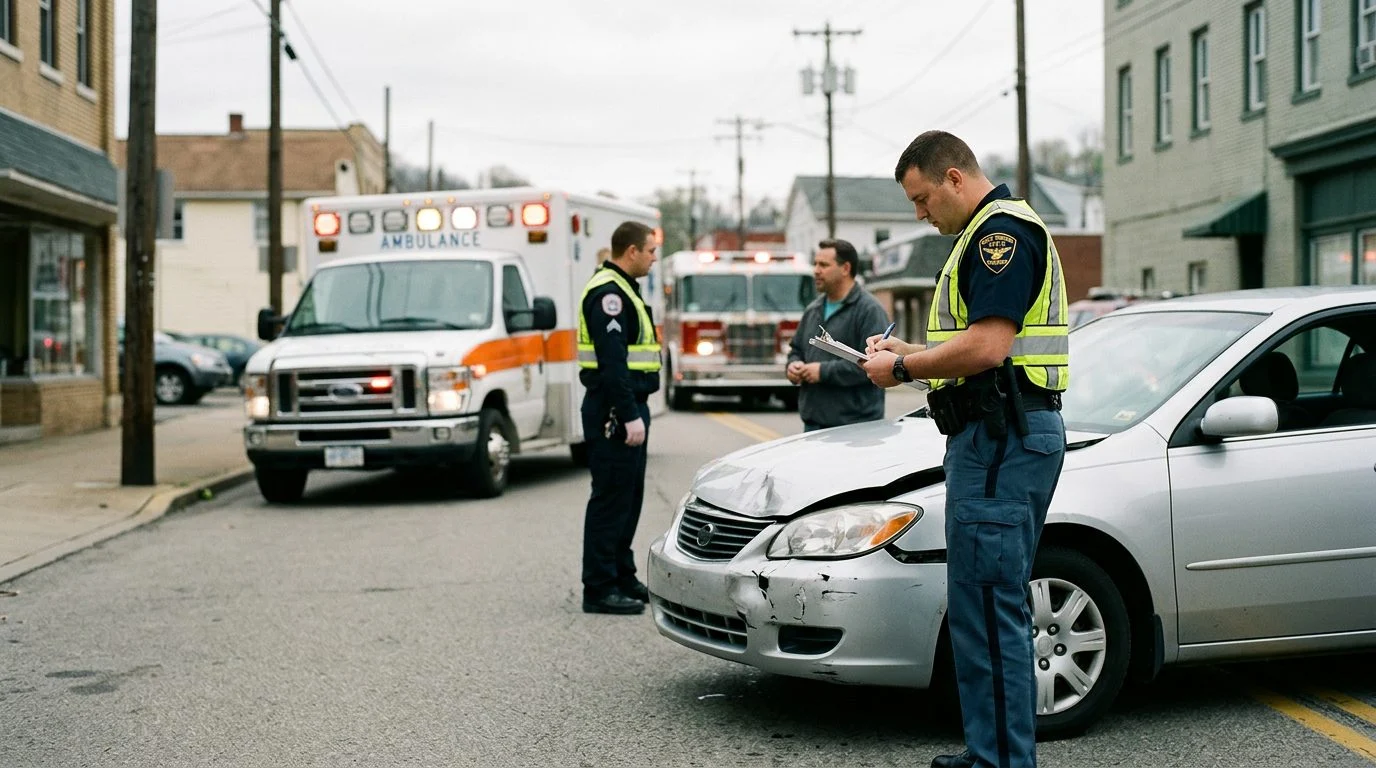
Turning down an ambulance at the scene does not end your options. The firm helps injured West Virginians and families understand their next steps after car and truck crashes.
Published November 2, 2026
If you declined an ambulance after a car accident in West Virginia, you may still have an injury claim. It can change the questions the other side asks about your injury, so the early steps matter.
Many people say no to an ambulance because they feel shaken but believe they are okay. This page covers declined ambulance after car accident West Virginia claims in plain language. It explains the general state rules, what insurers may question, and which records may help later.
Why many people turn down an ambulance after a crash
Many people decline transport because they feel well enough to wait. That choice is understandable after a crash that happens fast.
Adrenaline can hide pain for hours. A person may feel sore, dazed, or fine at the scene and still have an injury. The decision often gets made before anyone knows how the body will respond.
Some people wake up stiff or with a headache. Others notice neck pain only after the adrenaline wears off. Waiting is a common reaction, and it is not a sign that you were uninjured.
If you were riding with a family member, you may be deciding for someone else too. Worry for a relative who was in the car is a common reason people look for these answers. To learn about brain injuries that follow car crashes, read traumatic brain injury after car accidents.
If symptoms or questions about your crash are still worrying you, we can talk it through with you, and you can request a free case review. Talk it through with Big Bubba — the first case review is free, confidential, and carries no obligation.
Does declining an ambulance end your right to file a claim?
West Virginia generally allows two years to file a personal injury action, and exceptions may apply, according to W. Va. Code § 55-2-12.
A claim generally turns on proof. If another driver was at fault, you would need to show that the crash caused your injury and the losses that followed. The refusal is one fact among many.
Insurers and courts look at the whole record, not one moment at the scene. What matters is whether medical records and other proof connect the injury to the crash. A refusal may give the other side something to argue, so it helps to understand how it fits the full picture. How much it matters depends on the facts of each crash and each injury.
How West Virginia fault rules can affect a claim
West Virginia uses a modified comparative fault rule, so each person’s share of fault is compared with the others. Under W. Va. Code § 55-7-13c, your own fault does not bar recovery unless it is greater than the combined fault of all other people responsible for the damages. If it is less, your recovery is reduced in proportion to your share of fault.
Declining an ambulance is a separate question from who caused the collision. A choice about transport is not the same as causing the crash. Fault for the crash is decided under W. Va. Code § 55-7-13a, which allocates responsibility by percentage.
Fault is not the same as damages. Fault asks who caused the crash. Damages ask what losses followed from the injury. Keep these two questions apart when you read about your options.
If the other driver was working, rules on responsibility for a worker’s conduct may apply. See suing an employer for a worker’s crash.
Why the other side may question the medical gap
The other side may question an injury when medical care does not start right away. Some insurers may dispute a claim by arguing that the crash did not cause the injury, that it was less serious, or that waiting made it worse.
The time between the crash and the first medical visit is one thing they may review. A gap does not end a claim. It can, however, make the timeline harder to explain.
A documented reason helps. For example, you may have felt stable at the scene, with symptoms that developed later. Write down when each symptom started and what you noticed each day. Keep the notes factual and avoid guessing about cause.
A claim may still move forward with a clear timeline. What helps most is consistency: the same symptoms described to each provider, and records that match the story you tell.
Head and brain symptoms can appear after the scene
Some concussions and brain injuries do not show obvious signs at the scene. Headaches, confusion, dizziness, sleep changes, and memory trouble may appear hours or days later.
Tell each provider about every symptom, even small ones like trouble finding words or bright light bothering your eyes. A missed symptom in the chart can make the timeline harder to read later.
If new or changing symptoms show up, get a medical evaluation. Your health comes first. A medical provider can record what they find and help determine whether symptoms relate to the crash. That answer depends on your history and findings.
Keep copies of every visit summary you receive. They can later show how your symptoms were recorded over time.
Records and evidence that may matter
Several kinds of evidence may be relevant to a car accident claim. Start with the items that are easiest to lose:
- The crash report from the investigating agency
- Photos of the vehicles, the road, and any visible injuries
- Names and contact details for witnesses
- Any dashcam or nearby video
- A dated log of symptoms, missed work, and daily limits
- Medical records from every provider seen after the crash, including urgent care and follow-up visits
Photos taken on the day of the crash can show the scene before it changes. Keep paperwork from any tow, rental, or repair in one folder, paper or digital.
A dated log can show how an injury affected daily life over time. For a fuller list, see what to keep after a car crash.
Not sure what your next step is?
Talk it through with Big Bubba — the first case review is free, confidential, and carries no obligation.
Deadlines to keep in mind
Deadlines come from statute, and missing one can end a claim. The general rule for personal injury is two years, under W. Va. Code § 55-2-12, and exceptions may apply. Don’t assume you have time to wait.
Many people wait on a claim while they recover. That makes sense, but the clock still runs. Write down the date of the crash so you can check the deadline later.
Wrongful death claims are governed by W. Va. Code § 55-7-6. West Virginia law generally requires a wrongful death action to be commenced within two years after the death, subject to the provisions of section eighteen, article two, chapter fifty-five, under W. Va. Code § 55-7-6. W. Va. Code § 55-7-6 reads: “The provisions of this section shall not apply to actions brought for the death of any person occurring prior to July 1, 1988.” The action is brought by the personal representative, the person formally appointed for the deceased person. Family members should ask about timing early, since the questions in a fatal crash can differ from an injury claim.

If you turned down an ambulance and are still worried
If symptoms or questions still worry you, you don’t have to sort them out alone. Waiting to see how symptoms develop is a hard place to be. Some people feel uncertain for weeks about what to do next. Those questions are real, and asking them is not overreacting.
Can I still file a claim if I refused an ambulance?
West Virginia generally allows two years, and exceptions may apply.
Can concussion symptoms appear days after a crash?
Yes, some brain injury symptoms can start hours or days after a crash. Get a medical evaluation for any new or changing symptoms.
How does fault affect a claim in West Virginia?
Your recovery may be reduced by your share of fault (W. Va. Code § 55-7-13c). Under West Virginia’s rule, your fault bars recovery only if it is greater than the combined fault of everyone else responsible.
If you turned down an ambulance and now have concerns about symptoms or your claim, you can reach out to the firm to discuss your situation. We serve Charleston injury victims, and you can request a free case review to go over the crash, the medical timeline, and the next steps.