
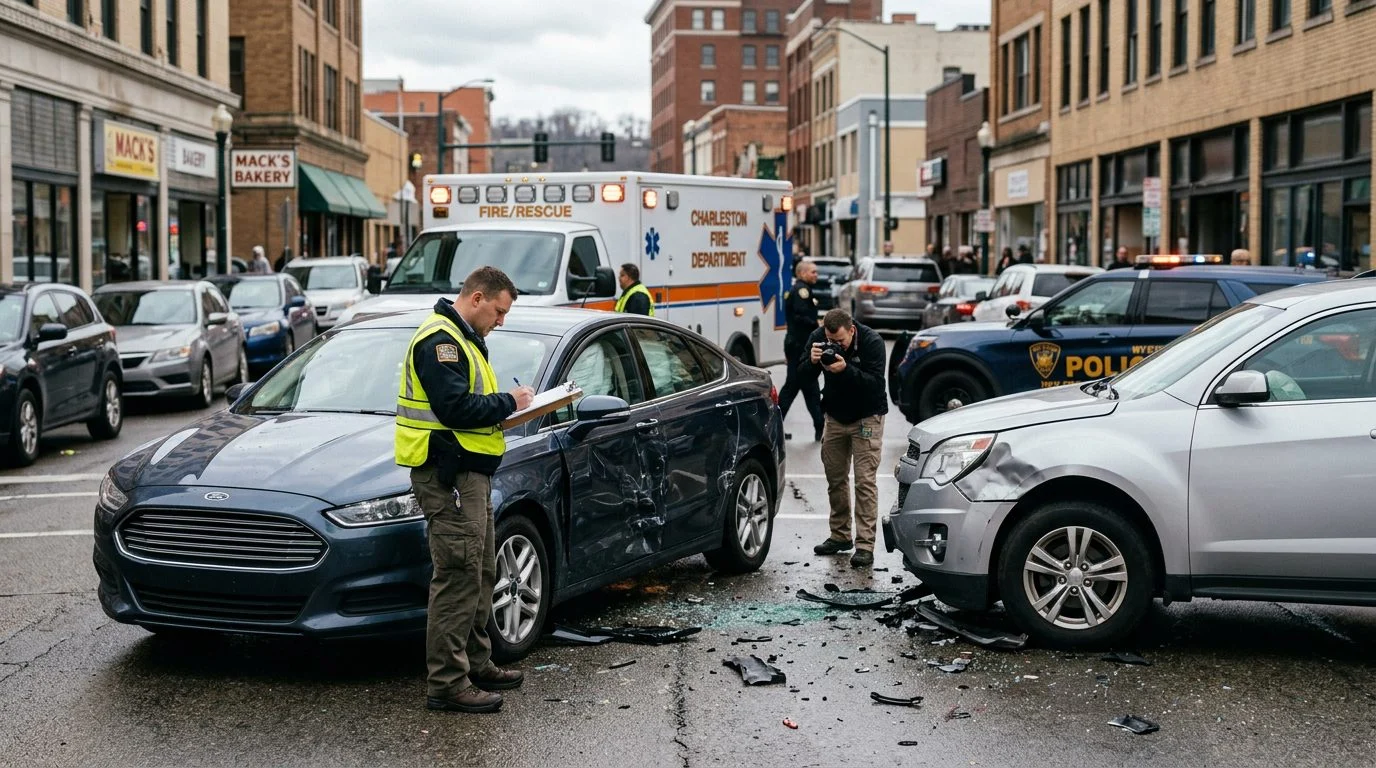
Distracted Driving Car Accidents | West Virginia
Hurt by a Distracted Driver? Talk to Big Bubba
Big Bubba Injury Law represents people seriously hurt in car and commercial truck crashes caused by a driver who was not paying attention. We serve Charleston, Huntington, Morgantown, Wheeling, Martinsburg, Parkersburg, Beckley, Clarksburg, Fairmont, Weirton and communities across West Virginia.
Published October 31, 2026
A distracted driving car accident can happen in seconds. If another driver was texting, calling, or looking away from the road, you may have a claim for your injuries. The hard part is proving what they were doing. Big Bubba Injury Law represents people hurt in distracted driving car accident cases across West Virginia. This page explains the proof and the steps that follow.
What Is a Distracted Driving Car Accident?
A distracted driving car accident happens when a driver’s attention moves away from driving and a crash follows. Distraction comes in three forms. Manual distraction means a hand is off the wheel, like texting. Visual distraction means eyes are off the road, like checking a map. Cognitive distraction means the mind is elsewhere, like thinking about a heated phone call.
Common examples include texting, calling, using navigation apps, eating, and reaching for objects. Many drivers say they only looked away for a second. In a negligence claim (a claim that someone failed to use reasonable care), that second can matter a great deal.
This page is for drivers, passengers, pedestrians hit by a vehicle, and families who lost a loved one in these crashes. We serve Charleston, Huntington, Morgantown, Wheeling, Martinsburg, Parkersburg, Beckley, Clarksburg, Fairmont, Weirton, and communities across West Virginia.
Not sure what your next step is?
Talk it through with Big Bubba — the first case review is free, confidential, and carries no obligation.
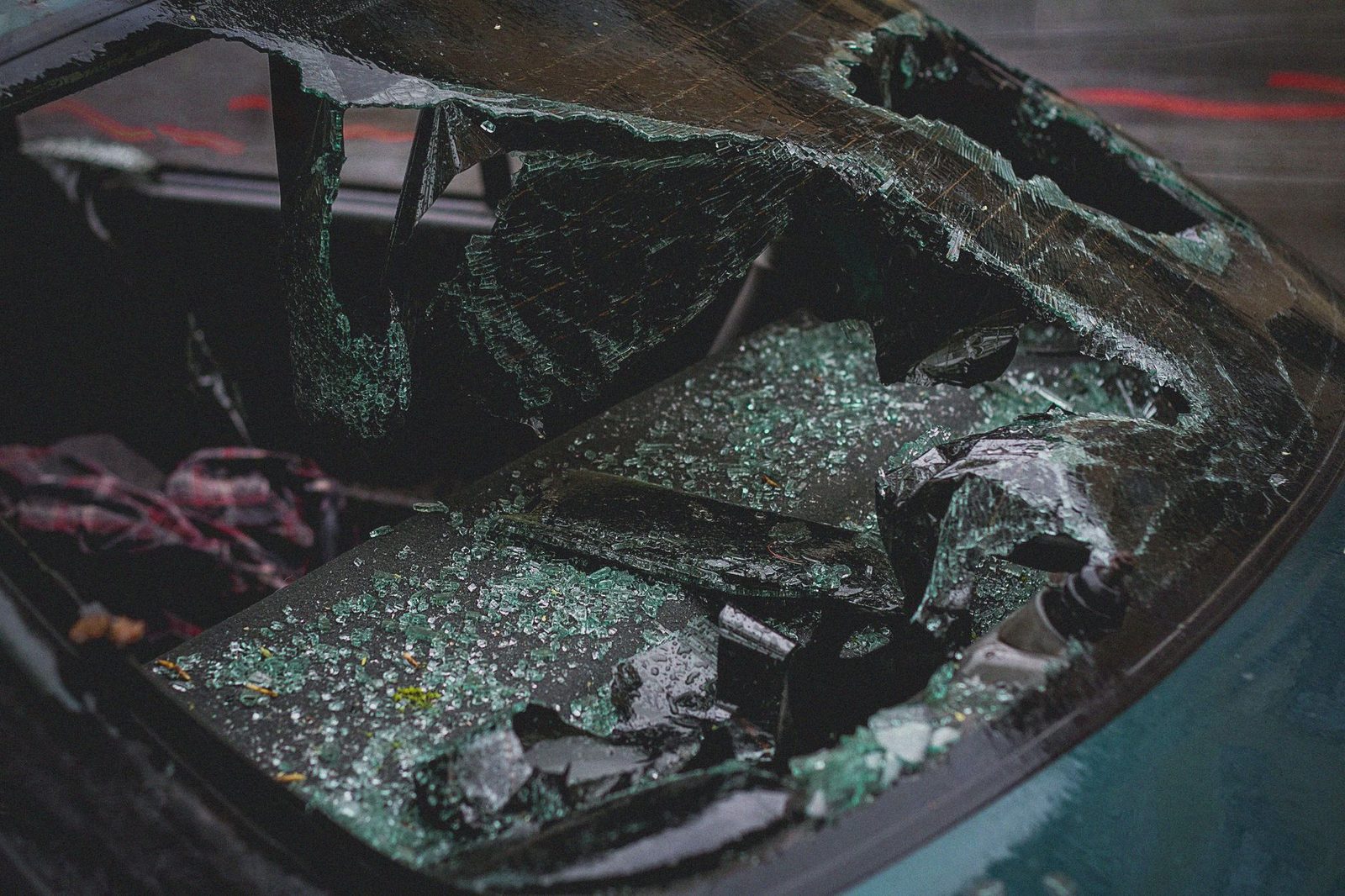
What Evidence Shows the Other Driver Was Distracted?
Phone records, vehicle data, and witness accounts are the main proof of distraction. Each one shows a different part of what happened.
- Phone evidence: call logs, text and data timestamps, and app activity. These records can be requested from the phone carrier through proper legal steps.
- Vehicle evidence: the airbag control module, which is the car’s event data recorder (a device that stores crash data such as speed and braking). Newer vehicles may also store telematics (data sent from the car) and Bluetooth connection logs.
- Physical evidence: a phone found at the scene, damage patterns, and skid or lane-departure marks.
- Witness evidence: statements from passengers, nearby drivers, and responding officers, plus photos or video from businesses or dash cameras.
Traffic law can add weight. Under W. Va. Code § 55-7-9, a person injured by the violation of a statute may recover the damages caused by that violation. W. Va. Code § 55-7-9 reads: “Any person injured by the violation of any statute may recover from the offender such damages as he may sustain by reason of the violation, although a penalty or forfeiture for such violation be thereby imposed, unless the same be expressly mentioned to be in lieu of such damages.” If the other driver broke a traffic law that caused your harm, that violation can support your claim.
How Do You Prove What the Other Driver Was Doing?
You prove distraction by matching digital records to the exact crash time. A phone log showing activity only helps if the crash time is known. Timing sits at the center of the case.
Early steps matter most. A preservation letter asks the other driver and their insurer to keep phones, vehicles, and data intact. Phone and car data can be overwritten or lost, so these requests should go out quickly.
The crash report, citations, and officer notes add a second layer. Together with digital records, they build a timeline from the moment of impact backward.
Insurers often move fast. The other driver’s insurance company may ask you for a recorded statement soon after the crash. West Virginia law limits some early contact. For 20 days after a personal injury, while you are in the hospital or unable to do your usual work, no one may negotiate a settlement of your claim, seek a partial or general release of liability from you, or ask you for a statement to use in negotiating a settlement; the only exception for statements is when a person acting for you obtains one upon your express request. See W. Va. Code § 55-7-11a. Ask questions before you give any statement.
How Does West Virginia Fault Law Apply to Your Claim?
West Virginia uses a modified comparative fault rule, so your own share of fault can reduce what you recover. Under W. Va. Code § 55-7-13c, your fault does not bar recovery unless it is greater than the combined fault of all other persons responsible for the damages. If your fault is less, your recovery is reduced in proportion to your share of fault. West Virginia’s comparative fault statute, W. Va. Code § 55-7-13c, addresses how fault chargeable to an injured person affects recovery: it does not bar recovery unless that person’s fault is greater than the combined fault of all other persons responsible, and otherwise recovery is reduced in proportion to the injured person’s degree of fault.
Under W. Va. Code § 55-7-13a, liability is allocated to each person, including plaintiffs and nonparties who caused the damages, in direct proportion to that person’s percentage of fault.
Insurers may argue that you were distracted too, or following too closely. That is why records matter. They answer those arguments with facts instead of opinions.
More than one party can share fault. A defending party can give notice, no later than one hundred eighty days after service of process upon said defendant, that a nonparty was partly at fault, as allowed under W. Va. Code § 55-7-13d. Whether fault is shared depends on the facts of the crash.
What Injuries Often Follow Distracted Driving Crashes?
Distracted driving crashes often involve high speeds, side impacts, or sudden stops. These forces can cause serious injuries, including:
- traumatic brain injury
- spinal cord injury
- broken bones and internal injuries
- burns
Seeking medical care early creates records that link your injuries to the crash. Treatment records, future care needs, and lost work are also part of proving the full harm.
A wrongful death action in West Virginia is brought by the decedent’s personal representative, and it generally must be commenced within two years after the death, subject to the provisions of section eighteen, article two, chapter fifty-five. Under W. Va. Code § 55-7-5, a person whose wrongful act, neglect or default causes a death, where that act would have entitled the injured person to sue had death not ensued, can be liable in an action for damages, even after the injured person dies, but no action may be maintained by the personal representative if the injured person, not an infant, compromised the injury and accepted satisfaction for it before death. It must be started within two years after the death, subject to the provisions of section eighteen, article two, chapter fifty-five, under W. Va. Code § 55-7-6. W. Va. Code § 55-7-6 reads: “The provisions of this section shall not apply to actions brought for the death of any person occurring prior to July 1, 1988.”
What Happens After You Contact the Firm?
After you contact the firm, the process starts with a free case review. This review is confidential and carries no obligation to continue. Here is what usually follows.
- Free case review. The firm listens to what happened and asks for the crash report and medical information.
- Evidence preservation. Letters go to the other driver and insurer. Requests go out for phone, vehicle, and witness records.
- Investigation. The firm builds the timeline, gathers medical records, and identifies every party that may share fault.
- Building the claim. This includes preparing a demand and, when needed, filing suit in the proper West Virginia court.
Deadlines apply. Under W. Va. Code § 55-2-12, a personal injury action for which no other limitation is prescribed must be brought within two years after the right to bring it has accrued.
Timelines vary with the injuries, the evidence, and whether fault is disputed. The facts of each case decide the path. No result can be predicted from a first call.
Not sure what your next step is?
Talk it through with Big Bubba — the first case review is free, confidential, and carries no obligation.
Common Questions About Distracted Driving Claims
Most readers ask whether they still have a claim and how to protect proof. Short answers follow.
Can I still have a claim if the other driver says they were hands-free?
Yes, you may still have a claim. Hands-free use is a question of fact, and vehicle and phone records can show what was actually in use.
What if the other driver deletes phone records?
Early preservation letters ask for those records before they are lost. The sooner the request goes out, the lower that risk.
Do I need a police report?
A police report helps, but it is not the only proof. Phone, vehicle, and witness records can also support a claim.
Can a passenger make a claim?
A passenger hurt by a distracted driver may have a claim against the at-fault driver. Who is responsible depends on the facts of the crash.
How do I start?
Start by describing what happened to the firm. The first step is a free case review.
Tell the Firm What Happened and Protect the Proof
If a distracted driver hit you or someone you love, the records that show it can disappear fast. Phone and vehicle data are often the first to go. Asking for them early is the most useful step you can take now. If another driver was on a phone when your vehicle was hit, reach out to Big Bubba Injury Law for a free case review. Tell the firm where and when the crash happened and what injuries you or your family members suffered.