
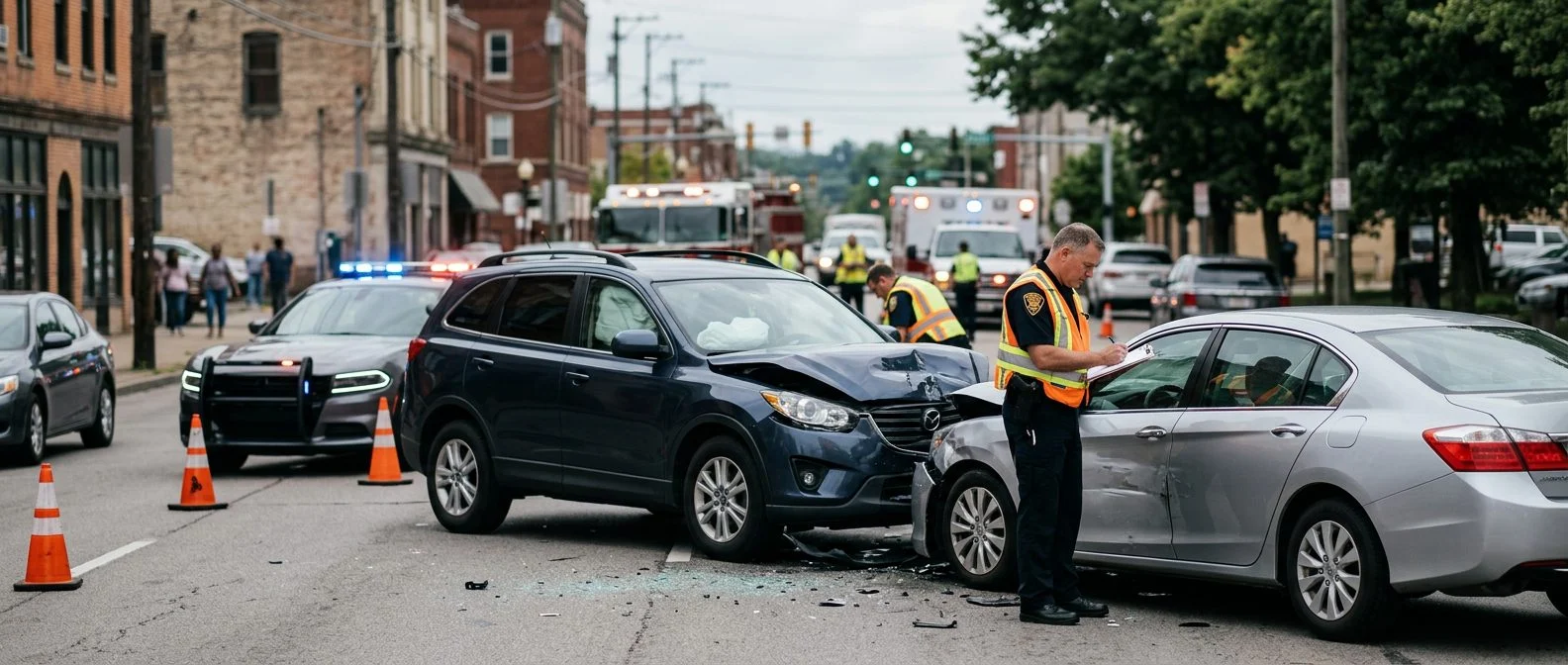
Car Accidents | Serving West Virginia
Hurt by a Distracted Driver in West Virginia? Tell Bubba What Happened.
Big Bubba Injury Law represents people seriously injured in car and commercial truck crashes caused by distracted driving, along with families in wrongful death cases across the state. We serve Charleston, Huntington, Morgantown, Wheeling, Martinsburg, Parkersburg, Beckley, Clarksburg, Fairmont, Weirton and communities throughout West Virginia.
Published October 30, 2026
A distracted driver crash claim asks who is responsible when another driver’s attention was off the road. If you were hurt, or lost someone, you may have a claim in West Virginia. Big Bubba Injury Law handles car and truck crashes, catastrophic injuries, and wrongful death cases. We serve people across West Virginia, including Charleston, Huntington, Morgantown, Wheeling, Martinsburg, Parkersburg, Beckley, Clarksburg, Fairmont, and Weirton. A distracted driver car accident lawyer can explain how these claims work. The firm offers a free case review to talk through your situation.
What a Distracted Driver Crash Claim Is and Who It Is For
A distracted driver crash is a collision where a driver’s attention moved away from the road. Common distractions include a phone, a text, a screen, eating, grooming, passengers, or another task. Attention can be lost in three ways:
- Manual: the hands leave the wheel.
- Visual: the eyes leave the road.
- Cognitive: the mind is on something other than driving.
All three can support a claim. This page is for:
- Injured drivers, passengers, pedestrians, and cyclists.
- Families of people killed in a crash.
- Drivers struck by someone who was distracted.
Crashes involving commercial trucks and buses also fall within this practice area. If you aren’t sure your crash fits, you can request a free case review. The review is confidential, and it carries no obligation to continue.
If a distracted driver's crash left you or someone you love hurt, you may have a claim, and you don't have to sort out the next steps alone. Request a free case review with the firm today. Talk it through with Big Bubba — the first case review is free, confidential, and carries no obligation.
Common Ways Distraction Causes Crashes in West Virginia
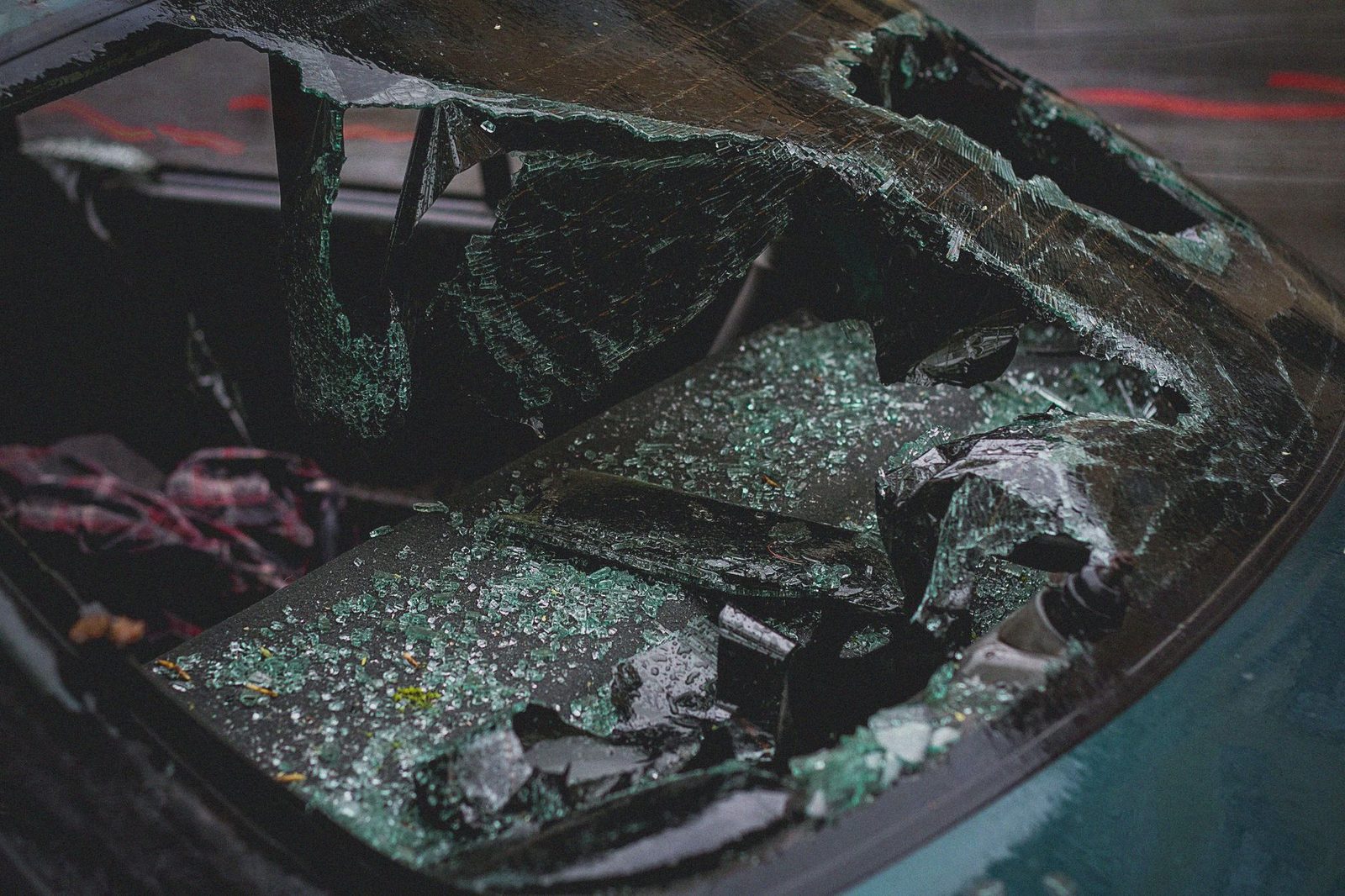
Distraction causes crashes in a few common ways. Phone use is the form people picture first, but it isn’t the only one. Other examples include:
- Reading or typing on a phone, even briefly.
- Using touchscreens, navigation apps, or in-dash systems that pull eyes from the road.
- Eating, drinking, or reaching for items on the floor or seat.
- Turning around to deal with children, pets, or passengers.
Distraction often plays a part in rear-end, lane-departure, intersection, and left-turn crashes. Commercial drivers face specific federal rules. Federal rules bar commercial drivers from texting while driving. They also restrict hand-held phone use while driving a commercial vehicle. Those rules can add to the evidence in a truck or bus crash. We serve Charleston, Huntington, Morgantown, Wheeling, Martinsburg, Parkersburg, Beckley, Clarksburg, Fairmont, and Weirton, and communities across all 55 West Virginia counties.
What a Distracted Driver Claim Can Cover
A distracted driver claim can seek payment for medical care, lost income, and other losses from the crash. Losses usually fall into a few groups:
- Medical care: emergency treatment, hospital stays, surgery, rehabilitation, and future care needs.
- Lost income: missed work and reduced ability to earn, including future earnings after serious injuries.
- Pain and daily life: pain, emotional distress, and changes to everyday life.
- Property: damage to your vehicle and other losses tied to the crash.
Serious injuries, such as traumatic brain injury or spinal cord injury, need careful documentation. Medical records and treating providers show how the injury affects memory, movement, mood, work, and daily life over time.
For families, West Virginia’s wrongful death law lets a personal representative bring the action. The jury’s verdict shall include, but may not be limited to, damages for sorrow, mental anguish, and solace. The jury’s verdict shall include, but may not be limited to, compensation for reasonably expected loss of income and services, expenses for the care, treatment and hospitalization of the decedent incident to the injury resulting in death, and reasonable funeral expenses. West Virginia also lets certain injury claims survive the death of the injured person.
In cases involving a commercial motor vehicle that requires a commercial driver’s license (not buses or other vehicles primarily carrying passengers), § 55-7-32 caps the noneconomic damages each person injured or killed can recover against certain employer defendants at $5 million for each occurrence, for causes of action arising after July 1, 2024. On January 1, 2026, and in each year thereafter, the limitation on compensatory damages for noneconomic loss in subsection (b) increases to account for inflation, by an amount equal to the Consumer Price Index published by the United States Department of Labor, but not to exceed 150 percent of the amount specified in that subsection (W. Va. Code § 55-7-32). That limit does not apply when the driver was found to be distracted under the statute. The limit is also not available to any employer defendant that does not have commercial motor vehicle insurance of at least $3 million in the aggregate for each occurrence covering the personal injury in the case.
How Distraction Is Proven After a Crash
Distraction is shown through evidence. The evidence in each case decides what can be shown. Several sources may help:
- The police report, citations, and what the officer noted at the scene.
- Cell phone records showing calls, texts, or app use near the time of the crash.
- Vehicle event data and onboard telematics, where available.
- Dash cam, traffic camera, and business surveillance footage.
- Witness accounts from people nearby.
- Medical records showing how the injuries match the type of impact.
Timing matters. Phone and vehicle data can be overwritten or deleted. That is why requests to preserve records are often sent early. Witness accounts and the driver’s own statements can also help show distraction.
How the Process Works, Step by Step
The process moves from a free case review to investigation, insurer talks, and, if needed, a lawsuit. Here is what to expect:
- Request a free case review. Share the date, location, vehicles, and injuries.
- Protect your records. Get medical care, keep bills, note the police report number, save photos, and avoid posting about the crash online.
- Investigate. The firm works to identify every party who may share fault. That may include the distracted driver, a commercial employer, or a vehicle owner.
- Handle insurer contact. Learn how to handle adjuster calls and what a recorded statement involves before you give one.
- Value and negotiate. The claim is valued using medical records and the losses involved, then negotiated with insurers.
- File a lawsuit if needed. If the claim can’t be resolved fairly, a lawsuit may be filed in the proper West Virginia court.
Timelines vary with the facts, including how severe the injuries are and how long treatment lasts.
Deadlines and Insurance Limits That Affect Your Options
West Virginia generally gives two years to bring a personal injury claim (W. Va. Code § 55-2-12). A wrongful death action must start within two years after the death, subject to the provisions of section eighteen, article two, chapter fifty-five (W. Va. Code § 55-7-6). W. Va. Code § 55-7-6 reads: “The provisions of this section shall not apply to actions brought for the death of any person occurring prior to July 1, 1988.” Acting early keeps more options open.
- Personal injury: § 55-2-12 sets a two-year period for personal injury damages.
- Wrongful death: § 55-7-6 requires the action within two years after the death, subject to the provisions of section eighteen, article two, chapter fifty-five. W. Va. Code § 55-7-6 reads: “The provisions of this section shall not apply to actions brought for the death of any person occurring prior to July 1, 1988.”
Insurance talks are also limited for a short time. Under § 55-7-11a, certain settlement talks and statements are barred within twenty days of the injury. That applies when the injured person is an inpatient in any hospital or is partially or totally unable to engage in his or her usual trade, profession or occupation. Under W. Va. Code § 55-7-11a, an injured person may disavow a settlement, release of liability or statement entered into, obtained or made in violation of that section at any time within one hundred eighty days from the date of the personal injury.
Insurance may pay less than your total losses. An uninsured motor vehicle is one with no bodily injury liability insurance and property damage liability insurance both in the amounts specified by section two, article four, chapter seventeen-d of this code, or one whose insurer denies coverage, or one with no certificate of self-insurance; a motor vehicle is also deemed uninsured if the owner or operator is unknown. W. Va. Code § 33-6-31 reads: “unless it contains an endorsement or provisions undertaking to pay the insured all sums which he or she is legally entitled to recover as damages from the owner or operator of an uninsured motor vehicle, within limits which shall be no less than the requirements of section two, article four, chapter seventeen-d of this code, as amended from time to time: Provided, That such policy or contract shall provide an option to the insured with appropriately adjusted premiums to pay the insured all sums which he or she shall be legally entitled to recover as damages from the owner or operator of an uninsured motor vehicle up to an amount of $100,000 because of bodily injury to or death of one person.” Knowing which coverage applies helps you see the full picture.
Not sure what your next step is?
Talk it through with Big Bubba — the first case review is free, confidential, and carries no obligation.
Frequently Asked Questions About Distracted Driver Crashes
Here are short answers to common questions about these claims.
What if I was partly at fault?
West Virginia uses comparative fault. Your recovery is reduced by your share of fault, and it is barred only if your fault is greater than all others combined.
Can I bring a claim if the other driver was only texting?
Yes. A claim can rest on distraction, not only on speeding. What matters is whether the distraction contributed to the crash and your injuries.
Witness accounts, vehicle data, and video can also show distraction.
What if a family member died in a distracted driver crash?
A personal representative brings the wrongful death action for the family. The firm can explain who may bring the claim in your situation.
Will the firm deal with the insurance company for me?
The firm can communicate with insurers on your behalf. Ask how that works for your claim during your free case review.
How soon should I reach out?
Earlier is generally better for preserving evidence and watching deadlines.
Talk With the Firm About What Happened
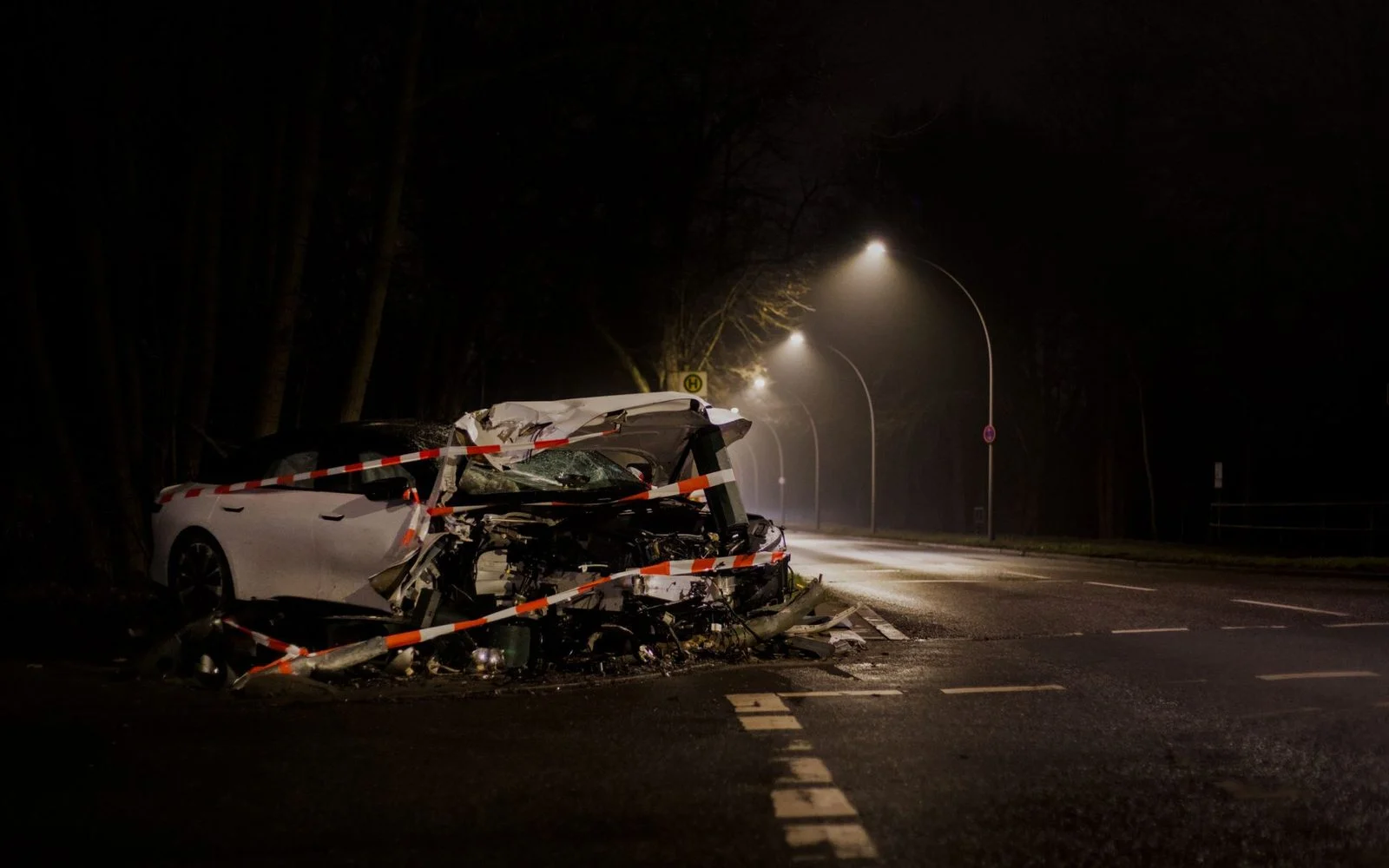
If a driver looking at a phone or screen hurt you or someone you love, the details matter now. Phone records, witness memories, and vehicle data can change quickly. Big Bubba Injury Law serves injured people and families across West Virginia. Tell Bubba what happened, in your own words, and reach out today to request your free case review. The review is confidential and carries no obligation to continue. Contact the firm here.
Related practice areas
- Traumatic Brain Injury from Car and Truck Accidents in West Virginia
- Wrongful Death Car Accident Damages in West Virginia