
West Virginia Injury Guide
Drowsy Driver Crash Brain Injury: What West Virginia Families Should Know
Fatigue can slow a driver's reaction and leave less time to brake or steer away. Here is how drowsy driving may connect to a brain injury and what evidence may help show it.
Published November 3, 2026
A drowsy driver crash can cause a serious brain injury, even when the impact does not look severe. A tired driver may react more slowly, which can leave less time to brake or steer away. Families looking into a drowsy driver crash brain injury West Virginia case often ask how fatigue connects to the injury, why symptoms can take days to appear, and what evidence may show a driver was tired. This guide answers those questions in plain language, with links to federal and West Virginia rules.
What Drowsy Driving May Look Like in a Crash
Drowsy driving means operating a vehicle while tired enough that attention and reaction time may be reduced. It can look like drifting, following too closely, or a brief microsleep, which is a moment of lost awareness that may last only seconds.
Some crash patterns may point toward fatigue. A vehicle that leaves its lane on a straight road, with little or no braking before impact, is one example. A driver who has no memory of the final minutes before the crash is another.
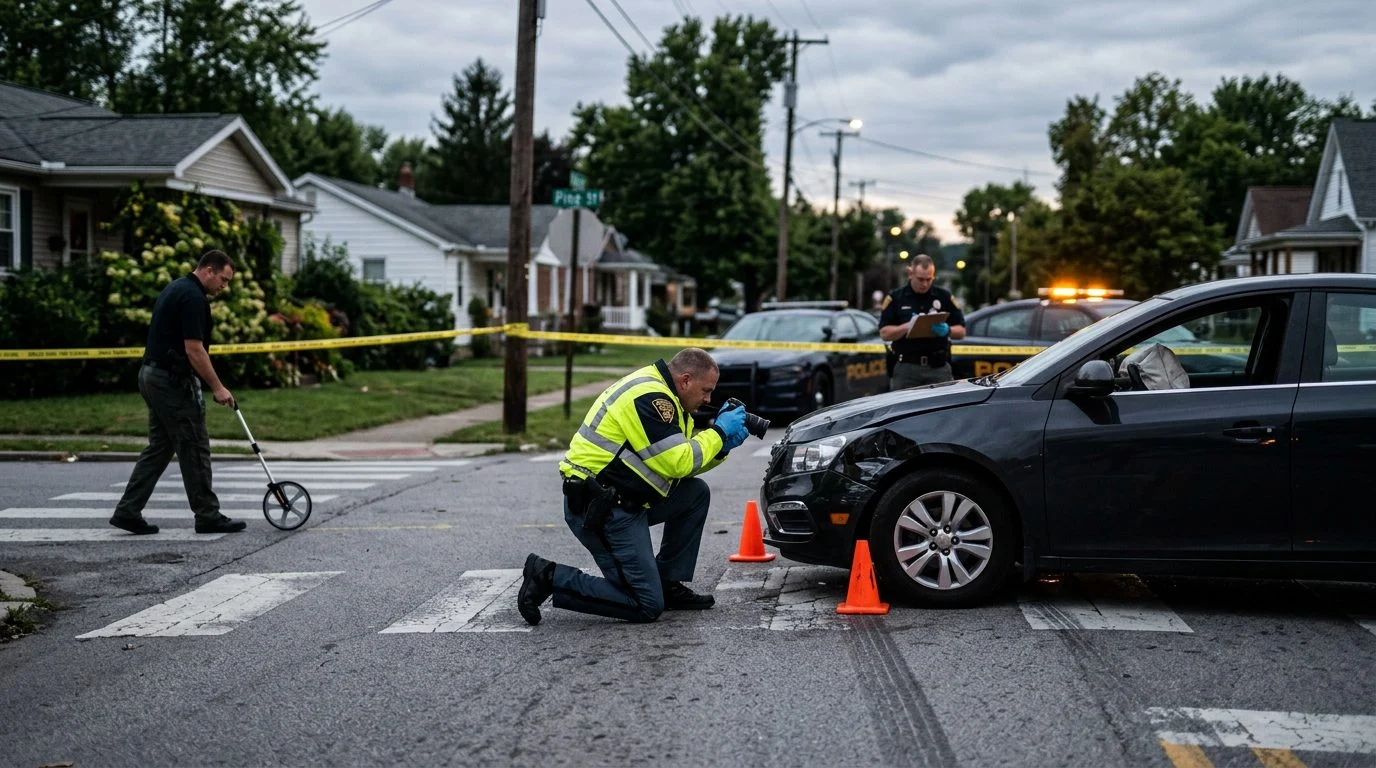
These signs are clues, not proof. A crash is usually reviewed through several sources, including the police report, witness accounts, vehicle data, and medical records. The picture often becomes clearer when those sources are read together. Early notes and photos from the scene can matter, because scenes change quickly.
Brain injuries are one of the most serious harms a crash can cause. For background on how they happen in car crashes, read our traumatic brain injury guide.
Not sure what your next step is?
Talk it through with Big Bubba — the first case review is free, confidential, and carries no obligation.

How a Drowsy Driver Crash May Cause a Brain Injury
A drowsy driver crash may cause a brain injury through a direct blow to the head or through fast movement of the brain inside the skull. Doctors call that second mechanism acceleration and deceleration. It can occur even when the head never strikes anything. The Brain Trauma Foundation guideline covers how traumatic brain injuries occur and how they are assessed before a person reaches the hospital.
Fatigue may matter because a tired driver may react more slowly. Less reaction time can mean less time to brace, brake, or steer away. That may increase the force of impact. How much force a crash involves depends on the facts, including speed and vehicle size.
The Administration for Community Living states that automobile accidents can cause traumatic brain injuries. Injuries range from mild to severe. A medical evaluation is the way to learn what happened inside the head. Symptoms, scans, and recovery differ from person to person, so no two cases look the same.
Why Brain Injury Symptoms May Appear Days Later
Brain injury symptoms may appear hours or days after a crash, even when a person feels fine at the scene. Common later symptoms include headache, confusion, memory trouble, trouble concentrating, and unusual tiredness. Some people also notice changes in sleep, mood, or balance.
Delayed symptoms can be hard to tell apart from ordinary tiredness after a stressful event. Shock, pain, and a busy schedule can make early signs easy to miss. The link to the crash may not be obvious for days.
Sleep changes deserve particular attention. For more on this, see sleep changes after a car accident brain injury.
Tell a medical provider about every symptom, even minor ones. Keep a written log with the date, the symptom, how long it lasted, and what made it better or worse. The log can help the provider. It can also give a clear record of changes over time. If symptoms get worse or new ones appear, seek medical care promptly.
Evidence That May Show Fatigue After a Crash
Evidence that may show fatigue includes the crash report, witness statements, vehicle data, phone records, and medical records that note the history given. No single item settles the question. Together, though, these records may show the timing of the crash, the driver’s condition, and what happened in the minutes before impact.
A police crash report may note weather, road conditions, and what the investigating officer observed about the drivers. Witness statements may describe how a vehicle moved before the crash.
Vehicle event data and cell phone activity may be relevant to timing, depending on the facts and on whether the data was preserved. Medical records that note how the injury happened may also matter.
Evidence can disappear. Federal rules on carrier records allow records to be kept on any technology that accurately reflects all of the information in the record and remains accessible in a form that can be accurately reproduced later for reference, as 49 C.F.R. § 379.7 explains. Asking early about preservation is wise. Keep copies of your own bills, reports, and medical notes too.
Commercial Truck Drivers and Federal Hours-of-Service Rules
Federal hours-of-service rules limit how long commercial truck drivers may drive and work before resting. Under 49 C.F.R. § 395.3, a property-carrying driver may not drive without first taking 10 consecutive hours off duty. A driver may not drive after 14 consecutive hours on duty that follow that break, and may drive a total of 11 hours in that period.
The same section limits driving after more than 8 hours of driving time without at least a 30-minute break. That applies to drivers who do not qualify for the listed short-haul exceptions. It also caps total on-duty hours over 7 or 8 day periods.
Federal rules also bar a driver from operating a commercial vehicle when fatigue, illness, or another cause makes it unsafe. 49 C.F.R. § 392.3 states this rule.
Driver logs may be relevant. Motor carriers must require drivers to record duty status. Carriers operating commercial motor vehicles must use an electronic logging device, or ELD, under 49 C.F.R. § 395.8.
West Virginia law may also matter. W. Va. Code § 55-7-32 says the limit on noneconomic damages against an employer defendant may not apply when the operator is found to have driven beyond hours-of-operation limits. A truck crash can involve more than one company, such as the carrier or another party. Which parties may be responsible depends on the facts.
Brain Injury and Wrongful Death Claims in West Virginia
West Virginia generally allows two years to file a personal injury claim, and exceptions may apply. The limit comes from W. Va. Code § 55-2-12, which sets two years after the right to bring an action accrues for personal injury damages. Because timing can turn on the facts, check the deadline early.
For a fatal crash, W. Va. Code § 55-7-6 says a wrongful death action must be commenced within two years after the death, subject to related limitation provisions. W. Va. Code § 55-7-6 reads: “The provisions of this section shall not apply to actions brought for the death of any person occurring prior to July 1, 1988.” The action is brought by the duly appointed personal representative of the deceased person. Damages may include sorrow, mental anguish, and solace, along with lost income and services and reasonable funeral expenses.
If another driver was at fault, the injured person or the family may have legal options.
Some insurers may dispute a claim or ask for early statements. W. Va. Code § 55-7-11a generally bars others from seeking a settlement or statement for 20 days after an injury. That applies while the injured person is an inpatient in any hospital or is partially or totally unable to engage in his or her usual trade, profession or occupation. The exception is for a person acting on the injured person’s behalf, who may obtain a statement upon the injured person’s express request. Under W. Va. Code § 55-7-11a, an injured person may disavow a settlement, release of liability or statement obtained in violation of that section at any time within one hundred eighty days from the date of the personal injury, by executing a written statement of disavowal and forwarding a copy to the person who violated the section.
Keep records of medical care, missed work, and daily limits. Those are your own losses to document.
Not sure what your next step is?
Talk it through with Big Bubba — the first case review is free, confidential, and carries no obligation.

If You Are Deciding What to Do Next
The most useful next steps are medical care, a written record, and organized paperwork. You may be caring for an injured family member, grieving a loss, or trying to make sense of a crash you did not choose. That is a lot to carry.
Get a medical evaluation, even if symptoms seem minor. Write down what you remember about the crash while it is fresh. Keep the police report, bills, and treatment notes together. Before giving any recorded statement to an insurer, take time to understand your options.
Timing and records may matter in a drowsy driver crash brain injury case in West Virginia, so you may want to reach out to the firm early. If a drowsy driver’s crash left someone you love with a brain injury or caused a death, you can reach out to the firm for a free case review and talk through what happened.