
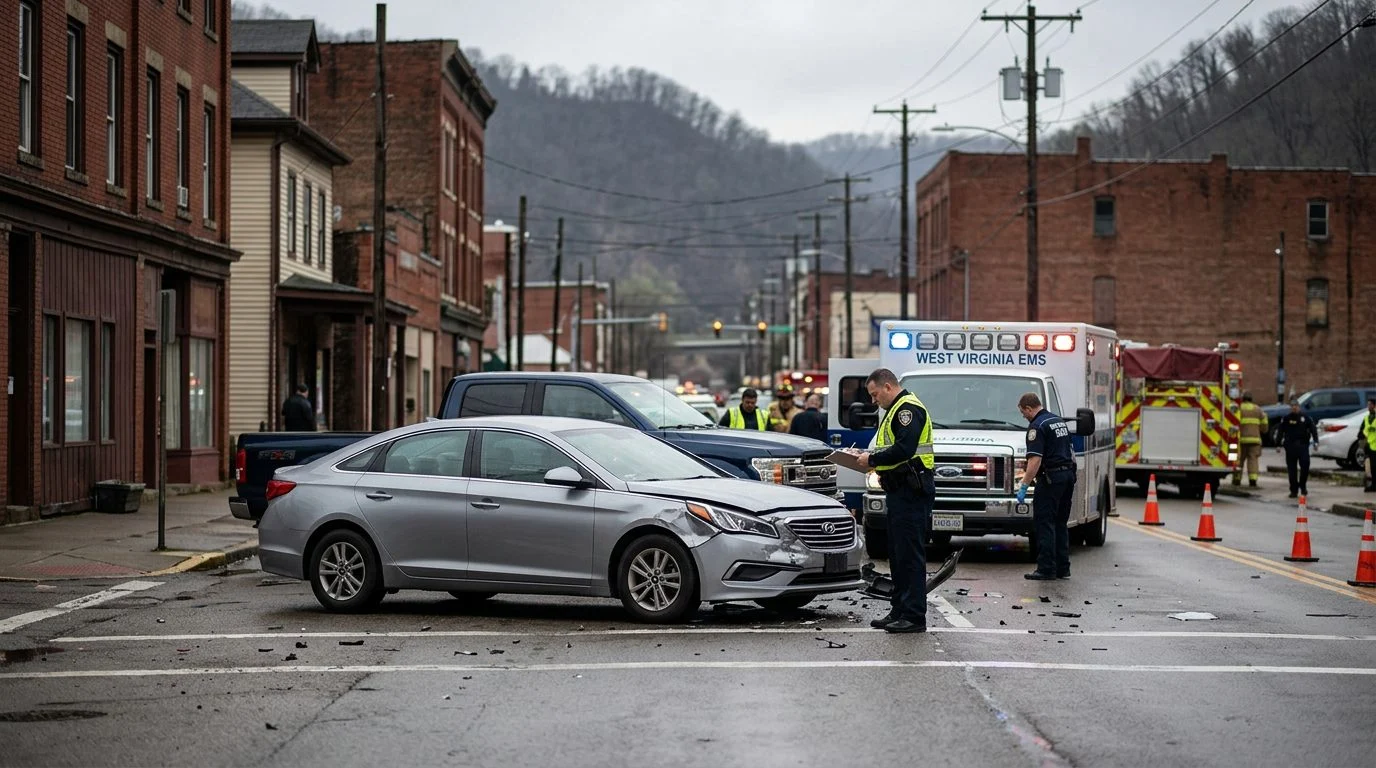
West Virginia Crash Claims
Who Can Be Held Responsible After a West Virginia Crash?
A serious crash can involve more than one person and more than one insurance policy. Here is how to think through the questions that come up.
Published November 19, 2026
After a crash, one question comes up fast: can you sue the driver, the owner of the car, or both? In many West Virginia crashes, a claim starts with the driver. The owner, an employer, or another company that controlled the vehicle may also be responsible.
This guide explains how each party’s role works under West Virginia law and which facts usually shape the answer. If you’re reading this for an injured family member, the same questions still apply.
The Short Answer: Driver, Owner, or Both
A claim may name the driver, the car’s owner, or both. Who gets named turns on who was driving, why the car was in use, and who had control of it.
The driver is usually where a claim begins. Speeding, texting, or running a red light often sits at the center of who caused a crash. Those choices are concrete, and they are often the first thing an investigation looks at.
A death or serious injury can change the picture. A wrongful death claim is brought by the personal representative of the deceased person’s estate. Family members often work with that representative, and the list of possible defendants can still include more than the driver.
If someone you love was hurt in a crash and you're unsure who is responsible, you can request a free case review with the firm to talk through the details. Talk it through with Big Bubba — the first case review is free, confidential, and carries no obligation.

Why the Driver Is Usually the Starting Point
The driver is the first party most claims examine, because the driver’s actions led to the crash.
Those actions can be specific and easy to describe. West Virginia generally bars a driver on a public road from writing, sending, or reading text messages on a phone. Calls are also restricted unless a hands-free or voice feature is used. W. Va. Code § 17c-14-15 reads: “(3) Make any communication involving a wireless telecommunications device, including a phone call, voice message, or one-way voice communication: Provided, That this prohibition does not apply to a voice operated or hands-free communication feature or function.” See § 17C-14-15. Evidence of a traffic violation may be relevant, depending on the facts of the crash.
Insurance is part of the picture too. The driver’s own auto policy may apply, and other policies may apply as well. The police crash report, witness statements, and photos help show what the driver did. A report is useful evidence, but it does not settle fault on its own.
When the Car Owner May Also Be Liable
A car owner may share responsibility in some situations, most often when the owner let someone else drive.
West Virginia’s auto insurance law requires motor vehicle liability policies to cover people who drive with the named insured’s or spouse’s consent, express or implied, for liability from their negligent driving, except a bailee for hire and any persons specifically excluded by a restrictive endorsement. See § 33-6-31. That rule is about insurance coverage. It means the owner’s policy may matter when someone else drove with permission.
Common examples include a family car, a vehicle loaned to a friend, or a car a teen drives with a parent’s okay. Some insurers may dispute a claim, so the owner’s policy is worth reviewing early.
Negligent Entrustment: Lending a Vehicle to an Unsafe Driver
Questions about who was allowed to drive a vehicle can matter in some crash claims, depending on the facts.
Examples often discussed include lending a car to someone with a suspended license, or to someone with a known history of dangerous driving or impairment. Whether such a claim fits a given crash depends on the evidence in that case.
Records of prior incidents, messages between the owner and driver, and testimony about the handoff can all matter. A family tie alone may not be enough. What the owner knew is usually central.
Employers, Company Vehicles, and Commercial Trucks
When a driver was working, the employer may be responsible in some cases.
West Virginia courts generally hold an employer answerable for an employee’s negligent act within the scope of employment. See Zirkle v. Winkler. See McCormick v. W. Va. Dep’t of Pub. Safety.
Commercial vehicles add more parties. Qualifying interstate carriers must obtain a USDOT Number, according to the Federal Motor Carrier Safety Administration. The firm handles truck accident and commercial vehicle accident claims.
Why Serious Brain and Spinal Cord Injuries Raise the Stakes
When a crash causes a serious injury, finding every possible responsible party can matter more.
Traumatic brain injury and spinal cord injury can change a person’s life in lasting ways. Recovery can take time and may be uncertain, so the full effects are often hard to know early. Keep every medical record, even the ones that seem minor at the time.
Coverage may come from more than one policy, depending on who drove and who owned the vehicle. The West Virginia Division of Motor Vehicles explains mandatory auto insurance and proof of coverage.
Fault can also be split. Under § 55-7-13c, each defendant’s share of compensatory damages is generally limited to its percentage of fault. A plaintiff’s own fault does not bar recovery unless it is greater than the combined fault of everyone else. Otherwise, the recovery is reduced by the plaintiff’s share.
Not sure what your next step is?
Talk it through with Big Bubba — the first case review is free, confidential, and carries no obligation.
Insurance Questions and Early Steps to Consider
Some insurers may ask for a recorded statement soon after a crash, and you can take time before you agree.
West Virginia law limits settlement talks in the first 20 days after an injury, while the injured person is an inpatient or unable to work. See § 55-7-11a.
Practical steps help. Keep the police report, photos, medical records, and a written timeline of the crash. Write down each insurer and policy number involved. Those details help identify every possible source of coverage.
Deadlines matter. West Virginia generally allows two years to file a personal injury claim, and exceptions may apply. See § 55-2-12. Consumers can also contact the West Virginia Offices of the Insurance Commissioner about auto insurance concerns.

Learn More About Your Options
Working out who is responsible for a crash is hard, especially when someone you love is hurt or has died. Many of these questions become clearer once the facts are gathered in one place.
The firm serves injury victims across West Virginia, including people hurt in car, truck, and commercial vehicle crashes. You can request a free case review to talk through the crash, the vehicles involved, and the insurance information. Reach out through the firm’s contact page when you’re ready.
Can you sue the driver directly?
A claim may name the driver, and the driver’s insurance may be involved.
Can the owner be sued if someone else was driving?
Sometimes. Whether the owner gave permission to drive, and which insurance applies, are key questions.
Is an employer responsible when its driver causes a crash?
It may be, if the driver was working at the time. Who is named can vary.
What if a family member died in the crash?
A wrongful death claim is brought by the personal representative of the deceased person’s estate. Under § 55-7-6, it generally must start within two years after death, and exceptions may apply. W. Va. Code § 55-7-6 reads: “The provisions of this section shall not apply to actions brought for the death of any person occurring prior to July 1, 1988.”