
Car and Truck Crash Guidance · West Virginia
The Driver Left. Your Next Steps Still Matter.
A hit-and-run crash leaves hard questions behind. Here is what to focus on in West Virginia, and how the firm can help you think through your options.
Published November 17, 2026
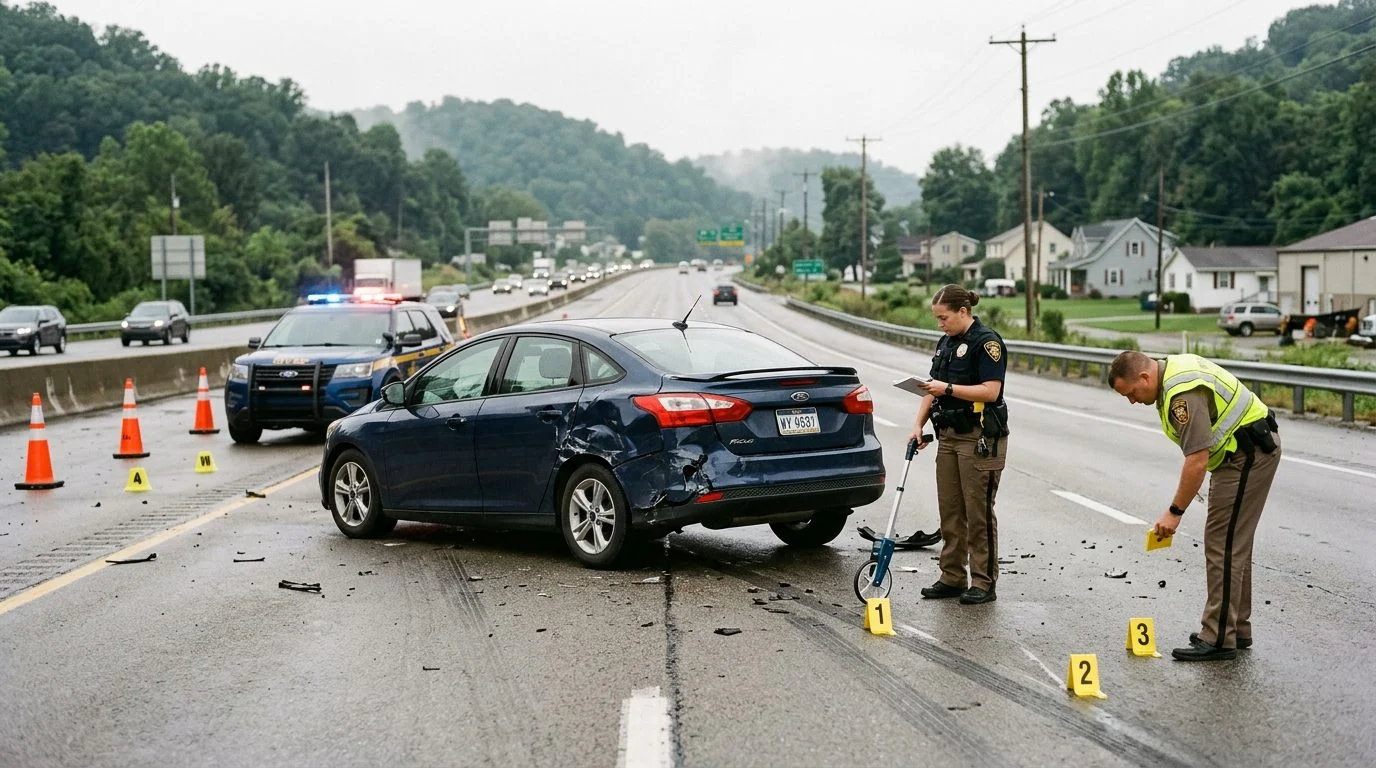
If a driver hit you and drove away, you may be hurt, shaken, and unsure what comes next. This guide explains what West Virginia law generally expects of a driver after a crash, and what you can do when the driver left the scene.
In short, a driver in a crash that causes injury or death generally must stop, stay, and share identifying information. A driver who leaves may face criminal penalties, and the injured person still has steps that may help protect a claim.
What West Virginia law generally expects of a driver after a crash
A driver in a crash that causes injury generally must stop and stay at the scene. W. Va. Code § 17C-4-1 says the driver must immediately stop at the scene, or as close as possible, and remain there until the duties under the next section are met. The driver may leave only as reasonably needed to help an injured person.
W. Va. Code § 17C-4-3 adds more duties. If physically able, the driver must give the other people involved a name, a valid phone number, and the year, make, model, and last four digits of the vehicle identification number. The driver must also share proof of insurance. A driver may meet this duty by giving the information to a law enforcement officer who is investigating or providing assistance at the scene of the collision.
The driver must also give reasonable help to an injured person. That can include arranging a ride to a doctor or hospital when treatment looks necessary or when the injured person asks for it.
Penalties depend on what happened. A driver who leaves may face fines and prison time.
If the driver who hit you drove away, you don't have to sort out the next steps alone, and we're glad to talk through what happened. Talk it through with Big Bubba — the first case review is free, confidential, and carries no obligation.

What to do right after a crash when the other driver is gone
Your first steps should focus on safety, medical care, and details that fade quickly. Move to a safe spot if you can, and call 911 right away.
Under W. Va. Code § 17C-4-6, a driver in a crash with injuries must notify police right away. Still, it helps to report the crash yourself so a record exists. Depending on where it happened, that may be the local police, the county sheriff, or the West Virginia State Police.
Get checked by a medical professional even if your pain seems mild. Some injuries may not show clear symptoms for hours or days. Early medical records also help show when symptoms began.
While the details are fresh, write them down. Note the time, the road name, the nearest mile marker or landmark, and the direction you were traveling. Take photos from several angles, and keep any paint, plastic, or glass that came off the other vehicle. If anyone saw the crash, get their name and phone number.
Information that may help police identify a driver who fled
Police can work with a driver’s description when they get specific details quickly. Give the investigating agency everything you remember, even if you’re not sure it matters.
Useful details may include the vehicle’s color, make, model, and body damage. Note any headlight or taillight pattern and any part of a license plate you saw. A missing mirror or broken light may also help.
Witnesses may have seen the driver or the vehicle. Write down their names and phone numbers and share them with the investigating officer. Nearby homes and businesses may have security cameras. Footage may be erased on a schedule, so ask about it quickly.
Under W. Va. Code § 17C-4-7, the investigating officer must prepare a crash report within 24 hours after finishing the investigation. Within 24 hours of the crash, the investigating officer must also share owner, operator, and insurance information for the parties involved with each other involved party when you ask, at no cost. Ask for the report number, and tell the agency about anything new you learn later.
How uninsured motorist coverage may matter when the driver is never found
Uninsured motorist coverage may help when the at-fault driver cannot be identified, depending on your policy. West Virginia law requires motor vehicle policies to include this protection.
W. Va. Code § 33-6-31 requires policies to include an endorsement or provisions that pay the insured the sums they are legally entitled to recover from the owner or operator of an uninsured motor vehicle. The West Virginia Division of Motor Vehicles explains insurance requirements on its consumer insurance information page.
When the other person’s identity is unknown, the statute lists conditions. The insured generally must report the accident to a police, peace or judicial officer within 24 hours after discovering it, if physically able to report, unless police have already investigated the accident. The insured must also notify the insurer within sixty days that a claim exists against a person whose identity is unknown.
If the insurer asks in writing within five days after receiving your statement, you may need to make the vehicle available for inspection. Review your declarations page and the uninsured motorist section, because limits and notice terms vary by policy.
Why brain and spinal cord injuries deserve prompt attention after a hit-and-run
A brain or spinal cord injury may not show clear signs right after a crash. Symptoms can appear hours or days later.
Headaches, confusion, memory trouble, dizziness, numbness, or weakness may appear after a high-impact crash. Some people feel fine at the scene and notice problems later. Tell your doctor about every symptom, even small ones, and keep follow-up visits.
Medical records that describe symptoms when they first appear can help show how an injury connects to the crash. Records created long after the crash, with no explanation, may be harder to tie back to it. A common mistake is skipping follow-up care because symptoms seemed to fade.
Our pages on traumatic brain injury and spinal cord injury explain these injuries in more detail. They can help you know what to watch for and what questions to ask your doctor.
How a wrongful death claim may proceed when the driver fled
When a crash causes a death, a wrongful death claim is generally brought by the personal representative of the person who died. W. Va. Code § 55-7-6 requires the action to be brought in the name of the personal representative who has been appointed.
The statute also sets a time limit. The action generally must be commenced within two years after the death, and exceptions may apply (W. Va. Code § 55-7-6). W. Va. Code § 55-7-6 reads: “The provisions of this section shall not apply to actions brought for the death of any person occurring prior to July 1, 1988.” The period runs from the date of death, so track that date carefully.
The verdict must include damages for sorrow, mental anguish, and solace, and is not limited to the items listed in the statute. W. Va. Code § 55-7-5 provides that a person or corporation whose wrongful act, neglect, or default caused a death, where the act would have entitled the injured party to maintain an action for damages had death not ensued, shall be liable for damages.
If another driver was at fault, the family may be able to seek compensation for losses connected to the death, depending on the facts. Our wrongful death page covers the process in more detail.
Not sure what your next step is?
Talk it through with Big Bubba — the first case review is free, confidential, and carries no obligation.
What a claim may cover and how the firm can help you decide your next step
West Virginia generally allows two years to bring a personal injury action. W. Va. Code § 55-2-12 sets that period for personal injury claims, and exceptions may apply. Don’t rely on that date alone.
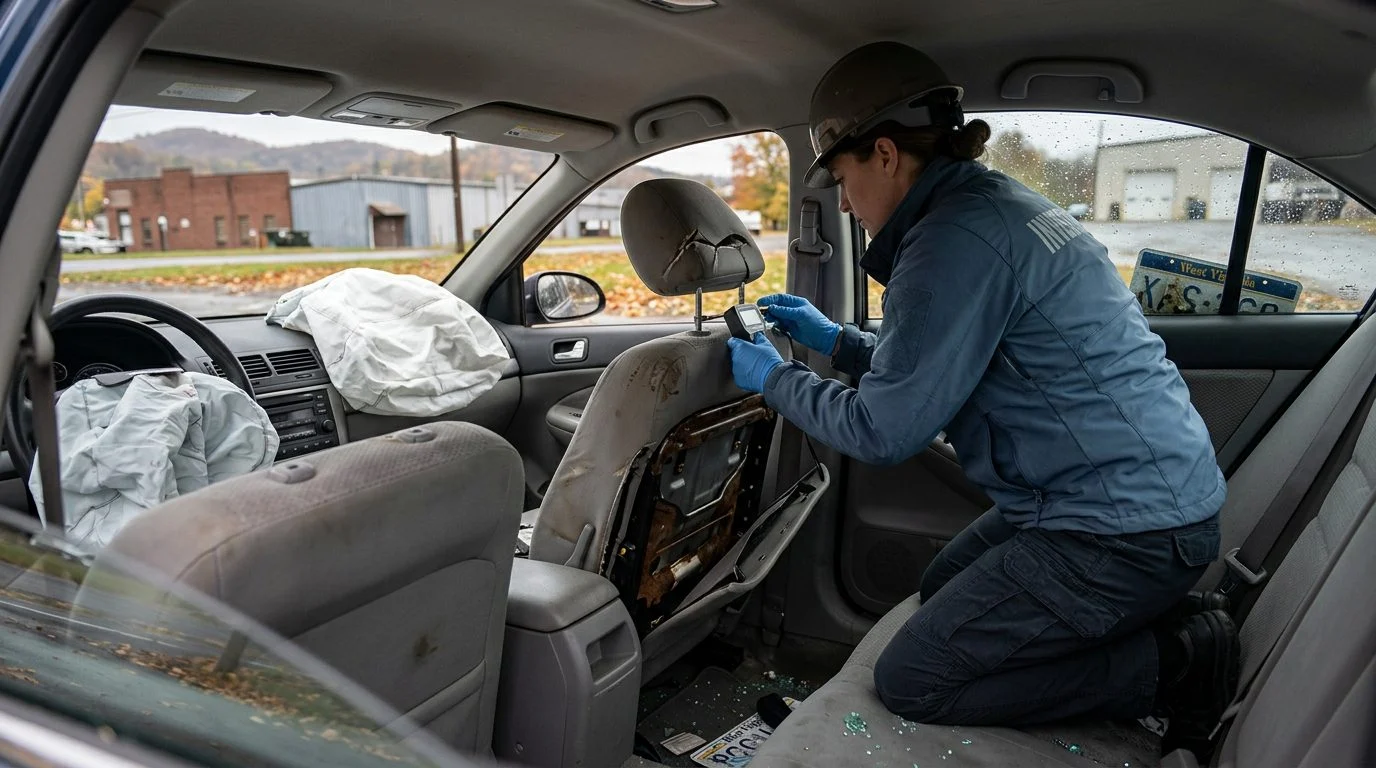
Losses tied to the crash, such as medical care and time away from work, may be part of a claim, depending on the facts. Crash reports, medical records, photos, witness names, and insurance details are often reviewed together. Keep copies of everything you collect.
If a driver left the scene after hitting you or someone you love, you can request a free case review of what happened, with no obligation to continue. We serve injury victims across West Virginia, including Charleston, Huntington, Morgantown, Wheeling, Martinsburg, Parkersburg, Beckley, Clarksburg, Fairmont and Weirton. Request a free case review when you’re ready to talk.