
Personal Injury | West Virginia
Emotional Harm After a Crash Is Real, and You Do Not Have to Carry It Alone
Fear, sleeplessness, and anxiety can linger long after the bruises fade. Learn how the firm approaches these losses for people across West Virginia.
Published November 19, 2026
After a car crash, the fear and stress can linger long after the bruises fade. After a frightening crash, you may notice that your sleep, your driving, and your daily routine feel different. That reaction is real and can be part of what you are dealing with.
After a car accident, some people notice a mental or emotional reaction, and it can show up with or without a physical injury. Common signs include poor sleep, nightmares, jumpiness, and avoiding the road where the crash happened. If symptoms last or get in the way of your life, talk with a doctor or counselor, and keep notes on what you notice.
What Emotional Distress Means After a Car Accident
Emotional distress is a mental or emotional response to a traumatic event like a crash. It is not a sign of weakness. It is how the mind and body react to a sudden threat they could not control.
Emotional effects often show up alongside physical injuries. Some people feel shock or numbness right after the crash. Others feel fine at first and notice problems days or weeks later, once the adrenaline wears off and routines return.
Early reactions can include feeling dazed, detached, or on edge. You may replay sounds, lights, or the moment of impact. You may feel tired even after a full night’s rest. These reactions are the body’s alarm system doing its job. They become a concern when they keep going or start to interfere with work, sleep, and family life.
If a crash has left you shaken, you don't have to sort it out alone. Tell Big Bubba what happened and request a free case review. Talk it through with Big Bubba — the first case review is free, confidential, and carries no obligation.

Common Signs of Emotional Trauma After an Accident
The most common signs are sleep trouble, nightmares, trouble focusing, and a strong startle response. You may also feel anxious in traffic or want to avoid driving altogether.
Sleep problems are often the first thing people notice. You might lie awake after the crash, wake from dreams about it, or sleep far more than usual. Trouble concentrating at work or while reading can also appear.
A startle response is a sudden jolt at a loud horn, a squealing tire, or a car that drifts too close. Irritability with family or coworkers can follow. Some people grip the wheel or check their mirrors again and again.
Avoidance is another sign. You may stop using the highway, skip a route you drove every day, or refuse to ride as a passenger. Avoiding reminders can feel protective, but over time it can narrow your daily life.
When symptoms persist or interfere with work, school, or family life, talk with a doctor or counselor. A primary care provider is often a good first stop. Bring a written list of what you have noticed and when it started.
Why You May Keep Replaying the Crash
Replaying the crash is a common response to a frightening event. Your mind tries to make sense of a sudden threat, so it keeps returning to the moment of impact.
Intrusive memories and flashbacks can arrive without warning. You might see headlights, hear the crunch of metal, or smell smoke while you are doing something unrelated, like cooking dinner. These moments can feel as real as the crash itself, even though you are safe now.
The brain tends to store frightening events with strong emotion and sensory detail. A similar sound or sight can bring the memory back quickly.
Replaying the crash does not, by itself, mean something is permanently wrong. Memories may fade in intensity over time. However, if the memories stay intense, come up daily, or pull you away from people you care about, a clinician should take a look. Note how often they happen and what seems to set them off.
PTSD and Other Conditions a Clinician May Evaluate
A clinician may evaluate posttraumatic stress disorder (PTSD) and other conditions when emotional symptoms last after a crash. Only a licensed clinician can make a diagnosis.
PTSD is a condition that can follow a frightening event. In general terms, a clinician looks at whether intrusive memories, avoidance, changes in mood or thinking, and heightened reactivity have lasted and affect daily functioning. The clinician also considers other possible explanations for the symptoms.
Other conditions can follow a crash too. Anxiety may show up as constant worry, racing thoughts, or panic in traffic. Depression may bring low mood, loss of interest in things you used to enjoy, and changes in sleep or appetite. Some people have more than one.
A blow to the head can cause different symptoms. Memory trouble, headaches, dizziness, or confusion may need a medical check. To learn more about those symptoms, read about traumatic brain injury.
Before an appointment, write down your symptoms, when they started, and what makes them better or worse. List any medicines you take. Bring any crash details and injury records you have. A clear list helps a clinician understand what you have been going through.
Feeling Shaken After a Near-Miss Crash
You can feel real emotional distress after a near miss, even if you were not hurt. A close call can leave the same fear, avoidance, and sleep trouble that a collision does.
A near miss often happens in seconds, but the mind may replay it for much longer. A truck that swerves across your lane or a driver who runs a red light and misses you by inches can leave you shaking for days. Some people feel foolish because they were not physically hurt. Those feelings are common, and they deserve the same attention as any other symptom.
Near misses can also cause lasting avoidance. You may stop taking the route where it happened or stop driving at night. If that avoidance starts to shape your work or errands, a doctor or counselor can help you sort it out.
How a near miss is treated under the law turns on the facts of what happened, including whether another driver’s negligence caused any harm.
How Emotional Distress May Factor Into a West Virginia Injury Claim
West Virginia generally allows two years to bring a personal injury action, and exceptions may apply. The deadline is set by W. Va. Code § 55-2-12. Claims against a city, county, or other political subdivision may follow a separate limit under W. Va. Code § 29-12a-6, so timing matters early.
Under W. Va. Code § 55-7-13a, recovery in a personal injury or wrongful death action is predicated on comparative fault, and each person’s liability is allocated in direct proportion to that person’s percentage of fault. Under W. Va. Code § 55-7-13a, each person’s share of fault is set as a percentage. Under W. Va. Code § 55-7-13c, your own fault does not bar recovery unless it is greater than the combined fault of everyone else responsible.
How emotional harm is weighed in a claim can depend on the facts. Medical records, your daily life before and after the crash, and the details of what happened all may matter.
Insurance questions can affect how a claim moves forward, so keep your policy information with your crash papers. Also, W. Va. Code § 55-7-11a limits certain settlement contact in the first 20 days after an injury, when you are hospitalized or unable to work.
How long do I have to file a claim?
West Virginia generally allows two years for a personal injury action, and exceptions may apply. Shorter limits can apply to claims against government bodies.
Does my own fault stop me from recovering?
Usually not. Under West Virginia’s comparative fault rule, your recovery is reduced by your share of fault, and it is barred only if your fault is greater than everyone else’s combined.
Not sure what your next step is?
Talk it through with Big Bubba — the first case review is free, confidential, and carries no obligation.
Documenting Emotional and Mental Health Effects
Start by keeping records that show what changed after the crash. Include what you felt and what you could no longer do.
- Medical and counseling records. Keep visit notes, referrals, and prescription histories, even for visits that feel small.
- A symptom journal. Write down sleep trouble, nightmares, driving avoidance, missed work, and activities you stopped, with dates.
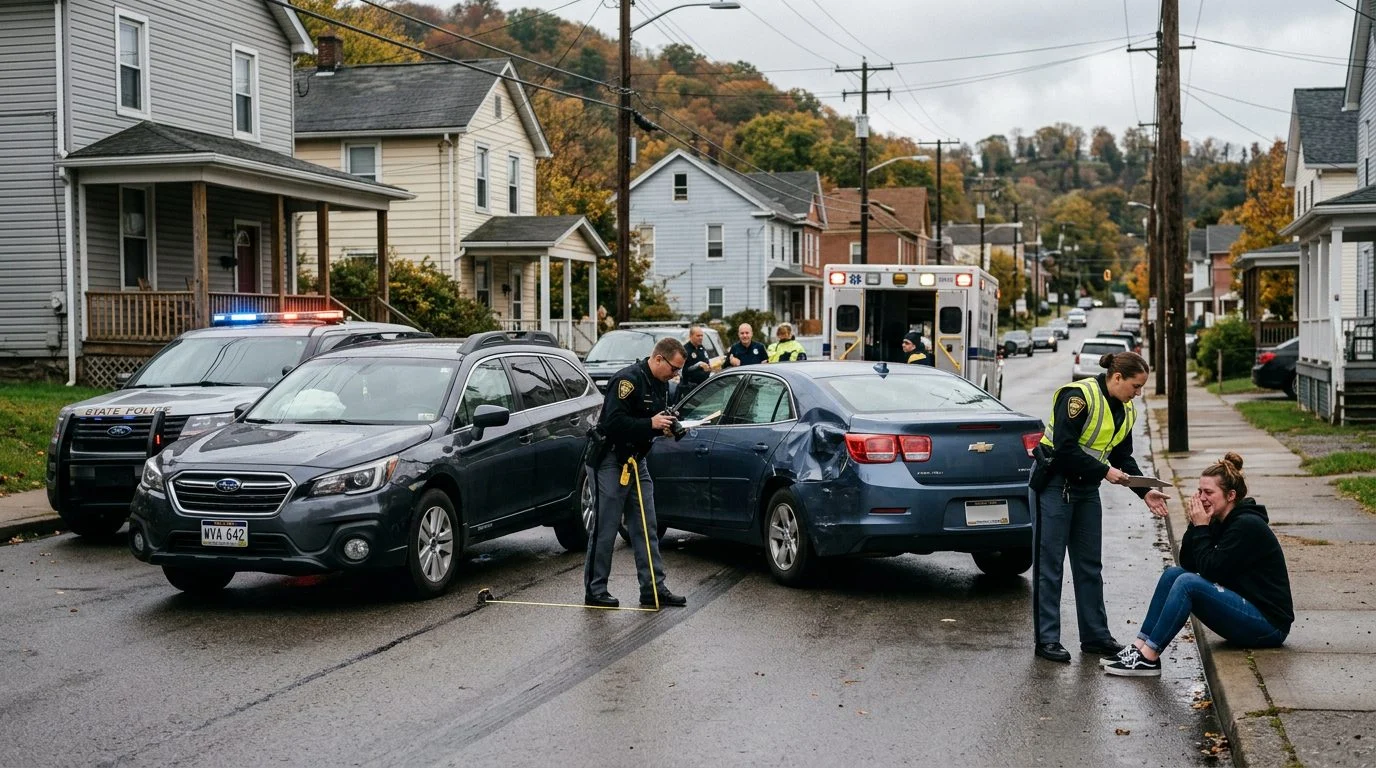
- The police crash report. A law-enforcement officer who investigates a motor vehicle crash on public streets or highways resulting in bodily injury, death, or total property damage to an apparent extent of $1,000 or more must prepare a crash report within 24 hours after finishing the investigation, under W. Va. Code § 17c-4-7. The report format must show the cause, the conditions, and the vehicles and persons involved, under W. Va. Code § 17c-4-9.
- Statements from people close to you. Family, coworkers, and friends who noticed changes can describe what they saw.
Report the crash right away. Under W. Va. Code § 17c-4-6, a driver in a crash with injury must give immediate notice to the local police, or to the county sheriff or the nearest State Police office if the crash is outside a municipality.
Keep original records, and make copies of everything you share. This documentation may be relevant to a claim, and a clinician’s notes can help show what you have experienced.

Telling the Firm What Happened
If you are still dealing with fear, exhaustion, or uncertainty after a crash, you don’t have to work out the legal side alone. The firm can talk through your situation with you.
Big Bubba handles car accident, truck accident, commercial vehicle accident, catastrophic injury, traumatic brain injury, spinal cord injury, and wrongful death claims. We serve injury victims across all 55 West Virginia counties, and we also work with families researching on behalf of someone who is struggling after a crash.
If a crash has left you or someone you love shaken, you can request a free case review and tell Big Bubba what happened, in your own words.