
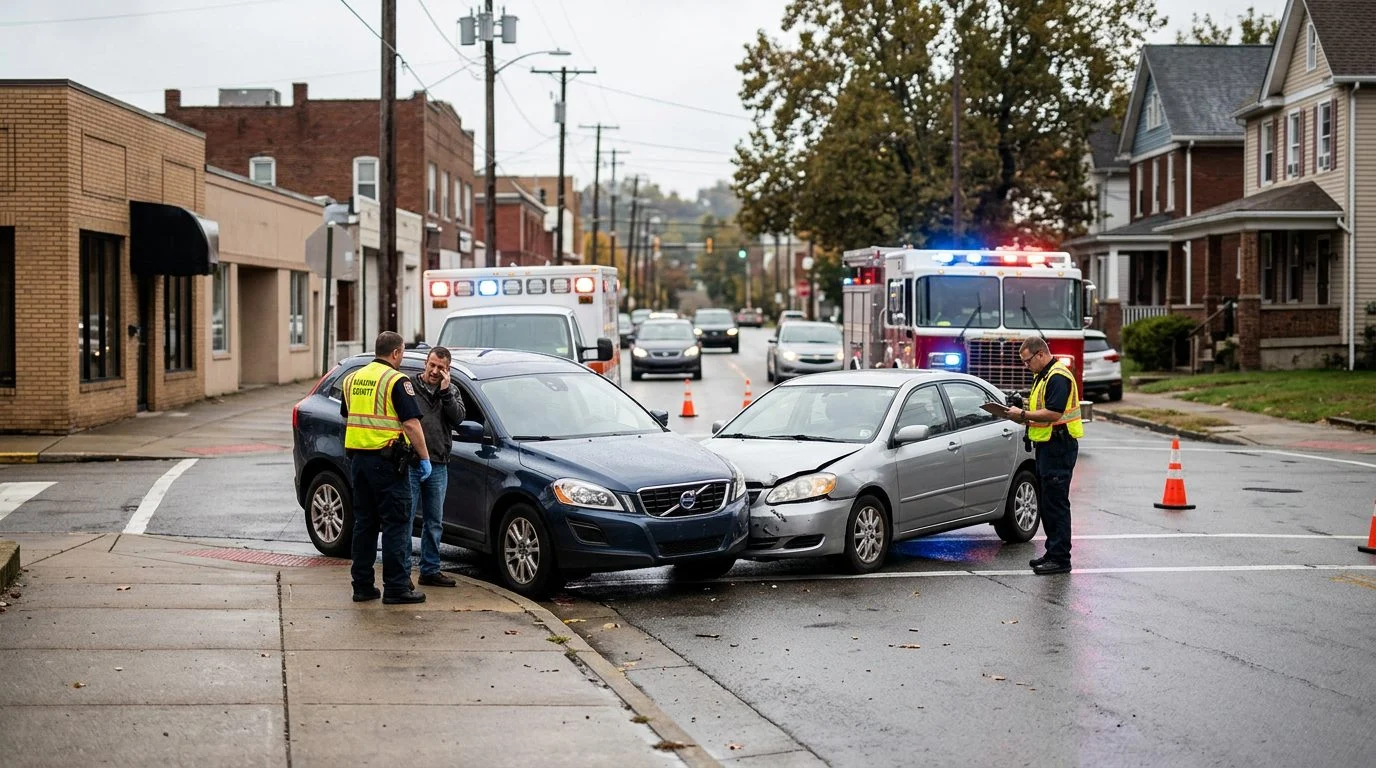
West Virginia car and truck accident claims
Can an Employer Be Liable for a Car Accident in West Virginia?
A crash on the job raises questions about who was driving, why, and in whose vehicle. Here is how those facts can matter.
Published November 22, 2026
If you were hurt while driving for work, or a family member died in a crash on the job, you may be asking whether the employer can be liable too. An employer may be liable for a car accident in West Virginia when its employee causes the crash while doing the employer’s work. Whether that fits your crash depends on the job, the trip, and the vehicle.
This page explains the main routes to liability, the time limits that apply, and the first steps to take.
Short Answer: An Employer May Be Liable for a Work-Related Crash
Many people assume the company is responsible automatically. That is not how it works in every case.
The first route is vicarious liability, which means one party answers for another’s act. Under West Virginia’s respondeat superior doctrine, an employer may answer for an employee’s negligent acts within the scope of employment.
The second route is a direct claim based on the employer’s own choices, covered below. The third involves the vehicle itself. If the employer owned, leased, or controlled the vehicle, that fact is one of the first things to check.
If a work trip left you hurt, or a family member was killed while driving for the job, you don't have to sort out who may be responsible alone. Contact us to request a free case review. Talk it through with Big Bubba — the first case review is free, confidential, and carries no obligation.

What “Scope of Employment” Means in a Car Crash
Examples include a delivery driver on an assigned route, a field technician traveling between job sites, and a salesperson driving to a client meeting. Each one may come out differently.
Useful questions include whether the trip served the employer’s business and whether the driver had left work for a personal reason. A detour or personal stop can change the analysis. The timing and purpose of the trip are often central.
The label on a driver’s paperwork matters less than the facts.
Who Owned the Vehicle and Whether Permission Was Given
Who owned, leased, or controlled the vehicle can shape who may be responsible. West Virginia’s commercial vehicle liability statute defines an “employer defendant” to include the vehicle’s owner, the operator’s employer, and anyone with legal control over the vehicle or driver.
That statute covers commercial vehicles that require a commercial driver’s license, but not a vehicle serving as a common carrier of passengers, a school bus, or other vehicle primarily engaged in transporting passengers (the statute lists further exclusions), and it applies only to causes of action arising after July 1, 2024. It also limits noneconomic damages against an employer defendant in some cases. The limit is not available to an employer defendant that does not have commercial motor vehicle insurance in the aggregate amount of at least $3 million for each occurrence covering the personal injury. It also does not apply where listed conditions are found, such as impairment or willful or wanton disregard for safety.
Permission matters too. A vehicle taken without permission may be treated differently from one used with it.
Commercial trucks often leave a longer paper trail. Federal rules require a motor carrier to keep a driver qualification file for each driver it employs, and to keep it while the driver works and for three years after. Federal drug and alcohol testing rules may also call for testing after some commercial vehicle crashes. Crash reports, registration papers, and insurance details may help show who owned or operated the vehicle.
Negligent Hiring, Supervision, and Entrustment Claims
A direct claim asks whether the employer’s own choices contributed to the crash. These claims are sometimes called negligent hiring, negligent supervision, or negligent entrustment.
Negligent hiring looks at whether the employer reasonably checked a driver’s background for the job. Negligent entrustment looks at whether a vehicle was given to a driver who was unfit to drive it.
These claims may depend on the driver’s record, prior complaints, training, and what the employer knew at the time. Reviewing personnel files and company policies can be a detailed part of this work.
Can I Be Sued for an Accident in a Company Vehicle?
A driver can be named in a claim while using a company vehicle, if the driver’s own negligence may have caused the injuries. The employer may be named too.
Insurance often becomes an early issue. A personal auto policy, a commercial policy, and an employer’s policy may each respond differently, depending on the vehicle, how it was used, and the policy terms. The West Virginia motor vehicle insurance statute addresses uninsured and underinsured motorist coverage, which may matter when the at-fault driver’s insurance limits are too low.
Fault can also be shared. Under the West Virginia comparative fault statute, a person’s own fault generally does not bar recovery unless it is greater than the combined fault of everyone else responsible. If it is less, recovery is reduced by that person’s share.
Keep copies of every insurance letter and claim form. Read each statement carefully before you sign it.
Workers’ Compensation and a Crash Involving Another Driver
A worker hurt in a crash on the job may have a workers’ compensation claim through the employer’s coverage.
Both may be possible in some cases, and each can affect the other. The rules for how they interact are technical, so the claim file and any insurer letters deserve a careful read.
Keep a written record of who you spoke with, when, and what was said. Early questions include whether the crash was reported to the employer and whether the other driver’s insurer knows about the claim.
Not sure what your next step is?
Talk it through with Big Bubba — the first case review is free, confidential, and carries no obligation.
Time Limits and Steps to Take After a Work-Related Crash
West Virginia generally allows two years to file a personal injury lawsuit, and exceptions may apply. The personal action statute sets that period for personal injury claims.
Wrongful death claims follow their own timing. Under the wrongful death statute, an action is generally brought by the personal representative of the deceased person’s estate, and the filing period is two years from the death, subject to the provisions of section eighteen, article two, chapter fifty-five. W. Va. Code § 55-7-6 reads: “The provisions of this section shall not apply to actions brought for the death of any person occurring prior to July 1, 1988.”
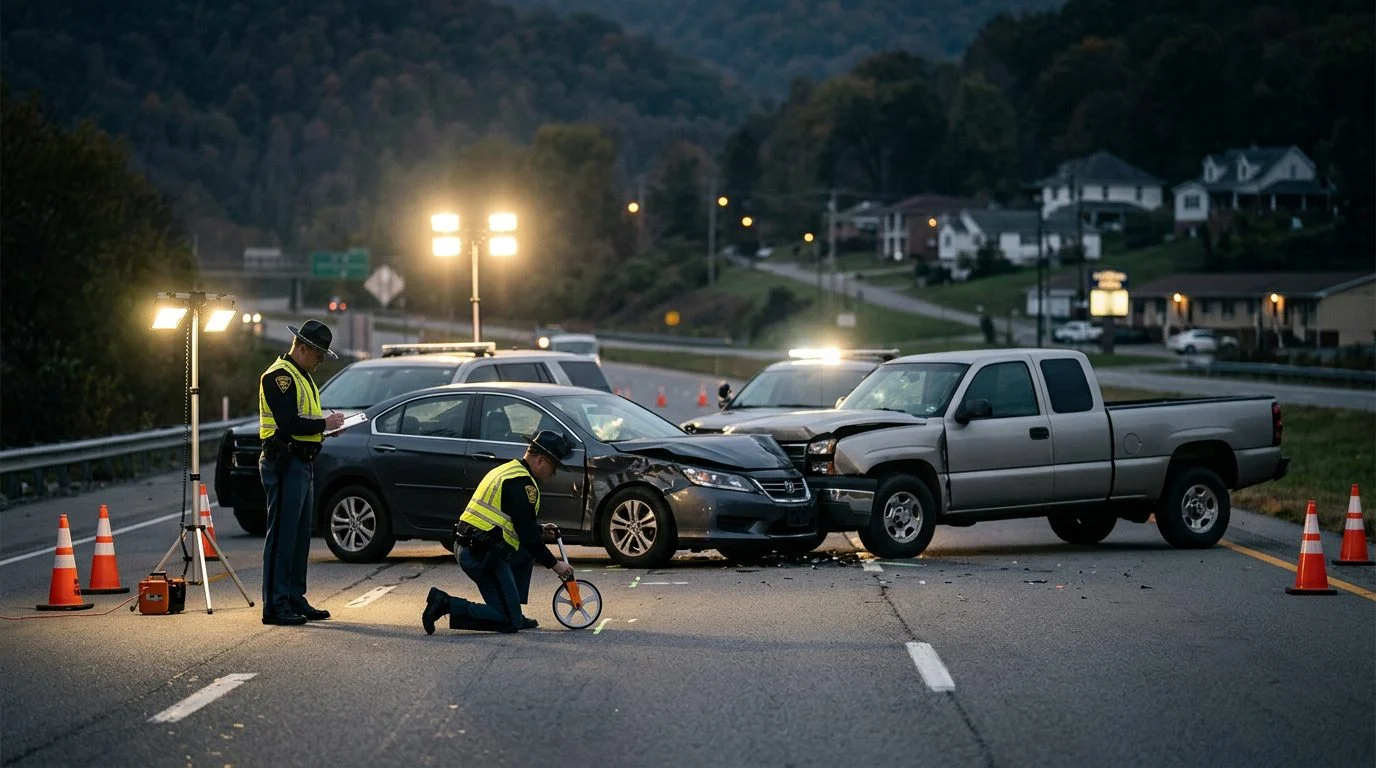
Start with the basics. Get medical care and keep every record. Report the crash right away to the local police department, or to the county sheriff or State Police outside a municipality. W. Va. Code § 17C-4-6 requires immediate notice for a crash involving injury, death, or $1,000 or more in property damage.
Write down what the driver said about the job and the trip. Photograph the vehicles and the scene, and collect witness names. Under W. Va. Code § 17C-4-7, the investigating officer must prepare a crash report within 24 hours after finishing the investigation of a crash on the public streets or highways of this state resulting in bodily injury to, or death of, any person or total property damage to an apparent extent of $1,000 or more.
W. Va. Code § 55-7-11a restricts certain settlement and statement activity during the twenty days after a personal injury, while the injured person is either an inpatient in any hospital or partially or totally unable to engage in his or her usual trade, profession or occupation. A settlement, release of liability or statement obtained in violation of this section may be disavowed by the injured person at any time within one hundred eighty days from the date of the personal injury, by executing a written statement of disavowal, subject to the conditions the statute sets out.
For a truck crash, you can also read about truck accident claims in West Virginia.
Common Questions
Does a work trip automatically make the employer liable?
No single fact decides it. Courts look at the job, the trip, the vehicle, and the purpose of the drive.
What is respondeat superior?
It is a legal rule that can make an employer answer for an employee’s negligent acts within the scope of employment.
Can I sue an employer and an at-fault driver at the same time?
Both may be named in some cases. The details of the crash shape who is named.
If a work trip left you hurt, or a family member was killed while driving for the job, you don’t have to sort out who may be responsible alone. Tell us what happened and request a free case review at our contact page.