
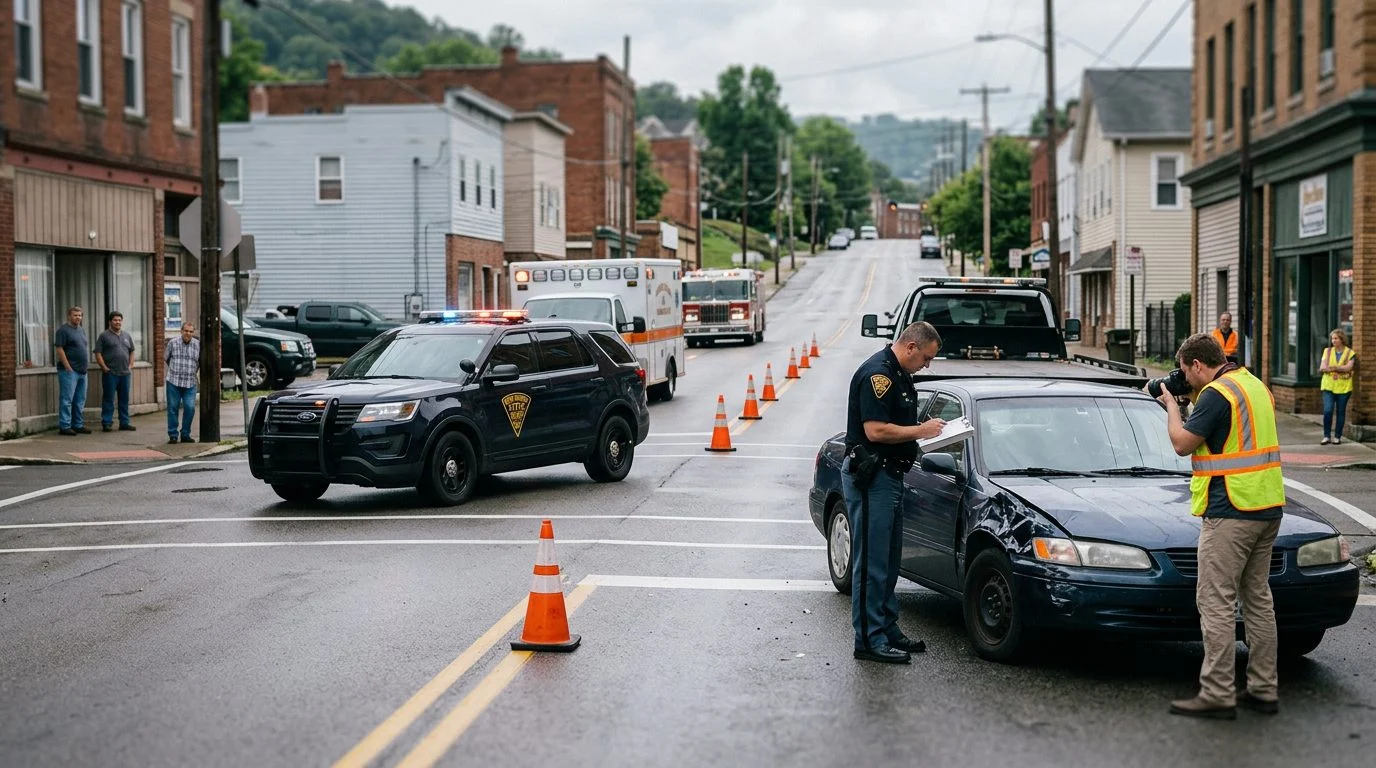
West Virginia Crash Claims
Unsure What You Owed After a Crash? Start With the Facts
Confusion after a collision is common. Here is how West Virginia's reporting duties connect to an injury claim, and how the firm can help you sort out your situation.
Published November 20, 2026
After a crash, it’s easy to miss a step. Maybe no one called the police. Maybe a relative was driving and never reported it.
Here’s the short answer: West Virginia law requires a driver in an injury crash to stop and stay at the scene. Breaking that duty on purpose can bring criminal charges and a license revocation.
This page explains what the state code says about failing to report an accident in West Virginia, and how that duty relates to a later injury claim.
What Does West Virginia Law Say About Leaving the Scene of a Crash?
A driver who intentionally leaves the scene of an injury crash can face misdemeanor or felony charges and a license revocation, under West Virginia Code § 17C-4-1. The penalty depends on how much harm occurred and what the driver knew.
The statute, known as Erin’s Law, sets the basic duty. The driver of any vehicle involved in a crash resulting in injury or death must immediately stop the vehicle at the scene, or as close as possible, and stay until the required steps are complete, except that the driver may leave the scene as reasonably necessary to render assistance to any person injured in the crash.
For a crash with bodily injury, an intentional violation is a misdemeanor. The driver must know or have reason to believe someone was physically injured. The fine can reach $1,000, jail can reach one year, or both.
If another person suffers serious bodily injury, the same conduct is a felony. The fine can reach $2,500, and prison can run from one to three years, or both.
If the crash causes a death, the same conduct is a felony. The fine can reach $5,000, and prison can run from one to five years, or both. The death must occur within one year of the crash.
A conviction also brings a license revocation for one year. That period runs from the conviction or the release from incarceration, whichever is later.
These are criminal and licensing consequences. They are separate from any injury claim. For background on these crashes, see our traumatic brain injury accident guide.
If you or a family member did not report a crash and feel unsure what comes next, we offer a free case review to talk through your facts. Talk it through with Big Bubba — the first case review is free, confidential, and carries no obligation.

When Does West Virginia Law Require a Crash to Be Reported?
West Virginia generally requires immediate notice of a crash that causes injury or death, or total property damage of $1,000 or more. § 17C-4-6 sets that rule. Notice goes to the local police when the crash happens inside a city or town.
Outside a municipality, the driver notifies the county sheriff or the nearest West Virginia State Police office. The notice must be given immediately by the quickest means of communication.
At the scene, the driver should stop and stay. § 17C-4-3 requires the driver, if physically able, to give the other party a name, a valid phone number, vehicle details, and proof of required insurance.
Crashes with only vehicle damage follow their own rule. § 17C-4-2 requires the driver to stop and remain, and a violation there is a misdemeanor.
A crash can look minor at first. Injuries and repair costs may show up later. Virginia has its own reporting rules, so a crash across the state line may follow different ones.
How Does the Police Report Affect My Claim?
A police report can be useful evidence, but it does not decide a claim on its own. Under § 17C-4-7, for a crash resulting in bodily injury to, or death of, any person or total property damage to an apparent extent of $1,000 or more, the investigating officer must prepare a crash report within 24 hours after finishing the investigation.
A report helps show when and where the crash happened, and who was involved. Without one, those details can be harder to prove. Other evidence may be relevant, depending on the facts. That can include photos, witness names, medical records, and vehicle repair records.
West Virginia uses comparative fault. Under § 55-7-13a, recovery is based on each person’s percentage of fault.
Failing to report is a separate issue from who caused the crash. If another driver was at fault, that question turns on the evidence. Keep the two questions apart as you sort out your facts.
What If an Insurer Denies a Claim After an Unreported Crash?
Some insurers may dispute a claim when a crash was not reported to police. A denial letter is not the end of the story, but it does call for a careful response.
An insurer may ask why the crash was not reported. It may also question the timing of injury reports, especially when treatment began days later. Each claim is different, so these are questions the insurer may raise, not findings.
Read any denial letter closely. Write down the specific reason given. Ask the insurer to state that reason in writing.
Keep copies of every letter, email, and form you send or receive. Think carefully before giving a recorded statement.
A denial may not stop the clock on a filing deadline. Exceptions may apply, so the timing question deserves attention early.
How Long Do You Have to Bring an Injury Claim in West Virginia?
West Virginia generally allows two years to bring a personal injury claim, and exceptions may apply. § 55-2-12 sets that period for personal injury damages.
The two years run from when the right to bring the claim has accrued (W. Va. Code § 55-2-12). Missing that deadline can end a claim, however serious the injuries were.
Waiting for a police report or medical answers may not pause the deadline. Calendar the date early so you don’t lose track of it.
Wrongful death follows a different rule. Under § 55-7-6, the action is brought by the personal representative of the person who died, who must be duly appointed in this state or in another state, territory, district, or foreign country. It generally must start within two years after the death, subject to other provisions of the code. W. Va. Code § 55-7-6 reads: “The provisions of this section shall not apply to actions brought for the death of any person occurring prior to July 1, 1988.”
How Do I Get a Copy of the Accident Report in West Virginia?
The agency that investigated the crash keeps the report. Each agency sets its own request process.
The Monongalia County Sheriff’s vehicle accident reporting FAQ describes the identifying details needed and online retrieval. It lists a $20 fee for a crash report.
Before you request one, gather the date, location, and names of the people involved. Those details help the agency find the right file.
If no report was ever filed, the crash may still be documented. Other records can include medical notes describing how the injury happened, photos, and witness contact details.
Not sure what your next step is?
Talk it through with Big Bubba — the first case review is free, confidential, and carries no obligation.
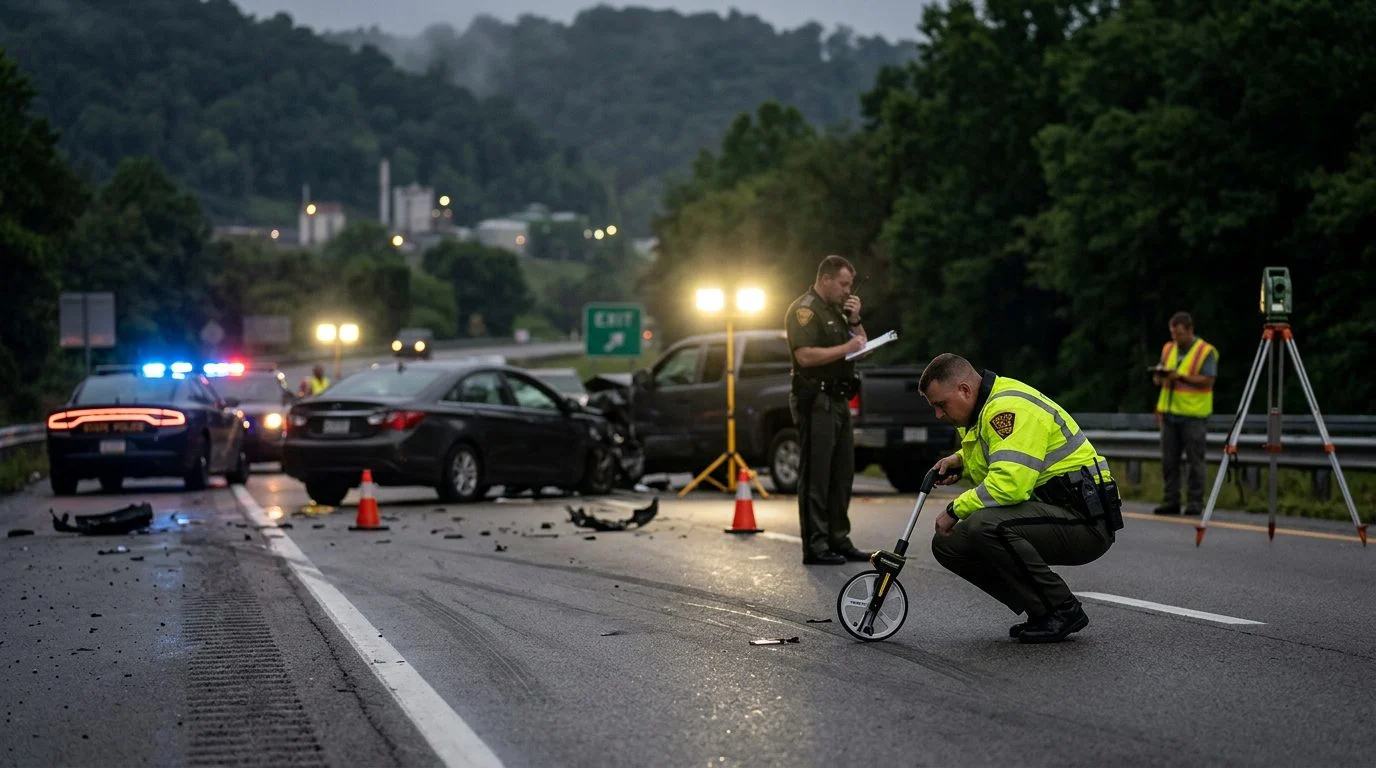
If You Did Not Report a Crash Right Away
It’s understandable to feel unsure after a crash you did not report. You may worry that a missed call will hurt an injury claim. You may be trying to decide whether a relative’s unreported crash still matters.
Those questions can be worth talking through. The firm handles car accident, truck accident, commercial vehicle accident, catastrophic injury, traumatic brain injury, spinal cord injury, and wrongful death matters. We serve injury victims across West Virginia.
You can request a free case review to talk through what happened, the reporting questions, and the deadlines that may apply. Reach out through the Big Bubba contact page.