

Car Accidents | West Virginia
When Your Parent Is Hurt in a West Virginia Crash, You Don't Have to Sort It All Out Alone
A calm, step-by-step guide for adult children managing medical care, paperwork, and questions after a collision, with a way to reach our team.
Published November 18, 2026
If your parent was hurt in a car accident in West Virginia, you may be the one tracking their care, paperwork, and changes. That is a lot to carry, and you don’t need every legal answer on day one.
Here is the short answer: get your parent medical care first, get the crash report number, keep dated notes, and slow down before anyone asks them to sign something. The steps below explain how an adult child can handle each one.
First Steps When Your Parent Is Hurt in a Car Accident
Get your parent checked by a medical provider as soon as possible, even if they say they feel fine. Some head injuries are not obvious at the scene. A traumatic brain injury review notes that effects may not be immediately apparent after an accident.
Next, ask for the crash report number. Under W. Va. Code § 17c-4-7, an officer who investigates a crash on the public streets or highways of this state resulting in bodily injury, death, or total property damage of $1,000 or more must prepare a report within 24 hours after completing the investigation. Write down the agency’s name and phone number so you know where to request it.
Then record the other drivers’ details. Under W. Va. Code § 17c-4-3, a driver in a crash that causes injury must, if physically able, provide his or her name, a valid phone number, the year, make, model and last four digits of the vehicle identification number of the vehicle he or she is driving, and insurance information. Note each insurer, the witnesses’ names, and where each vehicle was taken. W. Va. Code § 17c-4-6 also requires drivers in crashes causing injury or death, or total property damage of $1,000 or more, to immediately give notice by the quickest means: to the local police if the crash occurs within a municipality, otherwise to the county sheriff or the nearest West Virginia State Police office.
If your parent was hurt in a crash and you're unsure how to protect their claim while they recover, we're here to talk it through with you. Talk it through with Big Bubba — the first case review is free, confidential, and carries no obligation.
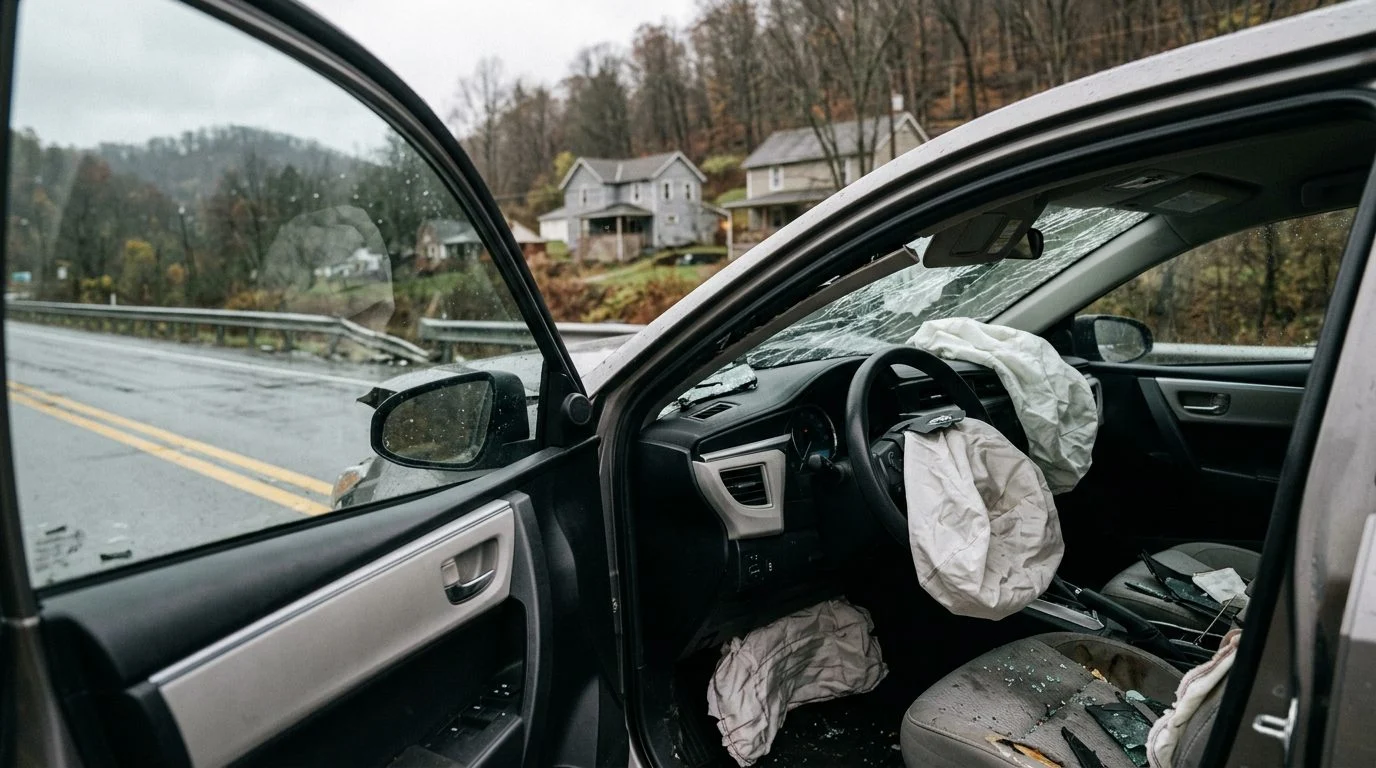
Why a Parent’s Brain Injury Can Be Missed at First
A brain injury may not show its full signs right after a crash. A parent who seems fine still needs watching, because symptoms can appear later and are easy to explain away.
Common signs include headache, dizziness, confusion, sleep changes, irritability, and trouble finding words. Families often blame these changes on age, stress, or medicine. That can delay care that should happen sooner.
Older parents may also downplay symptoms, because they don’t want to worry their children. Doctors may use terms such as coup-contrecoup injury or diffuse axonal injury. Ask them to explain any term in plain words, and write down the answer.
For a deeper look at the injury itself, read our traumatic brain injury after a car accident guide.
Coordinating Your Parent’s Medical Records
Start one folder, paper or digital, for every record connected to the crash. Keep discharge papers, imaging reports, test results, a current medication list, and a contact list of every provider with phone numbers.
Ask your parent to sign release forms so providers can share records with you. Without a release, providers may not be able to share much with family members. If your parent wants a lawyer or other representative involved, the release can cover them too.
Keep a dated list of appointments, referrals, and test results. Gaps in care are easier to spot on paper. If a referral never gets scheduled, you’ll see it right away.
Write down who gave each instruction and when. When your parent is confused, these notes can fill in the gaps.
Speaking With Your Parent’s Doctors
Bring a short written summary of changes to every appointment. List what your parent says, what you have noticed, and when it started. Keep it to one page so the doctor can read it during the visit.
Ask each provider to put in writing what they found, what they are watching, and which symptoms need an immediate call or an emergency visit. Written answers are easier to check later than memory.
Share your observations as observations, not diagnoses. Say “Dad forgot his pills twice this week,” not “Dad has brain damage.” Doctors can draw conclusions from facts more easily than from labels.
Confirm what your parent has agreed to share with you. Ask them directly and respect the answer, even when it is hard to hear.
Watching for Changes in Memory, Mood, and Behavior
Keep a simple dated log of memory lapses, mood shifts, sleep problems, and new confusion. A few lines a day is enough. Patterns are easier to see on paper than in memory.
Seek emergency care right away for a worsening headache, repeated vomiting, a seizure, new weakness, or drowsiness that is hard to wake from. Don’t wait for the next scheduled appointment.
Track how changes affect daily tasks. Ask whether your parent is still safe driving, managing medications, handling bills, and making decisions. Note missed bills or medication errors in your log.
Brain injury effects may be long-lasting, according to a traumatic brain injury review. Changes may continue after the first few weeks, so keep the log going.
When Your Parent Cannot Manage Their Own Affairs
Age alone does not make an adult incapacitated. Under W. Va. Code § 16-30-7, a person may not be presumed incapacitated merely because of advanced age or disability. A qualified provider must personally examine the person before making that determination.
If your parent signed a medical power of attorney before the crash, check how it was signed. Among other requirements, W. Va. Code § 16-30-4 provides that a living will, medical power of attorney, or combined medical power of attorney and living will made pursuant to that article shall be in writing; executed by the principal, or by another person in the principal’s presence at the principal’s express direction if the principal is physically unable to do so; dated; signed in the presence of two or more witnesses at least 18 years of age; and signed and attested by those witnesses, whose signatures and attestations shall be acknowledged before a notary public. A document that skipped these steps may not be valid.
A durable power of attorney works differently.
If no valid document exists, a court may be asked to appoint a guardian or conservator. The petition is filed with the circuit clerk in the county where your parent lives or, if your parent has been admitted to a health care or correctional facility, in the county where that facility is located, under W. Va. Code § 44a-2-1. The West Virginia Judiciary’s guardian training describes appointment steps and later duties.
Not sure what your next step is?
Talk it through with Big Bubba — the first case review is free, confidential, and carries no obligation.
Documenting the Crash and Its Effects on Your Parent’s Life
Keep proof of how the crash changed your parent’s daily life. Save photos of the vehicles, the scene, and visible injuries. Keep every insurance letter, and write down the date, name, and summary of each phone call.
Track medical bills, missed work, and the help your parent needs at home. Include your own time if you have stepped away from work to provide care. These details may be relevant to any claim.
Some insurers may dispute a claim or ask for records early. Keep copies of everything you send and receive.
Be careful about signing anything in the first days after an injury.
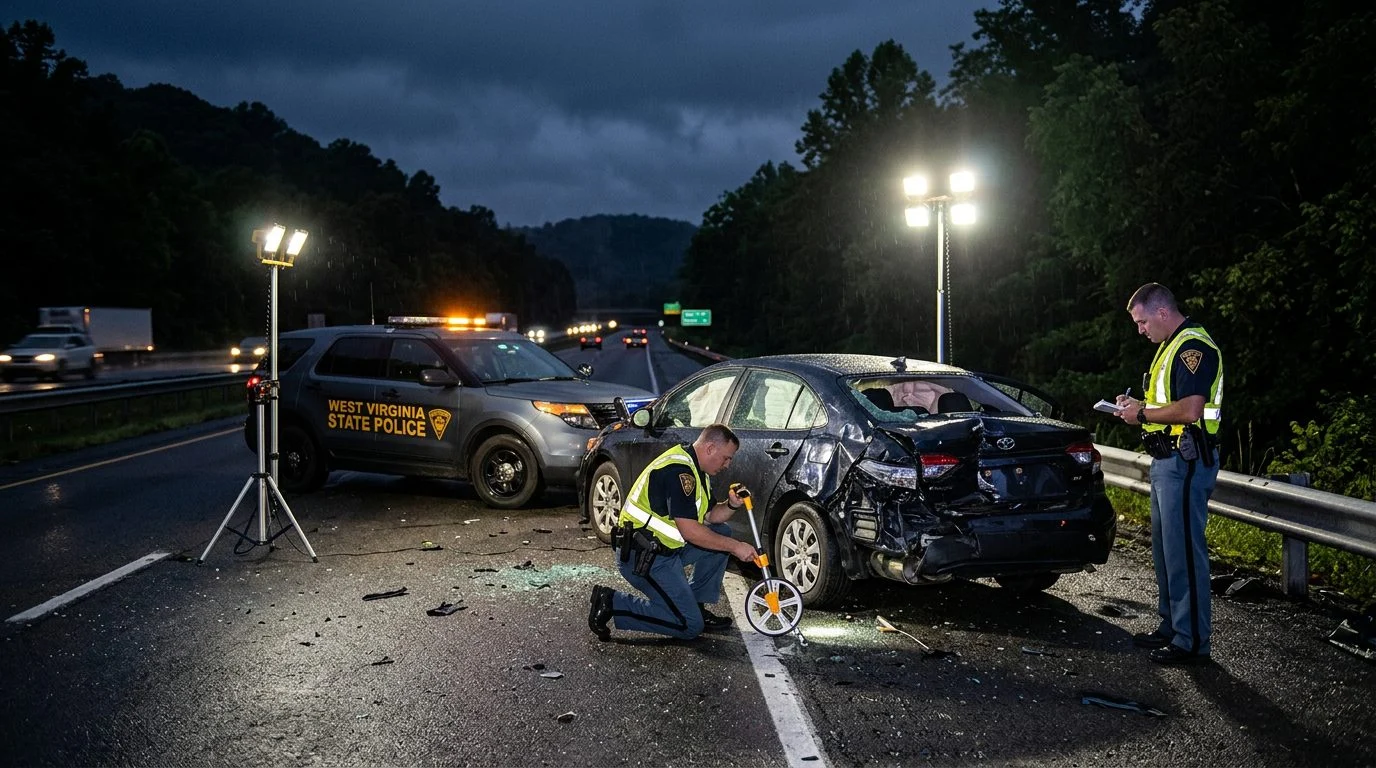
Deciding What to Do Next for Your Parent
Time limits matter, so ask early. West Virginia generally allows two years to file a personal injury claim, and exceptions may apply. See W. Va. Code § 55-2-12.
Fault matters too. Under W. Va. Code § 55-7-13a, recovery in an injury action follows comparative fault, with each person’s share allocated by percentage. If another driver was at fault, that driver’s share may matter in your parent’s claim.
Crashes involving trucks or other commercial vehicles can raise extra questions about records and who was responsible. Families should not assume the first insurer’s view is the full picture.
We serve families across West Virginia and handle car, truck, and commercial vehicle crash claims, along with catastrophic injuries, traumatic brain injury, spinal cord injury, and wrongful death. If your parent is recovering and you’re unsure how to protect their claim while you help them through it, you can request a free case review through our contact page.