
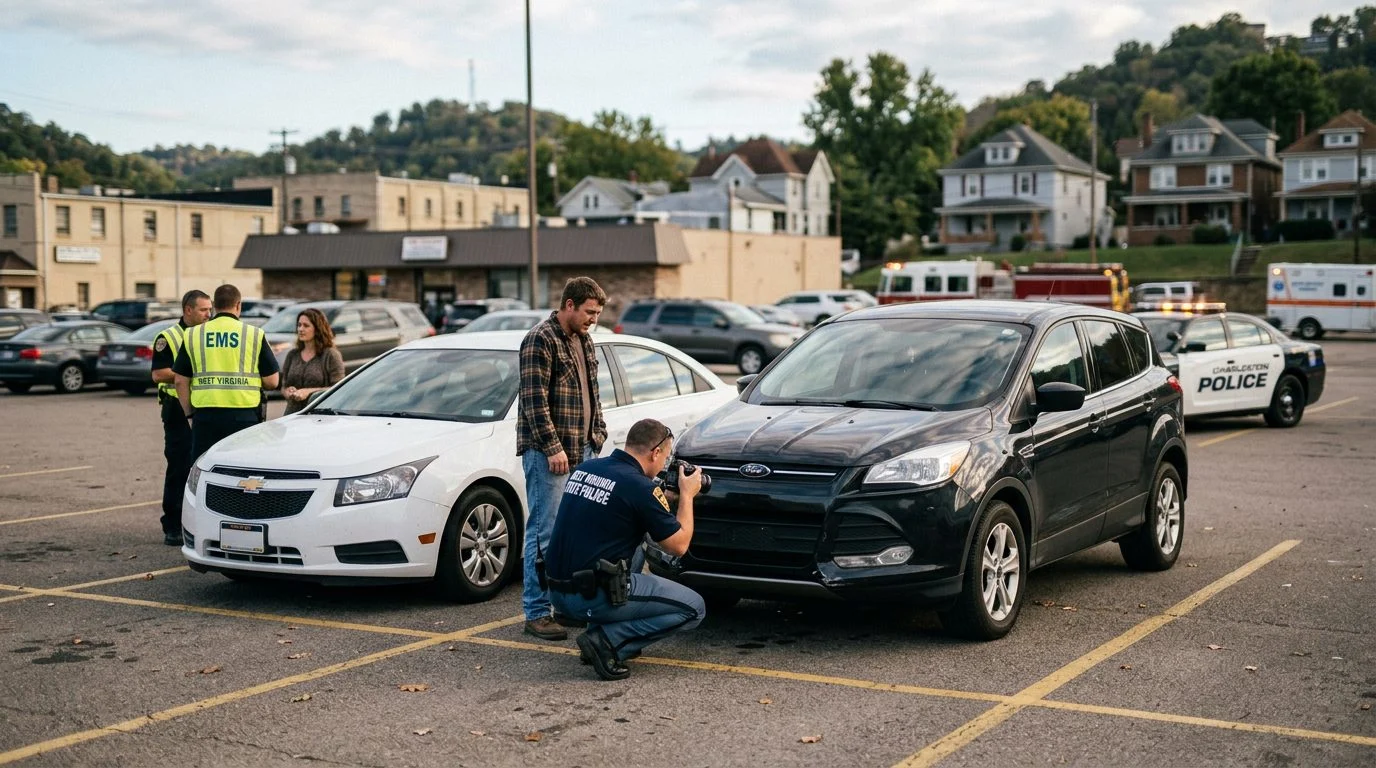
Parking Lot Car Crashes | West Virginia
Hurt in a Parking Lot Crash? Learn Who May Be Responsible
Low-speed crashes can still cause real injuries and costly damage. Reach out to the firm to talk through what happened and what your options may look like.
Published November 18, 2026
A parking lot crash can happen at low speed and still leave someone hurt or a car badly damaged. Many people ask who is at fault when the other driver was backing up, cutting across an aisle, or hit a car that was already parked.
In West Virginia, fault is usually decided by how the crash happened, not where it happened. Responsibility is split by percentage, and more than one driver can share it. This guide walks through the situations that come up most often.
How Fault Is Usually Decided in a Parking Lot Crash in West Virginia
West Virginia generally uses a percentage system, so each driver’s share of fault matters. Under W. Va. Code § 55-7-13a, fault is expressed as a percentage, and each person’s share is allocated in direct proportion to that share.
Under W. Va. Code § 55-7-13c, a driver’s own fault does not bar recovery unless it is greater than the combined fault of everyone else responsible. If it is less, the recovery is reduced in proportion to that driver’s share.
Parking lot crashes can involve moving vehicles, pedestrians, and shopping carts, and how a crash happened depends on the facts of each situation. Fault is usually judged by conduct, such as speed, lookout, signals, and the path each car took. Under W. Va. Code § 55-7-13d, the court considers the fault of everyone who contributed to the harm, even someone who was not a named party, but fault of a nonparty is considered only if the plaintiff entered into a settlement agreement with the nonparty or a defending party gives notice no later than one hundred eighty days after service of process that the nonparty was wholly or partially at fault.
If a parking lot crash left you hurt or dealing with damage you didn't cause, you can reach out to the firm to request a free case review. Talk it through with Big Bubba — the first case review is free, confidential, and carries no obligation.
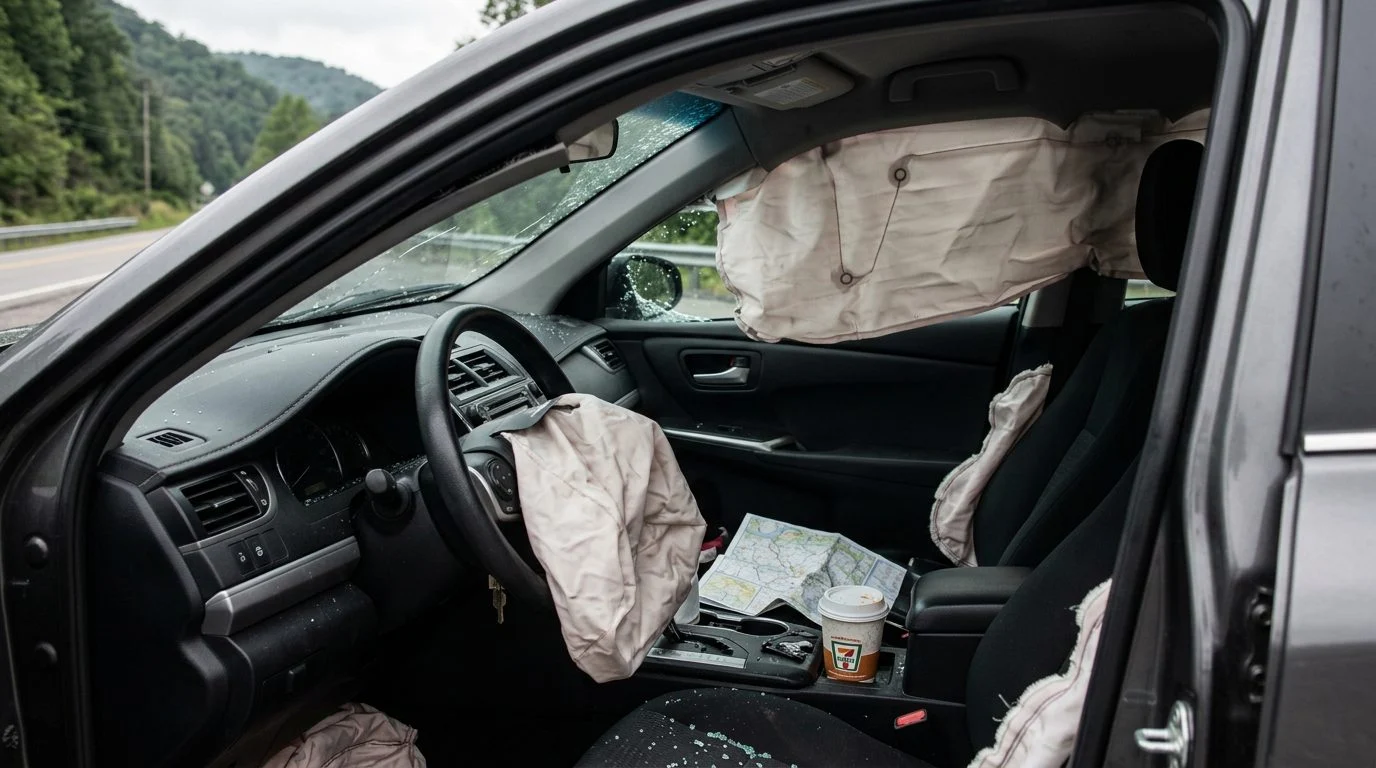
Who Is at Fault When Someone Backs Out of a Parking Space
Backing out of a parking space can involve other cars, pedestrians, and shopping carts, and the details of each incident matter. A driver who backs into a car moving through the aisle may be found at fault.
The driver already moving down the aisle can also be examined. A court or insurer may ask whether that driver was keeping a reasonable lookout and whether they were going too fast for the lot.
Backing crashes are often disputed because each driver may tell the sequence differently. One driver may say the other car came out of nowhere. Some insurers may dispute a claim on that basis. Physical evidence, such as where each car was hit and where it came to rest, often helps show what happened.
Lane Changes, Turns, and Two Cars Moving in the Same Lane
A driver who turns or changes lanes without checking for nearby vehicles may be found at fault. Many lot aisles have no painted lanes, so the layout and the flow of traffic can matter a great deal.
When two cars move into the same open space at once, fault may turn on several points. Common questions include who had the right of way, who signaled, and who was closest to the open space. A driver who cut across another car’s path may carry more of the fault.
Arrows, stop signs, and one-way markings may also be part of the picture. If a driver ignored a sign or an arrow, that can affect how the crash is analyzed. Photos of the lot taken soon after the crash can show how the aisle was set up. Those details are easy to lose if no one records them.
What Happens When Someone Hits a Parked Car
When a moving car hits a parked car, the moving driver is often the first one whose actions get examined. The facts may still show otherwise, so each crash needs a careful look.
West Virginia sets specific duties after a crash. Failing to stop or comply is a misdemeanor.
The driver must then either find the owner or leave a written notice in a conspicuous place in the vehicle, under W. Va. Code § 17c-4-4. A person injured by a violation of a statute may recover damages from the offender, unless the statute expressly makes its penalty in lieu of such damages, under W. Va. Code § 55-7-9.
Evidence That May Bear on Fault in a Lot Accident
Photos and video are often among the most useful evidence in a lot crash. Store and security cameras may record the sequence, but footage may be kept only for a short time. Asking for it early can matter.
Other useful records include the direction each car was traveling, damage patterns on both vehicles, signs and painted markings, witness names, and photos taken at the scene.
The police report is another key record. Under W. Va. Code § 17c-4-7, when a law-enforcement officer investigates a motor vehicle crash occurring on the public streets or highways of West Virginia that results in bodily injury, death, or total property damage to an apparent extent of $1,000 or more, the officer must prepare a report of the crash, and the statute sets a 24-hour window that runs from completion of the investigation. Within 24 hours of the crash, the officer must also provide owner, operator, and insurance information on request, at no cost. The agency that holds the full report may charge its own copy fee.
Insurers may dispute a claim or assign fault differently than the injured person expects. If the other driver cannot be identified, uninsured motorist coverage may apply.
Injuries From a Parking Lot Crash and Why Medical Records Matter
Low-speed parking lot crashes can still cause real injuries. A person may feel fine at the scene and still have problems later.
Some symptoms may show up hours or days after a crash. Headaches, dizziness, confusion, and neck or back pain are examples. Any of these can be linked to a head or spine injury, so they deserve prompt medical attention.
Prompt medical evaluation creates records that may matter for both your health and any claim. Those records show what you reported, when you reported it, and what was found. Keeping a simple journal of symptoms, appointments, and missed work can also help. The firm handles traumatic brain injury and spinal cord injury claims, and we serve injury victims across West Virginia.
Not sure what your next step is?
Talk it through with Big Bubba — the first case review is free, confidential, and carries no obligation.
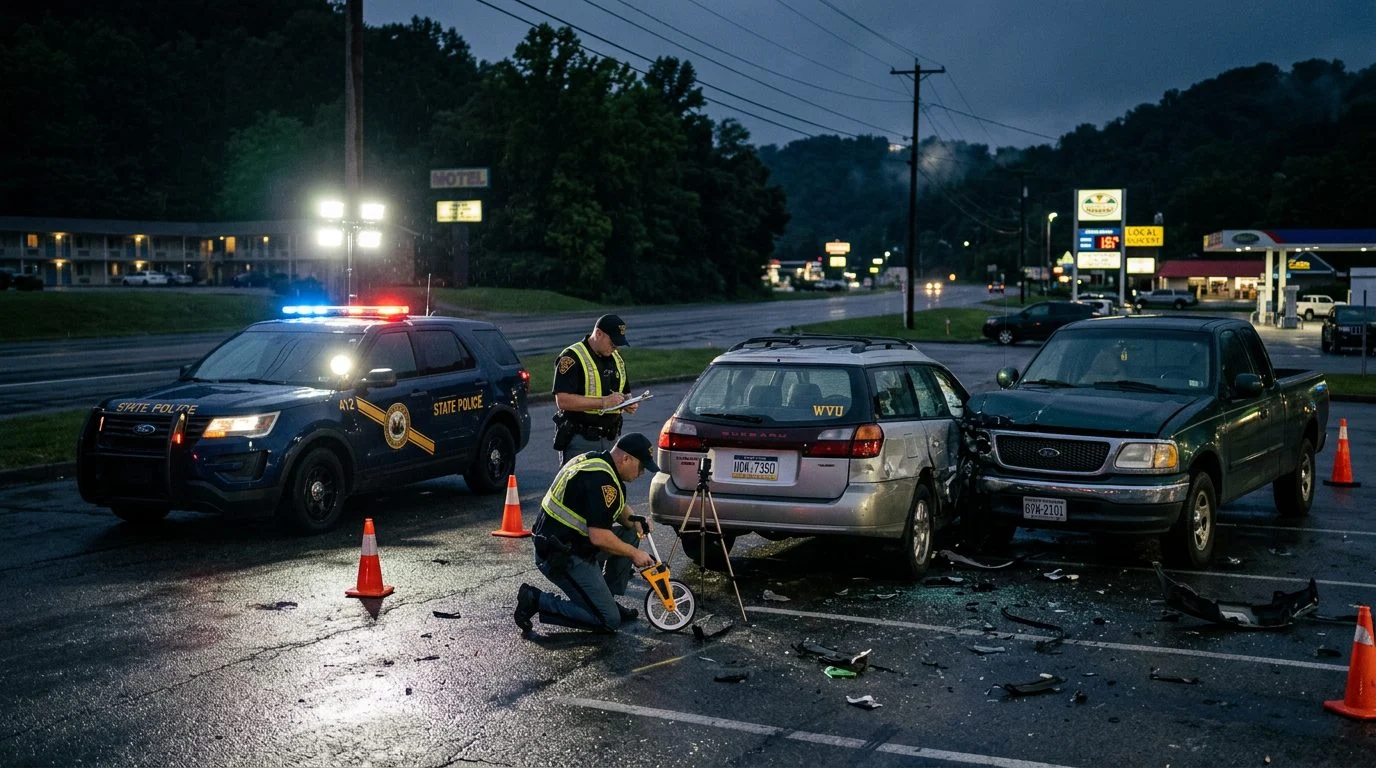
Parking Lot Crash Claims: What to Know
If you were hurt or your car was damaged in a lot, you may not know who was responsible. The answer may depend on the sequence of events, the markings, and the evidence that was captured.
Gather what you have now. That includes the police report number, photos of both cars and the lot, the names of any witnesses, and the other driver’s insurance details. Write down your own account while it is fresh.
If you were hurt or are stuck with damage you did not cause, you can reach out to the firm to request a free case review of your crash.