
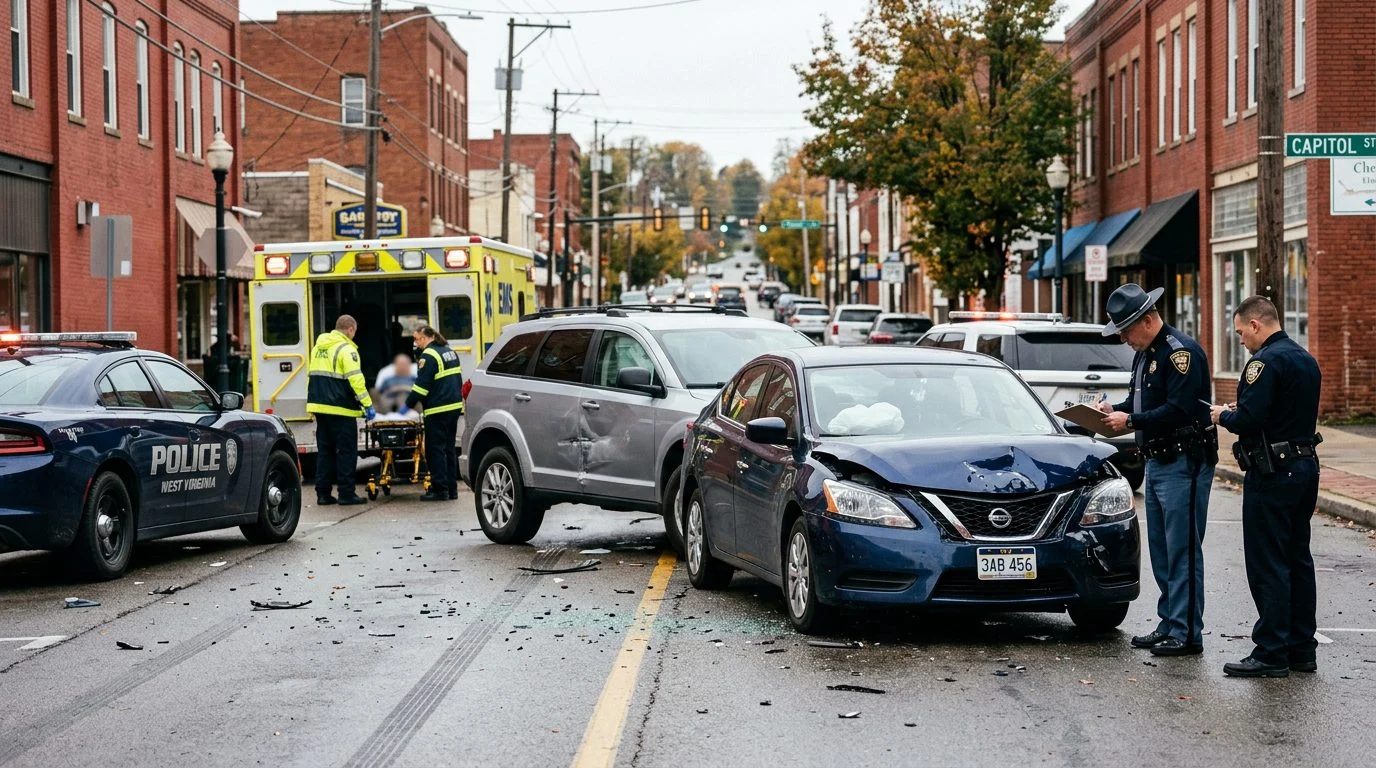
Car Accident Injuries | West Virginia
Pain Can Show Up Days After a Car Accident
Stiffness, headaches and dizziness often build after a crash. Big Bubba Injury Law helps people hurt in car and truck crashes across West Virginia understand what comes next.
Published October 30, 2026
Pain that shows up days after a crash can be confusing and frightening. Pain, stiffness, or other symptoms can appear days after a car accident, so it is important to pay attention to how you feel as the days pass and to report new symptoms to a medical provider. If you were hurt in a crash in West Virginia, or you are helping someone who was, this page explains what to watch for, when to get emergency care, and why records and timing matter.
Why Pain Can Show Up Days After a Crash
Pain often arrives late because the body hides it at first. In the minutes after impact, adrenaline and other stress hormones can dull pain. A person may feel shaken but mostly fine.
As hours and days pass, the body’s reaction changes. Muscles, ligaments, and tendons in the area that took the force can stiffen and swell. That swelling is one reason pain can grow instead of fade.
Every person reacts differently. Pain location, timing, and severity vary from one person to the next. Only a medical evaluation can identify the cause of your symptoms, and a medical visit also creates a written record of what you reported and what the provider found.
If pain showed up days after a crash you did not choose, you don't have to sort it out alone, so tell the firm what happened and request a free case review. Talk it through with Big Bubba — the first case review is free, confidential, and carries no obligation.

Common Injuries That Hurt Later
Here are the most common patterns.
- Whiplash and neck strain. Stiffness, less range of motion, headaches that start at the base of the skull, and shoulder pain.
- Back and muscle strain. A low back ache, tight muscles, and pain that gets worse after sitting or sleeping.
- Disc injuries. Pain that runs into an arm or leg, plus tingling or numbness as the area swells.
- Sprains. Pain in the knees, hips, wrists, or ankles, especially if your body braced against the dashboard or steering wheel.
Think of this list as a starting point for a doctor’s exam. It is not a diagnosis. Only a medical provider can tell which injury is present.
Delayed Symptoms of a Traumatic Brain Injury
Any new headache, dizziness, or change in thinking after a crash deserves a medical check, even if you never hit your head. A traumatic brain injury (TBI) can cause symptoms that appear hours or days later.
Watch for these signs:
- A headache that does not go away
- Dizziness or nausea
- Trouble concentrating or remembering things
- Sensitivity to light or noise
- Sleep changes
- Irritability, mood shifts, or feeling “off”
Family members may notice changes first. Ask them to write down what they see, with dates. Report any new or worsening symptom to a medical provider right away, because brain injury signs can be subtle.
Warning Signs That Need Emergency Care
Call 911 or go to the nearest emergency department right away if you notice any of these signs:
- A severe or worsening headache, or repeated vomiting
- Confusion, slurred speech, fainting, or a seizure
- Pupils of unequal size
- Numbness, tingling, or weakness in the arms or legs, or trouble walking
- Neck or back pain with loss of bladder or bowel control
- Belly pain or swelling, lightheadedness, pale or clammy skin, or shortness of breath
Injuries high in the neck can affect breathing. The National Institute of Neurological Disorders and Stroke explains that nerves in the upper neck (C1 to C4) help control the diaphragm, so an injury there can stop breathing. Do not wait to see whether these signs fade on their own.
Protecting Your Records After a Delayed Injury
Clear records help connect new symptoms to the crash. Start them now.
- Tell every provider about the crash and every symptom, including new ones.
- Keep a daily journal with pain levels, sleep, medicines, and activities you can no longer do.
- Save photos of the vehicles and your injuries, the police report number, witness names, and receipts for visits and prescriptions.
- Get any work restrictions from your doctor in writing, and note the days you missed.
Gaps in treatment can make it harder to link later symptoms to the crash. Follow the treatment plan and report any new problem.
Be careful with early calls from insurers. Under W. Va. Code § 55-7-11a, for twenty days from the date of an injury, no person may negotiate a settlement, seek a release of liability, or obtain a statement for use in negotiating a settlement from an injured person who is an inpatient in any hospital or who is partially or totally unable to engage in his or her usual trade, profession or occupation. The injured person can ask for it, though: the restriction does not prohibit a person acting or intending to act for and on behalf of the injured person from obtaining a statement upon the injured person’s express request. Talk through your symptoms with a medical provider before giving a detailed recorded statement.
West Virginia’s Filing Deadline and Why Timing Matters
West Virginia generally allows two years to file a personal injury claim. Under W. Va. Code § 55-2-12, the two years run from when the right to bring the claim accrued. A wrongful death action must be brought by the personal representative of the deceased person and commenced within two years after the death, subject to the provisions of section eighteen, article two, chapter fifty-five, under W. Va. Code § 55-7-6. W. Va. Code § 55-7-6 reads: “The provisions of this section shall not apply to actions brought for the death of any person occurring prior to July 1, 1988.”
Other rules can apply. Claims involving government vehicles or property can follow different rules, and the facts of each crash matter. Truck crashes can also involve federal testing rules. The Federal Motor Carrier Safety Administration explains that post-accident drug and alcohol testing can be required after some commercial motor vehicle crashes.
Fault also matters. Under W. Va. Code § 55-7-13c, a plaintiff’s fault does not bar recovery unless it is greater than the combined fault of all other persons responsible. Otherwise, recovery is reduced in proportion to the plaintiff’s share of fault.
Waiting can make evidence harder to gather. Vehicle data and surveillance footage may be overwritten over time.
Not sure what your next step is?
Talk it through with Big Bubba — the first case review is free, confidential, and carries no obligation.

Common Questions Before You Reach Out
Why do injuries hurt days after car accident?
Stress hormones can mask pain early, and soft tissue can stiffen and swell over the following days. A medical evaluation is how the cause gets found.
Should I see a doctor if I feel fine?
A medical check is wise after any crash, even when symptoms seem mild.
What if urgent care treated me and the pain got worse?
Tell the provider about the change and keep a record of each visit.
Does a delayed injury mean I cannot file a claim?
Not necessarily, because the facts and timing are reviewed case by case. West Virginia generally allows two years for a personal injury claim.
What happens at a case review?
It is a confidential meeting where the firm listens to what happened, reviews your timeline, and explains possible next steps. You have no obligation to continue.
Big Bubba Injury Law serves injury victims across West Virginia, including Charleston, Huntington, Morgantown, Wheeling, Martinsburg, Parkersburg, Beckley, Clarksburg, Fairmont, and Weirton. If pain showed up days after a crash you did not choose, you don’t have to sort it out alone. Tell the firm what happened and request a free case review.