
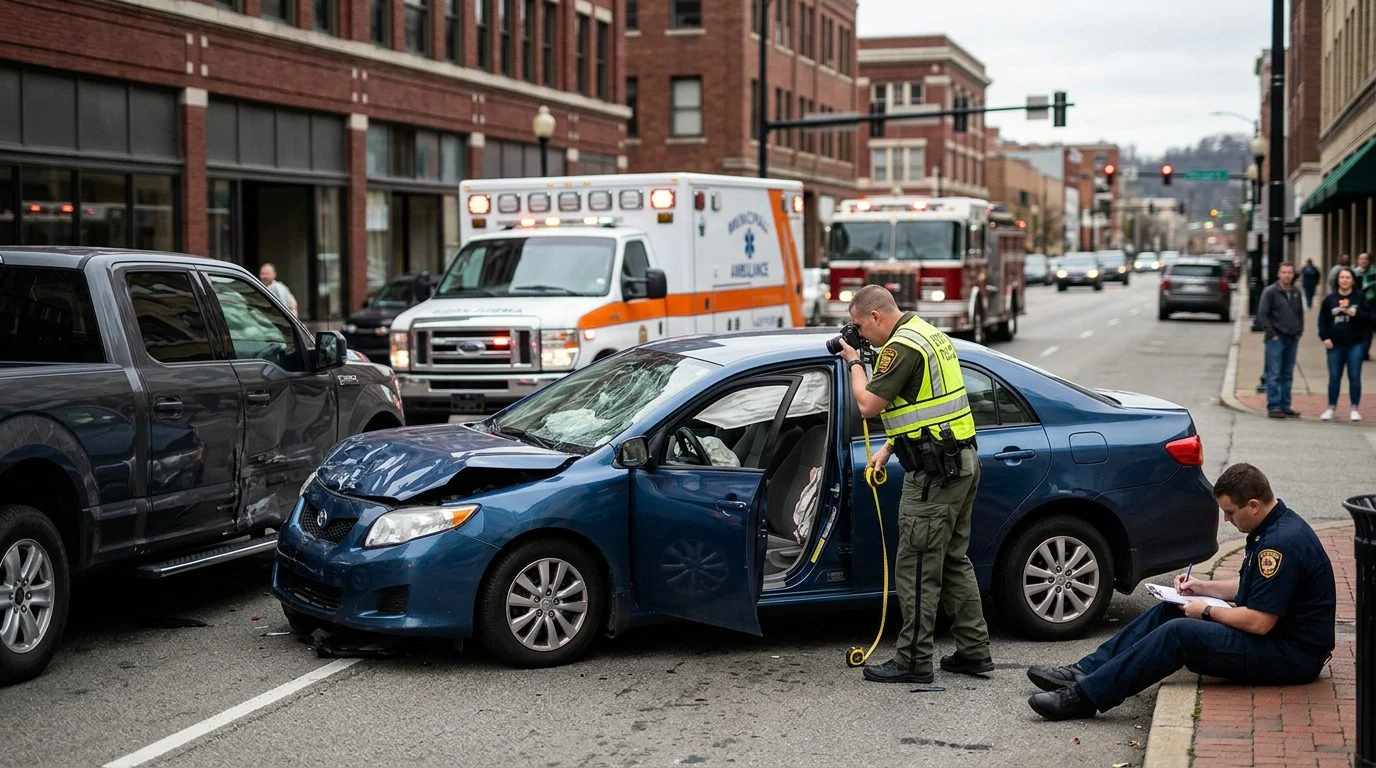
Car Accidents and Brain Injuries | Serving West Virginia
Hurt in a Crash and Told You Have a Skull Fracture? Talk With the Firm
Big Bubba Injury Law represents people seriously hurt in car and commercial truck crashes, including head injuries. Tell us what happened and we will walk you through what comes next.
Published October 24, 2026
If you need a skull fracture car accident lawyer in West Virginia, Big Bubba Injury Law handles claims like yours. A skull fracture is a break in one of the bones of the head, and it can point to a serious brain injury. This page explains what a fracture means for a claim, which medical records matter most, and how a free case review works.
What a Skull Fracture From a Car Accident Means
A skull fracture is a break in one of the bones that form your skull. Doctors describe several types. A linear fracture is a thin crack. A depressed fracture is a section of bone pushed inward. A basilar fracture happens at the base of the skull.
A fracture can happen with or without damage to the brain. The fracture alone does not show how much the brain was hurt.
In a crash, a skull fracture often comes with bleeding, swelling, or other traumatic brain injury. That is why imaging and neurological follow-up matter. Symptoms can change over time, so keep every follow-up appointment, even when you feel better.
The firm handles car accident claims involving skull fractures and related traumatic brain injury across West Virginia.
Not sure what your next step is?
Talk it through with Big Bubba — the first case review is free, confidential, and carries no obligation.
Who This Page Is For and What the Free Case Review Covers
This page is for people hurt in a crash and for families dealing with a head injury or a death. Families looking for a skull fracture car accident lawyer in West Virginia often fall into one of these groups:
- An injured driver or passenger with a suspected or confirmed skull fracture
- A pedestrian or cyclist struck by a vehicle
- A family member of someone with a head injury from a crash
- A family facing a wrongful death after a crash
A free case review is a confidential first conversation with the firm. You describe what happened, the injuries, and the records you have. There is no obligation to continue after the review.
Have these details ready if you can:
- The date and place of the crash
- Each vehicle involved, including any commercial truck
- Names of hospitals and treating providers
- Any police report number
In the review, the firm looks at whether the crash facts and medical picture fit the claims it handles.
Medical Records That Matter After a Skull Fracture
The records that matter most show how the injury began and how it has changed over time.
- Emergency and admission records: arrival time, any loss of consciousness, and the care team’s neurological checks.
- Imaging reports and images: CT and MRI results that show where the fracture is and whether there is bleeding or swelling.
- Neurosurgery and consult notes: any surgery, monitoring, or decisions about whether surgery was needed.
- Neurology and therapy notes: rehabilitation, speech, or cognitive therapy records that document headaches, memory trouble, dizziness, or mood changes.
- Work records: restriction notes, missed time, and changed duties from your employer.
- A symptom journal: a dated log kept by the injured person or family.
Records written close to the crash, and kept up over time, help show the injury’s full course. The firm can help identify which records to request and who holds them.
How the Process Works, Step by Step
The process starts with a free case review and moves forward as the facts and records support it.
- Free case review. You describe what happened in your own words, and the firm asks about your injuries.
- Initial look. The firm reviews the crash facts, the medical information you can share, and your records. It then explains what it still needs.
- Records and evidence. If the firm takes the matter, it works to gather medical records, the police report, and information about the vehicles and insurance.
- Ongoing updates. The firm keeps the injured person or family informed as care continues and the full extent of the injury becomes clearer.
Timing matters. West Virginia generally allows two years after the right to bring the claim accrued to bring a personal injury action (W. Va. Code § 55-2-12). A wrongful death action must be commenced within two years after the death, subject to the provisions of section eighteen, article two, chapter fifty-five (W. Va. Code § 55-7-6). W. Va. Code § 55-7-6 reads: “The provisions of this section shall not apply to actions brought for the death of any person occurring prior to July 1, 1988.” The exact deadline depends on the facts, so an early review helps.
Crashes the Firm Handles Involving Head and Skull Injuries
The firm handles car accidents, truck and commercial vehicle crashes, catastrophic injuries, and wrongful death claims.
- Car accidents: intersection collisions, rear-end impacts, and crashes on highways and rural roads.
- Truck and commercial vehicle crashes: claims may involve the driver, the company that employs the driver, the vehicle’s owner, or any other person or entity that owns, leases, rents, or otherwise holds or exercises legal control over a commercial motor vehicle or its operator (W. Va. Code § 55-7-32).
- Catastrophic injuries: including traumatic brain injury and spinal cord injury.
- Wrongful death: claims brought after a crash causes a death, including crashes where a head injury was involved.
Commercial vehicle claims carry extra rules. Beginning January 1, 2026, that limit increases each year to account for inflation, but it may not exceed 150 percent of the stated amount (W. Va. Code § 55-7-32). The cap is not available to an employer defendant that does not have commercial motor vehicle insurance in the aggregate amount of at least $3 million for each occurrence covering the personal injury (W. Va. Code § 55-7-32). It also does not apply in certain cases, such as when the driver had an alcohol concentration of .04 or more.
Federal rules also set short deadlines for post-accident drug and alcohol testing of commercial drivers, including an 8-hour and a 32-hour limit (FMCSA testing rules).
We serve Charleston, Huntington, Morgantown, Wheeling, Martinsburg, Parkersburg, Beckley, Clarksburg, Fairmont, Weirton, and communities across all 55 West Virginia counties.
Why Families Bring Their Case to the Firm
The firm handles serious injury matters, including car and truck crashes, catastrophic injuries, and wrongful death cases across West Virginia. The firm handles car and truck crashes, catastrophic brain and spinal cord injuries, and wrongful death. Each matter is reviewed on its own facts.
In a wrongful death case, the claim is brought by the personal representative appointed for the person who died (W. Va. Code § 55-7-6). The firm can explain how that process works for your family.
The firm’s support staff help with scheduling, records requests, and keeping track of your questions. The free case review gives you a direct way to ask about your injury and your options before you decide anything.
Not sure what your next step is?
Talk it through with Big Bubba — the first case review is free, confidential, and carries no obligation.

Common Questions About a Skull Fracture Car Accident Claim
Here are short answers to questions people ask most often.
Do I need a skull fracture diagnosis to talk with the firm?
No. A free case review helps you learn whether your symptoms and records fit the kinds of claims the firm handles.
What if my symptoms seem mild right after the crash?
Brain injury symptoms can appear or change over days or weeks. Tell the firm about everything you notice.
Can I still pursue a claim if I was partly at fault?
West Virginia uses a comparative fault rule. Your recovery is reduced by your share of fault, and it is barred only if your fault is greater than everyone else’s combined (W. Va. Code § 55-7-13c).
Can an insurer or other party negotiate with me right after a crash?
West Virginia limits settlement talks during the first 20 days after an injury if you are in the hospital or unable to work (W. Va. Code § 55-7-11a). Share details with the firm before you give any recorded statement.
Is the free case review confidential?
Yes. The free case review is confidential and carries no obligation to continue.
If a crash has left you or someone close to you with a skull fracture, request a free case review to talk through what happened and which records to gather first.