
West Virginia Crash Claims
Reckless Driving After a Crash in West Virginia: A Plain-Language Guide
Reckless driving is one question among many after a serious crash. Here is how the term is used and where it may fit into your situation.
Published November 20, 2026
If you were in a crash, or you are helping someone who was, you may be wondering what counts as reckless driving. It is separate from speeding, and it is separate from an injury claim, although the two can overlap. Here is how the pieces fit together.
What West Virginia law says about reckless driving
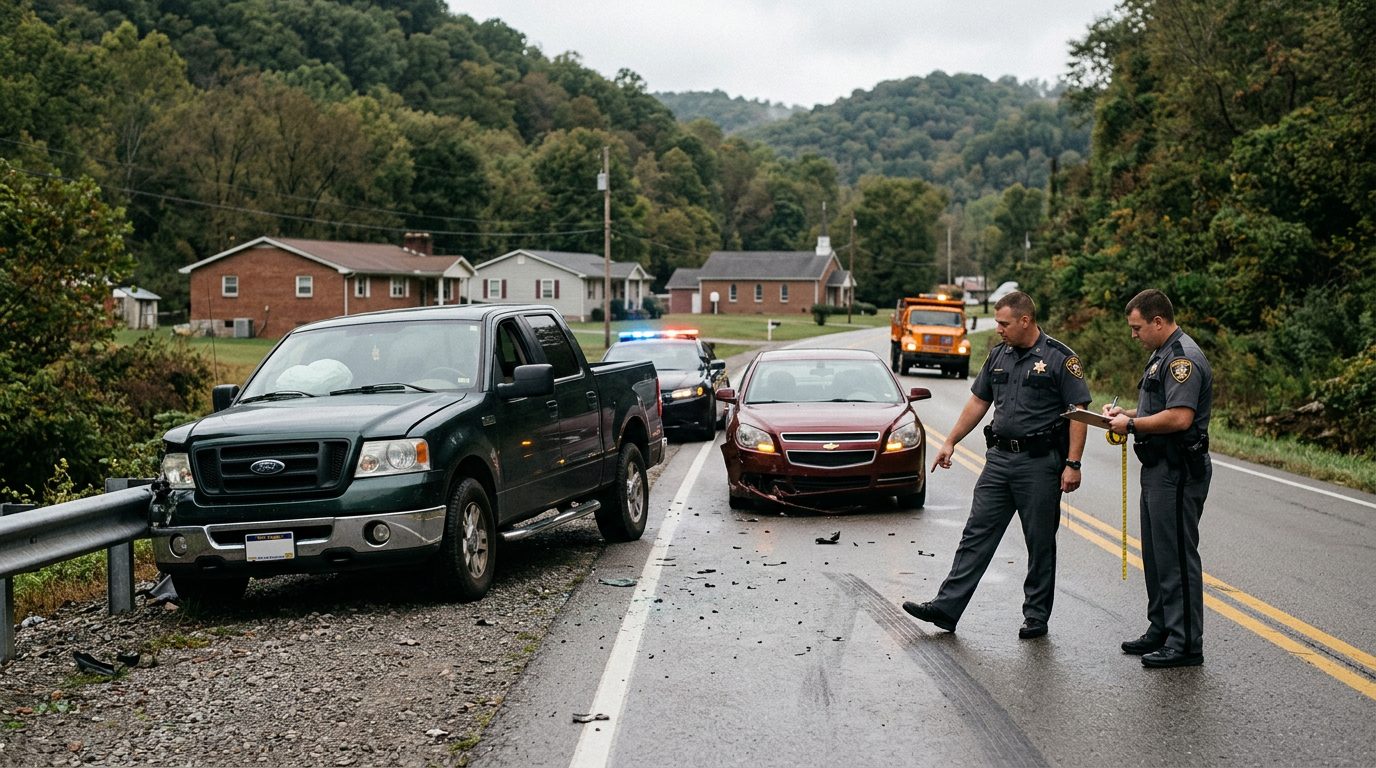
The exact wording lives in the state’s motor vehicle code, and a court applies that wording to the facts of each case. A crash can happen without any reckless driving charge. A crash can also follow choices a driver made on purpose. Police officers may note what they see at the scene, but a charge is a separate decision from the crash itself. A charge alone does not settle who is responsible for someone’s injuries. That is why the story behind the crash matters, not just the damage it caused.
If you are trying to understand a crash right now, you do not have to sort out the law alone. Talk it through with Big Bubba — the first case review is free, confidential, and carries no obligation.

Willful or wanton disregard compared with ordinary negligence
Ordinary negligence means carelessness, while reckless conduct goes further. In everyday words, willful means done on purpose. Wanton means showing indifference to a danger the driver knew was there. A momentary lapse, such as glancing away from the road for a second, is generally treated differently from a driver who knowingly keeps going in dangerous conditions. Courts look at the whole picture, not one moment. A court may view repeated tailgating at highway speed in heavy traffic as conduct that fits this description, depending on the facts. The same driver can be careless on one trip and reckless on another. That is why the details of the drive matter. Witnesses often remember the driving that came before the crash, and that context can be important. Write down what you remember while it is still fresh.
Where speed fits into a reckless driving question
Speed alone does not automatically answer the reckless driving question. No single number of miles per hour over the limit settles it. Speeding and reckless driving are different charges with different focuses. Speeding is about going over a posted limit. Reckless driving asks about the driver’s conduct as a whole. Officers and courts weigh speed alongside road conditions, traffic, weather, visibility and how the driver handled the vehicle. Distracted driving is another example of conduct that may matter. West Virginia restricts texting and handheld cell phone use while driving, according to the state Division of Motor Vehicles. A citation for one offense does not automatically mean the other applies. Each charge has its own requirements.
How a reckless driving charge can matter in an injury claim
A criminal or traffic case and a civil injury claim are decided separately, through different processes. An injury claim asks who was at fault and how responsibility should be divided. Under W. Va. Code § 55-7-13a, fault is expressed as a percentage, and recovery is based on those percentages. Under W. Va. Code § 55-7-13c, an injured person’s own fault does not bar recovery unless it is greater than the combined fault of all others responsible. If it is less, the recovery is reduced by the injured person’s share. A driver’s conduct, including a citation, may be relevant to a claim, depending on the facts. Under W. Va. Code § 55-7-13d, the person who seeks to prove comparative fault carries the burden of proving it. Some insurers may dispute fault. Timing matters too. For a commercial truck, federal hours-of-service rules for drivers can apply alongside state law, according to the Federal Motor Carrier Safety Administration.
Records that can show what the driver was doing
The crash report is often the first record to request. Under W. Va. Code § 17c-4-7, an officer who investigates a crash on the public streets or highways of this state involving injury, death, or total property damage of $1,000 or more must prepare a report. The officer must submit it within 24 hours after finishing the investigation. The same statute requires the officer to share owner, operator and insurance details on request within 24 hours. The report format must show the cause of the crash, the conditions then, and the people and vehicles involved, as W. Va. Code § 17c-4-9 describes. The agency that responded may charge its own fee for a copy. Other useful records include witness names and contact details, photos of the scene and vehicles, and repair records. Dashcam or traffic camera footage may exist. Some systems overwrite old video, so it helps to ask early. Keep copies of everything you already have, including texts, emails and insurance letters.
When reckless driving leads to a brain or spinal injury
A crash involving reckless driving can cause serious head and spinal injuries. Forces in a crash can harm the brain and spinal cord even when the outside of the body looks fine. Some symptoms may appear later rather than right away. A medical evaluation after any crash can help identify injuries that are not obvious at the scene. Keep a written log of symptoms, appointments and missed work. These notes may matter later. Our delayed brain injury symptoms guide explains signs to watch for. Recovery looks different for each person. Families often face these questions while they are also dealing with medical bills and time away from work.
Not sure what your next step is?
Talk it through with Big Bubba — the first case review is free, confidential, and carries no obligation.

Talking with the firm about a crash involving reckless driving
If you are trying to understand a crash right now, you do not have to sort out the law alone. You may be looking into this for an injured parent, a friend, a coworker, or yourself. Crashes you did not choose can leave people with many questions at once. The firm handles car accident and truck accident claims, commercial vehicle crashes, catastrophic injuries, traumatic brain injury, spinal cord injury and wrongful death matters. We serve injury victims across West Virginia, including Charleston, Huntington, Morgantown, Wheeling, Martinsburg, Parkersburg, Beckley, Clarksburg, Fairmont and Weirton. If another driver’s conduct may be part of what happened to you or someone you love, you can request a free case review with the firm.