
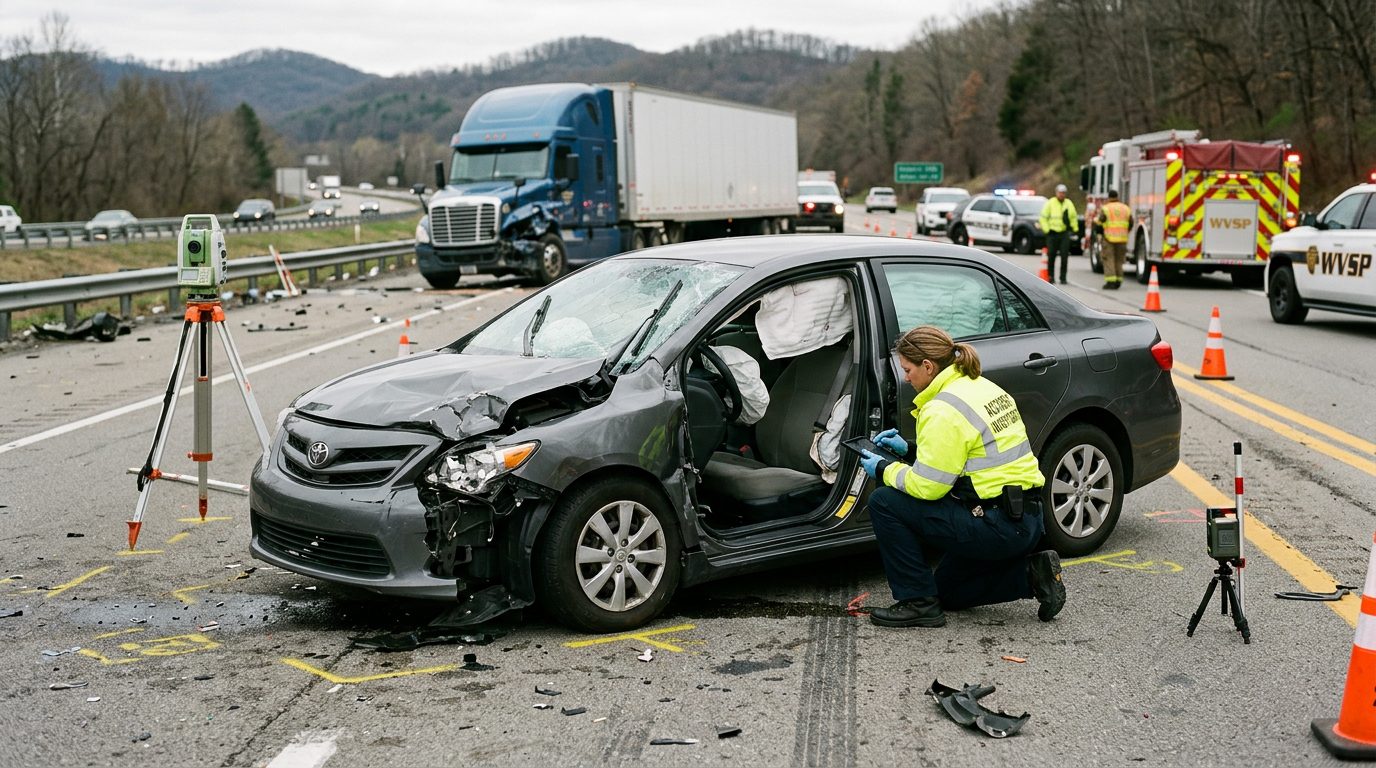
Truck Accidents | West Virginia
Catastrophic Truck Crash Injuries: Help for West Virginia Families
We represent people seriously hurt in commercial truck crashes and families who have lost a loved one. We serve communities across West Virginia, including Charleston, Huntington, Morgantown, Wheeling, Martinsburg, Parkersburg, Beckley, Clarksburg, Fairmont, and Weirton.
Published November 2, 2026
A catastrophic truck crash injury claim seeks compensation from those who may be responsible for a serious injury caused by a large truck. These claims often involve brain injuries, spinal cord injuries, or both. They also tend to need more planning than a typical car claim. This guide explains how these claims generally work in West Virginia, what evidence matters early, and how to reach the firm for a free case review.
What a Catastrophic Truck Crash Injury Claim Covers and Who It Is For
A catastrophic truck crash injury claim covers serious harm that may last for years. Catastrophic injuries have long-term effects. Traumatic brain injury and spinal cord injury are two common examples. They may affect work, independence, and daily life long after the crash.
Several people may bring a claim:
- The injured driver or passenger.
- A pedestrian or cyclist struck by a commercial vehicle.
- A family member acting for someone who cannot manage a claim alone.
If a crash causes a death, the matter may fall under wrongful death law instead. West Virginia law says a wrongful death action is brought in the name of the decedent’s personal representative, under W. Va. Code § 55-7-6.
Truck claims often differ from car claims. A commercial carrier may be involved, federal safety rules may apply, and more than one party may share responsibility. In 2024, West Virginia recorded 256 motor-vehicle crash deaths, a rate of 14.5 per 100,000 people, according to the Insurance Institute for Highway Safety.
If someone you love was seriously hurt in a truck crash, you don't have to sort out the next steps alone. Request a free case review and tell us what happened. Talk it through with Big Bubba — the first case review is free, confidential, and carries no obligation.

Brain and Spinal Cord Injuries Common in Heavy Truck Crashes
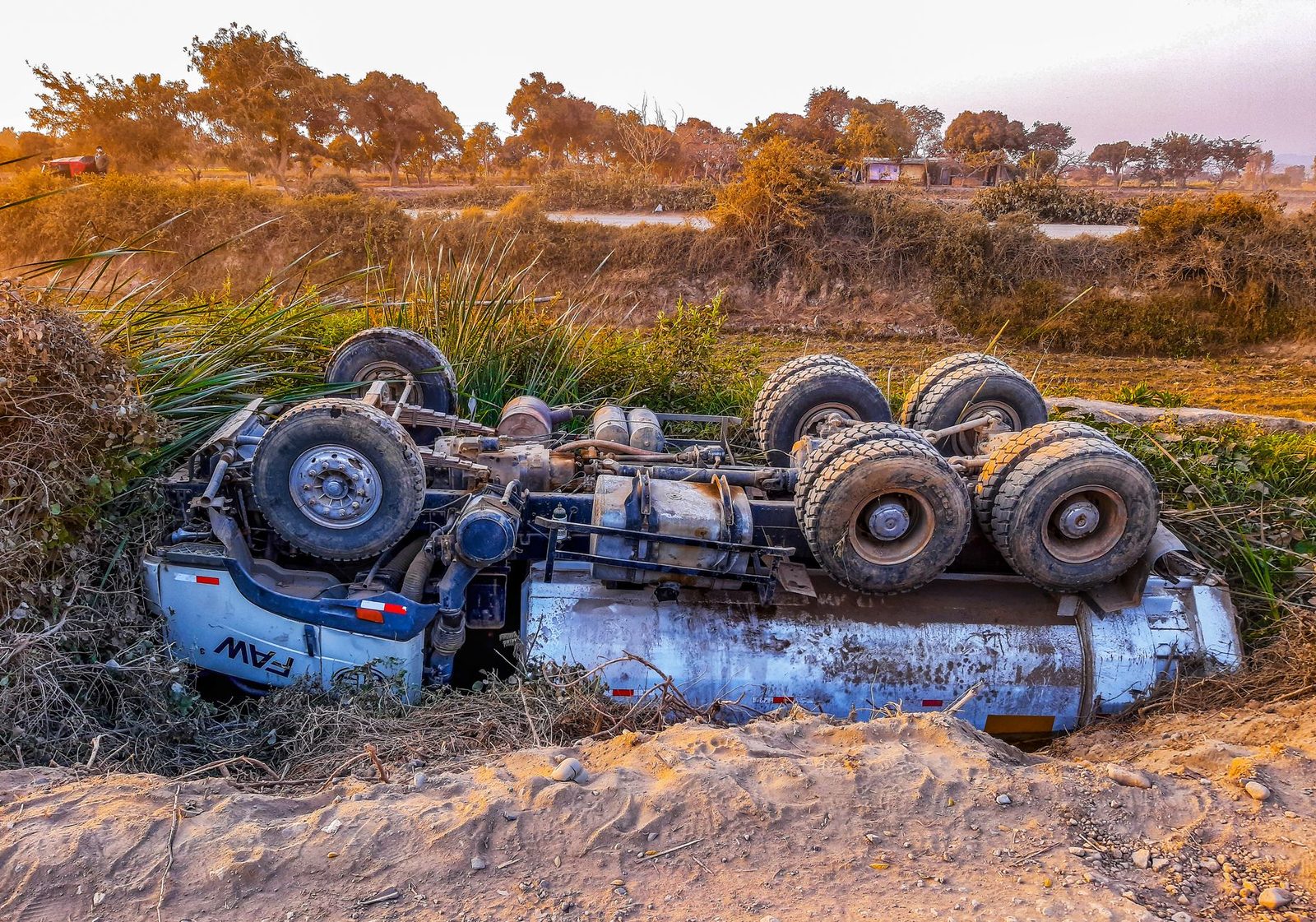
Brain and spinal cord injuries are among the serious harms that can follow a heavy truck crash. A loaded truck carries great weight and momentum. In a jackknife, where the trailer swings out of line, or in a rollover, occupants may be thrown or struck hard.
Traumatic Brain Injury
A traumatic brain injury is an injury to the brain caused by a blow, jolt, or penetrating force. Severity can range from a mild concussion to a severe injury. Symptoms may not appear right away. Some people notice changes days or weeks after the crash.
Spinal Cord Injury
A spinal cord injury may be partial or complete. The effects depend on where the injury is and how severe it is. Some effects may change over time, and others may not.
Keeping Medical Records
Early medical evaluation creates a record of what happened. Keep copies of imaging, discharge notes, and referrals to other doctors as your medical picture develops. Organized records help show the care a person needs.
Who May Be Liable and What Evidence Matters Early
The truck driver, the trucking company, or another party may be liable, depending on the facts of the crash. Federal rules may set the standards used to judge a driver’s or carrier’s conduct.
Under 49 C.F.R. § 395.3, a driver of a property-carrying commercial motor vehicle generally may not drive after 14 consecutive hours on duty, following 10 consecutive hours off duty, though some exceptions may apply. Weekly on-duty limits also apply. Hours-of-service records may show whether these limits were followed.
Carriers must keep driver vehicle inspection reports for three months, under 49 C.F.R. § 396.11, except private motor carriers of passengers (nonbusiness), driveaway-towaway operations, and motor carriers operating only one commercial motor vehicle. Driver qualification files must be kept for as long as the driver works there and three years after, under 49 C.F.R. § 391.51. Because some records have short retention periods, early requests may matter.
Evidence that may be relevant includes:
- The police crash report.
- Electronic logging device data.
- Engine control module data.
- Dashcam footage.
- Maintenance and inspection records.
- Driver qualification files.
Some insurers may dispute a claim. Trucking companies may also act quickly to gather their own records. West Virginia law generally bars settlement talks with an injured person during the first twenty days after the injury, when that person is hospitalized or unable to work. Under W. Va. Code § 55-7-11a, settlement negotiations or obtaining a release generally may not occur within 20 days while the injured person is hospitalized or unable to work. See W. Va. Code § 55-7-11a.
Damages a Catastrophic Injury Claim May Include
A catastrophic injury claim may seek both economic and non-economic losses. Economic losses are money costs you can document. Non-economic losses are harms like pain and daily hardship.
Economic losses may include:
- Past and future medical care.
- Rehabilitation and prescriptions.
- Assistive equipment and home modifications.
- In-home care needs.
- Lost income and reduced earning capacity.
Non-economic losses may include pain and suffering, loss of enjoyment of life, and effects on family relationships.
West Virginia uses modified comparative fault. Under W. Va. Code § 55-7-13c, a plaintiff’s own fault generally does not bar recovery unless it is greater than the combined fault of all others responsible. If it is less, recovery is reduced in proportion to the plaintiff’s share of fault.
These limits have conditions and exceptions. See W. Va. Code § 55-7-32.
A claim’s value depends on documented medical needs and the evidence in each case. Early, organized records may help show those needs.
How the Claim Process Usually Works
Most truck injury claims follow a set of steps. Each case moves at its own pace.
- Case review. The firm listens to what happened and identifies the records and parties involved.
- Investigation. The firm may request the crash report, carrier records, and vehicle data.
- Medical documentation. Records are gathered and, where needed, ongoing care needs are assessed.
- Demand and negotiation. A demand is made to the responsible insurers, followed by negotiation.
- Lawsuit. If a fair resolution cannot be reached, a lawsuit may be filed.
West Virginia generally allows two years to file a personal injury lawsuit, and exceptions may apply. See W. Va. Code § 55-2-12.
Insurers may ask for a recorded statement soon after a crash. You can speak with the firm before giving one, so you understand what the request covers.
Frequently Asked Questions
Can a claim still move forward if I can’t remember the crash?
Memory gaps can happen after a head injury. Medical records and the police report may help fill in what happened.
Should I talk to the trucking company’s insurer?
Some insurers may ask for a recorded statement early. You can talk with the firm first to understand what the request involves.
What if the crash killed a family member?
A wrongful death action is brought in the name of the personal representative and generally within two years of the death. See W. Va. Code § 55-7-6.
Do federal rules apply to every truck driver?
Federal hours-of-service rules may apply to commercial drivers, depending on the trip and the vehicle. Hours records may show whether a driver followed the limits in 49 C.F.R. § 395.3.
Not sure what your next step is?
Talk it through with Big Bubba — the first case review is free, confidential, and carries no obligation.
Talking With the Firm About a Brain or Spinal Cord Injury
The firm handles truck accident and commercial vehicle claims, catastrophic injury claims, and wrongful death matters in West Virginia. We serve injury victims in Charleston, Huntington, Morgantown, Wheeling, Beckley, and other communities across the state.
The firm offers a free case review. It is confidential and carries no obligation to continue.
If you are looking into this for a spouse, parent, or child, you may be facing choices you never planned for. Reach out through the contact page to request a free case review, and tell us what happened in your own words.