
West Virginia Truck Crash Guidance
How to Get the Police Report After a Truck Crash in West Virginia
Knowing where the crash report comes from and what it should include can help you move forward. Serving injury victims across West Virginia, including Charleston, Huntington, Morgantown, Wheeling and Beckley.
Published October 23, 2026
Wondering how to get a police report after a truck crash in West Virginia? The investigating law enforcement agency writes the report, so that agency is where you ask for a copy. This guide explains which agency to contact, how to request the report, and what it contains.
Who Writes the Police Report After a Truck Crash in West Virginia
The investigating law enforcement agency writes the crash report. That agency is the first place to ask for a copy. You usually don’t need to get it from the other driver or the trucking company.
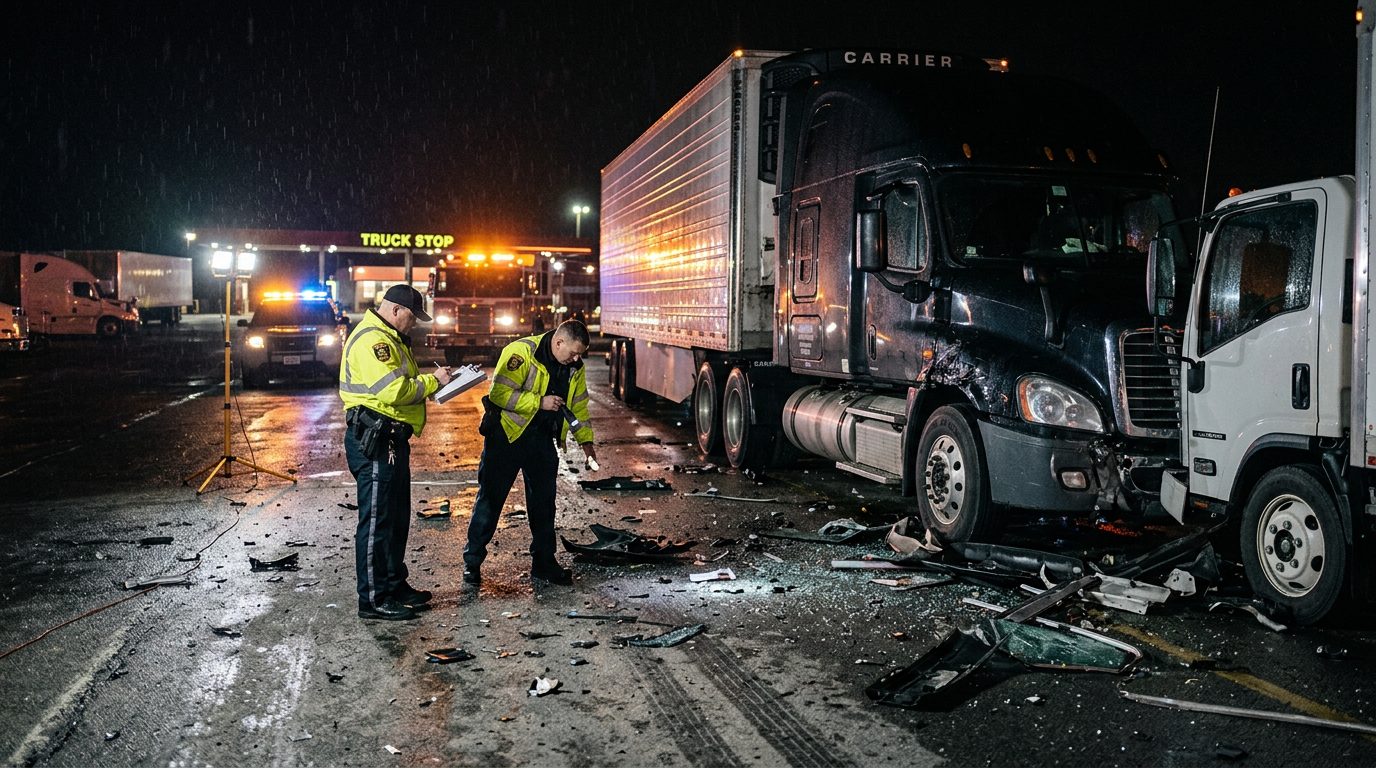
The officer at the scene collects facts, notes what each driver reported, and records the vehicles and damage. The agency then files the report. Its records unit keeps the file and handles copy requests.
Trucking companies keep their own records, too. Federal rules require a motor carrier to keep an accident register for 3 years after each accident. That register must include copies of all accident reports required by State or other governmental entities or insurers (49 C.F.R. § 390.15). The carrier’s records don’t replace the official report held by the investigating agency.
Truck crashes often involve more than one party. A driver, a carrier, and an owner may each have a role. The official report is a good place to start sorting out who was involved.
If a truck crash left you or someone you love hurt and the police report is still out of reach, we can help you request it and review it with your other records. Request a free case review. Talk it through with Big Bubba — the first case review is free, confidential, and carries no obligation.
Which Agency Holds the Report: State Police, Sheriff, or City Police
The responding agency is whichever agency sent officers to the scene. In West Virginia, that can be the State Police, a county sheriff’s office, or a city or municipal police department.
Location usually decides which agency responds. Crashes on state highways often involve a State Police trooper. Crashes inside a city often involve city officers. Rural county roads often involve a sheriff’s deputy. These are common patterns, not fixed rules, so check your own paperwork.
Start with the documents you received at the scene. A citation, a tow receipt, or a card left by the officer usually names the agency. Look for a report or case number on those papers too.
Write down the crash date, the road or intersection, and any report number. These details help the records unit find the file quickly. Without a report number, the search takes longer.
How to Request a Copy of the Crash Report Step by Step
To get a copy, contact the investigating agency’s records unit. Give it the crash date, the location, and the drivers’ names. Each agency sets its own process.
- Gather the basics. Have the crash date, approximate time, road or intersection, and each driver’s name ready. Add the report or case number if you have it.
- Contact the records unit. Ask how it takes requests: in person, by mail, or through an online form.
- Show identification if asked. Agencies often ask who is requesting the report. Ask what they need from you.
- Ask about timing. Reports sometimes take time to finish. Ask when the file will be ready, and write down the date.
Some agencies post their process online. The Beckley Police Department crash report requests page is one example. It explains how a city department handles requests and when reports become available. For the wider picture of truck crash claims in the state, read the truck accident guide for West Virginia.
What a Truck Crash Report Contains
A truck crash report usually records the vehicles, the drivers, the carrier, any citations, a scene sketch, and witness details. The layout varies by agency, so your copy may look different from another one.
- Vehicle details. Each truck and passenger vehicle, with make, model, plate number, and the damage noted at the scene.
- Commercial vehicle and carrier details. The carrier name and the commercial vehicle information the officer recorded. These help identify who was involved.
- Driver information and citations. Each driver’s details, plus any citation and the reason the officer noted.
- A scene diagram and narrative. A sketch of lane positions and points of impact, plus the officer’s written account of the crash.
- Witnesses and conditions. Witness names and contact details, and notes on weather, road surface, and lighting.
Some of these details connect to federal safety duties for commercial vehicles. You can read more in federal trucking safety rules.
Why the Police Report Matters After a Truck Crash
The report records the crash facts close to the time they happened. That early record can help keep the timeline of events clear. It’s one record among several, alongside medical records, photos, and maintenance or inspection records when they exist.
The carrier, vehicle, and witness details can point to the other people and businesses involved. That matters when a truck is owned by one company and driven by another person.
Deadlines matter too. Under W. Va. Code § 55-2-12, a personal action for which no other limitation is prescribed must be brought within two years next after the right to bring it has accrued, if it is for damages for personal injuries. A wrongful death action must be commenced within two years after the death of the deceased person, subject to the provisions of section eighteen, article two, chapter fifty-five (W. Va. Code § 55-7-6). This section does not apply to actions brought for the death of any person occurring prior to July 1, 1988. W. Va. Code § 55-7-6 reads: “The provisions of this section shall not apply to actions brought for the death of any person occurring prior to July 1, 1988.”
If a death followed the crash by weeks, see the guide for families of delayed deaths. If a child was hurt, see the guide for parents of injured children.
What to Do If the Report Is Incomplete, Delayed, or Disputed
If the report is late, ask the records unit about its status first. Reports can take time to finish, and checking the status is a normal step.
If a detail looks wrong, such as a lane position, a driver’s name, or a missing witness, raise it with the investigating agency. Write down who you contacted, the date, and what they said. Keep those notes with your copies.
Keep every copy of the report, the report number, and any supplemental paperwork together in one folder. That makes it easier to share the file when you talk with the firm.
Frequently Asked Questions
Who writes the police report after a truck crash in West Virginia?
The investigating law enforcement agency writes the report. Start your request with that agency’s records unit.
How long do I have to file a personal injury claim in West Virginia?
West Virginia generally allows two years to bring a personal injury action, counted from when the right to sue accrued, and exceptions may apply. The deadline is set out in W. Va. Code § 55-2-12. See W. Va. Code § 55-2-12.
See W. Va. Code § 55-7-6.
Not sure what your next step is?
Talk it through with Big Bubba — the first case review is free, confidential, and carries no obligation.

Talk With the Firm About Your Truck Crash Report
If a truck crash left you or a family member hurt, and you’re still waiting on the report, you don’t have to sort out the paperwork alone. The firm can help you request the report and review it with your medical and crash details.
When you reach out, it helps to have the report number, the crash date, and any photos or medical paperwork you already have. You don’t need every document to start. We serve people in all 55 West Virginia counties. Request a free case review to talk through what you have and what comes next.