
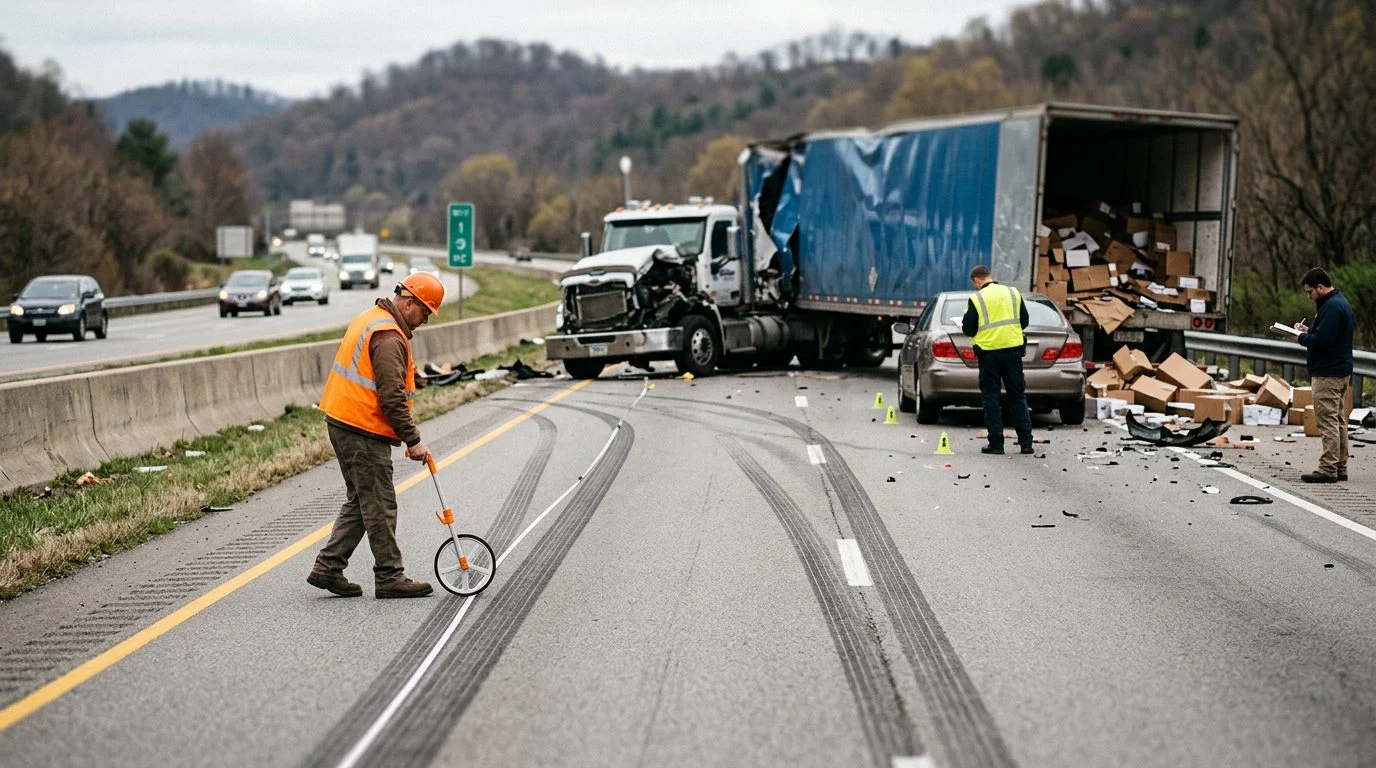
Paralysis Truck Accident Claims | West Virginia
Paralysis After a Truck Crash? Talk With Big Bubba About Your Case
Big Bubba Injury Law represents people seriously hurt in truck and commercial vehicle crashes, including spinal cord injuries that cause paralysis. Start with a free case review.
Published October 31, 2026
A paralysis claim after a truck crash is a civil claim for money damages against the people and companies responsible for the crash. It is separate from any criminal case. Families looking for a paralysis truck accident lawyer West Virginia residents can rely on usually want clear answers about who may be responsible, what can be recovered, and how long they have to act. This guide covers those points in plain language.
What a Paralysis Claim After a Truck Crash Involves
A paralysis claim is a civil case that seeks payment for the harm a crash caused. Paralysis usually comes from a spinal cord injury. MedlinePlus on spinal cord injuries explains that motor vehicle accidents can cause spinal cord injuries, which may lead to weakness, paralysis, and loss of feeling.
Paraplegia affects the legs and lower body. Quadriplegia, also called tetraplegia, affects the arms and legs too. The level and type of injury depend on where the spinal cord was damaged. Doctors make that judgment, and it shapes the long-term care a person needs.
This page is for three groups:
- The injured person.
- A spouse or family member acting for that person.
- Families whose loved one died after a paralyzing injury.
Big Bubba Injury Law handles car accidents, truck accidents, commercial vehicle accidents, catastrophic injuries, spinal cord injuries, and wrongful death claims in West Virginia.
Not sure what your next step is?
Talk it through with Big Bubba — the first case review is free, confidential, and carries no obligation.

Losses a Paralysis Claim Can Cover
A paralysis claim can seek money for medical care, equipment, lost income, and the harm to daily life. Families often need to account for each of these areas.
- Medical care now and later: surgery, hospital stays, rehabilitation, doctor visits, and therapy.
- Equipment and home changes: wheelchairs, adaptive vehicles, ramps, bathroom changes, and in-home help.
- Lost income: wages missed now, and lower earning ability over a working life.
- Non-economic harm: pain, suffering, loss of independence, and loss of enjoyment of life.
- Family losses: West Virginia law addresses loss of consortium claims, which cover a spouse’s lost companionship. W. Va. Code § 48-29-302 says a married woman may sue for loss of consortium the same way a married man may.
When injuries are permanent, a life care plan helps show the full picture. It is a written estimate of future medical and daily care needs, usually prepared with medical professionals.
For a death claim, W. Va. Code § 55-7-6 lets the jury, or the court in a case tried without a jury, award such damages as it may seem fair and just. These include sorrow, mental anguish, and solace (which may include society, companionship, comfort, guidance, kindly offices and advice of the decedent); reasonably expected loss of income and of services, protection, care and assistance provided by the decedent; expenses for the care, treatment and hospitalization of the decedent incident to the injury resulting in death; and reasonable funeral expenses. The list is not limited to these items.
Who May Be Responsible in a West Virginia Truck Crash
More than one party can share responsibility for a truck crash. The driver and the company that employs or controls the truck can each play a role.
- The driver: speeding, distraction, fatigue, or impairment.
- The motor carrier or employer: claims can include negligent hiring, training, supervision, or dispatch pressure.
- Cargo loaders: when freight was improperly secured or overloaded.
- Maintenance and repair companies: when brakes, tires, or steering failed after poor service.
- Government entities: when a road condition or government vehicle played a part. W. Va. Code § 29-12a-6 provides that an action against a political subdivision for injury, death, or loss generally must be brought within two years after the cause of action arose or after the injury, death or loss was discovered or reasonably should have been discovered, whichever last occurs, or within any shorter period the code provides for bringing the action. A child hurt before age ten has until the later of that date or the child’s twelfth birthday, and the deadline is paused while the subdivision conceals facts through fraud or collusion. The complaint must include a demand for judgment but must not specify any monetary amount for damages sought.
Insurance matters too. W. Va. Code § 55-7-32 limits the compensatory damages recoverable for noneconomic loss against an employer defendant in a personal injury or wrongful death action involving a commercial motor vehicle that requires a commercial driver’s license. The limit is $5 million for each person injured or killed per occurrence, regardless of the number of claims or theories of liability, and it increases for inflation starting January 1, 2026. The statute applies to causes of action arising after July 1, 2024. That cap is not available unless the employer carries at least $3 million in commercial motor vehicle insurance for that occurrence. The statute also lists exceptions, such as certain alcohol and hours-of-operation violations.
How Fault Is Proven in Commercial Truck Cases
Fault is proven with records, data, and accounts of what happened before and after the crash. Trucking companies keep many of these records, so early requests matter.
- Hours of service: Under 49 CFR § 395.3, except as § 395.1 otherwise provides, a driver of a property-carrying commercial motor vehicle may not drive after 14 consecutive hours on duty that follow 10 consecutive hours off duty. Driving time is capped at 11 hours in that period.
- Post-crash testing: 49 CFR § 382.303 requires employers to test surviving drivers for alcohol and controlled substances after certain crashes. If the drug test is not given within 32 hours, the employer must keep a written reason.
- Driver qualification files: 49 CFR § 391.51 requires each motor carrier to keep a file for each driver, including the driver’s application and driving records.
- Other evidence: police reports, scene photos, dashcam video, witness names, maintenance records, electronic logging data, and medical records that tie the spinal cord injury to the crash.
Preservation letters sent early ask the trucking company and insurers to keep evidence that could otherwise be lost or overwritten.
Under W. Va. Code § 55-7-13a, recovery in an action for personal injury, property damage, or wrongful death is based on comparative fault, and each person’s liability is allocated in direct proportion to that person’s percentage of fault. Under W. Va. Code § 55-7-13c, your own fault bars recovery only if it is greater than the combined fault of everyone else responsible. If it is not, your recovery is reduced by your share of fault.
How the Process Works and What the Timeline Looks Like
The process usually starts with a free case review and moves through investigation, medical documentation, settlement talks, and, if needed, a lawsuit.
- Free case review. A confidential first meeting with no obligation to continue. The firm listens to what happened and reviews the records you have.
- Investigation and preservation. Evidence requests go to the trucking company and insurers.
- Medical picture. Doctors clarify the injury and long-term needs. Paralysis cases often take longer because lifelong care needs must be understood first.
- Demand and negotiation. A written demand goes to insurers, followed by settlement talks.
- Lawsuit if needed. If a fair resolution is not reached, a suit is filed in the proper West Virginia court.
Early timing matters. W. Va. Code § 55-7-11a bars anyone from negotiating a settlement or obtaining a release within 20 days after a personal injury while the injured person is an inpatient in any hospital or partially or totally unable to engage in his or her usual trade, profession or occupation. That rule applies when the injured person is an inpatient in any hospital or partially or totally unable to engage in his or her usual trade, profession or occupation. The exceptions are that a person acting or intending to act for the injured person may obtain a statement, oral or written, from the injured person upon the injured person’s express request, and that a person who may be liable for damages on account of the personal injury may make an advance payment of all or any part of his or her liability for the damages.
Filing deadlines also matter. Under W. Va. Code § 55-2-12, personal injury claims generally must be brought within two years. For wrongful death, W. Va. Code § 55-7-6 generally requires suit within two years after the death, subject to the provisions of section eighteen, article two, chapter fifty-five. Acting early protects the claim.
How Families Can Reach Out to the Firm
The firm focuses its work on the matters listed on this page: car accidents, truck and commercial vehicle crashes, catastrophic injuries, traumatic brain injury, spinal cord injury, and wrongful death. Big Bubba Injury Law serves injured people and families across all 55 West Virginia counties. We serve Charleston, Huntington, Morgantown, Wheeling, Martinsburg, Parkersburg, Beckley, Clarksburg, Fairmont, and Weirton.
Families can expect:
- Plain-language explanations of options, timelines, and what each step means.
- Support staff who keep records, medical documents, and letters organized.
- A free case review, offered confidentially, with no obligation to continue after the first meeting.
- The lawyer responsible for this page, who is available to answer questions about the next step.
Not sure what your next step is?
Talk it through with Big Bubba — the first case review is free, confidential, and carries no obligation.
Common Questions Families Ask About Paralysis Truck Cases
Can I still recover if I was partly at fault?
West Virginia can still allow recovery when you share some fault. Your recovery is reduced by your share, and it is barred only if your fault is greater than everyone else’s combined.
Should I talk to the trucking company’s adjuster?
Talk with the firm first. Adjusters work for the insurer, and a recorded statement can be used later.
How long do I have to file?
Generally, two years for injury claims and two years after death for wrongful death claims, under the statutes cited above.
Can a family file a claim after a loved one dies?
Yes. Under W. Va. Code § 55-7-6, a wrongful death action is brought by the personal representative of the deceased person’s estate.
What should I keep from the crash?
Keep medical records, bills, photos, the police report number, witness names, and a daily journal of symptoms and limits.
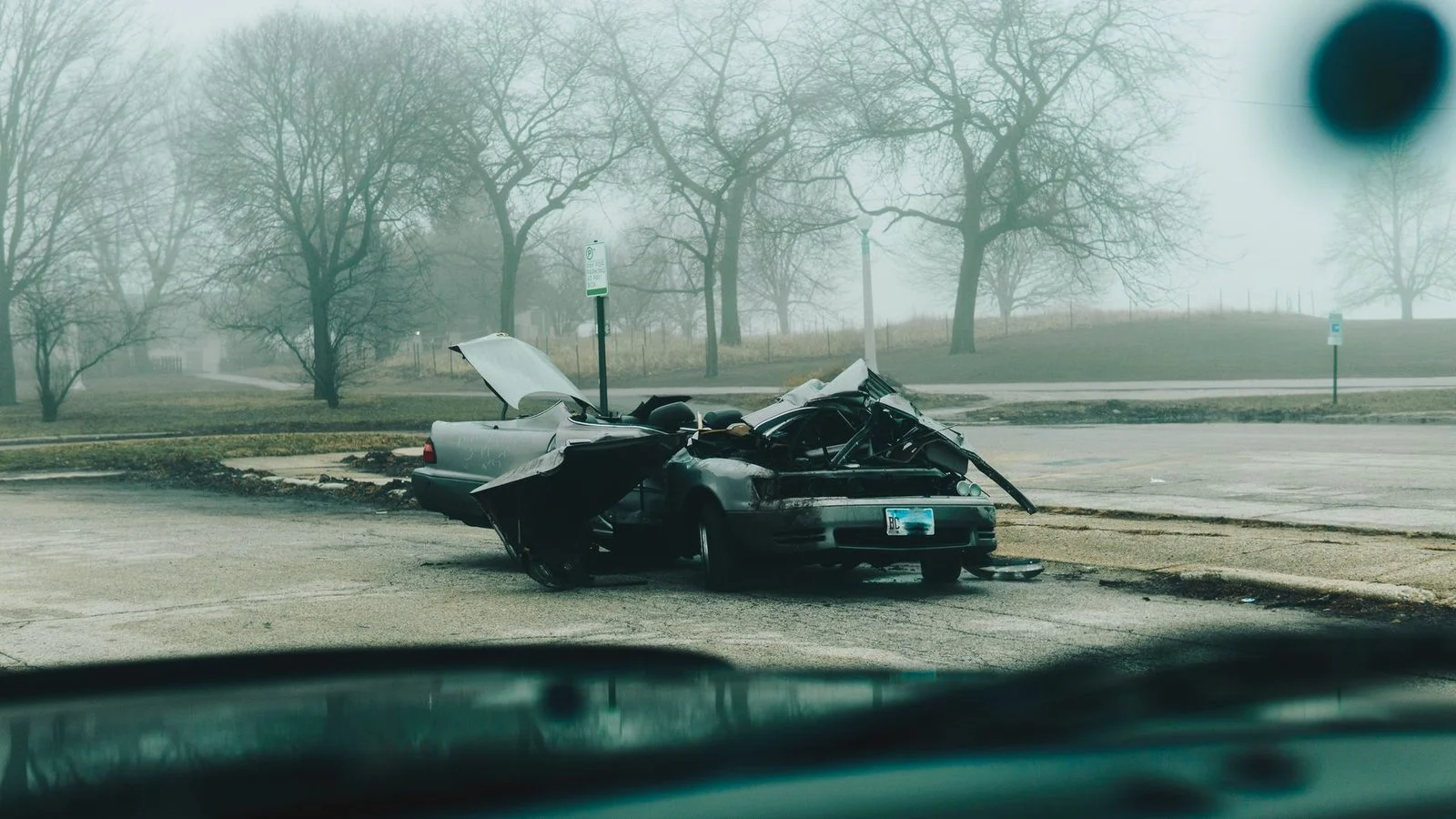
Next Steps for a Family Facing This Decision Now
Start by writing down the crash date, the location, the truck company’s name if you know it, and the names of anyone who saw what happened. Keep every medical record, bill, and insurance letter in one place. Avoid posting about the crash or the injury online while your claim is open.
If a truck crash in West Virginia left your family member paralyzed, tell Bubba what happened and request a free case review. The facts, records, and deadlines can be reviewed together.